From Landfill to Living Room: The Environmental Impact of Second-Hand Furniture
How Circular Manufacturing, Sustainable Timber, Recycling & Furniture Reuse Are Helping Build a Greener Future
Green Furniture Intelligence Desk
By The Furniture Times (TFT) & Furniture Industry Search Engine (FISE)
June 2026
For generations, the furniture industry has been measured by one simple indicator:
How much new furniture can be produced?
Factories expanded.
Production increased.
Retailers sold more.
Consumers bought more.
As economies grew, furniture became more accessible than ever before.
But beneath this remarkable success lies a growing environmental challenge.
Every year, millions of tonnes of furniture are discarded across the world.
Sofas.
Dining tables.
Beds.
Wardrobes.
Office desks.
Hotel furniture.
Restaurant seating.
Many of these products are not structurally damaged.
Many are still functional.
Many simply become victims of changing fashion, renovation projects, relocation, or consumer preferences.
The question facing the global furniture industry today is no longer simply:
“How do we manufacture more furniture?”
The question is becoming:
“How do we protect the planet while continuing to serve a growing population?”
The answer increasingly points toward one of the fastest-growing movements in the global furniture ecosystem:
The Second-Hand Furniture Economy.
Furniture Waste Has Become a Global Challenge
Furniture is one of the largest household products entering waste streams.
Unlike packaging or consumer electronics, furniture occupies enormous physical space.
Large sofas.
Wooden wardrobes.
Office workstations.
Hotel beds.
Conference tables.
These products consume landfill capacity while containing valuable materials that often remain usable.
The problem is not always that furniture has reached the end of its life.
Often, it has simply reached the end of its first ownership.
That distinction changes everything.
Every Refurbished Chair Protects Natural Resources
When furniture receives a second life, the industry reduces demand for new raw materials.
Every refurbished product can potentially reduce the need for:
- New timber
- New steel
- New aluminium
- New plastics
- New glass
- New textiles
- New packaging
The environmental benefits extend throughout the supply chain.
Fewer raw materials extracted.
Less manufacturing energy.
Lower transportation demand.
Reduced industrial emissions.
One refurbished chair may appear insignificant.
Millions of refurbished chairs represent an environmental movement.
Carbon Footprint Begins Long Before Furniture Reaches a Home
Many consumers think about carbon emissions only during transportation.
In reality, a furniture product generates emissions throughout its lifecycle.
These include:
- Forest harvesting
- Material processing
- Manufacturing
- Surface finishing
- Packaging
- International shipping
- Warehousing
- Distribution
- Installation
Producing new furniture requires significant energy.
Extending the life of existing furniture spreads those environmental costs over many more years.
The longer furniture remains useful, the lower its environmental impact per year of use.
Sustainable Timber Is More Valuable Than Ever
Timber remains one of the most important materials used in global furniture manufacturing.
When responsibly managed, wood is a renewable resource.
However, sustainable forestry depends on responsible consumption.
Discarding usable wooden furniture unnecessarily increases pressure on forests.
By extending product life through:
- Restoration
- Refinishing
- Repairs
- Refurbishment
the industry protects valuable timber resources.
A well-crafted solid wood table can serve multiple generations.
The greatest sustainability may not always come from buying new sustainable furniture.
Sometimes it comes from preserving existing sustainable furniture.
Waste Reduction Begins With Better Decisions
Many consumers believe sustainability begins with recycling.
In reality, recycling is often the final option.
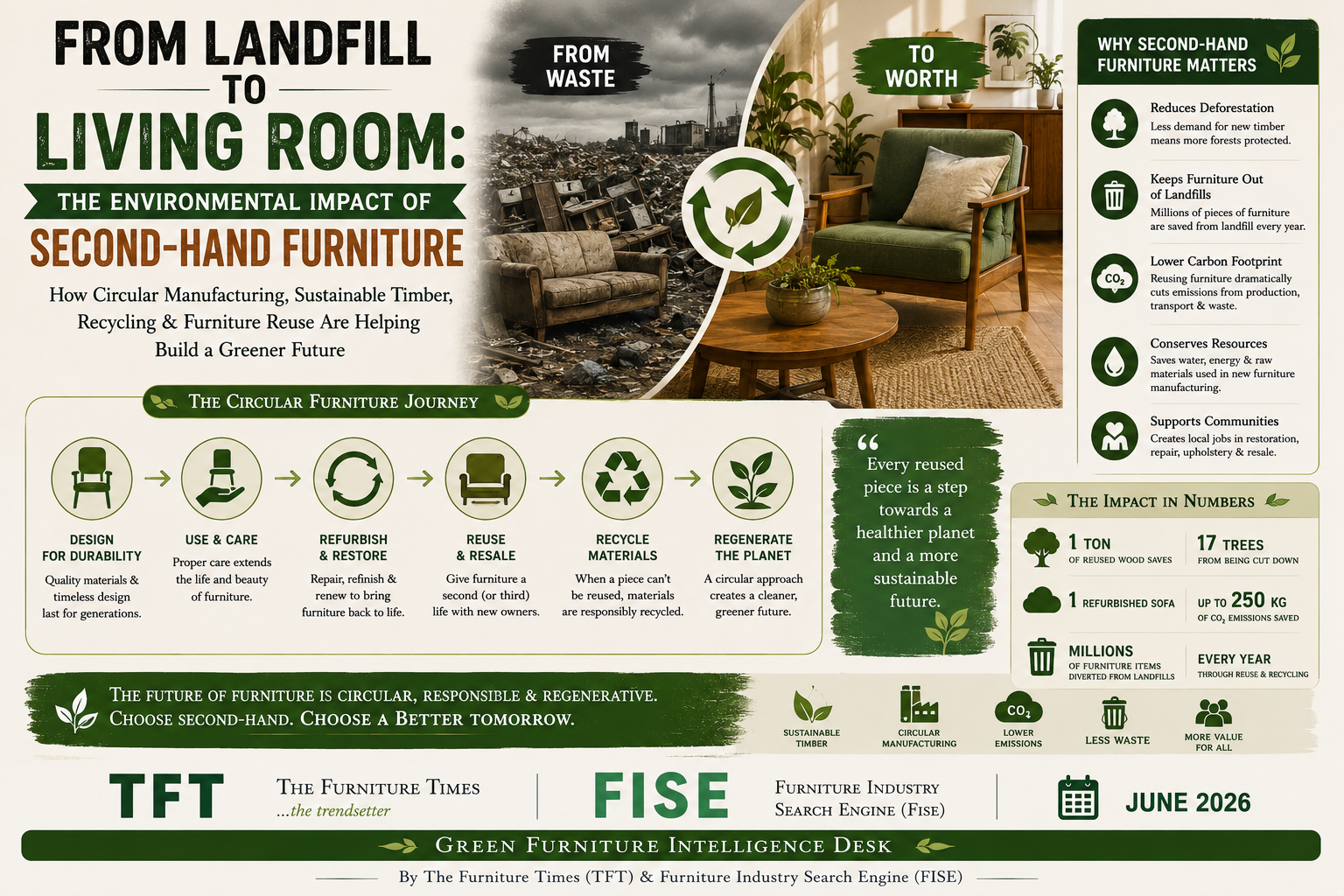
A more sustainable hierarchy is emerging.
First: Reduce unnecessary purchases.
Second: Reuse existing products.
Third: Repair damaged furniture.
Fourth: Refurbish and modernize.
Fifth: Resell.
Finally: Recycle materials that cannot be reused.
The furniture industry has an opportunity to redesign its entire value chain around this principle.
Recycling Alone Is Not Enough
Recycling plays an important role.
However, recycling often requires:
- Material separation
- Energy consumption
- Transportation
- Industrial processing
A product that remains fully functional should not immediately enter recycling.
Keeping furniture in use generally preserves more value than breaking it down into raw materials.
The future furniture economy should prioritize:
Reuse before recycle.
Circular Manufacturing Is Becoming the New Standard
The traditional manufacturing model has been linear.
Take.
Make.
Sell.
Dispose.
Circular manufacturing introduces a different philosophy.
Design products that:
- Last longer
- Can be repaired
- Can be upgraded
- Can be refurbished
- Can be disassembled
- Can be recycled efficiently
Manufacturers increasingly recognize that product responsibility should extend beyond the first sale.
The future factory will not simply manufacture furniture.
It will manage furniture throughout its lifecycle.
Hospitality Industry Can Lead the Transformation
Hotels replace furniture regularly.
Not always because furniture fails.
Often because brands refresh interiors.
Thousands of hotel beds, chairs, wardrobes, sofas, and tables remain structurally sound after renovation.
Rather than sending these products to landfill, they can be:
- Refurbished
- Reupholstered
- Certified
- Resold
- Donated
- Reused
The hospitality sector has an opportunity to become one of the largest contributors to the circular furniture economy.
Office Furniture Renewal Reduces Environmental Impact
Across the world, organisations continue redesigning offices.
Hybrid work.
Flexible workspaces.
Modern layouts.
These changes often result in large-scale furniture replacement.
Yet many office products require only:
- New work surfaces
- Replacement fabrics
- Updated finishes
- Hardware upgrades
- Ergonomic improvements
Office refurbishment extends product life while reducing waste and procurement costs.
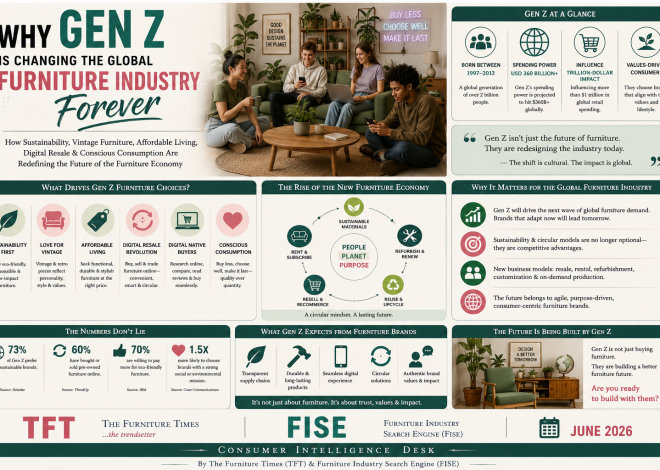
Consumer Behaviour Is Changing
Modern consumers increasingly ask questions that previous generations rarely considered.
Where was this furniture made?
Can it be repaired?
Can replacement parts be purchased?
Can it be resold?
Will it still have value after ten years?
Sustainability is becoming part of purchasing decisions.
Furniture brands that support longer product lifecycles strengthen both customer trust and environmental responsibility.
Climate Goals Require Industry Participation
Governments around the world have introduced ambitious climate targets.
The furniture industry cannot remain separate from these discussions.
Reducing carbon emissions requires action across every stage of the value chain.
Manufacturers.
Retailers.
Designers.
Architects.
Consumers.
Refurbishment specialists.
Logistics providers.
Every participant has a role.
The circular furniture economy supports broader climate objectives by reducing waste, conserving materials, and lowering demand for new production.
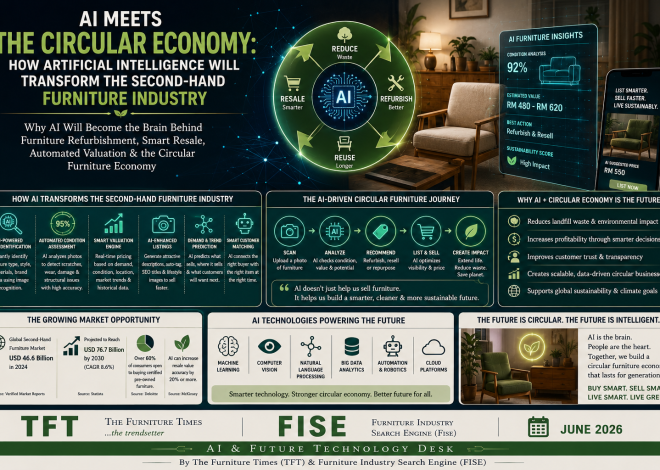
Digital Technology Will Accelerate Sustainability
Artificial Intelligence and digital platforms will help make circular furniture more accessible.
Technology can support:
- Product identification
- Condition assessment
- Repair recommendations
- Material traceability
- Product history
- Carbon reporting
- Resale marketplaces
The future of sustainability will be increasingly digital.
Why Furniture Businesses Should View Sustainability as an Investment
Many businesses still treat sustainability as a compliance requirement.
Leading companies treat it as a competitive advantage.
Consumers increasingly reward brands that demonstrate:
- Environmental responsibility
- Transparency
- Product longevity
- Ethical sourcing
- Circular business models
Sustainability strengthens:
- Brand reputation
- Customer loyalty
- Investor confidence
- International competitiveness
The green economy is also becoming a profitable economy.
The Role of TFT & FISE
The Furniture Times believes sustainability should become part of every furniture conversation.
Not only manufacturing.
But also:
- Restoration
- Refurbishment
- Recycling
- Repair
- Responsible sourcing
- Circular innovation
Furniture Industry Search Engine (FISE) believes these businesses deserve greater visibility.
Future buyers should easily discover:
- Restoration companies
- Sustainable manufacturers
- Certified refurbished furniture
- Circular economy specialists
- Green product innovators
Visibility accelerates sustainability.
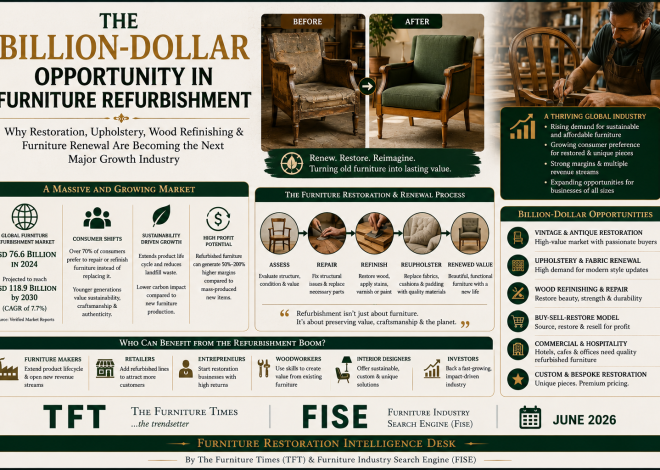
TFT & FISE Analysis
The second-hand furniture economy is no longer simply about affordability.
It is about environmental responsibility.
The future furniture industry must measure success not only by annual sales.
But also by:
- Products restored
- Furniture reused
- Timber protected
- Waste avoided
- Carbon emissions reduced
- Product lifespan extended
The businesses that understand this shift will become tomorrow’s sustainability leaders.
Final Verdict
The future of furniture is no longer measured only by what factories produce.
It is increasingly measured by what society preserves.
Every refurbished chair.
Every restored dining table.
Every refinished cabinet.
Every repaired sofa.
Represents more than a product saved.
It represents resources protected.
Carbon emissions reduced.
Forests preserved.
Landfills avoided.
And a smarter way of building the future.
The furniture industry has an extraordinary opportunity.
Not only to furnish homes.
But also to help protect the planet.
Because the most sustainable piece of furniture is often not the newest one.
It is the one that continues serving people for decades.
By The Furniture Times (TFT) & Furniture Industry Search Engine (FISE)
Green Furniture Intelligence Desk | June 2026
“TFT tells their story. FISE helps the world find them.”
The furniture industry ecosystem is a $1 Trillion Dollar Industry.