
Who Wins During a Downturn? The Visible, Trusted and Prepared
Identifying the qualities that allow businesses to capture attention, protect customer confidence and gain market share while competitors retreat
By The Furniture Times (TFT) Editorial Desk | Business Strategy | Furniture Industry | Brand Visibility | Customer Trust | Market Preparedness | SME Growth | Searchology
Economic downturns do not affect every business equally.
Some companies experience declining enquiries, falling margins, excess inventory and increasing pressure on cash flow. Others operating in the same market continue attracting customers, winning projects and strengthening their positions.
The difference is not always lower prices, greater size or a larger advertising budget.
Businesses that perform comparatively well during difficult periods are often the ones that remain:
- Visible when competitors become silent
- Trusted when customers become cautious
- Prepared when opportunities appear
- Responsive when buyers need reassurance
- Financially disciplined without disappearing
- Easy to discover, understand and contact
- Consistent in their products, service and communication
A downturn reduces demand, but it rarely eliminates demand completely. Homes still need furniture. Hotels continue replacing damaged products. Restaurants renovate. Offices move or reconfigure. Property projects reach furnishing stages. Schools, hospitals and public institutions procure equipment. Consumers replace broken beds, mattresses, sofas, chairs and cabinets.
The critical question is: Which business receives the remaining demand?
When buyers become more selective, visibility and trust become more—not less—important.
The companies that continue educating the market, publishing genuine news, maintaining accurate product information, collecting credible reviews and responding quickly can capture a larger share of a smaller opportunity pool.
The businesses that disappear may save money temporarily, but they also risk becoming absent from the customer’s consideration.
A Downturn Is Not an Equal Distribution of Pain
It is tempting to describe a market slowdown as though every company automatically loses the same percentage of business.
That is rarely how competition works.
Demand may decline across the market, but individual outcomes depend on several factors:
- Product category
- Customer segment
- Geographic coverage
- Pricing position
- Financial resilience
- Inventory availability
- Brand recognition
- Customer relationships
- Digital visibility
- Service quality
- Operational efficiency
- Management speed
One company may rely heavily on discretionary retail purchases, while another serves essential replacement demand. One manufacturer may depend on a single export country, while another has diversified buyers. One retailer may wait for showroom traffic, while another actively reaches customers through search, news, reviews, messaging and local discovery.
A downturn does not merely shrink a market. It exposes weaknesses that stronger demand may previously have hidden.
These weaknesses can include:
- Excessive dependence on discounts
- Unclear product positioning
- Weak customer retention
- Poor online information
- Limited market awareness
- No reputation strategy
- Inaccurate stock records
- Slow quotations
- High operating costs
- Overdependence on one customer
- Lack of working-capital planning
- No structured follow-up process
The downturn therefore becomes a competitive test.
Visibility Becomes More Valuable When Competitors Retreat
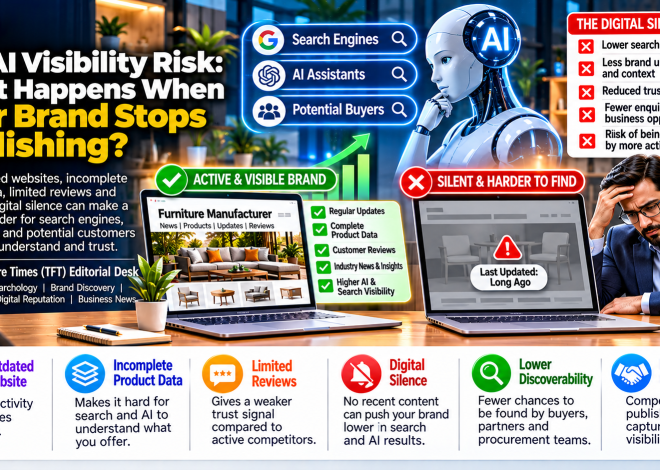
During difficult periods, many businesses make an immediate decision to reduce marketing.
Some stop advertising completely. Others stop publishing news, updating websites, posting projects, attending events or communicating with previous customers. Their reasoning is understandable: if revenue is declining, every expense must be questioned.
However, indiscriminate withdrawal creates a second problem.
The company becomes harder to see precisely when every available enquiry matters.
Customers cannot consider a supplier they cannot find. Architects cannot specify products they do not know exist. Journalists cannot report developments they never receive. AI assistants cannot accurately describe a company whose information is incomplete or outdated.
Visibility is not vanity. It is commercial availability.
A visible furniture business makes it easy for the market to determine:
- What it manufactures or sells
- Which markets it serves
- Where it is located
- Whether products are available
- What materials and specifications it offers
- Whether it handles residential or commercial projects
- How buyers can request a quotation
- Why it should be trusted
- What differentiates it from alternatives
When ten competitors communicate actively and eight go silent, the two that remain visible can occupy a greater share of attention—even if the overall market has contracted.
This does not guarantee sales, but it increases the probability of being shortlisted.
Visibility Without Trust Is Not Enough
Attention can bring a buyer to the door. Trust determines whether the buyer proceeds.
During strong economic periods, customers may experiment more freely. During a downturn, purchasing decisions become cautious. Buyers scrutinise suppliers, compare alternatives and delay commitments because the consequences of a poor decision feel greater.
A hotel procurement manager cannot afford delayed furniture installation. A homeowner may not have the budget to replace a failed sofa. A retailer cannot risk ordering inventory that will not sell. An importer needs confidence that the manufacturer can deliver consistent quality and documentation.
Trust is therefore an economic asset.
It can be strengthened through:
- Accurate company information
- Clear product specifications
- Genuine customer reviews
- Independent media coverage
- Detailed case studies
- Transparent delivery terms
- Realistic warranties
- Visible leadership
- Certifications and test reports
- Prompt communication
- Consistent after-sales service
- Evidence of completed projects
- Honest handling of complaints
A company that makes extravagant claims but provides no proof may attract attention without creating confidence.
The winning combination is visibility supported by evidence.
Prepared Businesses Can Act While Others Are Still Reacting
A downturn often produces sudden opportunities:
- A competitor closes a branch
- A project requires an urgent replacement supplier
- A retailer needs clearance inventory
- A hotel restarts a postponed renovation
- A distributor changes manufacturing partners
- A government introduces a support programme
- A buyer seeks a regional alternative to an unreliable supplier
- A landlord offers favourable premises
- Skilled employees become available
- Advertising costs become more negotiable
- Customers begin searching for better value
These opportunities may not remain available for long.
Prepared companies can respond because they already have:
- Current catalogues
- Accurate price lists
- Professional product photographs
- Updated websites
- Searchable company profiles
- Defined payment terms
- Standard quotation templates
- Product specifications
- Capacity information
- Stock visibility
- Customer databases
- Case studies
- Compliance records
- Trained sales teams
An unprepared company may need weeks to assemble basic information. By then, the buyer may have selected another supplier.
Preparation turns market disruption into commercial responsiveness.
The Seven Qualities of Downturn Winners
1. They protect discoverability
Strong businesses do not allow every marketing channel to go dark.
They identify the channels that produce credible visibility and protect a minimum level of activity across:
- Local search
- Website content
- Business profiles
- Industry directories
- News coverage
- Email communication
- Customer reviews
- Social platforms
- High-intent advertising
- Trade relationships
- Industry platforms
They may reduce spending, but they preserve the infrastructure that allows customers to find them.
A furniture manufacturer should remain discoverable by product, location, material, capability and market segment. A retailer should remain searchable for its categories, showroom, delivery coverage and current stock. A service provider should explain precisely which industry problems it solves.
2. They communicate useful information
Weak marketing repeatedly says, “Buy from us.”
Strong marketing helps customers make decisions.
During a downturn, useful content may address:
- How to select durable furniture
- Which materials suit particular environments
- How to calculate lifecycle cost
- How to maintain furniture
- What buyers should ask suppliers
- How delivery and installation work
- How warranties should be evaluated
- What certifications apply
- Which mistakes increase project costs
- When to repair, refurbish or replace
- How to plan procurement under budget pressure
Educational communication reduces uncertainty. It also demonstrates that the business understands more than the product it is trying to sell.
3. They defend customer relationships
Acquiring a new customer is difficult when demand is weak. Existing relationships become exceptionally valuable.
Prepared businesses maintain contact with:
- Previous buyers
- Dealers
- Designers
- Architects
- Property managers
- Contractors
- Hospitality operators
- Procurement consultants
- Developers
- Institutional clients
The purpose is not to send constant promotions. It is to remain helpful and relevant.
A well-managed customer programme may include:
- Maintenance reminders
- New-product updates
- Replacement-part availability
- Stock announcements
- Project-planning assistance
- Warranty guidance
- Repair and refurbishment options
- Personal follow-up
- Early access to clearance items
Businesses that ignore customers after the invoice is paid must repeatedly rebuild trust from zero.
4. They maintain operational discipline
Visibility cannot compensate for chaotic execution.
A business that wins attention but fails to quote, deliver or communicate may damage its reputation faster than a silent company.
Downturn winners understand their numbers.
They monitor:
- Cash flow
- Gross margin
- Inventory ageing
- Customer acquisition cost
- Quotation conversion
- Receivables
- Supplier exposure
- Delivery performance
- Product returns
- Warranty claims
- Marketing outcomes
- Category profitability
They distinguish between revenue and healthy revenue.
A large order with poor margins, expensive customisation, long credit terms and high warranty exposure may weaken the company rather than rescue it.
Financial discipline means pursuing business that contributes to survival—not simply celebrating sales volume.
5. They preserve quality and service
When margins are under pressure, businesses may quietly reduce material specifications, substitute components or weaken service.
This can create short-term savings but long-term damage.
Furniture customers may encounter:
- Thinner materials
- Lower-density foam
- Weaker fittings
- Inferior coatings
- Unapproved component substitutions
- Reduced inspection
- Poor packaging
- Delayed after-sales support
- Shortened warranties
- Unavailable spare parts
If the product fails, the customer rarely blames the economic downturn. The customer blames the brand.
Strong companies may redesign products to meet realistic price points, but they communicate specifications honestly. They do not disguise deterioration as efficiency.
Trust built over years can be lost through one period of uncontrolled cost-cutting.
6. They adapt their offer without losing identity
Adaptation is not the same as panic.
Businesses may respond to changing demand by introducing:
- Entry-level collections
- Modular products
- Smaller furniture for compact homes
- Repair services
- Refurbished furniture
- Rental options
- Furniture-as-a-service
- Ready-to-assemble models
- Faster-delivery ranges
- Project bundles
- Flexible payment structures
- Clearance programmes
- Replacement components
These adjustments can unlock new demand.
However, frequent discounting without a clear strategy can weaken perceived value. Customers may learn to delay purchases until the next promotion. Dealers may struggle to defend regular prices. The brand may become associated primarily with clearance.
Successful adaptation solves a customer problem while protecting the brand’s long-term position.
7. They make decisions early
Many businesses wait for certainty.
They want proof that demand has recovered before restarting communication, refreshing the catalogue, developing products or pursuing new markets.
By the time certainty arrives, competitors may already control the opportunity.
Prepared businesses use signals rather than waiting for perfect information. They monitor:
- Enquiry patterns
- Search demand
- Housing activity
- Hospitality projects
- Tender announcements
- Customer feedback
- Export orders
- Material prices
- Freight movement
- Competitor behaviour
- Inventory turnover
- Review themes
They make measured decisions, test on a limited scale and adjust quickly.
The objective is not reckless expansion. It is avoiding paralysis.
The Furniture Industry’s Particular Downturn Challenge
The furniture industry is especially exposed because it is fragmented.
It includes:
- Manufacturers
- Component producers
- Material suppliers
- Importers
- Exporters
- Wholesalers
- Distributors
- Retailers
- Designers
- Architects
- Installers
- Repairers
- Logistics providers
- Technology companies
- Independent artisans
Many smaller businesses possess excellent capabilities but remain poorly documented and difficult to discover.
They may have:
- No updated website
- Incomplete product information
- Few customer reviews
- Outdated photographs
- No published company news
- Inconsistent business names
- Limited search visibility
- No structured catalogue
- No visible leadership profile
- No independent credibility
During a strong market, relationships and walk-in traffic may conceal these gaps. During a downturn, limited visibility becomes a direct commercial risk.
The market cannot support a company it does not know exists.
Why News Matters During Difficult Times
Advertising tells the market what a business wants to sell.
News can show the market what the business is doing.
Genuine company developments may include:
- A new product collection
- Factory investment
- Export expansion
- Sustainability improvements
- Certification achievement
- New showroom
- Project completion
- Technology adoption
- Leadership appointment
- Training initiative
- Community programme
- Partnership
- Industry award
- Manufacturing capability
- Market research
- Business transformation
Credible news coverage creates a searchable record of activity.
It can support:
- Brand recognition
- Search visibility
- Stakeholder confidence
- Sales conversations
- Supplier confidence
- Recruitment
- Media discovery
- AI understanding
- Long-term reputation
A press release should not be invented merely to create noise. The strongest stories are specific, verifiable and commercially meaningful.
The AI Visibility Consequence of Silence
Business discovery is expanding beyond traditional search results.
Customers increasingly use search engines, marketplaces, maps, review platforms and AI assistants to ask questions such as:
- Which furniture manufacturers operate in my country?
- Who supplies hotel furniture in this region?
- Which office-chair brands have credible reviews?
- Where can I find sustainable furniture producers?
- Which supplier can deliver quickly?
- What company specialises in outdoor hospitality furniture?
AI systems rely on available information.
If a company’s digital presence is outdated, inconsistent or extremely limited, the system may struggle to identify:
- What the company does
- Where it operates
- Which products it offers
- Whether it remains active
- Why it is credible
- How it differs from competitors
A silent company may still be operational, but digitally it can begin to look inactive.
Continual publishing does not guarantee AI recommendation. It does, however, create more current, structured and independently discoverable evidence from which search and AI systems can understand the business.
What to Cut—and What to Protect
A downturn demands difficult decisions. Not every marketing expense should remain untouched.
Businesses should cut waste, not visibility itself.
| Reduce or eliminate | Protect or strengthen |
|---|---|
| Campaigns with no measurable purpose | Local and product-based search visibility |
| Repetitive generic social content | Accurate product information |
| Uncontrolled discounting | Customer-retention communication |
| Vanity sponsorships | Genuine company news |
| Poorly targeted advertising | High-intent campaigns |
| Duplicate subscriptions | Review and reputation management |
| Unqualified lead sources | Website conversion pathways |
| Expensive activity without follow-up | Customer databases and sales follow-up |
| Unnecessary content volume | Useful expert-led content |
| Broad messaging for everyone | Clear positioning for priority customers |
The correct question is not:
“Can we stop marketing?”
It is:
“Which activities keep us discoverable, credible and connected to customers at the lowest sustainable cost?”
A Minimum Downturn Visibility Programme
Even a small furniture business can protect a basic visibility system.
Weekly
- Respond to enquiries promptly
- Update important stock information
- Follow up on open quotations
- Publish one useful market or product insight
- Request feedback from completed customers
Monthly
- Publish genuine company news or a case study
- Review website and business-profile accuracy
- Analyse lost enquiries and sales objections
- Reconnect with previous customers
- Update products, projects or capabilities
- Monitor reviews and respond professionally
Quarterly
- Audit margins and marketing performance
- Remove outdated product information
- Review competitor positioning
- Identify growing customer segments
- Refresh sales materials
- Examine new markets and partnerships
- Conduct a reputation and search-visibility check
The programme does not need to be expensive. It needs to be consistent.
Preparedness Is More Than Cash Reserves
Cash is vital during a downturn, but preparedness has several dimensions.
| Area | Evidence of preparedness |
|---|---|
| Financial | Cash-flow forecasting, receivables control and margin discipline |
| Commercial | Clear target customers, current pricing and responsive quotations |
| Operational | Reliable suppliers, inventory visibility and quality controls |
| Digital | Updated website, searchable profiles and accurate product data |
| Reputation | Reviews, case studies, news coverage and transparent communication |
| Product | Defined specifications, documentation and dependable availability |
| Customer | Contact database, retention programme and after-sales support |
| Strategic | Scenario planning, market monitoring and decision thresholds |
A business may have cash but no market relevance. Another may have demand but no working capital. A third may have excellent products but no discoverability.
Resilience requires these capabilities to work together.
A 90-Day Downturn Action Plan
Days 1–30: Establish the truth
- Calculate cash runway
- Identify profitable and unprofitable categories
- Review aged stock
- Audit outstanding payments
- List active customers and open quotations
- Correct online business information
- Identify the company’s strongest evidence of credibility
- Stop activities producing no identifiable value
Days 31–60: Rebuild visibility and trust
- Update priority product pages
- Publish a credible company story
- Create two detailed case studies
- Request genuine customer reviews
- Contact previous customers
- Strengthen local search profiles
- Prepare current sales and specification documents
- Train staff to communicate value without relying immediately on discounts
Days 61–90: Pursue targeted growth
- Approach priority customer segments
- Test a focused advertising campaign
- Introduce an offer that solves a downturn-specific problem
- Pursue partnerships and referral relationships
- Publish expert commentary
- Enter relevant directories and industry platforms
- Measure enquiries, conversions, margins and repeat business
- Expand only what demonstrates commercial value
Who Is Most Likely to Lose?
The greatest danger is faced by businesses that are simultaneously:
- Invisible
- Undifferentiated
- Poorly documented
- Dependent on discounts
- Slow to respond
- Operationally inconsistent
- Financially uninformed
- Unsupported by reviews or evidence
- Waiting indefinitely for the economy to improve
These companies may still have good products, but goodness that remains unknown cannot influence purchasing decisions.
A downturn punishes ambiguity.
If customers cannot understand why a business is relevant, trustworthy and worth its price, they will choose a more familiar supplier, postpone the purchase or select the cheapest visible alternative.
The TFT Perspective: Retreat Is Not a Strategy
Not every company can spend aggressively during difficult times, nor should it.
Survival requires realism. Cash must be protected. Unprofitable activity must be stopped. Expansion should be carefully evaluated.
But silence is not the same as discipline.
A business that completely withdraws from the market gives competitors room to occupy its position. Customers begin building relationships elsewhere. Search results become dominated by other names. Reviews become outdated. Digital profiles lose relevance. Sales teams receive colder leads.
The eventual recovery may then require the company to rebuild awareness from the beginning.
The winners during a downturn are not necessarily the businesses that spend the most. They are the businesses that make themselves easiest to:
- Find
- Understand
- Verify
- Contact
- Trust
- Remember
- Select
That is the foundation of competitive resilience.
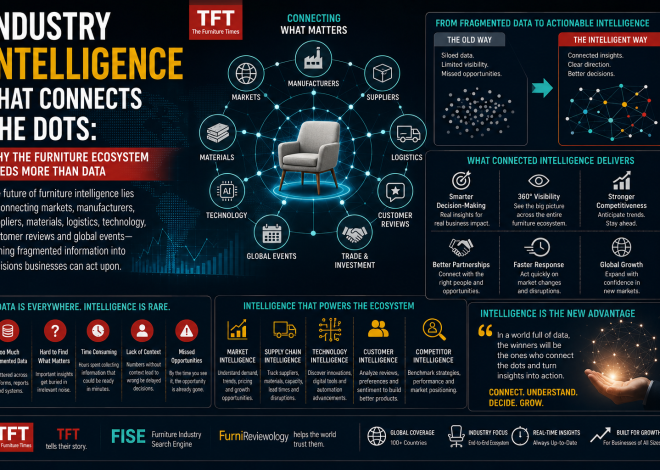
The Global Furniture Ecosystem Must Remain Connected
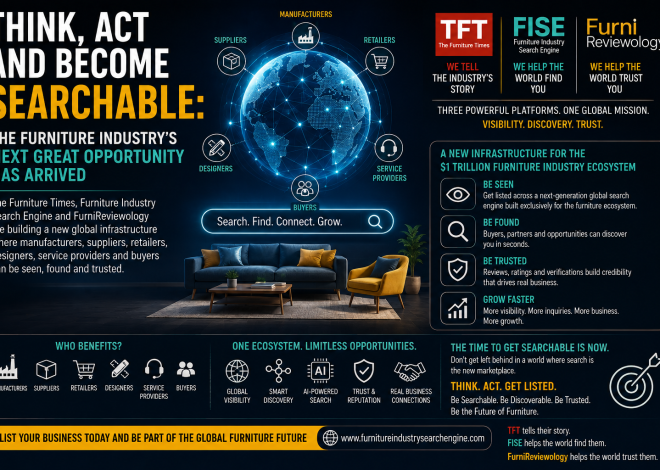
The furniture industry is a $1 trillion global ecosystem, but its businesses remain fragmented across markets, categories and digital platforms.
Smaller manufacturers, suppliers, retailers, designers and service providers require affordable pathways to visibility and trust—especially when economic pressure makes large advertising budgets impossible.
The Furniture Times tells their story.
Furniture Industry Search Engine helps the world find them.
FurniReviewology helps the world trust them.
Together, news, structured discovery and credible reviews can help businesses build a stronger digital identity.
A downturn will eventually end. The reputation created during it can remain much longer.
The businesses remembered after the slowdown will be those that refused to become invisible during it.
Stay visible. Build trust. Prepare before opportunity arrives.