
share of voice
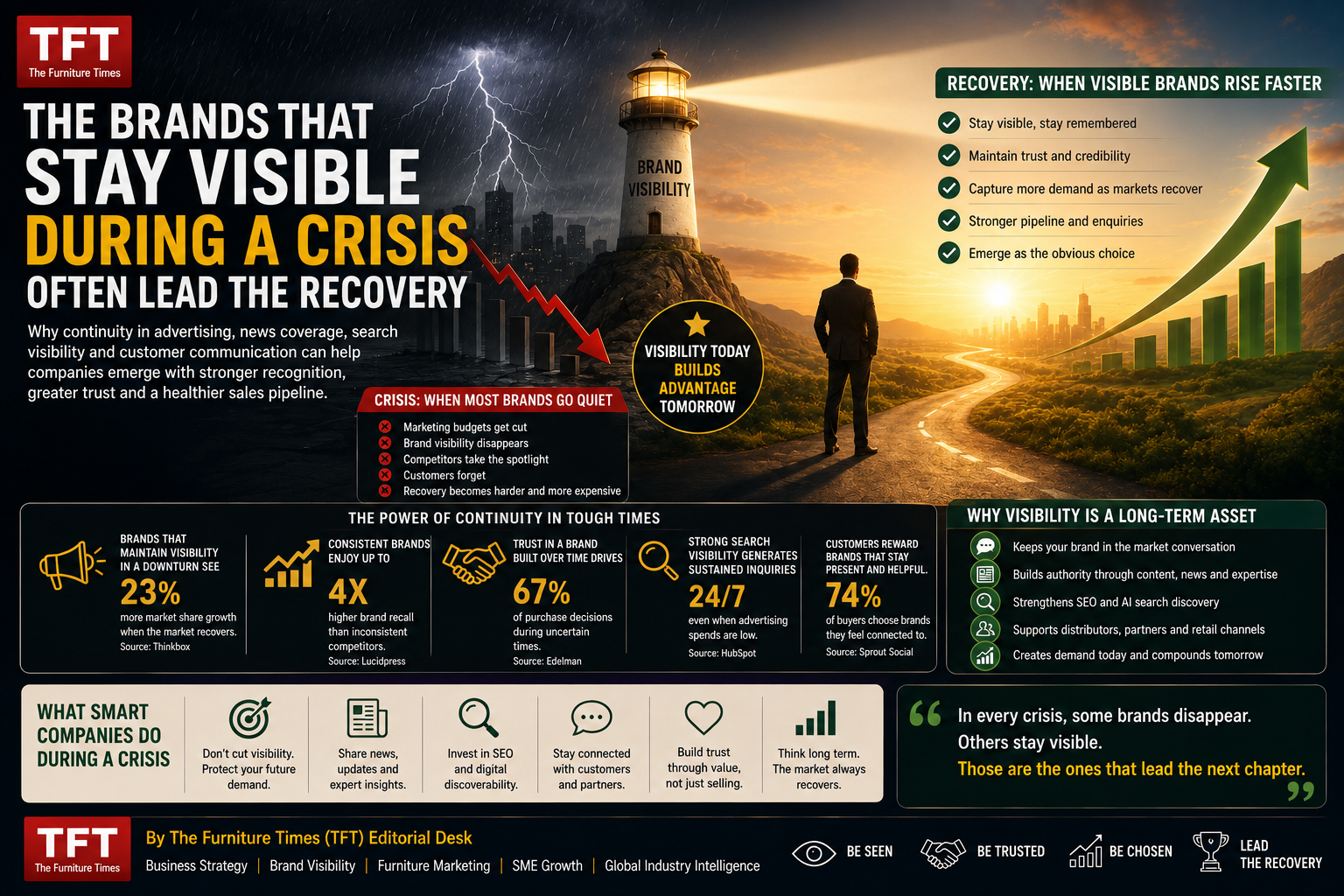
The Brands That Stay Visible During a Crisis Often Lead the Recovery
Economic uncertainty may reduce demand, but it does not stop customers from searching, comparing and forming opinions. This detailed TFT analysis explains why brands that maintain advertising, news coverage, search visibility and customer communication are often better positioned to lead the recovery.
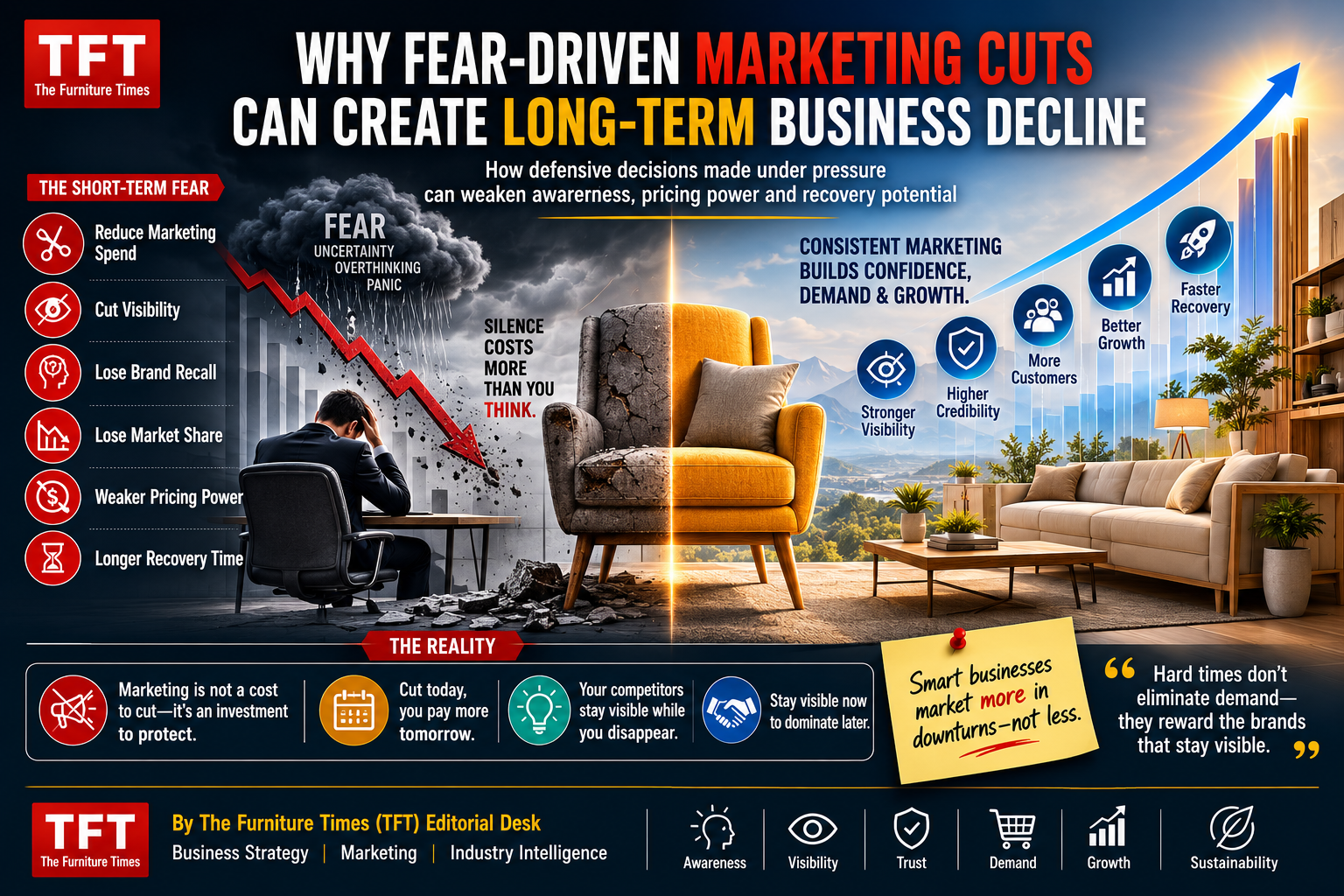
Why Fear-Driven Marketing Cuts Can Create Long-Term Business Decline
When businesses stop advertising under pressure, they do more than reduce expenditure—they surrender visibility, customer attention and future demand. This detailed analysis explains why disciplined brands remain present during uncertainty and how companies can cut costs without disappearing from the market.
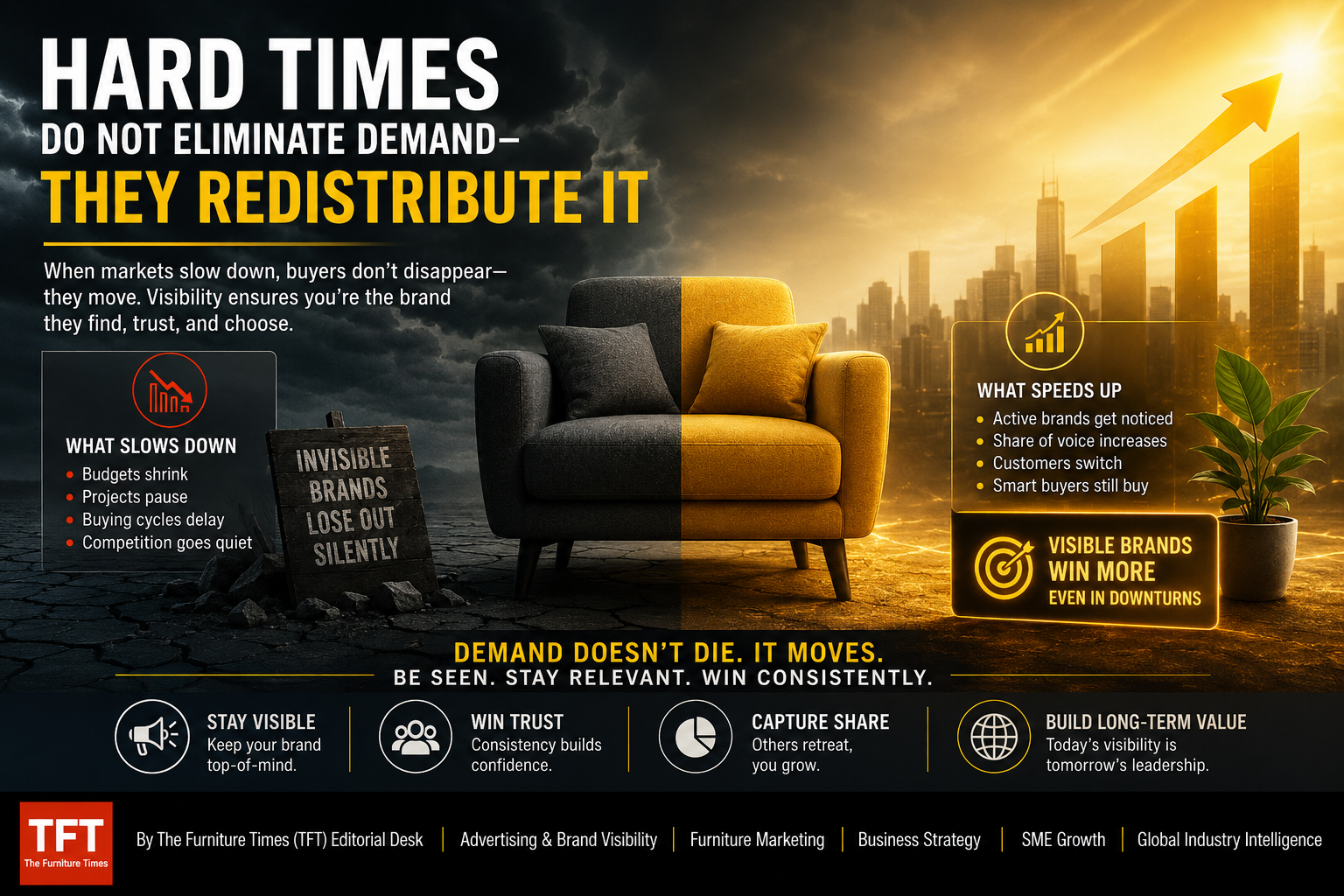
Hard Times Do Not Eliminate Demand—They Redistribute It
Hard times may reduce overall spending, but they also redistribute demand across price points, products, channels, regions and suppliers. This deep analysis explains how visible, responsive and flexible furniture businesses can gain market share by capturing opportunities quieter competitors abandon.
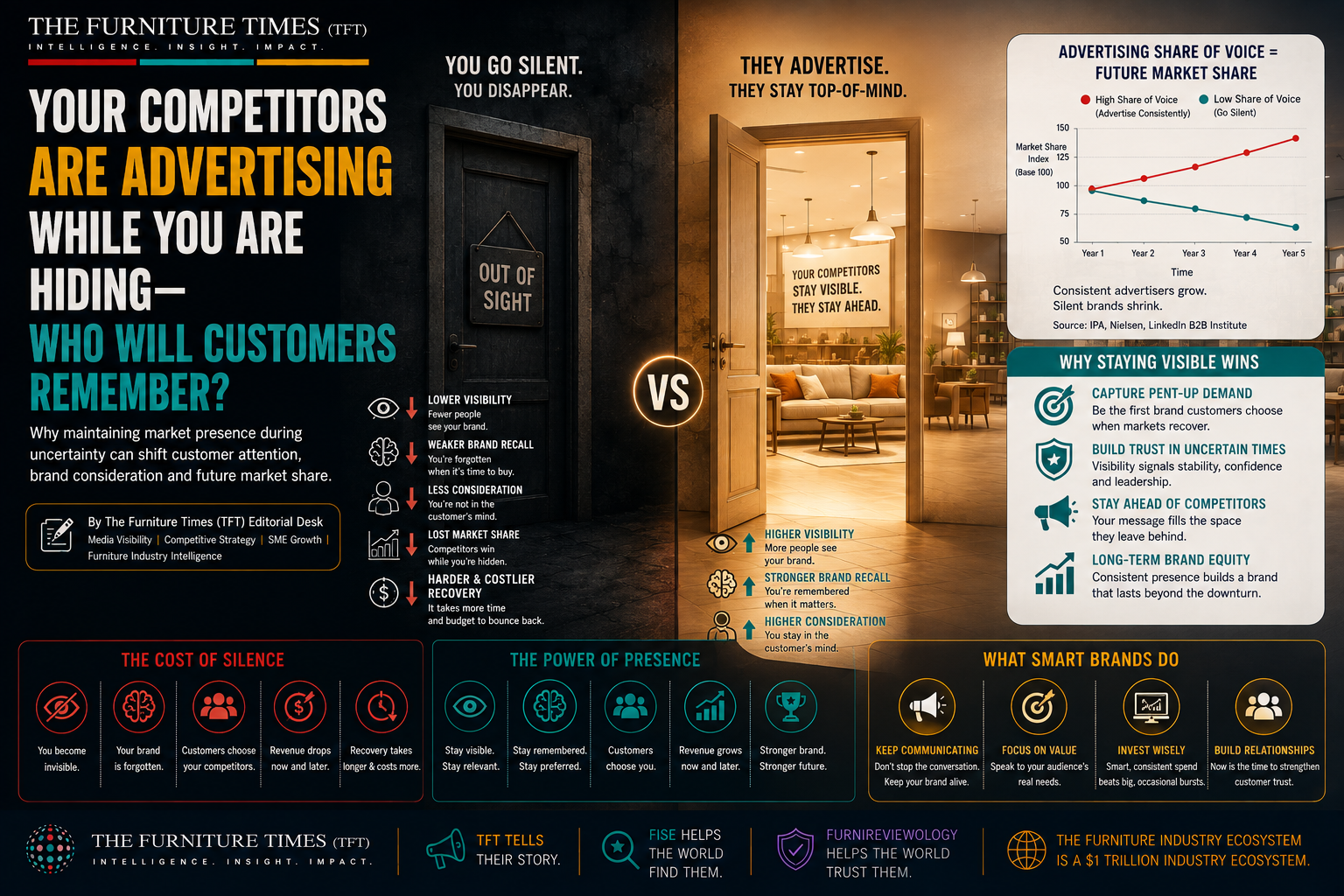
Your Competitors Are Advertising While You Are Hiding—Who Will Customers Remember?
When your company stops advertising, customers do not stop seeing advertisements—they begin seeing more of your competitors. This analysis explains how visibility during uncertainty can shape brand recall and future revenue.
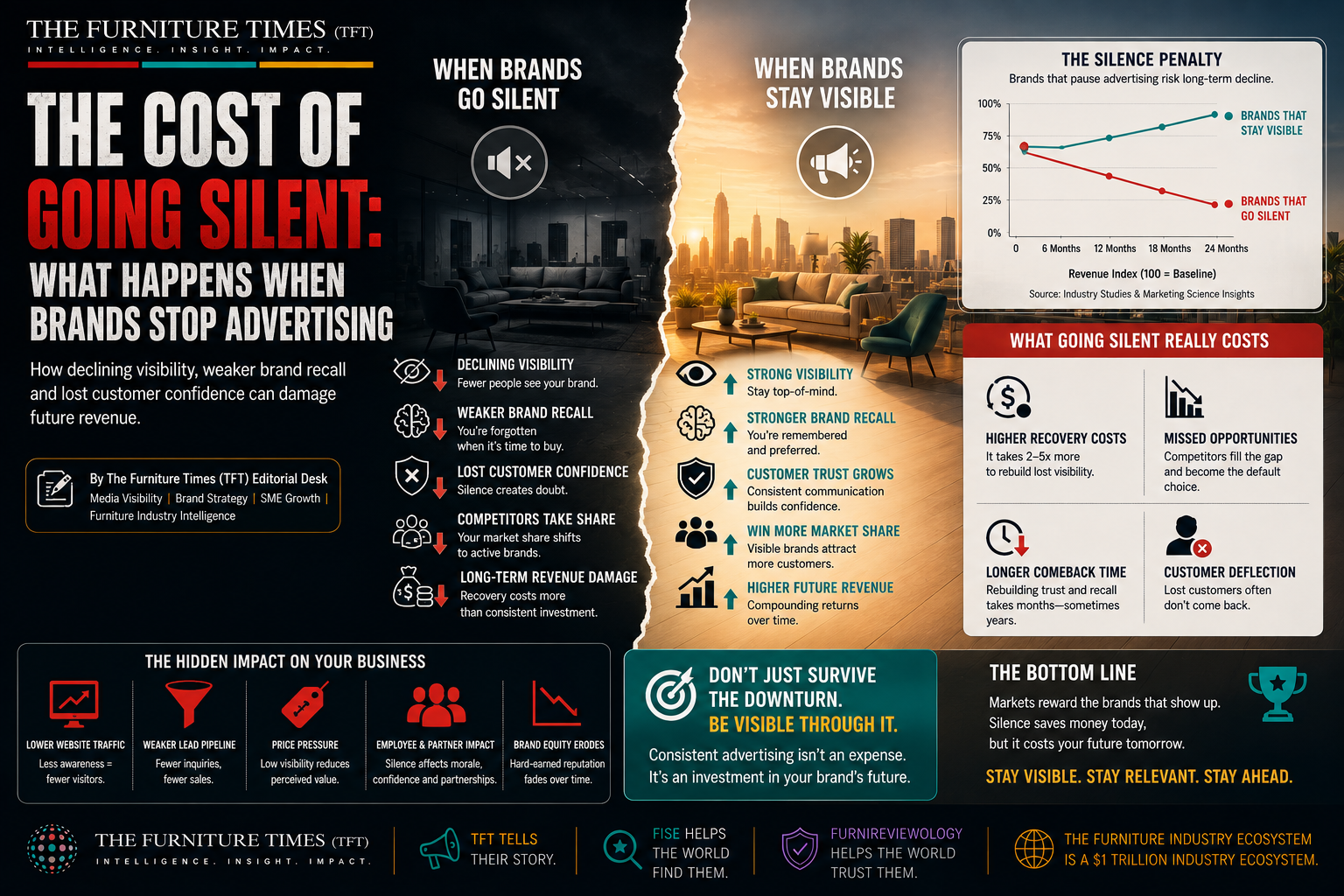
The Cost of Going Silent: What Happens When Brands Stop Advertising
Going silent during difficult times may create immediate savings, but the long-term cost can include weaker recall, colder sales leads, declining search presence and expensive brand recovery.
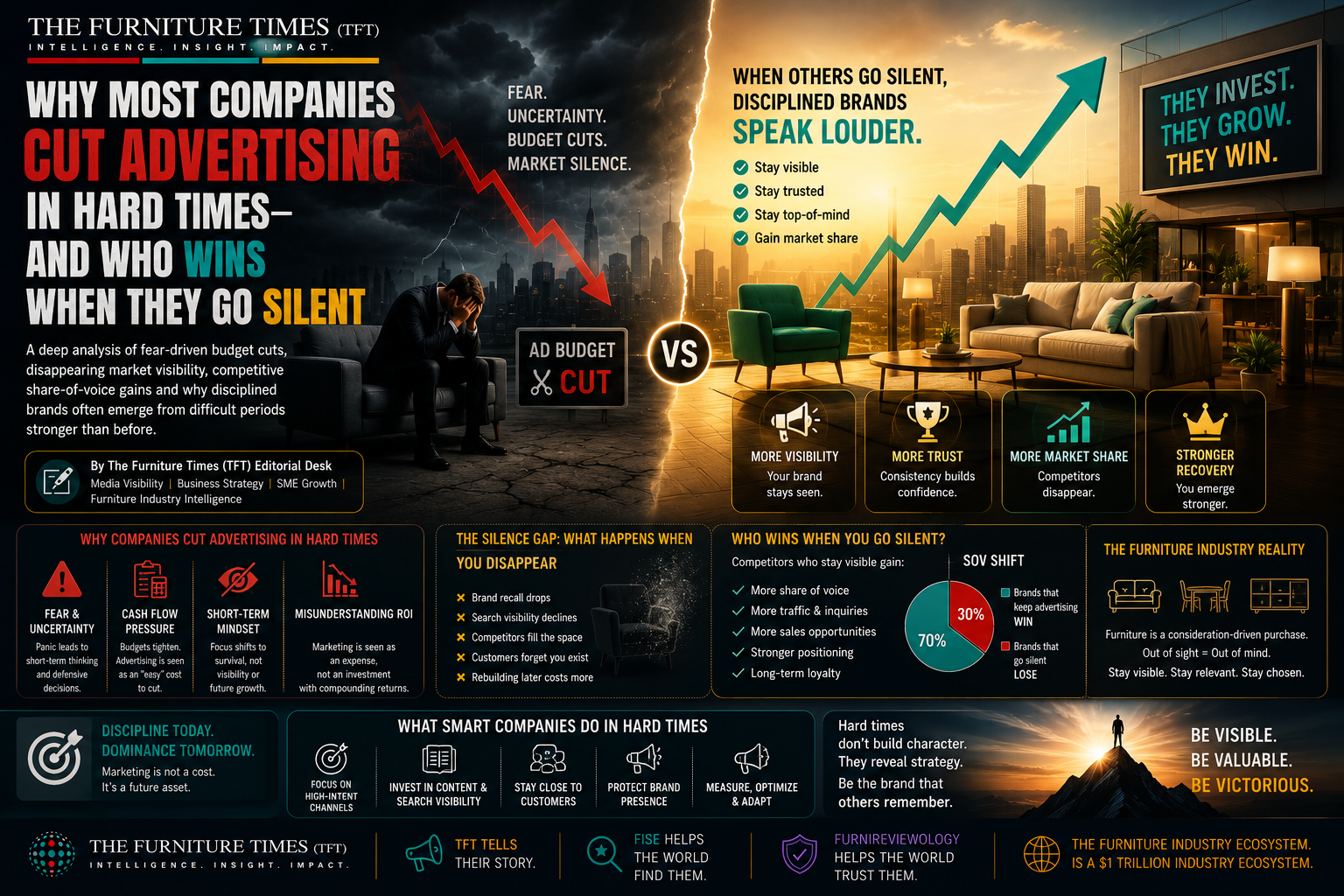
Why Most Companies Cut Advertising in Hard Times—and Who Wins When They Go Silent
Why do most companies reduce advertising during difficult economic periods, what does silence cost them, and who wins when they retreat? This report examines the psychology, evidence, risks and strategic opportunities behind downturn marketing.