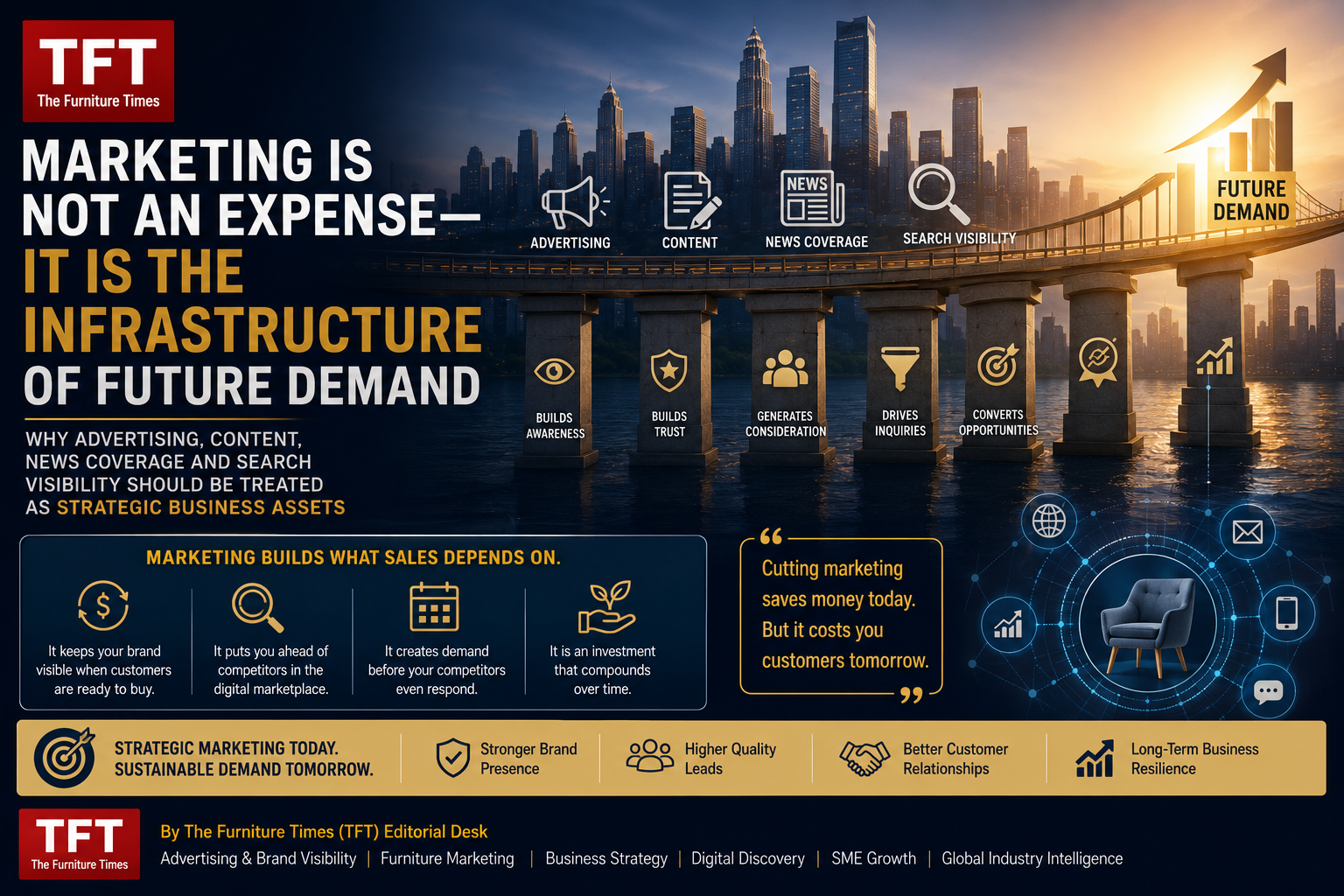
Marketing Is Not an Expense—It Is the Infrastructure of Future Demand
Why advertising, content, news coverage and search visibility should be treated as strategic business assets
By The Furniture Times (TFT) Editorial Desk | Advertising & Brand Visibility | Furniture Marketing | Business Strategy | Digital Discovery | SME Growth | Global Industry Intelligence
When businesses face uncertainty, marketing is often one of the first budgets placed under pressure.
Advertising is reduced. Content production slows. Public relations disappears. Search-engine work is postponed. Social-media activity becomes inconsistent. Trade-media coverage is treated as optional. The website remains outdated because management believes money should be directed toward “real business operations.”
This thinking appears financially responsible, but it is often strategically dangerous.
Marketing is not separate from business infrastructure. It is the infrastructure that enables future customers to discover, understand, remember and trust a business.
A company can possess an excellent factory, experienced employees, reliable suppliers and outstanding products, but those assets cannot generate their full commercial value if the market does not know they exist.
A factory creates production capacity. Logistics creates delivery capacity. Finance creates transactional capacity. Marketing creates demand capacity.
Without demand capacity, the rest of the organization becomes underutilized.
Marketing must therefore be understood not merely as promotional spending but as a long-term business system comprising:
- Advertising.
- Editorial content.
- News coverage.
- Search visibility.
- Brand identity.
- Customer education.
- Public relations.
- Reviews.
- Case studies.
- Product information.
- Social proof.
- Trade-show communication.
- Email marketing.
- Digital listings.
- Industry relationships.
- Reputation management.
Together, these activities determine whether a business enters the customer’s consideration set before a purchase decision is made.
Marketing builds the road customers use to reach a business
A business may be physically present in a market while remaining commercially invisible.
The company may have a registered office, warehouse, factory, showroom and website. Yet potential customers may still be unable to find it when they search for:
- A furniture manufacturer.
- A hotel furniture supplier.
- An office-chair producer.
- A hardware distributor.
- A kitchen company.
- A mattress supplier.
- An outdoor furniture specialist.
- An interior contractor.
- A custom furniture maker.
- A reliable business in a particular city or country.
This is why visibility functions like infrastructure.
Roads connect locations. Ports connect trade routes. Electricity powers production. Digital visibility connects businesses with customer intent.
If that connection is weak, demand travels elsewhere.
The modern market increasingly rewards the company that is easiest to find, understand, verify and contact—not necessarily the company with the best product hidden behind an outdated website.
Marketing does not manufacture demand overnight
One of the most damaging assumptions in business is that marketing should produce immediate sales every time money is spent.
Some activities can generate direct enquiries quickly. Performance advertising, promotional campaigns and highly targeted offers may produce measurable short-term responses.
However, much of marketing works cumulatively.
A customer may:
- See a company mentioned in a news article.
- Encounter its name again on social media.
- Read one of its educational guides.
- Find its product through a search engine.
- Visit the website.
- Compare specifications.
- Read customer reviews.
- Follow the company for several months.
- Contact it only when a project becomes active.
If management measures only the last interaction, it may conclude that the website or salesperson created the sale. In reality, trust was built across multiple encounters.
Marketing infrastructure creates these encounters before demand becomes visible.
Future demand begins before the customer is ready to buy
Many customers are not immediate buyers.
A hotel owner may plan a renovation a year in advance. A property developer may begin evaluating suppliers during the design stage. A retailer may review new brands months before changing its assortment. A homeowner may save ideas long before purchasing furniture.
This means future customers are researching today.
They are learning:
- Which brands exist.
- Which companies appear credible.
- What products are available.
- Which suppliers understand their problems.
- What pricing level to expect.
- Which businesses have project experience.
- Who can deliver in their region.
- Who publishes useful information.
- Who appears active and dependable.
The company that becomes familiar during research has an advantage when purchasing begins.
A business that starts marketing only after sales decline is attempting to build recognition at the exact moment it urgently needs results. That is expensive, stressful and often too late.
Advertising buys access to attention
Advertising allows a business to reach audiences it may not reach organically.
It can help companies:
- Enter new markets.
- Launch products.
- Generate awareness.
- Support dealers.
- Reach project decision-makers.
- Promote seasonal offers.
- Recover lost visibility.
- Test customer demand.
- Remind previous buyers.
- Protect market presence.
Advertising is sometimes criticized because customers know it is paid communication. But that does not make it worthless. Its purpose is to secure attention and present a controlled message.
The strategic question is not whether advertising is good or bad. It is whether it reaches the right audience with a relevant message at a sustainable cost.
Poor advertising is an expense. Disciplined advertising is market infrastructure.
Advertising becomes stronger when connected to other assets
An advertisement performs better when the customer can follow it to:
- A credible website.
- A complete product page.
- Useful specifications.
- Independent news coverage.
- Customer reviews.
- Case studies.
- A responsive contact channel.
Advertising cannot compensate indefinitely for weak business information or poor customer experience. It works best as the entry point to a larger trust system.
Content creates permanent commercial assets
Advertising usually stops delivering impressions when the campaign budget ends. High-quality content can continue producing value long after publication.
Useful content may include:
- Buying guides.
- Product comparisons.
- Industry analysis.
- Installation advice.
- Maintenance information.
- Case studies.
- Customer questions.
- Market reports.
- Manufacturing explanations.
- Sustainability information.
- Compliance guidance.
- Project showcases.
A detailed article can attract search traffic, educate buyers, support sales teams and demonstrate expertise for months or years.
This makes content more than a communication activity. It becomes a reusable knowledge asset.
One article can be adapted into:
- Website content.
- Sales presentations.
- Email campaigns.
- Social-media posts.
- Dealer training.
- Customer proposals.
- Video scripts.
- Exhibition handouts.
- Frequently asked questions.
The business is not simply spending money on words. It is building an information library that works across the customer journey.
News coverage creates third-party credibility
A company describing itself as innovative is advertising.
A credible publication reporting on the company’s innovation is validation.
News coverage is valuable because it places a business within a wider industry context. It can help communicate:
- Product launches.
- Factory investments.
- Market expansion.
- New appointments.
- Certifications.
- Sustainability initiatives.
- Research.
- Partnerships.
- Community impact.
- Exhibition participation.
- Business milestones.
Media visibility can strengthen the company’s reputation with customers, distributors, investors, employees, suppliers and search engines.
It also creates a public record.
When someone searches for a business and finds only its self-published website, the evidence available is limited. When the search also reveals independent news articles, interviews and industry features, the company becomes easier to verify.
Media is part of business due diligence
Before entering a commercial relationship, buyers often investigate:
- Is the company active?
- Does it have industry experience?
- Has it completed relevant projects?
- Has anyone credible mentioned it?
- Are its claims consistent?
- Does it have a history?
- Can management be identified?
- Is the brand visible beyond its own website?
News coverage helps answer these questions.
Media is not only about fame. It is about reducing uncertainty.
Search visibility captures existing intent
Advertising introduces a company to customers. Search visibility helps customers find it when they are already looking.
This is a crucial difference.
A person searching for “hotel furniture manufacturer,” “office furniture supplier,” or “outdoor furniture Malaysia” is expressing potential commercial intent.
If a business does not appear in those moments, the opportunity is not postponed. It often goes to a competitor.
Search visibility depends on several interconnected assets:
- Website structure.
- Product pages.
- Technical information.
- Local listings.
- News mentions.
- Backlinks.
- Reviews.
- Images.
- Category relevance.
- Accurate business details.
- Consistent publishing.
- Page performance.
- Structured data.
Search is not a one-time campaign. It is a long-term accumulation of relevance and authority.
A company cannot realistically remain invisible for years, publish several pages during a downturn and expect immediate authority.
AI changes discovery—but strengthens the need for marketing
Customers increasingly use AI tools to request recommendations, compare products, identify suppliers and summarize industries.
They may ask:
- Which furniture manufacturers supply hotels in Southeast Asia?
- What are the most trusted office-furniture brands?
- Which companies make sustainable furniture?
- Who supplies commercial outdoor furniture in Malaysia?
- Which brands have credible customer reviews?
- What manufacturer can customize furniture for a resort?
AI systems require information to answer these questions.
If a business has:
- Little published content.
- Weak product descriptions.
- No news coverage.
- Inconsistent listings.
- Few credible mentions.
- No structured information.
- No review signals.
AI may fail to understand or recommend it.
This makes marketing infrastructure even more important. Businesses must become machine-readable as well as human-readable.
The future of visibility is not only ranking on a page. It is being understood as a credible answer.
Reviews complete the trust infrastructure
Advertising creates awareness. Content creates understanding. News coverage creates credibility. Search creates discovery. Reviews provide evidence of customer experience.
Reviews can reveal whether a business:
- Delivers on time.
- Communicates clearly.
- Maintains quality.
- Handles complaints.
- Honours warranties.
- Provides professional installation.
- Offers fair value.
- Supports customers after the sale.
A company should not treat reviews as decorative stars on a profile. They are market intelligence.
Repeated criticism can expose weaknesses in:
- Packaging.
- Delivery.
- Installation.
- Product instructions.
- Hardware quality.
- Finish consistency.
- Customer service.
- Spare-parts availability.
FurniReviewology can help organize this trust layer for the furniture ecosystem, enabling capable companies to demonstrate their performance while helping buyers make more informed decisions.
Marketing strengthens every department
Marketing is frequently isolated inside one department, but its value extends across the organization.
Sales
Marketing gives salespeople warmer leads, better presentations, credible articles and stronger brand recognition.
Recruitment
Visible companies can attract employees more easily because candidates understand their purpose and reputation.
Distribution
Dealers are more willing to represent brands that actively create market demand.
Procurement
A credible public presence can reassure suppliers and commercial partners.
Investment
Investors and lenders can evaluate visible businesses more confidently than companies with little accessible information.
Pricing
Strong brands can compete on value, expertise and trust instead of depending entirely on discounts.
Product development
Search behaviour, reviews and content performance reveal what customers care about.
Crisis management
A company with established credibility is better positioned to communicate during product failures, disputes or market disruption.
Marketing is therefore not a support function operating after strategy. It is one of the systems through which strategy becomes visible to the market.
The danger of measuring marketing only by immediate sales
Not every valuable marketing outcome appears as a direct purchase.
Marketing can create:
- Branded searches.
- Website visits.
- Product-page engagement.
- Dealer enquiries.
- Specification downloads.
- Sample requests.
- Media mentions.
- Email subscriptions.
- Shortlisting.
- Repeat visits.
- Customer referrals.
- Review volume.
- Share of voice.
- AI citations.
- Improved sales conversion.
A hotel procurement manager may read an article today and issue a request for quotation six months later. A dealer may follow a brand through an entire season before contacting it.
Businesses need measurement, but the measurement system must reflect the actual buying cycle.
Useful marketing indicators
| Business objective | Relevant indicators |
|---|---|
| Awareness | Reach, branded searches, media mentions and direct traffic |
| Discovery | Search rankings, listing impressions and AI visibility |
| Education | Content engagement, downloads and repeat visits |
| Trust | Reviews, case-study views, news coverage and referrals |
| Demand | Enquiries, sample requests, RFQs and appointments |
| Conversion | Qualified leads, proposals, orders and revenue |
| Retention | Repeat purchases, warranty engagement and customer referrals |
A single number cannot explain the performance of the entire marketing infrastructure.
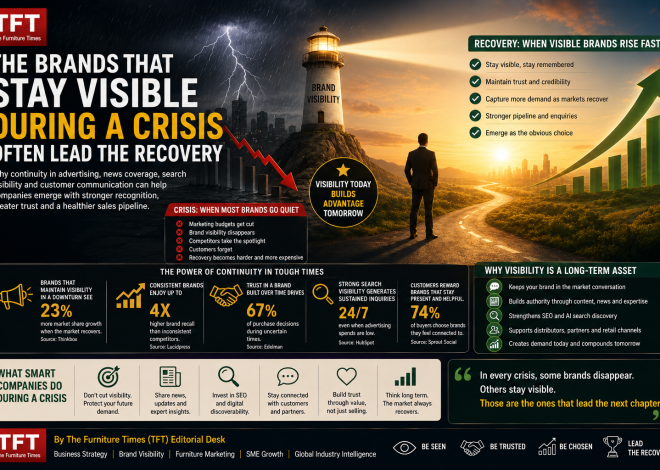
What happens when a company goes silent
When marketing activity stops, the company may not feel the consequences immediately.
Existing customers may continue ordering. Salespeople may still have active opportunities. Search rankings may remain stable temporarily. Previous campaigns may continue producing residual awareness.
This delay creates a dangerous illusion: management believes the marketing cuts had no effect.
Over time, however:
- Fewer new customers discover the business.
- Website traffic weakens.
- Branded searches decline.
- Competitors occupy more media space.
- Search authority erodes.
- Social channels appear inactive.
- Customer recall fades.
- Dealers lose confidence.
- Future enquiries become less predictable.
- Sales teams depend more heavily on discounts and cold outreach.
The company eventually develops a demand deficit.
Restarting marketing then requires greater spending because the business must rebuild lost attention, authority, content, recognition and trust.
This is the recovery debt created by prolonged invisibility.
Economic slowdowns can increase marketing’s relative value
During difficult economic periods, many businesses reduce communication simultaneously.
The market becomes quieter.
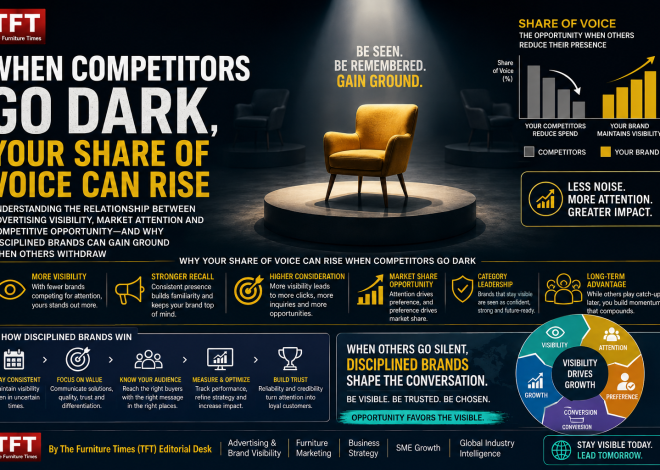
A disciplined company that continues publishing, advertising and engaging customers can achieve a stronger relative share of voice without necessarily increasing its budget.
This does not mean spending irresponsibly. It means protecting the activities that preserve future demand.
A downturn can be used to:
- Improve the website.
- Publish evergreen content.
- Secure news coverage.
- Update product data.
- Gather customer reviews.
- Build case studies.
- Strengthen local listings.
- Prepare AI-readable information.
- Support dealers.
- Enter under-served categories.
- Communicate reliability.
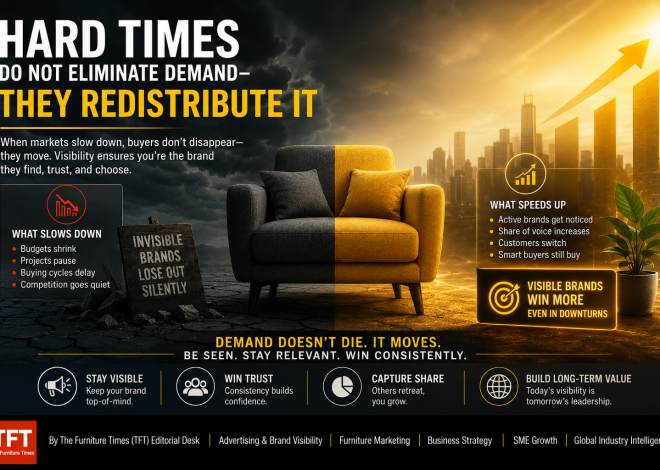
Hard times do not eliminate all demand. They redistribute it toward businesses that remain present, relevant and trusted.
Cut waste, not visibility
Marketing budgets should be reviewed. Ineffective campaigns should not be protected simply because marketing is strategically important.
Businesses should eliminate:
- Poor targeting.
- Duplicate software.
- Unused subscriptions.
- Vanity sponsorships.
- Weak agencies.
- Unmeasured campaigns.
- Low-quality content.
- Inconsistent branding.
- Irrelevant channels.
- Unqualified lead purchases.
At the same time, they should protect the assets that sustain discovery and confidence:
- Website maintenance.
- Search visibility.
- Core advertising.
- News coverage.
- Educational content.
- Customer communication.
- Reviews.
- Product information.
- Email databases.
- High-performing campaigns.
- Dealer support.
The goal is not to spend everywhere. It is to remain visible where commercial attention is created.
Smaller businesses need marketing infrastructure most
Large brands possess accumulated recognition. They have distribution networks, repeat customers, retail presence and years of publicity.
Smaller manufacturers, retailers and artisans often have none of these advantages.
They may be excellent at making products but weak at explaining:
- Who they are.
- What they make.
- Where they operate.
- Which customers they serve.
- Why they are different.
- How buyers can contact them.
- Whether they are trustworthy.
Marketing gives smaller businesses a route into the market.
Digital listings, educational content, regional news coverage and structured search platforms can reduce the dependence on large advertising budgets.
This is particularly important across the furniture ecosystem, where countless capable manufacturers, component suppliers, installers and artisans remain invisible beyond their immediate geography.
Marketing must begin with truth
Treating marketing as infrastructure does not justify exaggeration.
Infrastructure must be reliable.
The company’s marketing should accurately represent:
- Product capabilities.
- Materials.
- Manufacturing location.
- Lead times.
- Certifications.
- Warranties.
- Project experience.
- Sustainability.
- Customer service.
- Delivery coverage.
A business that creates visibility without operational reliability may accelerate disappointment.
Marketing does not replace quality. It amplifies what exists.
If the company is excellent, marketing expands trust and opportunity. If it is unreliable, marketing can spread negative experiences more quickly.
Operations and communication must therefore develop together.
A practical marketing-infrastructure model
Businesses can organize marketing into five connected layers.
Layer One: Identity
The market must understand the company’s name, purpose, categories, location and positioning.
Layer Two: Information
Customers need complete product pages, specifications, applications, prices or enquiry routes.
Layer Three: Discovery
The business needs search visibility, listings, advertising and distribution across relevant channels.
Layer Four: Authority
News coverage, expert content, certifications, case studies and industry participation establish credibility.
Layer Five: Trust
Reviews, referrals, warranties, after-sales service and transparent communication confirm performance.
Weakness in one layer reduces the value of the others.
A highly visible company with poor reviews struggles to convert. A trusted company that cannot be found struggles to grow. A well-designed website without authority may not receive traffic.
Marketing infrastructure works as a connected system.
Building future demand: a 12-month action framework
Months 1–3: Establish the foundation
- Audit the website.
- Correct business information.
- Define priority customer groups.
- Map core search categories.
- Improve product pages.
- Claim important listings.
- Create a content calendar.
- Establish measurement.
Months 4–6: Build authority
- Publish educational articles.
- Create case studies.
- Secure industry news coverage.
- Collect verified reviews.
- Develop sales resources.
- Improve technical information.
- Begin targeted advertising.
Months 7–9: Expand discovery
- Enter new search categories.
- Build regional landing pages.
- Strengthen dealer campaigns.
- Publish project stories.
- Test new audiences.
- Improve AI-readable information.
- Create strategic partnerships.
Months 10–12: Optimize and compound
- Compare lead quality.
- Expand successful campaigns.
- Remove underperforming activities.
- Repurpose strong content.
- Improve conversion paths.
- Publish an annual industry or company report.
- Plan the next year before momentum is lost.
The objective is not a burst of activity. It is a system that compounds.
TFT, FISE and FurniReviewology: story, discovery and trust
The furniture industry is a $1 trillion ecosystem, but much of it remains fragmented and difficult to search.
Manufacturers, retailers, artisans, designers, installers, suppliers and service providers need a connected visibility infrastructure.
The Furniture Times can tell their stories through news, analysis, interviews, launches and industry intelligence.
Furniture Industry Search Engine can help the world find companies, products, suppliers and capabilities through structured discovery.
FurniReviewology can help buyers evaluate trust through reviews and customer experience.
Together, the model addresses three fundamental business questions:
- Who are you?
- Can customers find you?
- Why should they trust you?
This is not simply promotion. It is infrastructure for the next generation of furniture commerce.
The businesses that build visibility today will own demand tomorrow
Marketing cannot guarantee success, but silence creates a predictable disadvantage.
Customers cannot consider a company they do not know. Search engines cannot rank information that does not exist. AI cannot recommend a business it cannot understand. Journalists cannot report stories that are never communicated. Buyers cannot trust claims they cannot verify.
The choice is not between marketing and running the business.
Marketing is part of running the business.
Advertising creates reach. Content builds knowledge. News coverage develops authority. Search visibility captures intent. Reviews strengthen trust. Together, they create the infrastructure through which future demand reaches the company.
Businesses should therefore stop asking, “Can we afford to market during uncertain times?”
The more strategic question is:
Can we afford to become invisible while customers, competitors, search engines and AI systems are deciding which businesses deserve attention?
The Furniture Times (TFT) & Furniture Industry Search Engine (FISE)
“TFT tells their story. FISE helps the world find them.”
FurniReviewology helps the world trust them.
The furniture industry ecosystem is a $1 trillion industry ecosystem.
Do not wait for demand to disappear before building visibility. Advertise, publish, get featured, become searchable—and construct the infrastructure of tomorrow’s growth today.