Malaysia Furniture Industry Health Check 2026
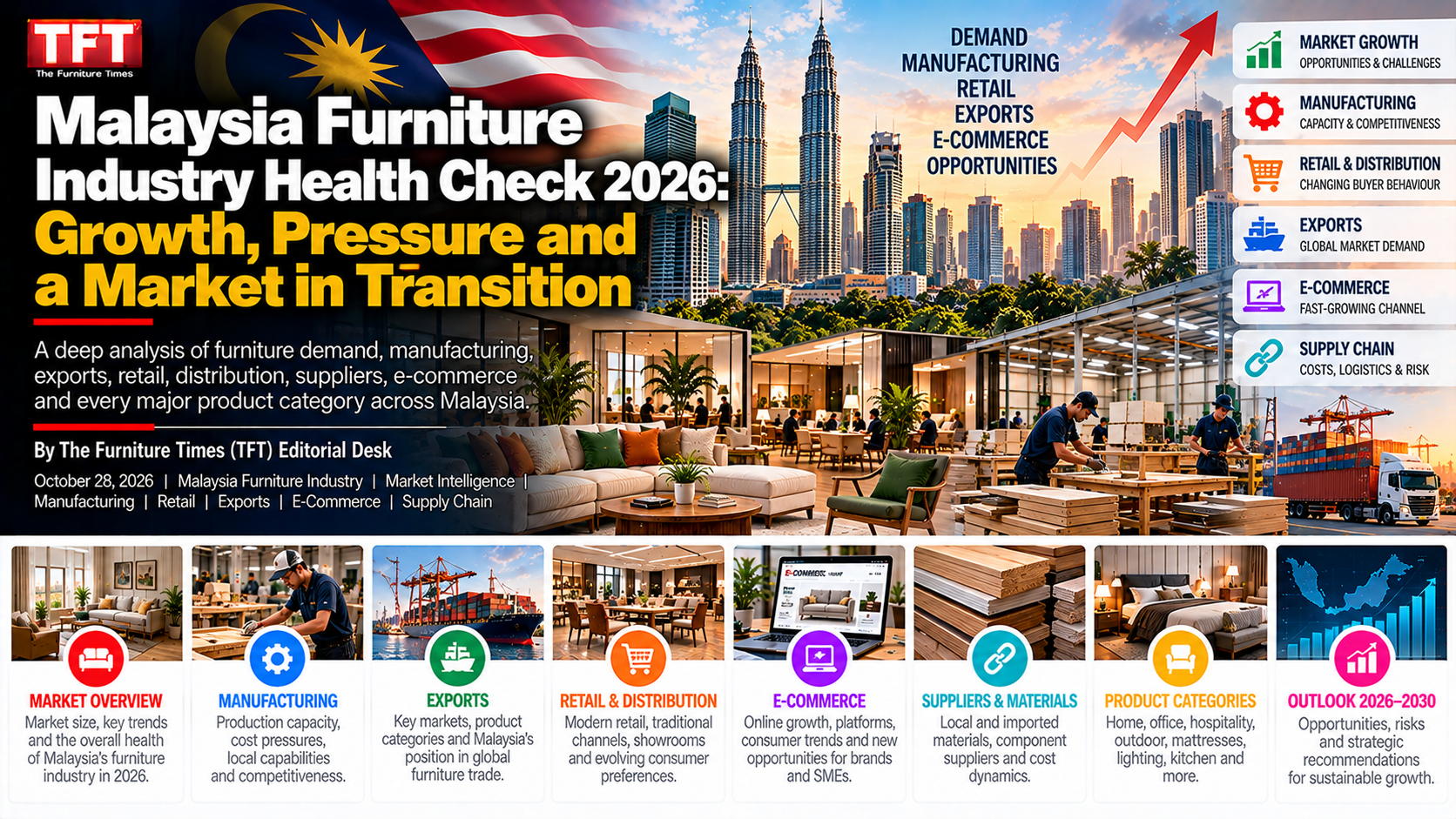
Malaysia Furniture Industry Health Check 2026: Growth, Pressure and a Market in Transition
A deep analysis of furniture demand, manufacturing, exports, retail, distribution, suppliers, e-commerce and every major product category across Malaysia
By The Furniture Times (TFT) Editorial Desk
October 28, 2026 | Malaysia Furniture Industry | Market Intelligence | Manufacturing | Retail | Exports | E-Commerce | Supply Chain
Malaysia’s furniture industry is not experiencing one uniform market condition.
Export-oriented manufacturers, neighbourhood furniture retailers, premium interior brands, online sellers, hotel-furniture suppliers, office-furniture specialists, component manufacturers and custom joinery businesses are moving through very different commercial realities.
Headline economic data appears encouraging. Malaysia’s economy expanded by 6% year-on-year in the second quarter of 2026. Manufacturing grew, construction activity remained positive, private consumption increased and wholesale and retail trade continued expanding.
Furniture-specific manufacturing data also improved later in the year: sales from furniture manufacturing grew 8.4% year-on-year in August 2026.
Yet beneath these stronger national indicators, the furniture ecosystem continues to face considerable pressure:
- Uneven domestic demand
- Reduced discretionary household spending
- Slower housing-market absorption
- Heavy promotional discounting
- Rising labour and operating costs
- Export-market concentration
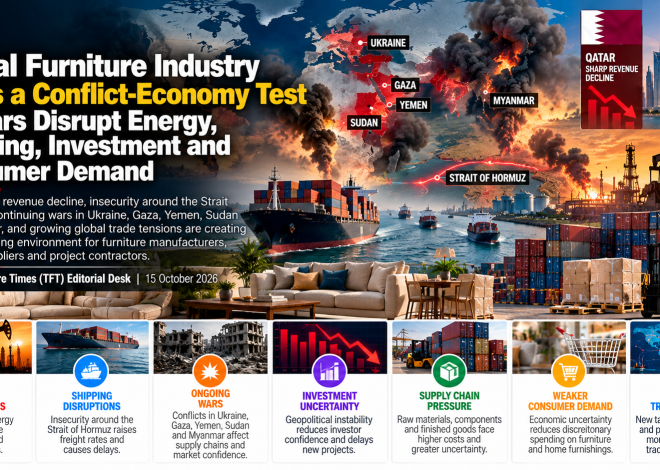
- Tariff and geopolitical uncertainty
- Strong competition from China, Vietnam and Indonesia
- Imported furniture sold through international platforms
- Rising logistics and delivery expectations
- Weak brand differentiation
- Difficulty recruiting and retaining skilled workers
- Fragmented digital visibility
- Growing pressure on independent retailers
- Shorter product cycles and changing consumer tastes
The correct diagnosis is neither “the industry is booming” nor “the industry is collapsing.”
Malaysia’s furniture industry is best described as:
Operationally active, economically important and capable of growth—but commercially uneven, margin-pressured and undergoing structural transformation.
Executive health assessment
| Industry area | October 2026 assessment | Direction |
|---|---|---|
| National economic environment | Relatively supportive | Positive |
| Furniture manufacturing output | Improving after a weak export start | Cautiously positive |
| Wooden-furniture exports | Under pressure and highly concentrated | Vulnerable |
| Metal-furniture exports | Showing stronger momentum | Positive |
| Domestic mass-market retail | Active but highly price-sensitive | Mixed |
| Premium residential furniture | Selective demand | Mixed |
| Housing-linked demand | Positive construction, weak new-launch absorption | Uneven |
| Hospitality and tourism furniture | Expanding opportunity | Positive |
| Office furniture | Selective, project-led recovery | Mixed-positive |
| Outdoor furniture | Niche but growing through hospitality and lifestyle demand | Positive |
| Custom and built-in furniture | Supported by renovation and smaller homes | Positive |
| Institutional furniture | Stable but tender-dependent | Moderate |
| Furniture e-commerce | Growing, but margin and trust challenges remain | Positive but competitive |
| Independent furniture retailers | Under intense pressure | Vulnerable |
| Raw-material and component suppliers | Active but exposed to cost and factory demand | Mixed |
| Labour availability and skills | Structural constraint | Weak |
| Automation and digitalisation | Necessary but unevenly adopted | Improving |
| Sustainability and traceability | Increasingly important for exports | Strategic priority |
| Overall industry health | Resilient but restructuring | Cautiously positive |
Malaysia’s wider economy is supporting activity
The furniture industry cannot be separated from housing, construction, consumption, tourism, employment and business investment.
Malaysia’s economy grew by 6% year-on-year in the second quarter of 2026, following growth of 5.4% in the first quarter. During the same quarter:
- Manufacturing expanded by 7.3%.
- Services grew by 5.9%.
- Construction grew by 6.5%.
- Private consumption increased by 4.8%.
- Gross fixed capital formation rose by 4.6%.
- Residential-building activity grew by 4.7%.
Malaysia’s economy expanded by 5.7% during the first half of 2026 compared with the corresponding period of 2025. dosm.gov.my
These indicators provide a healthier foundation for furniture demand than a recessionary environment would. However, total consumer spending growth does not mean every household is purchasing furniture.
Private consumption was supported particularly by restaurants and hotels, transportation, food and communication. Furniture continues to compete with essential household expenditure, vehicles, travel, electronics, education, healthcare and debt repayments.
Furniture is also a postponable purchase. Consumers can delay replacing a sofa, dining set, mattress or wardrobe when financial confidence weakens.
Therefore, Malaysia can record strong GDP growth while many furniture retailers still experience slow showroom traffic or price-sensitive enquiries.
Manufacturing health: improvement, but not universal strength
Malaysia’s total manufacturing sales reached RM185 billion in August 2026, rising 9.9% year-on-year.
Within export-oriented industries, the manufacture of furniture grew 8.4% year-on-year in August, improving from 7.9% growth in July. The broader wood, furniture, paper and printing production grouping increased 4.4% in August. dosm.gov.my
This is an encouraging indication that factory activity improved during the middle and later parts of 2026.
However, manufacturers should interpret the data carefully.
Higher manufacturing sales can reflect:
- Higher production volumes
- Improved export orders
- Price increases
- Currency effects
- Delayed shipments finally being completed
- Inventory rebuilding
- Growth among larger companies while smaller factories remain weak
It does not prove that every factory is profitable.
Furniture manufacturing margins can still be squeezed by:
- Wages
- Overtime
- Foreign-worker costs
- Raw materials
- Hardware
- Adhesives
- Finishing chemicals
- Energy
- Diesel
- Packaging
- Freight
- Compliance
- Finance costs
- Buyer pressure on prices
The Federation of Malaysian Manufacturers reported that 96% of surveyed manufacturers were affected by geopolitical tensions during 2026. The reported pressures included rising production costs and softer demand, although some businesses continued with capital expenditure and employment plans. FMM
The recovery is therefore more accurately described as an improvement in factory activity—not the elimination of structural pressure.
Export market: Malaysia remains strong, but concentration is dangerous
Malaysia is an established international furniture exporter, particularly in wooden household furniture and ready-to-assemble products.
The Malaysian Timber Council reported that wooden furniture—including bamboo and rattan furniture—remained Malaysia’s largest timber-product export category in 2025. It accounted for 43.2% of timber-product exports, with a value of RM9.28 billion.
That figure was 6.2% lower than in 2024.
Malaysia ranked ninth globally for wooden-furniture exports in 2025, according to the MTC report. FlipHTML5
The United States concentration
The United States purchased RM4.76 billion of Malaysian wooden furniture in 2025, representing 51.3% of the category’s export value.
Other major wooden-furniture destinations included:
- Singapore
- United Kingdom
- Japan
- Australia
- Canada
- Philippines
- United Arab Emirates
- Saudi Arabia
- India
The United States remains commercially essential, but dependence on one market increases exposure to:
- Tariff changes
- Consumer slowdown
- Housing-market weakness
- Retailer inventory reductions
- Exchange-rate movements
- Shipping disruption
- Buyer consolidation
- Changes in sourcing policy
The IMF has noted that Malaysia’s wood-related manufacturing sectors are among those exposed to higher effective United States tariffs under recent trade-policy changes. imf.org
Malaysia should not abandon its strongest export market. It should reduce the risk created by concentration.
Priority diversification markets include:
- ASEAN
- India
- Gulf Cooperation Council countries
- Australia and New Zealand
- United Kingdom
- European Union
- Japan and South Korea
- Canada
- Central Asia
- Selected African urban markets
A difficult first quarter followed by improvement
Malaysia’s wooden-furniture exports reportedly fell to RM1.82 billion in the first quarter of 2026, compared with RM2.37 billion during the same period of 2025. Fordaq News
Later indicators became more encouraging.
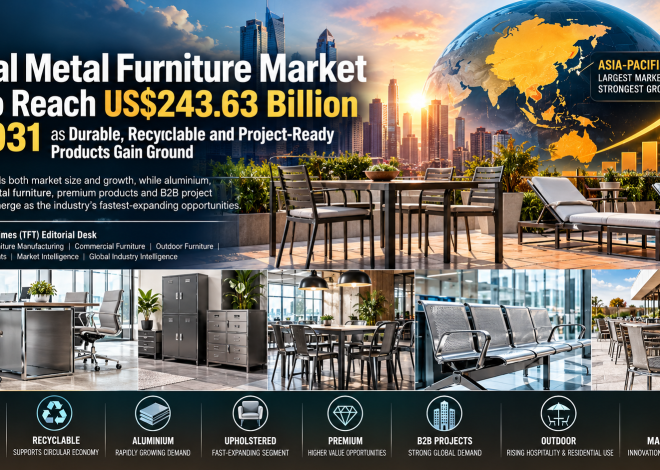
By August, furniture-manufacturing sales were growing, while MATRADE reported that metal-furniture exports increased by 27.8% during the first seven months of 2026. MATRADE
This suggests an industry with different trajectories:
- Wooden furniture remains the export foundation but faces pressure.
- Metal furniture is showing stronger recent momentum.
- Mixed-material products may offer opportunities.
- Domestic manufacturing activity improved after a difficult beginning to the year.
Manufacturing investment is continuing
MIDA recorded 30 approved furniture-and-fixtures manufacturing projects in 2025, with investment of RM482.7 million.
During the first quarter of 2026 alone, 14 furniture-and-fixtures projects were approved with total investment of RM327.4 million:
- RM138.6 million in domestic investment
- RM188.8 million in foreign investment
Wood and wood-products projects attracted a further RM389.7 million during the quarter. December 2025
This investment shows continuing confidence in Malaysia’s manufacturing base.
However, project approvals should not be confused with completed factories or guaranteed commercial success. The important questions are:
- How many approved investments are implemented?
- What level of automation will they introduce?
- Will they create original designs or only production capacity?
- Are they connected to secure buyers?
- Will they strengthen Malaysian brands?
- Can smaller suppliers participate in the investment ecosystem?
- Will they reduce dependence on low-margin contract manufacturing?
Malaysia’s future advantage cannot be built only on producing to foreign buyers’ drawings. It must include design, engineering, branding, intellectual property and direct customer relationships.
The housing market: construction is growing, but furniture conversion is delayed
Housing is one of the most important furniture-demand engines.
New homes can generate requirements for:
- Sofas
- Dining sets
- Beds
- Mattresses
- Wardrobes
- Kitchen cabinets
- Television units
- Study desks
- Curtains and blinds
- Outdoor furniture
- Storage systems
- Lighting and accessories
Malaysia’s construction sector recorded RM47.8 billion in work during the second quarter of 2026, an 8.8% year-on-year increase. Residential construction work rose by 8.7% to RM10.9 billion.
Selangor, Johor, the Federal Territories and Sarawak accounted for nearly two-thirds of total construction work. dosm.gov.my
This creates a meaningful medium-term pipeline for furniture.
But construction activity does not become furniture revenue immediately.
The demand sequence normally runs through:
- Project construction
- Completion
- Handover
- Renovation
- Interior works
- Furniture purchasing
- Occupation
A building under construction today may not generate retail-furniture sales until months or years later.
Furthermore, housing-market absorption weakened in the first half of 2026. NAPIC data reported through market analyses showed:
- 27,832 new residential units launched
- A 25.3% year-on-year decline in launches
- New-launch sales performance of 16.6%
- Residential transaction volume and value below the first half of 2025
Landed-home launch sales reportedly performed better than high-rise launches. NAPIC
This produces a mixed furniture outlook:
- Residential construction remains supportive.
- Existing-home transactions and renovation still create demand.
- Weak new-project absorption may delay mass furnishing.
- High-rise overhang limits immediate furniture conversion.
- Landed homes may support larger furnishing baskets.
- Compact urban homes increase demand for built-ins and multifunctional products.
Domestic retail: growing totals, difficult furniture economics
Malaysia’s wholesale and retail trade reached RM173 billion in August 2026, increasing 10.5% year-on-year. Retail trade rose 6.5% in value and 3.8% in volume. dosm.gov.my
Retail activity is therefore expanding at the national level.
Yet furniture retail remains more difficult than the headline suggests.
Why furniture retailers experience a different market
Furniture has several characteristics that make retail challenging:
- Low purchase frequency
- Large showroom requirements
- High warehouse costs
- Expensive delivery
- Product-damage risk
- Assembly requirements
- Significant inventory commitment
- Colour and model obsolescence
- Long customer decision cycles
- High competition from online sellers
- Heavy dependence on promotions
A retailer can receive many enquiries without producing sufficient gross profit.
The common retail pattern in 2026 is:
- Customers research online before visiting.
- They compare several sellers.
- They ask for discounts immediately.
- They expect free delivery.
- They demand fast stock availability.
- They want instalment options.
- They expect customised colours or dimensions.
- They remain cautious about quality and reviews.
The market has not disappeared. It has become harder and more expensive to convert.
The independent-retailer crisis
Independent furniture retailers face some of the industry’s greatest pressure.
Large chains benefit from:
- Greater purchasing power
- Wider product selection
- Stronger advertising
- Consumer financing
- Better-known brands
- Multiple locations
- Central warehousing
- Sophisticated e-commerce
- Negotiating power with landlords and suppliers
Online-only operators may carry lower showroom costs.
Independent retailers can become trapped between the two:
- High physical overhead
- Limited marketing budgets
- Smaller order quantities
- Weak digital visibility
- Dependence on walk-in traffic
- Insufficient customer data
- Little differentiation
- Difficulty offering fast delivery across regions
For these retailers, competing only on price is dangerous.
Their strongest opportunities are:
- Local service
- Product knowledge
- Immediate availability
- Customisation
- Personal consultation
- Installation
- Repair
- Community reputation
- Honest product guidance
- Specialised categories
- Strong post-sale support
Independent stores must become trusted local furniture specialists—not smaller versions of national chains.
Product-category health check
1. Living-room furniture
Market condition: Highly competitive and promotion-driven
Sofas remain one of the most visible furniture categories, but the segment is crowded.
Demand exists for:
- Compact apartment sofas
- L-shaped sofas
- Modular seating
- Recliners
- Sofa beds
- Easy-clean upholstery
- Pet-friendly fabrics
- Family-sized seating
- Premium leather
- Custom colours
Key problems include:
- Visual similarity across brands
- Inconsistent foam quality
- Confusion over fabric claims
- Delivery damage
- Large showroom footprints
- Discount dependency
- Online-photo colour differences
The mid-market is especially exposed. Budget sellers compete on price, while premium brands compete through design, materials and experience.
2. Bedroom furniture
Market condition: Stable but housing-dependent
Beds, wardrobes, dressing tables, bedside units and bedroom packages remain essential products.
Demand is supported by:
- Marriage and household formation
- New-home occupation
- Rental properties
- Student accommodation
- Hospitality
- Replacement buying
Challenges include:
- Bulky storage
- Installation costs
- Board-quality concerns
- Weak knock-down fittings
- Imported low-price bedroom sets
- Custom built-in wardrobe competition
Package selling can improve transaction value, but retailers must avoid hiding weak product quality behind bundled discounts.
3. Mattresses and sleep products
Market condition: Relatively resilient
Mattresses can outperform discretionary furniture because sleep quality is considered essential.
The category benefits from:
- Replacement cycles
- Health awareness
- Hospitality demand
- Branded retail
- Financing
- Trial-period marketing
- Direct-to-consumer models
However, the market is crowded with confusing claims about orthopaedic support, foam density, springs, cooling and health benefits.
Trust, transparent specifications and credible reviews are increasingly important.
4. Dining furniture
Market condition: Mixed
Traditional large dining sets face pressure from:
- Smaller homes
- Casual eating
- Kitchen islands
- Delivery meals
- Limited floor area
Demand is shifting toward:
- Four-seat sets
- Extendable tables
- Bench seating
- Compact round tables
- Mixed-material designs
- Easy-clean surfaces
- Apartment-scale products
Large formal dining sets remain relevant for landed homes, multigenerational households and premium buyers, but are less universal than before.
5. Storage furniture
Market condition: Positive
Smaller urban homes create continuing demand for:
- Modular wardrobes
- Shoe cabinets
- Kitchen storage
- Under-bed storage
- Wall-mounted systems
- Multipurpose cabinets
- Concealed storage
- Custom-fit solutions
The opportunity is strong, but safety, fixing systems and load performance must not be neglected.
6. Office furniture
Market condition: Selective recovery
Office demand has changed rather than disappeared.
Traditional rows of fixed workstations face competition from:
- Hybrid working
- Flexible offices
- Shared desks
- Collaboration areas
- Smaller corporate footprints
Growth areas include:
- Ergonomic chairs
- Height-adjustable desks
- Acoustic furniture
- Meeting pods
- Collaborative seating
- Mobile storage
- Home-office products
- Technology-integrated furniture
Demand is project-led. Suppliers need workplace-planning capability, compliance documentation, installation and after-sales support—not only products.
7. Hospitality furniture
Market condition: Strong opportunity
Tourism is becoming one of Malaysia’s most promising furniture-demand engines.
Malaysia recorded 28.8 million international visitor arrivals during January–August 2026, while domestic tourism reached 76.9 million visitors in the second quarter alone. Domestic tourism spending rose 12.3% year-on-year to RM32.8 billion during the quarter. dosm.gov.my
This supports demand from:
- Hotels
- Resorts
- Budget accommodation
- Serviced apartments
- Homestays
- Airbnb properties
- Restaurants
- Cafés
- Wellness retreats
- Tourism attractions
Hospitality furniture must satisfy higher expectations for:
- Durability
- Cleaning
- Replacement
- Fire performance where applicable
- Installation
- Project coordination
- Spare parts
- Commercial warranties
Manufacturers should treat hospitality as a specialised commercial category rather than modified residential furniture.
8. Outdoor furniture
Market condition: Niche but expanding
Malaysia’s climate creates both demand and product-performance challenges.
Growth comes from:
- Resorts
- Hotels
- Restaurants
- Rooftops
- Condominiums
- Landed homes
- Pool areas
- Wellness spaces
- Tourism developments
Products include:
- Outdoor sofas
- Dining sets
- Sun loungers
- Parasols
- Daybeds
- Benches
- Café furniture
- Balcony sets
Suppliers must address:
- UV exposure
- Humidity
- Rain
- Mould
- Corrosion
- Fabric performance
- Cushion drainage
- Wind stability
- Maintenance
The cheapest product often creates the highest lifecycle cost in commercial settings.
9. Kitchen cabinets and built-in furniture
Market condition: Positive but fragmented
Built-in furniture benefits from:
- New homes
- Renovations
- Smaller living spaces
- Demand for storage
- Interior-design packages
- Home improvement
The category includes:
- Kitchen cabinets
- Wardrobes
- Television walls
- Shoe cabinets
- Study units
- Vanity units
- Custom storage
Competition is intense among:
- Factories
- Contractors
- Interior designers
- Carpenters
- Modular-system providers
- Online lead-generation businesses
The biggest risks are inconsistent quotations, material substitution, delayed installation, weak site measurement and poor after-sales service.
10. Metal furniture
Market condition: Stronger export momentum
Metal furniture recorded meaningful export growth during 2026.
Opportunities exist in:
- Offices
- Schools
- Laboratories
- Hospitals
- Warehouses
- Restaurants
- Outdoor settings
- Public facilities
- Industrial storage
Malaysia can grow this segment through design, powder-coating quality, modularity, certified performance and mixed-material products.
11. Plastic and utility furniture
Market condition: Volume-driven
Plastic chairs, tables, shelving and utility furniture remain important for:
- Budget households
- Events
- Food businesses
- Institutions
- Outdoor use
- Temporary facilities
Competition is price-sensitive. Recycled content, durability, UV resistance and recyclability will become more commercially important.
12. Rattan and cane furniture
Market condition: Design-led niche
Rattan, cane and woven furniture benefit from:
- Tropical design
- Resort interiors
- Biophilic trends
- Artisan positioning
- Hospitality
- Export appeal
Malaysia has cultural and material credibility in this category, but it must avoid competing only through traditional designs.
The opportunity lies in combining craftsmanship with:
- Modern silhouettes
- Mixed materials
- Commercial durability
- Traceability
- Contemporary branding
- Global designer collaboration
13. Healthcare and elderly-care furniture
Market condition: Emerging opportunity
Malaysia’s ageing population and healthcare development create demand for:
- Patient-room furniture
- Assisted-living furniture
- Accessible seating
- Adjustable beds
- Treatment furniture
- Waiting-area seating
- Infection-control surfaces
This is not an ordinary residential category. Suppliers require technical knowledge, reliable materials, cleaning performance and procurement readiness.
14. Educational and institutional furniture
Market condition: Stable but tender-dependent
Schools, universities, training centres, government facilities and places of worship create continuing demand.
Success depends on:
- Tender qualification
- Pricing
- Delivery capacity
- Testing
- Documentation
- Installation
- Replacement support
The opportunity is significant but payment cycles and tender competition require careful cash-flow planning.
15. Children’s furniture
Market condition: Specialist growth category
Parents increasingly consider:
- Safety
- Non-toxic finishes
- Rounded edges
- Stability
- Storage
- Adaptability
- Educational function
Manufacturers must avoid unsupported safety claims and should recognise that children’s furniture carries distinct risk.
16. Luxury and designer furniture
Market condition: Selective but defensible
Affluent consumers, premium developments and luxury hospitality continue purchasing, but they expect:
- Originality
- Material quality
- Personalisation
- Storytelling
- White-glove delivery
- Design consultation
- Authenticity
- Strong after-sales service
This category is less driven by discounting and more by trust, exclusivity and experience.
E-commerce: important, but not automatically profitable
Malaysia’s digital economy is large and still expanding.
ICT and e-commerce contributed 23.5% of Malaysia’s GDP in 2025. E-commerce alone generated RM267.6 billion in gross value added, equivalent to 13.2% of the economy.
Total e-commerce income reached RM316.2 billion in the fourth quarter of 2025, rising 1.8% year-on-year. dosm.gov.my
These figures cover the wider economy, not furniture alone, but they demonstrate that digital purchasing is embedded in Malaysia’s commercial environment.
Why furniture e-commerce is difficult
Furniture is harder to sell online than small consumer goods because buyers want to assess:
- Scale
- Comfort
- Colour
- Texture
- Stability
- Material quality
- Finish
- Assembly
- Delivery access
Furniture e-commerce also faces:
- High last-mile costs
- Failed-delivery risk
- Damage claims
- Returns
- Complex assembly
- Lift and staircase restrictions
- Long-distance warranty support
- Misleading product photography
- Platform commissions
- Paid-advertising costs
- Cross-border seller competition
The winning model is omnichannel
The strongest furniture businesses will connect:
- Website
- Search
- Marketplace
- Social commerce
- Messaging
- Physical showroom
- Warehouse availability
- Delivery scheduling
- Customer reviews
- After-sales service
The customer should be able to discover online, inspect physically, purchase through the preferred channel and receive consistent support.
Furniture retailers should not treat e-commerce as merely uploading product photographs to a marketplace.
A serious digital operation requires:
- Accurate dimensions
- Material specifications
- Colour information
- Stock status
- Delivery coverage
- Assembly terms
- Warranty details
- Real product photographs
- Video
- Reviews
- Clear return conditions
- Responsive customer service
Foreign e-commerce platforms and the local-industry concern
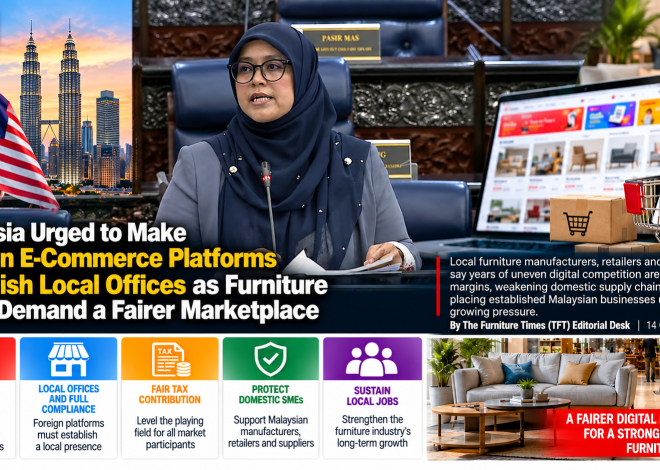
Malaysia’s manufacturers and retailers increasingly compete against overseas sellers that may access the local consumer without carrying equivalent local overhead.
Local businesses pay for:
- Premises
- Employees
- Warehouses
- Taxes
- Compliance
- Delivery
- Customer support
- Product returns
- Local advertising
Cross-border sellers may offer lower prices while the customer carries more of the risk relating to delivery, quality, installation and returns.
The solution is not to oppose digital trade. It is to create fairer competition through:
- Consumer-protection enforcement
- Seller identification
- Local representation
- Tax compliance
- Product-safety responsibility
- Transparent return policies
- Platform accountability
- Clear country-of-origin information
Malaysia also needs to help local furniture SMEs become digitally competitive rather than leaving them dependent on foreign platforms.
Distributors and wholesalers: the middle of the market is changing
Distributors traditionally connect factories with retailers, project buyers and regional markets.
Their role remains important, but it is changing.
Manufacturers can now reach customers directly through digital channels. Retailers can import directly. Marketplaces connect overseas factories with Malaysian consumers.
A distributor must therefore provide more than stock transfer.
The modern furniture distributor should offer:
- Local inventory
- Faster delivery
- Product training
- Credit support
- Regional sales coverage
- Warranty handling
- Spare parts
- Installation
- Market intelligence
- Digital catalogues
- Dealer leads
- Consolidated ordering
Distributors that merely add a margin without reducing risk or creating value will face increasing pressure.
Supplier health: hidden pressure behind finished furniture
Furniture production depends on a wide supporting ecosystem:
- Timber
- Rubberwood
- Plywood
- MDF and particleboard
- Veneer
- Metal
- Aluminium
- Foam
- Fabric
- Leather
- Synthetic rattan
- Glass
- Stone
- Plastics
- Hardware
- Adhesives
- Coatings
- Packaging
- Machinery
- Tools
- Logistics
Suppliers face the same uncertainty as manufacturers.
When factories receive irregular orders, suppliers must balance:
- Inventory
- Import lead times
- Currency risk
- Customer credit
- Minimum order quantities
- Storage costs
- Obsolescence
A component shortage can delay an entire shipment. A change in foam, hardware or board specification can create warranty and compliance problems.
Manufacturers must move from informal purchasing toward supplier-control systems involving:
- Approved specifications
- Traceability
- Incoming inspection
- Alternative-supplier validation
- Batch records
- Change approval
- Performance monitoring
The finished product is only as dependable as its least-controlled component.
Labour remains a structural problem
Malaysia’s furniture sector has historically depended on labour-intensive processes and foreign workers.
The industry requires:
- Carpenters
- Machine operators
- Upholsterers
- Sewers
- Welders
- Sprayers
- Finishers
- Quality inspectors
- Product engineers
- Installers
- Drivers
- Designers
- Digital marketers
- E-commerce personnel
The challenge is no longer only worker availability. It is also productivity, skill, retention and succession.
Businesses that rely entirely on low-cost labour risk losing competitiveness to more automated factories.
Malaysia needs:
- CNC adoption
- Digital production planning
- Automated cutting
- Better finishing systems
- Barcode tracking
- Enterprise software
- Product engineering
- Technical training
- Furniture-design education
- Maintenance skills
- Supervisor development
Automation should not mean removing every human role. It should reduce repetitive work, improve consistency and allow workers to move into higher-value activities.
Malaysia’s strongest competitive advantages
Malaysia still has meaningful furniture-industry strengths.
Established manufacturing clusters
Muar, Johor, Selangor and other production centres contain networks of factories, component suppliers, logistics providers and skilled industry participants.
Rubberwood experience
Malaysia has extensive knowledge of rubberwood processing and manufacturing, although availability, cost and sustainable sourcing require continued attention.
Export capability
Factories understand international buyers, containerisation, quality expectations, documentation and large-volume production.
English-language capability
This supports global sales, design collaboration and international trade.
Port and logistics infrastructure
Malaysia is well connected to regional and global markets.
International exhibitions
The Malaysian International Furniture Fair and Export Furniture Exhibition help connect local manufacturers with global buyers.
Mixed-material capability
Malaysia can combine timber, metal, upholstery, plastics, rattan, stone and other materials.
Regional position
Malaysia can serve ASEAN, the Gulf, India, Australia, East Asia and other markets.
These advantages are valuable, but they are not permanent. Competitors are improving rapidly.
The industry’s deepest weaknesses
1. Contract-manufacturing dependence
Many factories remain invisible behind overseas buyers’ brands.
They produce successfully but do not own the customer relationship.
2. Weak brand development
Malaysia exports significant furniture value, but relatively few Malaysian brands possess strong international consumer recognition.
3. Limited original design
Competing through copied or buyer-supplied designs restricts margins and differentiation.
4. Price-based competition
Discounting can increase volume while weakening profitability.
5. Market concentration
Dependence on the United States increases vulnerability.
6. Fragmented digital identity
Many companies have outdated websites, incomplete profiles and weak search visibility.
7. Insufficient customer-review infrastructure
Buyers find it difficult to verify unfamiliar manufacturers, retailers and suppliers.
8. Skills shortage
The industry needs engineers, designers, technicians, marketers and digital-commerce talent—not only production labour.
9. Weak data
Malaysia lacks sufficiently detailed, accessible and frequently updated furniture-market intelligence across every segment.
10. Limited after-sales systems
Warranty, replacement components, repairs and customer communication remain inconsistent across the market.
Outlook for the next 12 months
Base case
Malaysia’s furniture industry should remain active, with moderate improvement supported by:
- National economic growth
- Manufacturing activity
- Construction
- Tourism
- Residential completions
- Renovation
- E-commerce
- Hospitality projects
- Institutional demand
However, growth will remain uneven.
Main upside opportunities
- Tourism and hotel refurbishment
- Outdoor and resort furniture
- Built-in storage
- Compact urban furniture
- Mattresses
- Ergonomic office furniture
- Metal furniture
- Healthcare and elderly-care products
- Custom furniture
- Middle East exports
- ASEAN distribution
- Direct-to-consumer brands
- Repair, refurbishment and circular furniture
Main downside risks
- Global conflict
- Energy-price shocks
- Shipping disruption
- Higher United States tariffs
- Weak American housing demand
- Currency volatility
- Labour costs
- Foreign-worker shortages
- Aggressive imports
- Housing overhang
- Consumer debt
- Higher finance costs
- Excessive retail discounting
- Factory underutilisation
Strategic recommendations
For manufacturers
- Reduce dependence on one export market.
- Develop original products and brand assets.
- Measure profitability by model and customer.
- Invest in automation with a clear return.
- Strengthen component traceability.
- Build hospitality and project capabilities.
- Protect intellectual property.
- Improve product photography and documentation.
- Create spare-parts and repair systems.
- Develop direct market intelligence.
For retailers
- Stop relying entirely on walk-in traffic.
- Build accurate searchable product catalogues.
- Collect genuine customer reviews.
- Use customer-relationship systems.
- Differentiate through service and knowledge.
- Track showroom conversion.
- Reduce dead inventory.
- Integrate online and offline sales.
- Publish local project and company news.
- Compete on lifecycle value, not only discounts.
For distributors
- Maintain intelligent local stock.
- Offer installation and warranty support.
- Give dealers digital tools.
- Provide product and market training.
- Use sales data to forecast demand.
- Reduce delivery and replacement delays.
For suppliers
- Improve technical documentation.
- Maintain traceable specifications.
- Help manufacturers with testing and compliance.
- Develop lower-impact materials.
- Monitor customer credit carefully.
- Avoid unapproved component substitutions.
For policymakers and associations
- Support automation and digitalisation.
- Improve skilled-worker training.
- Promote Malaysian brands internationally.
- Develop market-diversification programmes.
- Strengthen local e-commerce fairness.
- Support product testing and certification.
- Improve industry-level data.
- Connect SMEs to hospitality, housing and government procurement.
- Encourage design ownership and intellectual property.
- Strengthen sustainable timber and material traceability.
TFT assessment: resilience is not the same as security
Malaysia’s furniture industry has survived economic cycles, currency movements, labour shortages, pandemic disruption and changing global demand.
Its resilience is real.
But resilience should not become an excuse to delay transformation.
The country’s future position will depend on whether it can move:
- From contract production to design ownership
- From price competition to value creation
- From buyer dependence to market diversification
- From labour intensity to intelligent manufacturing
- From isolated companies to a connected ecosystem
- From invisible factories to searchable businesses
- From occasional transactions to trusted brands
- From product sales to lifecycle service
Malaysia does not need to abandon its manufacturing foundation. It needs to build more value on top of it.
The Furniture Times, FISE and FurniReviewology
Malaysia’s furniture ecosystem includes manufacturers, retailers, exporters, importers, distributors, designers, component suppliers, machinery companies, logistics providers, installers, repairers, artisans and technology businesses.
Many remain difficult to discover and verify.
The Furniture Times (TFT) brings furniture businesses and industry developments into the global spotlight.
Furniture Industry Search Engine (FISE) helps buyers, suppliers and partners search and connect across the furniture ecosystem.
FurniReviewology helps create the trust layer through structured reputation and customer experience.
TFT tells their story.
FISE helps the world find them.
FurniReviewology helps the world trust them.
The furniture industry ecosystem is a $1 trillion industry ecosystem, and Malaysia has the manufacturing experience, trade capability and entrepreneurial base to remain an important participant.
But the next stage will not be won by production capacity alone.
It will be won through data, design, quality, technology, market intelligence, global visibility and trust.
Final verdict
Malaysia’s furniture industry is not in critical condition—but neither is it comfortably secure.
The patient is active. Manufacturing indicators are improving. Construction, tourism, investment and digital commerce are creating opportunity.
At the same time, export concentration, higher costs, labour dependency, weak branding, price competition and disruptive cross-border commerce remain serious structural risks.
TFT Malaysia Furniture Industry Health Rating
Current condition: 6.5 out of 10 — resilient, active and capable of growth, but under significant restructuring pressure.
The companies most likely to succeed will be those that:
- Understand their real customers
- Control costs without disappearing
- Build brands instead of relying only on discounts
- Develop differentiated products
- Diversify markets
- Digitise their operations
- Publish credible information
- Strengthen reviews and reputation
- Invest in design and skills
- Become searchable and trustworthy
Malaysia can remain a global furniture-manufacturing centre.
The larger opportunity is to become something more:
A design-led, technology-enabled, sustainable and globally recognised furniture-industry ecosystem.
If you are not searchable, you do not exist.