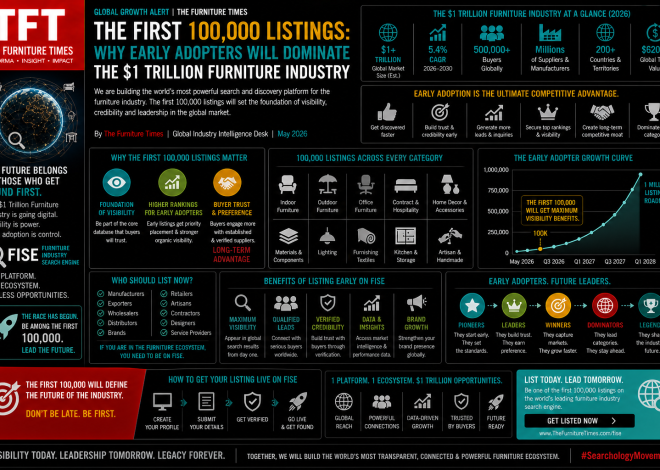
Global Furniture Ecosystem: Latest News, Trends & Market Intelligence (2026)
By The Furniture Times | Global Industry Intelligence Desk | May 2026
The global furniture industry in 2026 is entering one of the most transformational periods in its history.
From tariffs and geopolitical tensions to AI-driven supply chains, sustainability pressures, live commerce, and digital infrastructure—the entire ecosystem is being reshaped simultaneously.
The furniture industry is no longer just about manufacturing furniture.
It is now about controlling visibility, supply chains, communication, data, and customer experience.
1. Global Trade Tensions Continue to Reshape Furniture Supply Chains
One of the biggest stories affecting the furniture ecosystem in 2026 is the continued restructuring of global trade routes and sourcing strategies.
New tariff uncertainties, U.S.-China trade tensions, and geopolitical fragmentation are forcing furniture brands, importers, and manufacturers to rethink how and where they produce.
The industry is witnessing:
Nearshoring
Regional manufacturing hubs
Supply diversification
“China Plus One” strategies
Countries such as Vietnam, Malaysia, and India are benefiting as companies reduce overdependence on single-country sourcing models.
2. Vietnam Continues Rising as a Furniture Export Powerhouse
Vietnam remains one of the biggest growth stories in the global furniture industry.
Vietnam’s wood and furniture exports crossed the US$17 billion mark, driven by:
manufacturing expansion
automation
sustainable production
strong U.S. demand
The country is shifting from low-cost OEM manufacturing toward design-driven and value-added production.
Vietnam is no longer just competing on price.
It is competing on capability.
3. AI Is Quietly Reshaping the Industry
Artificial Intelligence is now influencing:
sourcing decisions
procurement
inventory forecasting
logistics optimization
pricing analysis
Global supply chains are increasingly adopting AI-powered decision systems to manage tariffs, optimize routes, and improve forecasting accuracy.
The furniture industry is moving toward:
AI-assisted sourcing
AI-driven RFQs
smart manufacturing
predictive inventory systems
4. Supply Chain Costs & Logistics Pressures Continue
Furniture companies globally continue facing:
higher shipping costs
labor shortages
rising material prices
warehousing pressures
The sector is under pressure from inflation, unstable logistics systems, and ongoing geopolitical uncertainty.
Materials including:
wood
steel
foam
fabrics
hardware
have experienced continued cost volatility.
5. Sustainability Is Becoming a Competitive Requirement
Sustainability is no longer optional.
Governments, buyers, and corporate procurement teams increasingly demand:
certified sourcing
lower carbon footprints
recyclable materials
transparent supply chains
Furniture companies are now investing in:
green manufacturing
FSC-certified sourcing
low-emission materials
sustainable packaging
Sustainability is becoming part of market access itself.
6. Digital Commerce Is Accelerating
Furniture e-commerce continues expanding globally despite economic pressures.
Consumers increasingly expect:
online visualization
3D previews
fast quotations
omnichannel experiences
Digital-first furniture buying behavior is becoming mainstream, especially among younger buyers.
At the same time, the industry is moving beyond static websites toward:
live commerce
interactive product showcases
connected communication systems
This creates major opportunities for ecosystem platforms such as:
Furniture Industry Search Engine – (FISE)
FISE Connect
FISE.live
7. The Industry Is Shifting from Fragmentation to Infrastructure
Historically, the furniture industry operated through fragmented systems:
exhibitions
WhatsApp chats
referrals
disconnected suppliers
But 2026 is accelerating a transition toward:
searchable ecosystems
structured communication
lead-driven infrastructure
industry intelligence systems
The industry is moving from informal networks to organized digital infrastructure.
8. The Rise of the “Furniture Industry Operating System”
The next major evolution of the furniture ecosystem is no longer just marketplaces.
The future is:
search infrastructure
communication infrastructure
live commerce infrastructure
knowledge infrastructure
professional networking
industry intelligence
This is where ecosystem platforms are beginning to emerge as:
industry operating systems
digital trade infrastructure
connected ecosystems
9. The New Competitive Advantage
In the past, success depended on:
factories
pricing
production scale
Now, competitive advantage increasingly depends on:
discoverability
speed
visibility
communication
data
trust
Visibility is becoming the new currency of global trade.
TFT Industry Insight
The furniture industry in 2026 is not collapsing.
It is reorganizing.
And the winners of the next decade will likely be those who control:
industry intelligence
search visibility
ecosystem infrastructure
communication systems
digital trust
Final Thought
The future of the furniture industry will not be built only by factories.
It will be built by systems that connect factories, buyers, professionals, intelligence, and commerce together.

Related Posts
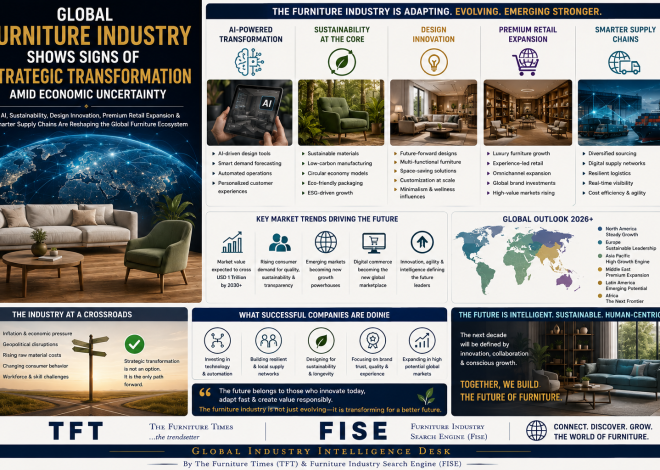
Global Furniture Industry Shows Signs of Strategic Transformation Amid Economic Uncertainty
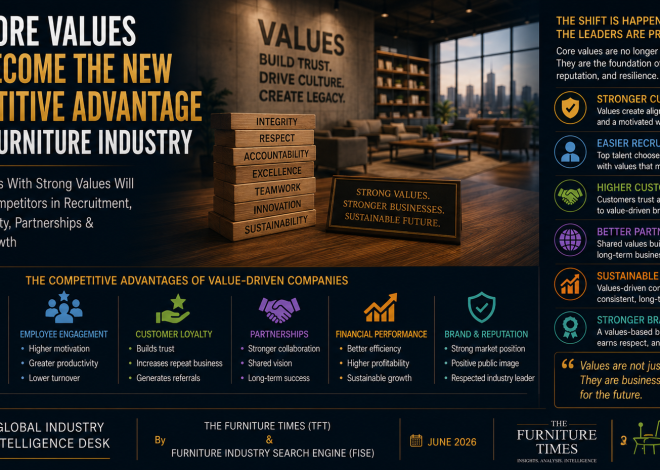
Why Core Values Will Become the New Competitive Advantage in the Furniture Industry