The Future of Smart Lighting: How AI Is Transforming Homes and Buildings
By The Furniture Times (TFT) | Indoor & Outdoor Lighting | Global Lighting Industry & Market
Artificial Intelligence Is Redefining the Way the World Experiences Light
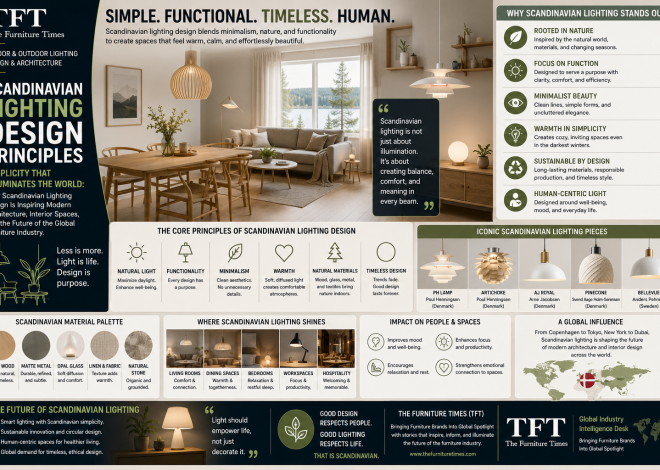
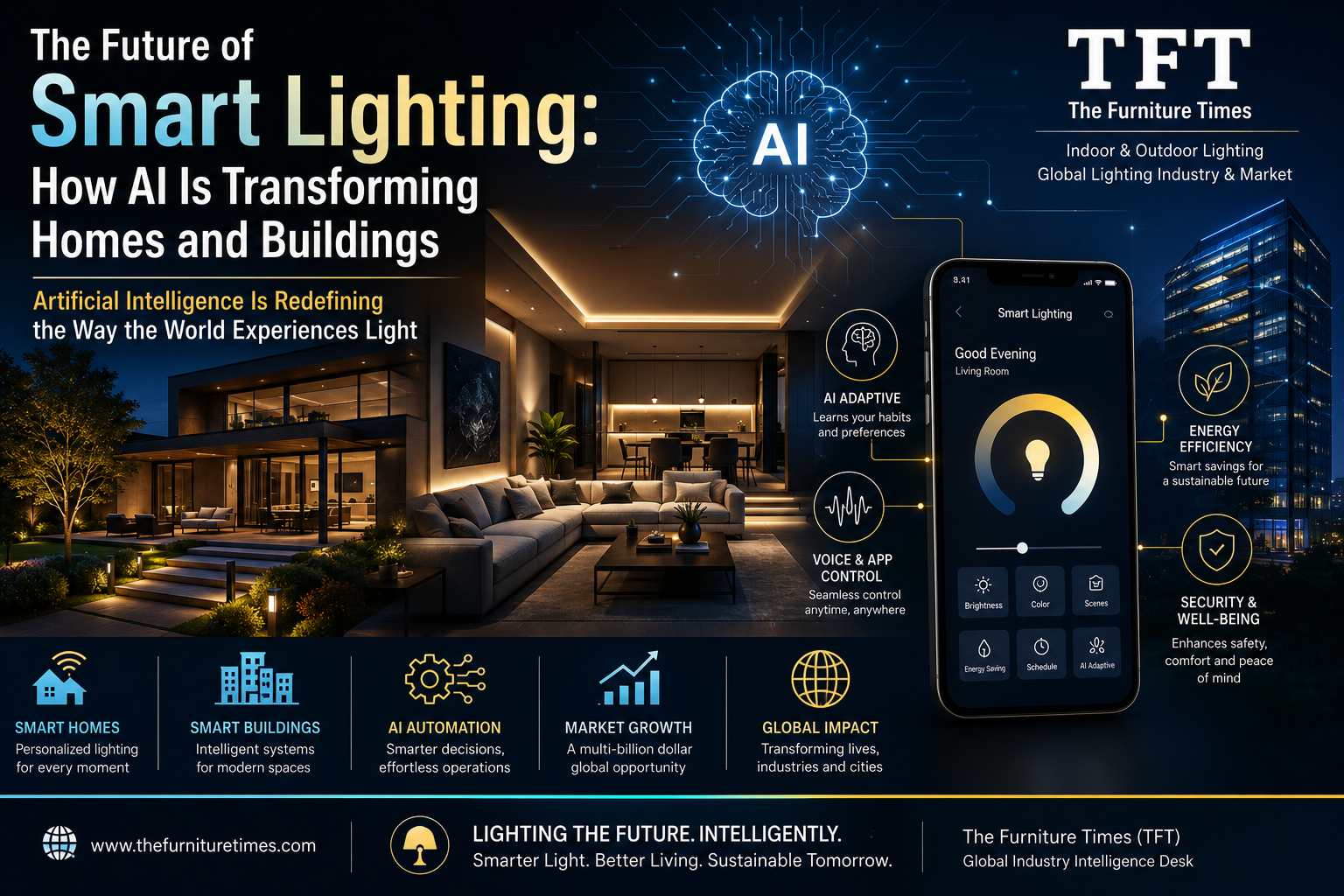
Lighting is no longer just about illuminating a room. It has become one of the most intelligent and rapidly evolving technologies within modern homes, commercial buildings, hospitality spaces, healthcare facilities, educational institutions, and smart cities. As Artificial Intelligence (AI), the Internet of Things (IoT), cloud computing, sensors, and machine learning continue to reshape the built environment, lighting systems are transforming into intelligent ecosystems capable of learning, adapting, communicating, and optimizing themselves in real time.
The future of lighting is no longer measured by brightness or energy efficiency alone. It is measured by how intelligently lighting interacts with people, buildings, businesses, and the environment. AI-powered lighting is creating healthier homes, more productive workplaces, safer public spaces, and significantly more sustainable buildings.
For manufacturers, architects, interior designers, furniture retailers, property developers, facility managers, technology companies, and governments, smart lighting is rapidly becoming a strategic investment rather than a luxury.
From Traditional Lighting to Intelligent Ecosystems
The lighting industry has undergone several technological revolutions over the past century—from incandescent bulbs to fluorescent lamps, then to LEDs. Today, the next revolution is driven by Artificial Intelligence.
Unlike traditional lighting systems that operate with simple on/off switches or timers, AI-powered lighting continuously collects and analyzes data from its surroundings. These intelligent systems can automatically adjust brightness, color temperature, lighting schedules, and energy consumption based on occupancy, natural daylight, weather conditions, user preferences, and even individual behavioral patterns.
Instead of merely responding to commands, modern smart lighting systems anticipate user needs, making buildings more responsive, efficient, and comfortable.
AI Is Making Homes Truly Intelligent
The concept of the smart home has evolved dramatically. Lighting now serves as one of the central control systems within connected homes, integrating seamlessly with smart speakers, security systems, entertainment devices, climate control, and home automation platforms.
AI-powered residential lighting can:
- Learn family routines and daily habits.
- Automatically illuminate pathways during nighttime movement.
- Adjust brightness according to sunrise and sunset.
- Create personalized lighting scenes for reading, dining, entertainment, or relaxation.
- Reduce energy consumption by switching off unused lights.
- Synchronize with smart curtains and HVAC systems.
- Enhance home security by simulating occupancy when residents are away.
- Respond to voice commands through digital assistants.
- Integrate with wearable devices to support health and wellness.
- Optimize electricity usage during peak tariff periods.
As homes become more connected, lighting is emerging as one of the most valuable components of intelligent living.
Commercial Buildings Are Becoming Smarter
Office buildings are among the biggest beneficiaries of AI-powered lighting.
Modern workplaces are increasingly designed around employee wellness, productivity, and operational efficiency. Intelligent lighting systems contribute significantly by adapting to occupancy levels, daylight availability, meeting schedules, and employee preferences.
AI systems can automatically:
- Dim lights in unoccupied workspaces.
- Increase brightness during collaborative meetings.
- Optimize natural daylight harvesting.
- Reduce glare on computer screens.
- Lower electricity costs.
- Support flexible hybrid working environments.
- Monitor building occupancy.
- Predict maintenance before failures occur.
- Improve emergency evacuation lighting.
- Generate valuable operational data for facility managers.
These capabilities reduce operational expenses while enhancing employee satisfaction and workplace performance.
Human-Centric Lighting Is Improving Health
One of the most exciting developments in AI-powered lighting is human-centric lighting, a technology designed to support the body’s natural circadian rhythm.
Traditional lighting often ignores biological needs. AI-driven lighting systems continuously adjust color temperature and brightness throughout the day to mimic natural sunlight.
Morning lighting becomes cooler and brighter to promote alertness and productivity. Evening lighting shifts toward warmer tones that encourage relaxation and prepare the body for sleep.
Applications include:
- Residential homes.
- Hospitals.
- Senior living communities.
- Schools.
- Corporate offices.
- Hotels.
- Wellness centers.
- Airports.
- Universities.
Research increasingly suggests that properly designed lighting environments can positively influence sleep quality, concentration, mood, cognitive performance, and overall well-being.
AI Is Revolutionizing Hospitality
Hotels, resorts, luxury apartments, and serviced residences are rapidly adopting intelligent lighting technologies to enhance guest experiences.
Guests increasingly expect personalized environments where lighting automatically adapts to their preferences.
AI-powered hospitality lighting can:
- Welcome guests with customized room settings.
- Adjust lighting according to occupancy.
- Create mood-based experiences.
- Integrate with entertainment systems.
- Improve energy efficiency in vacant rooms.
- Enhance conference facilities.
- Support event lighting automation.
- Improve guest satisfaction while reducing operational costs.
Luxury hospitality brands increasingly consider intelligent lighting part of their premium customer experience strategy.
Retail Lighting Becomes Data-Driven
Retailers have long understood that lighting influences purchasing decisions.
Artificial Intelligence is making retail lighting significantly more sophisticated.
Smart lighting systems now analyze customer movement, shopping behavior, dwell times, and product engagement.
Retailers can automatically:
- Highlight promotional products.
- Optimize seasonal displays.
- Improve visual merchandising.
- Increase customer comfort.
- Reduce electricity expenses.
- Adapt store lighting throughout the day.
- Generate customer analytics for merchandising decisions.
The integration of AI transforms lighting from a visual design element into a powerful business intelligence tool.
AI Supports Sustainable Buildings
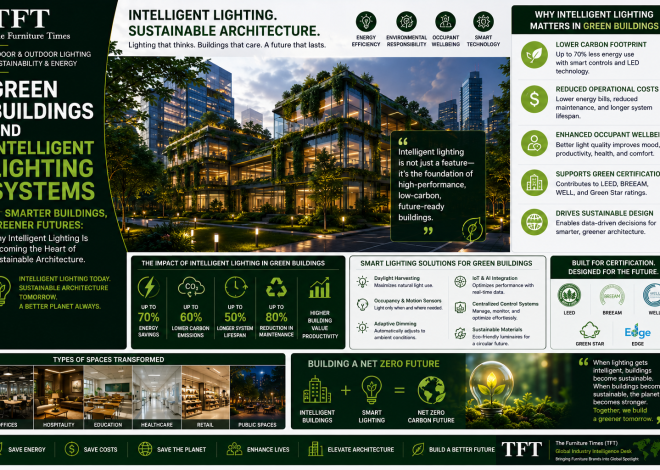
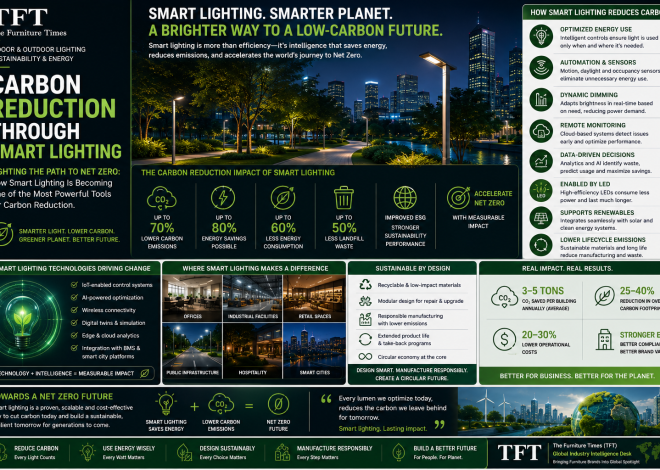
Buildings account for a significant share of global energy consumption, making lighting one of the most important opportunities for reducing environmental impact.
AI-powered lighting contributes to sustainability by:
- Reducing unnecessary electricity use.
- Automatically switching off unused lighting.
- Optimizing daylight utilization.
- Supporting renewable energy integration.
- Extending fixture lifespan.
- Lowering maintenance requirements.
- Reducing carbon emissions.
- Improving green building certification performance.
As governments strengthen environmental regulations and corporations pursue ESG (Environmental, Social, and Governance) goals, intelligent lighting is becoming an essential component of sustainable building strategies.
Smart Cities Depend on Intelligent Lighting Networks
Street lighting is evolving into one of the most important components of smart city infrastructure.
Modern AI-powered street lighting systems can communicate with traffic management platforms, emergency services, environmental sensors, surveillance systems, and public safety networks.
Smart poles equipped with AI technology can support:
- Traffic optimization.
- Air quality monitoring.
- Weather sensing.
- Electric vehicle charging.
- Public Wi-Fi.
- Security cameras.
- Emergency communication.
- Predictive maintenance.
- Energy optimization.
Rather than simply illuminating roads, future lighting infrastructure will function as intelligent digital platforms supporting entire urban ecosystems.
Predictive Maintenance Saves Millions
One of AI’s most valuable contributions is predictive maintenance.
Instead of waiting for lighting failures, AI continuously monitors fixture performance, temperature, voltage, operating hours, and system health.
Facility managers receive alerts before failures occur, reducing downtime, maintenance costs, and service interruptions.
Large commercial campuses, airports, hospitals, manufacturing plants, universities, and municipalities benefit significantly from these capabilities.
Manufacturers Are Reinventing Their Business Models
Lighting manufacturers are no longer selling only physical products.
Increasingly, they are delivering integrated technology solutions that combine:
- Intelligent luminaires.
- AI software.
- Cloud platforms.
- Remote monitoring.
- Data analytics.
- Digital maintenance services.
- Building integration.
- Energy management.
- Cybersecurity.
- Subscription-based software platforms.
This shift creates recurring revenue opportunities while providing customers with continuous value beyond the initial hardware purchase.
Opportunities for the Furniture and Interior Design Industry
The rapid evolution of AI-powered lighting presents significant opportunities for the furniture industry.
Furniture manufacturers, interior designers, architects, kitchen specialists, office planners, hospitality consultants, and workspace designers increasingly collaborate with lighting professionals to create integrated living and working environments.
Modern furniture collections now incorporate:
- Built-in LED systems.
- Wireless charging.
- Smart bedside lighting.
- Cabinet illumination.
- Wardrobe lighting.
- Kitchen task lighting.
- Office workstation lighting.
- Decorative ambient lighting.
- Sensor-controlled storage lighting.
- Connected home ecosystems.
The convergence of furniture, technology, architecture, and lighting is creating entirely new product categories and customer experiences.
Challenges That Must Be Addressed
Despite enormous opportunities, several challenges remain.
Manufacturers and technology providers must continue addressing:
- Cybersecurity risks.
- Data privacy concerns.
- System interoperability.
- Installation complexity.
- Standardization.
- Initial investment costs.
- Consumer education.
- Software updates.
- Long-term compatibility.
- Skilled workforce development.
Industry collaboration will be essential to ensure widespread adoption and seamless integration across different platforms and technologies.
The Future Is Intelligent, Adaptive, and Connected
Artificial Intelligence is transforming lighting from a passive utility into an intelligent digital infrastructure that improves how people live, work, travel, shop, heal, and interact with the built environment.
The future of smart lighting extends far beyond energy savings. It is about creating healthier buildings, smarter cities, more productive workplaces, safer communities, enhanced customer experiences, and sustainable infrastructure capable of supporting future generations.
For manufacturers, architects, property developers, technology companies, furniture businesses, hospitality operators, governments, and investors, AI-powered lighting represents one of the most significant growth opportunities of the coming decade.
As buildings become increasingly connected and data-driven, intelligent lighting will not simply illuminate spaces—it will illuminate the future of modern living.