
The 90-Day Downturn Marketing Plan for Furniture Businesses
A practical strategy for auditing spending, protecting visibility, strengthening customer retention and preparing for market recovery
By The Furniture Times (TFT) Editorial Desk | Furniture Marketing | Business Downturn | SME Strategy | Customer Retention | Brand Visibility | AI Discovery | Market Recovery
When furniture sales slow, marketing is often one of the first budgets businesses reduce.
The reasoning appears straightforward: revenue is weakening, cash must be conserved and expenses that do not produce immediate orders should be suspended.
But eliminating marketing indiscriminately can create a second crisis.
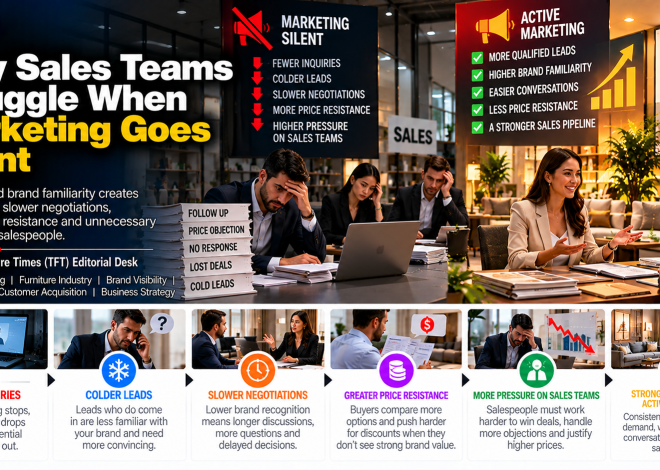
The business becomes less visible. Enquiries decline further. Existing customers receive no communication. Sales teams face colder prospects. Search engines encounter outdated information. AI discovery systems find fewer current signals. Competitors that continue publishing and communicating begin occupying the attention the retreating company has surrendered.
A downturn requires financial discipline—but discipline is not the same as disappearance.
The objective of this 90-day plan is to help furniture manufacturers, retailers, wholesalers, suppliers, designers, installers and service providers:
- Identify and stop wasteful spending
- Protect essential brand visibility
- Generate demand more efficiently
- Reconnect with previous customers
- Improve product and company information
- Build stronger review and reputation signals
- Support sales teams with better evidence
- Prepare campaigns and capacity for recovery
The programme is divided into three stages:
| Period | Primary objective |
|---|---|
| Days 1–30 | Audit, stabilise and prioritise |
| Days 31–60 | Rebuild visibility, trust and retention |
| Days 61–90 | Convert demand and prepare for recovery |
This is not a promise of instant sales. It is a practical operating framework for ensuring that a difficult quarter does not become prolonged commercial invisibility.
Before Day One: Establish the Real Situation
Marketing decisions should begin with financial and commercial facts, not fear.
Management must first understand:
- Current cash position
- Monthly fixed expenses
- Outstanding receivables
- Inventory value and ageing
- Gross margin by category
- Sales pipeline
- Average sales cycle
- Lead sources
- Enquiry-to-order conversion
- Customer-retention rate
- Marketing commitments
- Immediate market risks
A business cannot decide how much marketing to protect if it does not know how long its cash will last.
Calculate cash runway
A simplified calculation is:\[ \text{Cash Runway in Months} = \frac{\text{Available Cash}}{\text{Average Monthly Net Cash Burn}} \]
This calculation must be interpreted carefully. It should consider receivables that are realistically collectible, essential payments, inventory purchases, taxes, salaries and liabilities—not merely the bank balance.
Separate a sales slowdown from a business-model problem
A decline in sales can result from many conditions:
- Weak market demand
- Poor location
- Reduced housing transactions
- Delayed construction projects
- Lower consumer confidence
- Excessive prices
- Uncompetitive products
- Weak follow-up
- Limited stock availability
- Poor reviews
- Outdated marketing
- Inconsistent service
- New competitors
- Changed customer demographics
Marketing cannot solve every structural problem.
If customers are enquiring but not buying, the issue may involve price, product, trust, availability or sales execution. If nobody is enquiring, visibility or market demand may be the larger problem. If customers buy once but never return, retention and experience require attention.
The 90-day programme must address the actual constraint.
The Budget Principle: Cut Waste, Protect Discoverability
Before beginning the weekly actions, classify every marketing expense.
| Category | Meaning | Decision |
|---|---|---|
| Essential visibility | Keeps the business searchable, understandable and contactable | Protect |
| Proven demand generation | Produces qualified enquiries or attributable sales | Maintain or optimise |
| Customer retention | Supports repeat business, referrals and relationships | Strengthen |
| Experimental | Promising but not sufficiently tested | Limit and measure |
| Vanity activity | Looks impressive but lacks a defined commercial purpose | Pause |
| Ineffective spending | Consistently produces poor-quality or no results | Stop |
Protect the minimum viable marketing budget
Even under pressure, the business should try to preserve funding for:
- Website and domain continuity
- Business email
- Local search listings
- Essential product-page updates
- Customer database and communication
- Review monitoring
- High-intent advertising where proven
- Basic photography and product information
- Genuine company news
- Sales follow-up systems
- Reputation management
Removing these foundations may save a small amount today while increasing the cost of rebuilding visibility later.
PHASE ONE: DAYS 1–30
Audit, Stabilise and Prioritise
The first month is not about producing more marketing. It is about making better decisions.
Week 1: Audit every marketing expense
Create a complete list of spending from the previous six to twelve months.
Include:
- Search advertising
- Social-media advertising
- Marketplace fees
- Agency retainers
- Website maintenance
- Email platforms
- Content production
- Photography and video
- Influencer fees
- Events and exhibitions
- Sponsorships
- Print materials
- Directories
- Lead-generation platforms
- Review tools
- Discount campaigns
- Sales commissions
- Software subscriptions
For every expense, record:
| Field | Question |
|---|---|
| Cost | What did the activity cost? |
| Objective | What was it expected to achieve? |
| Audience | Who was targeted? |
| Result | What enquiries, sales or other value resulted? |
| Lead quality | Did the audience match the target customer? |
| Conversion | How many leads became orders? |
| Margin | Were the resulting sales profitable? |
| Strategic value | Did it strengthen reputation, data or relationships? |
| Decision | Protect, improve, reduce, pause or eliminate? |
Do not judge everything only by immediate sales
Some marketing works close to the transaction. Other activities influence trust earlier.
A customer may:
- Discover the company through news.
- Visit its website.
- Read reviews.
- Follow it on social media.
- Request a quotation two months later.
- Purchase after visiting the showroom.
If the business credits only the final interaction, it may cut the activity that created initial awareness.
However, “brand awareness” should not become an excuse for unaccountable spending. Every activity requires a clear purpose and relevant indicators.
Week 2: Audit the company’s digital storefront
A furniture company’s digital presence often becomes outdated gradually.
Conduct a page-by-page inspection of:
- Website
- Google Business Profile
- Maps listings
- Social profiles
- Marketplace stores
- Industry directories
- Review platforms
- Product catalogues
- Downloadable PDFs
- Messaging profiles
Correct critical information
Verify:
- Company name
- Address
- Telephone and messaging numbers
- Opening hours
- Website address
- Product categories
- Delivery areas
- Service areas
- Showroom location
- Factory location
- Warranty information
- Business status
Conflicting information weakens confidence and can reduce discovery.
Remove or label unavailable products
Nothing frustrates a buyer faster than discovering that a promoted product has been unavailable for months.
Each product should clearly indicate:
- In stock
- Limited stock
- Made to order
- Pre-order
- Discontinued
- Available in selected colours
- Estimated production or delivery time
Accurate availability can improve lead quality and reduce wasted sales effort.
Week 3: Analyse customers, enquiries and lost sales
Export or compile the previous twelve months of:
- Enquiries
- Quotations
- Orders
- Lost sales
- Repeat customers
- Complaints
- Returns
- Review comments
Segment customers by:
- Residential buyers
- Hospitality businesses
- Offices
- Developers
- Designers and architects
- Retailers
- Distributors
- Government or institutions
- Export customers
- Online buyers
Then ask:
- Which segments are still buying?
- Which products remain resilient?
- Which enquiries have declined most?
- Which customers produce acceptable margins?
- Why are quotations being lost?
- Which customers are likely to purchase again?
- Where is the company overdependent?
Create a lost-sale register
Sales teams frequently record an order only when it is won. This leaves management blind to the causes of lost opportunities.
Record:
- Customer
- Product
- Quotation value
- Date
- Competitor, when known
- Reason lost
- Follow-up opportunity
- Expected future requirement
Use consistent categories:
- Price
- Lead time
- Product unavailable
- Specification mismatch
- Quality concern
- Weak warranty
- Poor review or reputation concern
- No response from customer
- Internal follow-up failure
- Purchase postponed
- Competitor relationship
Patterns become visible only when information is structured.
Week 4: Define the 90-day priority market
Trying to market everything to everyone wastes scarce resources.
Choose:
- One to three priority customer segments
- Three to five priority product categories
- One primary geographic area
- One clear commercial objective
Example for a retailer
- Audience: homeowners within delivery range
- Products: ready-stock dining sets, sofas and mattresses
- Geography: local metropolitan area
- Objective: convert aged inventory without destroying brand value
Example for a manufacturer
- Audience: regional furniture retailers and project buyers
- Products: repeatable high-margin models
- Geography: domestic and two established export markets
- Objective: increase qualified distributor enquiries
Example for a hospitality supplier
- Audience: hotels, resorts, restaurants and property managers
- Products: repairable commercial seating and outdoor furniture
- Geography: markets with active tourism projects
- Objective: secure replacement and refurbishment projects
At the end of Day 30, management should know what it will promote, to whom, where and why.
PHASE TWO: DAYS 31–60
Rebuild Visibility, Trust and Customer Retention
The second month turns the audit into market-facing action.
Week 5: Repair the product information
Furniture is difficult to compare when product data is incomplete.
Every priority product should include:
- Product name
- Model number
- Category
- Dimensions
- Materials
- Finish and colour options
- Upholstery details
- Weight or load information where applicable
- Indoor or outdoor suitability
- Assembly requirements
- Lead time
- Warranty
- Maintenance guidance
- Delivery area
- Commercial or residential use
- Country of manufacture, when relevant
- Clear enquiry action
For commercial buyers, add:
- Minimum order quantity
- Customisation availability
- Packaging method
- Testing or certification information
- Replacement-part availability
- Production capacity
- Project references
The goal is to reduce uncertainty before the buyer contacts the company.
Week 6: Reconnect with previous customers
Existing customers are one of the lowest-cost sources of potential revenue, referrals and market insight.
Divide the customer database into:
- Recent customers
- Lapsed customers
- High-value customers
- Commercial accounts
- Customers with unresolved complaints
- Customers likely to need replacements
- Customers who requested quotations but did not buy
Create helpful reasons to reconnect
Avoid sending the same discount message to everyone.
Possible messages include:
- Maintenance guidance
- Warranty reminders
- Replacement-component availability
- New collections
- Ready-stock announcements
- Refurbishment services
- Commercial-replacement programmes
- Project-planning support
- Limited genuine clearance
- Request for product feedback
A simple customer-reconnection message
We are reviewing how our furniture is performing after delivery and wanted to check whether you require maintenance guidance, replacement components or assistance with any new space or project.
The purpose is to reopen a relationship, not force an immediate sale.
Week 7: Build a trust campaign
Customers become more risk-conscious during a downturn. Marketing must answer the question:
“Why should I trust this business with limited money?”
Publish evidence addressing:
- Years of experience
- Manufacturing capability
- Materials used
- Product testing
- Completed projects
- Customer reviews
- Warranty process
- Delivery and installation
- Repair support
- Team expertise
- Certifications
- Complaint handling
Trust assets to create
- One detailed company profile
- Two project case studies
- Five useful customer reviews
- One warranty explainer
- One delivery-and-installation guide
- One product-quality article
- One leadership or expert commentary piece
Claims should be precise.
“We provide the best furniture” is weak.
“We provide replaceable components for selected commercial seating ranges and maintain specification records for repeat project orders” is specific and verifiable.
Week 8: Publish genuine business news
Furniture companies often possess publishable developments but fail to recognise them as news.
Possible stories include:
- New product launch
- Factory investment
- Export order
- Sustainability initiative
- Certification achievement
- Project completion
- New showroom
- Digital catalogue
- Partnership
- Technology adoption
- Workforce training
- Repair programme
- Material innovation
- Community involvement
- Business anniversary
A useful news article should explain:
- What happened
- Who is involved
- Why it matters
- Which market it serves
- What customers or the industry gain
- What happens next
Independent media coverage can support search visibility, brand authority, sales credibility and AI-era discovery.
Advertising says the company is active. News creates a record showing how it is active.
PHASE THREE: DAYS 61–90
Convert Demand and Prepare for Recovery
The final month focuses on targeted acquisition, sales enablement and readiness for improving conditions.
Week 9: Launch one focused campaign
Do not launch ten disconnected offers.
Select one campaign with:
- One target audience
- One customer problem
- One product or solution
- One geographic market
- One primary call to action
- One defined budget
- One measurement system
Campaign possibilities
- Ready-stock office furniture for fast business relocation
- Durable outdoor furniture for hotels preparing for peak season
- Compact furniture for apartments
- Replacement dining chairs for restaurants
- Refurbishment for commercial furniture
- Clearance of discontinued products
- Distributor recruitment in one export market
- Furniture packages for new rental properties
Protect margin
Before promoting the offer, calculate:\[ \text{Campaign Contribution} = \text{Revenue} – \text{Product Cost} – \text{Delivery Cost} – \text{Campaign Cost} – \text{Other Variable Costs} \]
A campaign producing orders but negative contribution is not a successful campaign.
Week 10: Equip the sales team
Marketing activity fails when sales follow-up is slow or inconsistent.
Provide salespeople with:
- Current price lists
- Product specifications
- Stock availability
- Delivery timelines
- Comparison sheets
- Case studies
- Reviews
- Warranty information
- Frequently asked questions
- Objection responses
- Follow-up schedule
Establish response standards
Examples:
- Acknowledge digital enquiries promptly
- Qualify the requirement before quoting
- Issue standard quotations within an agreed period
- Schedule follow-up dates
- Record the outcome
- Escalate unusual technical questions
- Close inactive leads properly
Speed matters, but accuracy matters too. A rapid quotation with incorrect dimensions, stock status or delivery terms can destroy trust.
Week 11: Strengthen reviews and reputation
Reviews help buyers evaluate risk.
Create a structured process:
- Ask after successful delivery or project completion.
- Direct the customer to an appropriate review platform.
- Encourage specific, honest feedback.
- Respond professionally.
- Record recurring themes.
- Correct operational problems revealed by reviews.
Useful reviews may describe:
- Product quality
- Comfort
- Delivery
- Installation
- Communication
- Durability
- Warranty support
- Value
- Commercial performance
Do not purchase fabricated reviews or pressure customers to leave only positive feedback. False reputation signals can produce legal, ethical and platform risks.
Critical reviews can be commercially useful when they reveal problems the business can correct.
Week 12: Build the recovery-ready campaign library
Do not wait for demand to recover before preparing.
Create reusable assets for:
- New-product launches
- Project announcements
- Trade exhibitions
- Dealer recruitment
- Export outreach
- Hospitality procurement
- Seasonal campaigns
- Replacement programmes
- Customer-retention campaigns
Prepare:
- Photography
- Product data
- Landing pages
- Email templates
- Advertising creative
- Media releases
- Sales presentations
- Short videos
- Frequently asked questions
- Quotation templates
When demand improves, the business should be ready to act immediately.
Days 85–90: Review, decide and reallocate
At the end of the programme, compare results against the Day One baseline.
Marketing indicators
- Website enquiries
- Calls and messages
- Local-search actions
- Product-page visits
- Advertisement conversions
- Email responses
- News coverage
- Review growth
- Branded searches
Sales indicators
- Qualified leads
- Quotations issued
- Quotation-to-order conversion
- Average order value
- Sales-cycle length
- Repeat sales
- Referral sales
- Gross-margin contribution
Customer indicators
- Retention
- Complaints resolved
- Review sentiment
- Response time
- Delivery performance
- Warranty requests
- Repeat enquiries
Financial indicators
- Cash burn
- Inventory turnover
- Receivables
- Campaign contribution
- Marketing cost per qualified lead
- Marketing cost per acquired customer
Classify every activity again:
- Scale
- Maintain
- Improve
- Retest
- Stop
The next quarter’s marketing budget should be built from evidence gathered during these 90 days.
Recommended Budget Allocation
The precise allocation depends on the company’s business model, but a constrained furniture SME could use the following framework:
| Activity | Suggested share |
|---|---|
| Customer retention and reactivation | 20% |
| Local search and website essentials | 20% |
| High-intent advertising | 20% |
| Product information and visual assets | 15% |
| News, authority and expert content | 10% |
| Reviews and reputation | 10% |
| Controlled experimentation | 5% |
| Total | 100% |
A manufacturer seeking distributors will require a different mix from a local retailer. A project supplier may prioritise case studies and direct outreach, while an e-commerce business may require more product feeds, conversion optimisation and high-intent advertising.
The framework should guide judgment—not replace it.
The 90-Day Content Calendar
| Week | Primary content | Commercial purpose |
|---|---|---|
| 1 | Business and market update | Establish relevance |
| 2 | Product buying guide | Capture informed demand |
| 3 | Customer problem explainer | Address objections |
| 4 | Priority-category showcase | Focus attention |
| 5 | Detailed product specifications | Reduce uncertainty |
| 6 | Customer follow-up campaign | Generate repeat opportunities |
| 7 | Project case study | Build trust |
| 8 | Genuine company news | Strengthen authority |
| 9 | Focused campaign launch | Generate qualified leads |
| 10 | FAQ or comparison guide | Support sales conversion |
| 11 | Customer-review feature | Reinforce reputation |
| 12 | Recovery outlook or new initiative | Prepare the market |
| 13 | Results review and next-quarter update | Demonstrate continuity |
One useful article supported by accurate product data is more valuable than a large volume of generic posts.
Marketing by Furniture Business Type
Manufacturers
Prioritise:
- Production capabilities
- Product specifications
- Quality controls
- Certifications
- Minimum orders
- Customisation
- Export markets
- Factory capacity
- Dealer and distributor recruitment
Retailers
Prioritise:
- Local search
- Current stock
- Delivery coverage
- Product comparisons
- Reviews
- Showroom information
- Financing options
- After-sales service
Suppliers and component companies
Prioritise:
- Technical data
- Material consistency
- Lead times
- Compatibility
- Compliance documents
- Batch traceability
- Application guidance
- Manufacturer relationships
Hospitality and project-furniture specialists
Prioritise:
- Completed projects
- Commercial durability
- Delivery coordination
- Installation
- Replacement programmes
- Maintenance
- Lifecycle cost
- Project-management capability
Designers and custom workshops
Prioritise:
- Portfolio quality
- Design process
- Material selection
- Craftsmanship
- Timelines
- Budget transparency
- Client reviews
- Before-and-after projects
Mistakes to Avoid During the 90 Days
1. Cutting all marketing equally
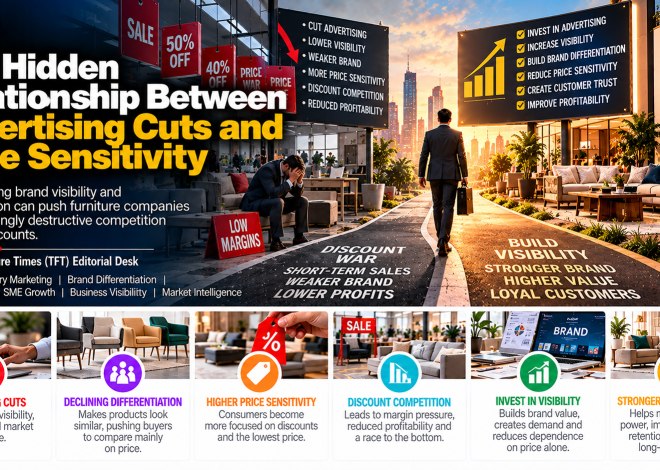
Activities differ in importance and performance. Across-the-board reductions can damage essential visibility while preserving inefficient spending.
2. Depending entirely on discounts
Discounting may move selected stock, but permanent promotions weaken margins and customer expectations.
3. Publishing generic AI content without expertise
High-volume, interchangeable articles do little to demonstrate real capability. Add company experience, original data, technical knowledge and specific examples.
4. Ignoring previous customers
A company may spend heavily acquiring strangers while failing to contact people who already know it.
5. Generating leads without improving follow-up
More enquiries will not solve slow quotations, inaccurate information or inconsistent communication.
6. Hiding business difficulties through misleading claims
Credibility requires honest information. Do not claim unavailable stock, unrealistic delivery times or unsupported quality.
7. Measuring social engagement as if it were revenue
Likes can support awareness, but management must also track enquiries, orders, margins and retention.
8. Waiting for the economy to recover
Preparation must occur before demand returns. Businesses that begin only after recovery becomes obvious may arrive late.
The Furniture Visibility and Trust Checklist
By Day 90, the business should be able to answer “yes” to the following:
Discoverability
- Our business information is accurate.
- Our priority products can be found online.
- Customers can contact us easily.
- Search engines understand our categories and location.
- Our website is active and usable on mobile devices.
Product clarity
- Priority products have complete specifications.
- Stock and lead times are accurate.
- Warranty and delivery terms are clear.
- Commercial buyers can obtain technical information.
- Discontinued products are labelled or removed.
Trust
- We show genuine customer reviews.
- We publish real project or customer evidence.
- We explain our experience and capabilities.
- We respond professionally to complaints.
- Our claims can be verified.
Sales readiness
- Every lead has an owner.
- Follow-up dates are recorded.
- Quotations are issued within an agreed period.
- Lost-sale reasons are analysed.
- Sales staff have current information.
Recovery preparedness
- Campaign assets are ready.
- Priority customer segments are defined.
- Profitable products are identified.
- Supplier and inventory risks are monitored.
- Marketing decisions are based on evidence.
The Role of TFT, FISE and FurniReviewology
The furniture industry is a $1 trillion global ecosystem, yet many capable businesses remain invisible outside their immediate networks.
During a downturn, this invisibility becomes even more dangerous.
The Furniture Times can help companies communicate genuine news, expertise, investments, projects, innovations and market developments.
Furniture Industry Search Engine can help structure the discovery of manufacturers, suppliers, retailers, designers, service providers and other furniture-industry participants through FurnitureIndustrySearchEngine.com.
FurniReviewology can help create a stronger trust layer through customer experience, business reputation and industry reviews.
TFT tells their story. FISE helps the world find them. FurniReviewology helps the world trust them.
Businesses should not wait until conditions improve before creating their digital identities. Recovery rewards companies that are already searchable, credible and prepared.
Final Word: Do Not Let a Slow Quarter Erase the Brand
A downturn demands restraint, but prolonged silence carries a cost.
When a company stops communicating:
- Customers assume less activity
- Competitors occupy search results
- Reviews become outdated
- Sales teams lose brand support
- Product information deteriorates
- AI systems receive fewer current signals
- Restarting becomes more expensive
The strongest 90-day strategy is not the loudest campaign. It is a disciplined combination of:
- Financial truth
- Focused visibility
- Useful product information
- Customer retention
- Credible news
- Genuine reviews
- Efficient conversion
- Recovery preparation
Cut what does not work. Protect what keeps the business discoverable. Strengthen relationships that already exist. Prepare before demand returns.
The businesses that remain visible, trusted and ready during difficult months will enter the recovery with an advantage.