From Empty Apartment to Guest-Ready Property: The Complete Furnishing Economy
Mapping Every Supplier and Service Involved in Preparing a Rental for Its First Booking
By The Furniture Times (TFT) Editorial Desk | Airbnb & Homestay Furniture | Furniture Procurement | Short-Term Rentals | Property Management | Installation | Hospitality Operations | Global Industry Intelligence
An empty apartment may appear close to completion once the walls are painted, the kitchen is installed and the keys are handed to the owner. For the short-term-rental industry, however, that moment is only the beginning.
Before the first guest can arrive, the property must pass through an extensive chain of planning, purchasing, delivery, installation, testing, cleaning, styling, photography and digital preparation. Beds must be assembled. Mattresses must be protected. Curtains must block light. Internet service must work. Kitchen equipment must be counted. Safety devices must be installed. Photographs must accurately represent the finished property.
Behind this transformation is a largely hidden economy connecting furniture manufacturers, interior designers, procurement specialists, logistics companies, installers, cleaners, photographers, technology providers, repair contractors and property managers.
Each guest-ready apartment is therefore not merely a furnished interior. It is the final product of a multidisciplinary supply chain.
With Airbnb reporting more than 9 million active listings, over 5.5 million hosts and more than 2.5 billion cumulative guest arrivals as of May 2026, the scale of the ecosystem supporting furnished rentals is considerable. Airbnb corporate facts
Yet the economic activity generated before a property receives its first booking is rarely measured as one market. Furniture sales may be recorded under retail or manufacturing. Photography belongs to the creative economy. Cleaning appears under facility services. Smart locks belong to property technology. Linen, appliances, logistics and maintenance are counted elsewhere.
Viewed together, these activities form the complete short-term-rental furnishing economy.
A guest-ready property is different from a furnished property
A furnished apartment may contain all the principal furniture expected in a home. It might have a bed, sofa, dining table, wardrobe and television.
A guest-ready property must do much more.
It must be safe, clean, functional, accurately represented and operationally prepared for people who have never visited it before. Guests must be able to enter without confusion, find essential items, operate appliances, sleep comfortably and contact someone if a problem occurs.
The difference lies in operational detail.
A bedroom containing a bed is furnished. A guest-ready bedroom has a stable bed frame, suitable mattress, mattress protector, clean linen, pillows, bedside lighting, accessible charging, blackout treatment, luggage space and a system for replacing every item between stays.
A kitchen containing cabinets is furnished. A guest-ready kitchen has cookware, utensils, plates, glasses, waste bins, cleaning materials and an inventory appropriate for the advertised number of guests.
A living room containing a sofa is furnished. A guest-ready living room has seating capacity that matches occupancy, durable surfaces, working lighting, usable power outlets, clear circulation and furniture capable of surviving repeated use.
This distinction explains why preparing a rental requires far more participants than a conventional furniture purchase.
The complete guest-readiness chain
The journey from vacant property to active listing can be divided into several interconnected stages.
| Stage | Primary participants | Principal output |
|---|---|---|
| Feasibility and positioning | Owner, developer, consultant, property manager | Target guest, budget and rental strategy |
| Design and specification | Interior designer, space planner, operator | Layout, furniture schedule and material specification |
| Product sourcing | Procurement company, manufacturers, distributors | Approved products, prices and delivery dates |
| Production and customisation | Furniture factories, joinery companies, textile suppliers | Project-specific furniture and furnishings |
| Logistics | Freight forwarders, warehouses, delivery teams | Products received, inspected and delivered |
| Installation | Furniture installers, electricians, curtain installers | Operationally assembled apartment |
| Equipping | Appliance, kitchenware, linen and amenity suppliers | Complete guest inventory |
| Safety and technology | Technicians, locksmiths, internet providers | Secure, connected and compliant property |
| Cleaning and staging | Cleaning team, stylist, property manager | Presentation-ready accommodation |
| Photography and listing | Photographer, copywriter, revenue manager | Bookable digital listing |
| Final inspection | Owner, operator, quality-control team | Approval for first guest |
A delay or failure at any stage can prevent the property from earning revenue.
Stage One: Defining the rental before buying furniture
The furnishing process should begin with the rental strategy, not a shopping list.
Owners first need to decide who the property is intended to serve. A compact apartment for solo business travellers requires a different specification from a coastal house for families. A premium villa designed for celebrations has different operational risks from a quiet urban residence targeting month-long stays.
Important questions include:
- Who is the target guest?
- What is the realistic occupancy?
- What nightly-rate category is being pursued?
- Will the property accept children or pets?
- Is the demand primarily short-term, medium-term or seasonal?
- Will the owner use the property personally?
- Who will manage operations?
- What regulations and building rules apply?
- How quickly must the property open?
- What is the furnishing and setup budget?
- Which amenities are common among competing properties?
This stage may involve property managers, revenue consultants, designers, developers and local regulatory specialists.
The target market affects almost every later decision. Business travellers may value a proper desk, reliable Wi-Fi and self-check-in. Families may need additional dining capacity, laundry equipment and child-conscious furniture. Longer-stay guests require more storage and functional cooking facilities. Leisure travellers may prioritise outdoor seating, attractive social spaces and local character.
Airbnb’s own 2025 guidance identified Wi-Fi, kitchens, air conditioning or heating, washing facilities, self-check-in and televisions among the features frequently sought by guests. Dedicated workspaces, suitable lighting and ergonomic support were also highlighted for remote workers. Airbnb Resource Center
The correct furnishing plan should therefore be based on expected guest behaviour rather than personal preference alone.
Stage Two: Surveying and measuring the property
Before products are ordered, the apartment must be measured accurately.
This apparently simple stage prevents some of the most expensive furnishing mistakes. A sofa may fit the living room but fail to pass through the lift. A headboard may cover electrical outlets. A dining chair may prevent a door from opening. Curtains may be ordered to an incorrect ceiling height.
Professional surveyors, interior designers or installers should record:
- Room dimensions
- Ceiling heights
- Door and corridor widths
- Lift dimensions and load limits
- Staircase restrictions
- Window dimensions
- Electrical outlets
- Lighting points
- Air-conditioning units
- Plumbing and drainage locations
- Built-in cabinet depths
- Balcony access
- Fire exits
- Service access
- Loading and parking restrictions
Access measurements are as important as room measurements. Large furniture that cannot enter the building can cause delays, return charges or expensive on-site modifications.
Accurate drawings also allow suppliers to plan modular products that can be assembled inside the apartment.
Stage Three: Interior design and space planning
The designer translates the rental strategy into a functional interior.
In short-term accommodation, space planning must balance occupancy, circulation, maintenance, photography and comfort. Increasing the number of beds may improve the apparent revenue model, but overcrowding can reduce guest satisfaction and accelerate wear.
A good plan considers how guests will move through the apartment with luggage, where they will eat, how they will work and where they will place personal belongings.
Entry area
The entrance establishes the first physical impression of the property. It may require:
- A console or key shelf
- Shoe storage
- Wall hooks
- A mirror
- Luggage space
- Durable flooring
- Accessible lighting
- Guest instructions
- A discreet cleaning-supply cabinet
Living area
The living space must support the advertised number of occupants. Designers evaluate seating capacity, table size, television visibility, lighting, power access and the possibility of a sofa bed.
Furniture should preserve circulation even when every sleeping position is in use.
Bedrooms
Bedroom planning includes the bed size, access on each side, bedside tables, charging points, wardrobe capacity, blackout treatment and luggage management.
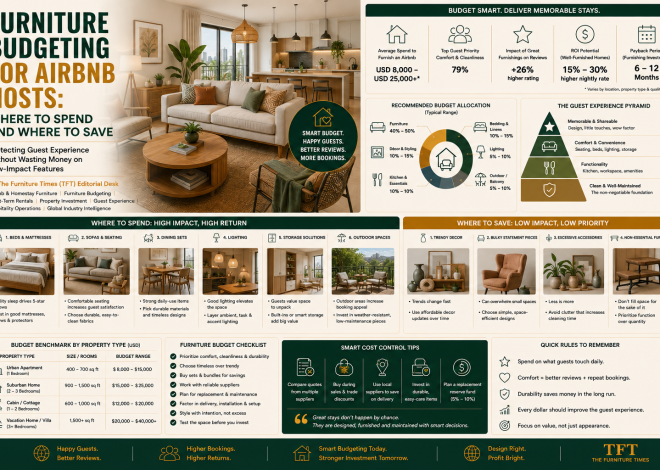
The mattress and bed structure usually deserve more budget than decorative accessories because sleep quality is central to the stay.
Dining and workspace
In small apartments, one table may serve as the dining surface and workspace. It should still provide sufficient depth, stability, lighting and electrical access.
Balconies and outdoor areas
Outdoor furniture must suit local weather, exposure and building rules. Materials selected for an enclosed balcony may fail quickly beside a pool or coast. Wind conditions must also be considered, particularly for lightweight chairs, umbrellas and decorative objects.
Stage Four: Creating the furniture, fixtures and equipment schedule
Once the layout is approved, the project team creates an itemised specification commonly described as an FF&E schedule—furniture, fixtures and equipment.
For a rental property, the schedule may extend beyond furniture to include operating supplies and decorative accessories.
Each entry should identify:
- Item description
- Product code
- Dimensions
- Material
- Colour or finish
- Quantity
- Supplier
- Unit price
- Delivery time
- Warranty
- Assembly requirement
- Installation location
- Replacement availability
- Approved alternative
A well-prepared schedule reduces forgotten products, duplicate ordering and confusion during installation.
It also creates a record for future replacements. If a chair is damaged after six months, the property manager should be able to identify the model without searching through photographs or old messages.
The furniture manufacturers behind the rental
Manufacturers form the physical foundation of the guest-ready economy.
Depending on the project, furniture may be purchased from retailers, wholesalers, contract-furniture suppliers or custom factories. Larger portfolios often use a combination: standard retail products for rapidly replaceable items and custom manufacturing for beds, headboards, wardrobes or space-saving joinery.
Bedroom furniture suppliers
These companies provide:
- Bed frames
- Headboards
- Bedside tables
- Wardrobes
- Dressing tables
- Luggage benches
- Drawer units
- Mirrors
Beds require particular attention because weak central supports, loose joints and noisy frames can create frequent maintenance complaints.
Mattress and sleep-product manufacturers
The sleep package may include:
- Mattresses
- Mattress protectors
- Pillow protectors
- Pillows
- Duvets
- Mattress toppers
- Bed linen
- Spare linen sets
Mattress selection should balance comfort, durability, hygiene and replacement cost. A removable, washable protector is a small investment with significant operational value.
Living-room furniture manufacturers
Typical products include:
- Sofas
- Sofa beds
- Lounge chairs
- Coffee tables
- Side tables
- Television cabinets
- Shelving
- Ottomans
- Occasional seating
Rental operators often prefer modular or repairable sofas with replaceable covers and cushions. The appearance must remain consistent even after a single component is replaced.
Dining and workspace suppliers
These suppliers provide:
- Dining tables
- Dining chairs
- Bar stools
- Desks
- Work chairs
- Console tables
- Bench seating
Dining chairs are among the most frequently moved furniture items and require stable joints, durable finishes and easily cleaned surfaces.
Outdoor furniture suppliers
Properties with balconies, terraces, gardens or pools may require:
- Outdoor dining sets
- Lounge chairs
- Sun loungers
- Side tables
- Parasols
- Daybeds
- Benches
- Storage boxes
Outdoor products must be selected according to UV exposure, rain, humidity, salt air and wind. Residential furniture that performs well in a covered home environment may deteriorate rapidly in a frequently used rental.
Joinery and built-in furniture companies
Custom joinery allows the operator to use difficult spaces efficiently.
Joinery companies may produce:
- Built-in wardrobes
- Kitchen additions
- Storage benches
- Lockable owner cabinets
- Housekeeping cupboards
- Integrated desks
- Television walls
- Luggage platforms
- Feature headboards
- Concealed appliance storage
Owner storage is especially important when a property is used both personally and commercially. A secure cabinet allows owners to store possessions without leaving them accessible to guests.
Operational storage should also be separated from guest storage. Clean linen, replacement toiletries, batteries and maintenance equipment may need to remain in the unit without creating visual clutter.
Upholstery, textiles, curtains and blinds
Soft furnishings influence comfort, acoustics, cleanliness and photographic appeal.
This category includes:
- Upholstery fabric
- Curtains
- Blackout linings
- Blinds
- Rugs
- Decorative cushions
- Throws
- Bed runners
- Towels
- Bathmats
- Kitchen textiles
Curtain and blind specialists must measure, manufacture and install window treatments around existing ceilings, air-conditioning units and access doors.
Blackout performance is particularly important in bedrooms. Decorative curtains that allow excessive morning light may generate more guest dissatisfaction than their appearance suggests.
Textile selection should consider washing frequency, colourfastness, stain visibility and replacement availability. White linen can communicate cleanliness and simplify bleaching or replacement, but it requires disciplined laundry management.
Lighting suppliers and electricians
Lighting affects safety, usability and listing photography.
A complete lighting plan may require:
- Ceiling lights
- Bedside lamps
- Reading lights
- Desk lighting
- Mirror lighting
- Balcony lights
- Wardrobe lighting
- Decorative fixtures
- Emergency lighting where required
Electricians may also relocate sockets, install charging outlets, connect appliances and verify that the property’s electrical capacity is sufficient.
The lighting colour should be coordinated throughout the unit. Mixing incompatible warm and cool light sources can make an interior look inconsistent and produce poor photographs.
Every lamp and switch must be tested before photography and again before the first check-in.
Appliance and electronics suppliers
Furniture alone cannot make a property operational. Most rentals require a significant appliance package.
Depending on the market and property type, this may include:
- Refrigerator
- Hob and oven
- Microwave
- Kettle
- Coffee maker
- Toaster
- Washing machine
- Dryer
- Dishwasher
- Iron and ironing board
- Hairdryer
- Television
- Air-conditioning equipment
- Fans
- Vacuum cleaner
- Water heater
- Water filter
- Safe
- Speakers
Suppliers may also provide installation, testing and warranty support.
Property managers should record model numbers, serial numbers and warranty information. When an appliance fails during a stay, the ability to arrange service quickly becomes more important than the original purchase discount.
Kitchenware and housewares suppliers
A kitchen must be equipped according to actual occupancy rather than appearance.
The inventory may include:
- Plates and bowls
- Drinking glasses
- Cups and mugs
- Cutlery
- Cooking utensils
- Pots and pans
- Knives and cutting boards
- Serving dishes
- Food-storage containers
- Bottle and can openers
- Trays
- Dish racks
- Waste bins
- Cleaning tools
Every item should be counted and tested. The property should not advertise accommodation for six guests while providing only four dining chairs or three usable glasses.
Fragile or unusually shaped products can increase replacement difficulty. Many professional operators standardise kitchenware so broken items can be replaced individually without changing the entire collection.
Bathroom and amenity suppliers
Bathroom preparation involves more than towels and soap.
Suppliers may provide:
- Bath towels
- Hand towels
- Face towels
- Bathmats
- Soap dispensers
- Shower shelves
- Toilet-brush sets
- Waste bins
- Hairdryers
- Mirrors
- Hooks
- Tissue holders
- Toiletry trays
- Amenity kits
Installers may add grab bars, shelves or hooks where permitted and appropriately supported.
Operators should avoid placing essential items in locations that are difficult to see or reach. Bathrooms also need adequate storage for guest toiletries without creating surfaces that are slow to clean.
Safety and compliance providers
Safety preparation is not an optional decorative stage. It is a core part of making a property suitable for occupancy.
Requirements vary by jurisdiction, building type and rental model, but the safety package may involve:
- Smoke alarms
- Carbon-monoxide alarms
- Fire extinguishers
- Fire blankets
- Emergency lighting
- First-aid kits
- Pool-safety equipment
- Window restrictors
- Furniture anchoring
- Balcony checks
- Gas-system inspection
- Electrical inspection
- Emergency-exit information
- Occupancy and safety signage
Airbnb states that hosts are responsible for maintaining a safe space, addressing known hazards and complying with applicable laws, including fire rules and occupancy limits. Its guidance also calls for secure entry arrangements and regular testing of smoke and carbon-monoxide detectors where installed. Airbnb safety requirements
Specialists may be required to inspect gas appliances, electrical systems, fire equipment, pools or lifts. Local regulations must always take priority over a generic online checklist.
Smart-access and property-technology suppliers
Self-check-in has become an important part of professionally managed short-term rentals. It reduces dependence on physical key exchanges and allows operators to manage arrivals remotely.
The technology layer may include:
- Smart locks
- Electronic keypads
- Lockboxes
- Intercom systems
- Building-access applications
- Video doorbells where legally permitted
- Noise-monitoring devices
- Leak sensors
- Smart thermostats
- Energy controls
- Wi-Fi systems
- Property-management software
- Digital guest guides
Access systems must work with the building’s main entrance, lift, parking area and apartment door. Installing a smart lock on the unit is insufficient if guests cannot enter the lobby.
Codes should be securely managed and changed between reservations. Technology must also have a backup process for battery failure, internet disruption or guest difficulty.
Privacy rules are essential. Hosts and managers must understand local laws and platform policies concerning cameras, monitoring and the collection of guest information.
Internet and communications providers
Reliable internet is now basic rental infrastructure in many markets.
The internet provider, network installer and property manager must ensure that:
- Service is activated before photography or launch
- The router is positioned for adequate coverage
- The network name and password are clear
- Speed is appropriate for expected use
- Smart devices remain connected
- Support information is available
- Equipment cannot be accidentally disconnected
- A reset procedure is documented
Larger homes may require mesh networking or additional access points. A weak connection in the advertised workspace or bedroom can undermine the value of providing that space.
Procurement specialists: coordinating the entire order
For a single studio, the owner may buy products directly. For a multi-unit building or large rental portfolio, procurement becomes a specialist function.
The procurement company translates the design into orders and coordinates:
- Supplier quotations
- Product comparison
- Sample approval
- Budget control
- Purchase orders
- Production monitoring
- Quality inspection
- Shipping
- Customs clearance
- Warehousing
- Delivery sequencing
- Installation
- Defect resolution
- Final reconciliation
Procurement specialists must balance price, quality, lead time and replacement continuity. Selecting the cheapest supplier for every product can create an unmanageable mixture of deliveries, warranties and installation requirements.
The procurement plan also needs contingency products. If a specified chair becomes unavailable, the approved alternative should meet the same dimensions, quality and visual standard.
Freight, warehousing and last-mile delivery
Furniture often passes through several logistics stages before reaching the apartment.
The chain may involve:
- Factory collection
- Export packing
- Freight forwarding
- Port handling
- Customs clearance
- Regional warehousing
- Inventory inspection
- Building delivery
- Lift booking
- Room-by-room distribution
- Packaging removal
Timing is critical. Delivering furniture too early may expose it to construction dust, moisture or damage. Delivering too late delays staging, photography and listing activation.
Buildings may limit delivery hours or require lift protection and advance booking. Large developments require detailed schedules so installation teams do not block common areas.
Warehouses also play an ongoing role by holding replacement furniture, linens, amenities and consumables for property-management companies.
Installers and assembly teams
Installation is where product specifications meet the physical reality of the apartment.
Professional teams may be responsible for:
- Unpacking
- Furniture assembly
- Bed installation
- Headboard fixing
- Wall mounting
- Curtain installation
- Artwork hanging
- Mirror fixing
- Television mounting
- Furniture anchoring
- Touch-up work
- Packaging removal
- Product placement
Poor installation can cause even high-quality furniture to fail. Loose bed components, incorrectly mounted televisions and unstable wardrobes create safety and maintenance risks.
Installers need floor plans, item schedules and room labels. Photographic records can confirm that each unit was completed correctly and help allocate responsibility for later damage.
Waste removal and recycling services
Furnishing an apartment produces a substantial amount of cardboard, plastic, foam and timber packaging.
Waste contractors may be required to remove and separate these materials. Large projects should plan waste handling before deliveries begin. Otherwise, corridors, lifts and parking areas can quickly become obstructed.
Reusable packaging, supplier take-back programs and consolidated deliveries can reduce waste. Furniture manufacturers also have an opportunity to design packaging that protects products without creating unnecessary disposal costs.
Cleaners and housekeeping setup teams
After installation, the apartment is usually not ready for photography or guests.
Construction residue, fingerprints, packaging dust and textile fibres must be removed. The initial deep clean may be more intensive than a normal guest turnover.
Cleaning teams address:
- Floors and skirting
- Windows and mirrors
- Cabinets and drawers
- Furniture surfaces
- Upholstery
- Bathrooms
- Kitchen equipment
- Balconies
- Appliances
- Lighting fixtures
- Areas beneath furniture
- Installation dust
- Packaging residue
Airbnb advises hosts to clean floors—including beneath furniture—prepare fresh linen and towels, remove hair and pay close attention to high-traffic surfaces. Airbnb preparation guidance
The housekeeping company should contribute to the furnishing process before completion. Cleaners can identify furniture that is difficult to move, inaccessible gaps, delicate surfaces or storage arrangements that will slow every future turnover.
Linen suppliers and laundry operations
Linen is both a furnishing component and a recurring operating asset.
A rental needs enough stock to support cleaning schedules, delayed laundry and damaged items. Professional operators may use a par-level system—for example, one set in use, one in laundry and one in reserve.
The linen economy includes:
- Textile manufacturers
- Linen distributors
- Laundry companies
- Dry cleaners
- Delivery services
- Linen-rental businesses
- Stain-treatment specialists
- Replacement-stock providers
Every bed size must be recorded accurately. Standardising mattress and duvet sizes across a portfolio reduces sorting errors and inventory complexity.
Stylists and accessory suppliers
Once the functional products are installed, stylists prepare the visual layer.
They may select:
- Artwork
- Decorative cushions
- Throws
- Artificial or live plants
- Books
- Vases
- Trays
- Table accessories
- Wall décor
- Local craft pieces
Styling helps the property communicate its identity, but accessories should not obstruct cleaning or create unnecessary breakage.
A highly styled apartment may look impressive in photographs but become difficult to reset consistently. The best styling is repeatable. Housekeepers should be able to return each object to its correct position using reference photographs.
Photographers and visual-content specialists
Photography turns the physical property into its digital storefront.
The photographer’s work can influence which features guests notice, how spacious the property appears and whether expectations are accurate.
Professional preparation includes:
- Final cleaning
- Decluttering
- Bed and cushion styling
- Testing every light
- Opening curtains
- Removing supplier labels
- Hiding operational stock
- Checking reflections
- Selecting the best daylight period
- Preparing outdoor areas
- Confirming that amenities shown will remain available
Airbnb recommends capturing each space from different perspectives, highlighting distinctive details and accessibility features, and using soft natural light where possible. Airbnb photography guidance
Accuracy is as important as visual appeal. Photographs that exaggerate space or display unavailable furniture can create disappointment and poor reviews.
Video creators, virtual-tour specialists, drone operators and floor-plan photographers may also participate, depending on the property and local rules.
Listing writers and digital marketers
The completed apartment still needs to be converted into a bookable listing.
Copywriters and listing specialists prepare:
- Property title
- Description
- Room information
- Sleeping arrangements
- Amenity list
- House rules
- Accessibility information
- Safety disclosures
- Neighbourhood description
- Check-in guidance
- Image captions
The inventory shown online must match the physical property. Airbnb identifies listing accuracy, reservation reliability, timely communication and cleanliness as central host expectations. Airbnb host ground rules
Accessibility information requires particular care. Platforms encourage hosts to provide clear and accurate details so guests can determine whether a property meets their needs. Airbnb accessibility guidance
Revenue managers and launch strategists
Revenue management determines how the newly furnished asset enters the market.
Specialists evaluate:
- Comparable listings
- Seasonal demand
- Local events
- Minimum stays
- Weekday and weekend pricing
- Opening discounts
- Cleaning fees
- Occupancy targets
- Cancellation policies
- Lead time
- Booking restrictions
Furniture expenditure and revenue expectations must be aligned. A premium furnishing package cannot automatically create premium pricing if the location, building or guest service does not support that position.
Similarly, under-furnishing a high-value property can prevent it from competing within its intended category.
Property managers: the central coordinator
The property manager often connects every part of the guest-ready economy.
Before launch, the manager may coordinate suppliers, inspect installation, create inventories, hire cleaners, test access and prepare the listing. After launch, the same company may manage bookings, guest communication, maintenance, reviews and replacement purchases.
Involving the manager early can prevent operational mistakes such as:
- Insufficient linen storage
- Inaccessible water shut-off points
- Furniture that slows cleaning
- No location for luggage
- Too few keys or access credentials
- Difficult waste disposal
- Inadequate spare inventory
- Complicated appliance controls
- Products without local service support
The manager understands how the apartment must perform after the designer and installation team have left.
Maintenance, repair and emergency-response contractors
Furniture and equipment begin ageing from the first booking.
The property therefore needs a service network capable of responding to:
- Loose furniture
- Broken bed supports
- Upholstery damage
- Plumbing problems
- Electrical failure
- Air-conditioning faults
- Appliance breakdowns
- Lock malfunctions
- Internet outages
- Curtain damage
- Wall and paint repairs
- Pest-control issues
A property can lose booking nights when one essential item fails. Repair speed becomes part of the financial performance of the asset.
Manufacturers that offer spare parts, replaceable components and fast service can create continuing relationships with operators rather than one-time furniture sales.
Insurance, warranties and documentation
Owners should understand the difference between product warranties, building insurance, host protection programs and commercial short-term-rental insurance.
Coverage may exclude normal wear, business use, certain guest damage or particular property types. Airbnb’s Host Damage Protection, for example, has conditions, limitations and exclusions; the company states that normal wear and tear is not covered. Airbnb Host Damage Protection
Project records should include:
- Supplier invoices
- Product warranties
- Appliance serial numbers
- Installation records
- Safety certificates
- Furniture photographs
- Inventory counts
- Cleaning instructions
- Maintenance history
- Insurance documentation
These records support warranty claims, damage assessment and future refurbishment.
The final guest-readiness inspection
Before the first booking is accepted, the completed property should be inspected as though the inspector were a guest.
The inspection should test the full journey:
- Can the address be found easily?
- Does the building-access process work?
- Is the apartment door secure?
- Do all lights and sockets operate?
- Is the internet active?
- Are beds stable and correctly prepared?
- Do curtains provide privacy and darkness?
- Are appliances functioning?
- Is kitchen inventory complete?
- Is hot water available?
- Are bathrooms clean and properly equipped?
- Are smoke and carbon-monoxide alarms working where required?
- Are emergency instructions visible?
- Does furniture match the listing photographs?
- Are balconies, windows and pools appropriately secured?
- Is there sufficient seating for the stated capacity?
- Is storage available to guests?
- Have personal and operational items been secured?
- Is the property free from installation dust and odours?
- Can the management team respond if something fails?
Some operators conduct a trial stay before launch. Spending one night in the property can reveal problems that are invisible during a daytime inspection: street noise, poor blackout performance, uncomfortable bedding, confusing switches or weak Wi-Fi.
The hidden cost of coordination failure
The furnishing economy is interconnected. One supplier’s delay can affect every participant that follows.
If curtains arrive late, photography may be postponed. If photography is postponed, the listing cannot launch. If the listing does not launch, the owner loses potential revenue even though construction is complete.
Common sources of delay include:
- Incorrect measurements
- Late design approvals
- Out-of-stock products
- Customs delays
- Building-access restrictions
- Incomplete utilities
- Damaged deliveries
- Missing components
- Failed appliances
- Unfinished construction work
- Delayed internet activation
- Incomplete safety inspections
- Poor communication between suppliers
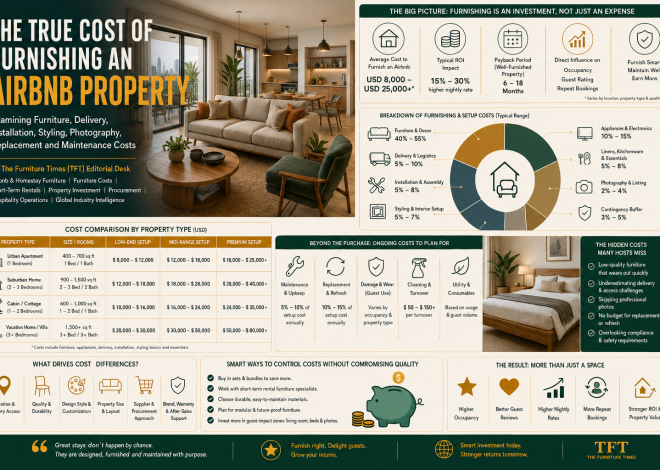
A realistic project budget should include coordination, contingency and replacement costs—not only product prices.
Why the first booking is not the end of the process
The first booking marks the transition from setup to asset management.
After guests begin using the property, real performance data becomes available. Operators can observe which furniture moves, stains, loosens or breaks. They can identify missing items, confusing controls and inefficient cleaning arrangements.
The initial furnishing plan should therefore be reviewed after the first several stays.
Possible adjustments include:
- Adding luggage racks
- Replacing weak dining chairs
- Improving blackout curtains
- Providing clearer appliance instructions
- Relocating decorative objects
- Adding hooks or shelves
- Improving Wi-Fi coverage
- Changing pillow combinations
- Increasing kitchen inventory
- Adding furniture protection
- Reorganising housekeeping storage
Guest feedback becomes a form of product-development intelligence.
A major opportunity for local suppliers
Not every component needs to come from a global manufacturer.
Local suppliers often provide important advantages:
- Faster delivery
- Easier site measurement
- Lower transport complexity
- Local material knowledge
- Rapid replacement
- Personal installation support
- Familiarity with building rules
- Easier customisation
- Stronger repair capability
A rental may combine mass-produced core furniture with locally made headboards, artwork, baskets, textiles or outdoor products. This approach can create a stronger sense of place while supporting the local economy.
For emerging destinations, the growth of homestays can stimulate new demand for carpenters, upholsterers, textile producers, photographers, cleaners and small logistics businesses.
From product sale to recurring service economy
The short-term-rental furnishing market should not be understood only through the initial purchase of furniture.
Every operating property creates recurring demand for linen, cleaning supplies, maintenance, replacement furniture, photography updates and periodic refurbishment.
For suppliers, this creates an opportunity to move from transactions to long-term service agreements. A furniture company might offer replacement-stock programs. A linen provider may provide scheduled replenishment. A procurement company may maintain a digital inventory. A repairer may serve an entire portfolio under contract.
The recurring economy may ultimately be more valuable than the original furnishing order.
The Furniture Times Perspective
Turning an empty apartment into a guest-ready property is an industrial process disguised as an interior-design project.
What guests see is a finished room. Behind that room may be months of work involving dozens of businesses and professionals. The bed connects a manufacturer, mattress supplier, textile company, freight provider, installer, cleaner and laundry operator. The listing photograph connects the designer, stylist, photographer, copywriter and revenue manager. The guest’s arrival depends on internet service, digital access, building management and operational support.
This is why Airbnb and homestay furniture deserves recognition as a specialised global category.
It is not merely residential furniture placed inside a rental. It is an integrated system of products and services designed to turn property into accommodation and accommodation into a functioning hospitality asset.
As the short-term-rental sector becomes more professional, the market will increasingly reward suppliers that understand the complete journey. Manufacturers must design for intensive use. Procurement companies must coordinate complex schedules. Installers must document their work. Cleaners must influence product selection. Property managers must be involved before launch. Technology providers must create systems that remain usable during failure.
The empty apartment has no booking value by itself.
Its commercial transformation occurs through the combined work of the furnishing economy—an economy that begins with measurement and planning but continues through every cleaning cycle, repair, replacement and future guest stay.