
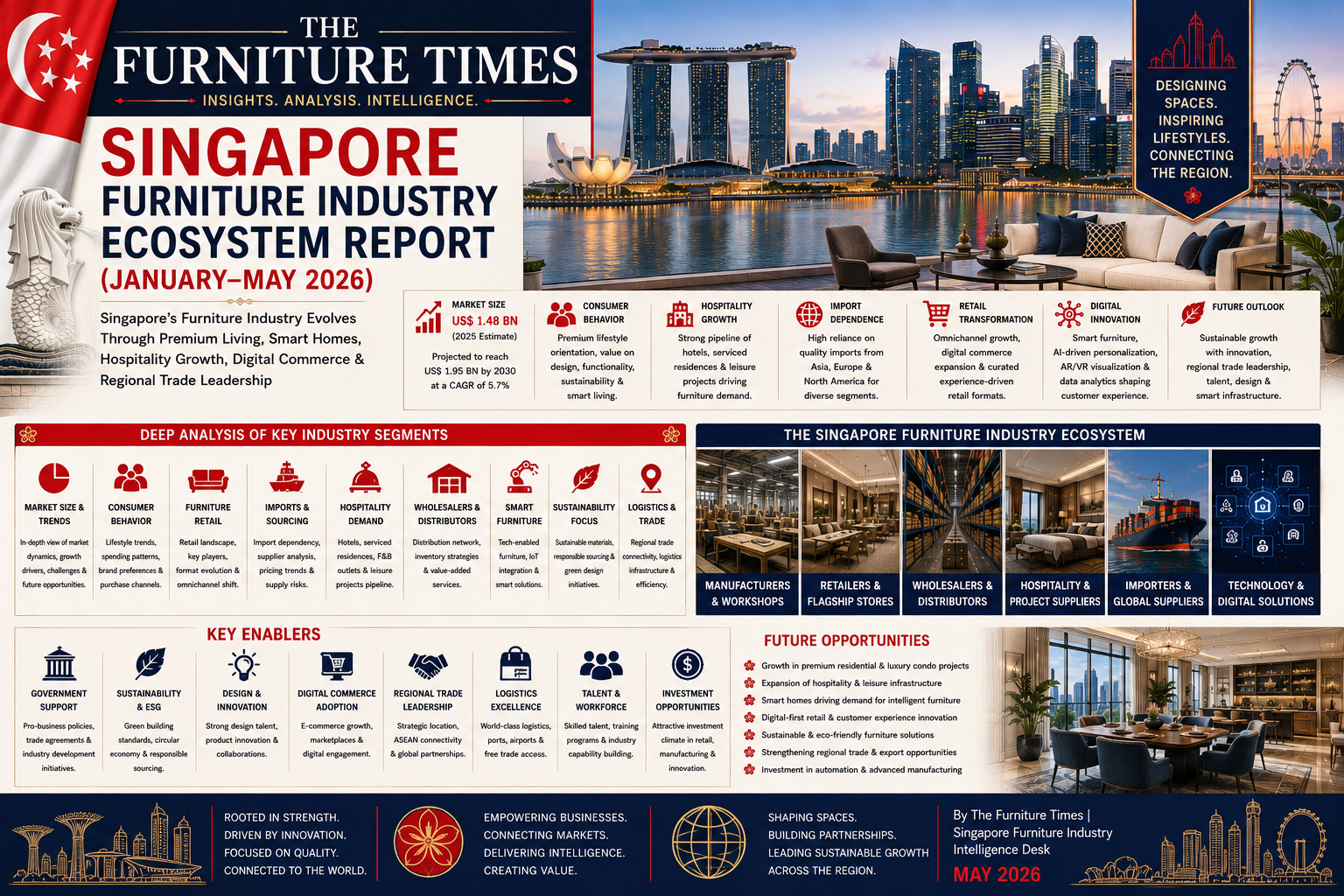
Singapore’s Furniture Industry Evolves Through Premium Living, Smart Homes, Hospitality Growth, Digital Commerce & Regional Trade Leadership
Singapore Furniture Industry Ecosystem Report (January–May 2026)
Deep Analysis of Market Size, Consumer Behavior, Furniture Retail, Imports, Hospitality Demand, Wholesalers, Smart Furniture, Sustainability, Logistics & Future Opportunities
By The Furniture Times | Singapore Furniture Industry Intelligence Desk | May 2026
Singapore’s furniture industry entered 2026 as one of Asia’s most sophisticated, digitally advanced, and design-conscious furniture ecosystems.
While Singapore is not a large-scale furniture manufacturing nation like China, Vietnam, or Indonesia, it plays a critical role as:
a premium furniture market
a regional distribution hub
a design center
a hospitality procurement destination
a smart-living innovation ecosystem
Between January and May 2026, Singapore’s furniture sector continued benefiting from:
strong residential demand
premium interior design spending
hospitality investments
office transformation
e-commerce growth
sustainability awareness
The future of Singapore’s furniture industry is increasingly being shaped by:
Smart Living
Design Excellence
Digital Commerce
Sustainability
Hospitality Demand
Urban Space Optimization
Regional Connectivity
January–May 2026 Industry Overview
The first five months of 2026 showed a stable and resilient furniture market.
Positive Drivers
home renovation demand
condominium furnishing
premium furniture consumption
hospitality refurbishment
office redesign projects
online furniture sales
sustainable product demand
Key Challenges
high operating costs
limited local manufacturing
import dependency
expensive retail space
labor costs
strong international competition
Despite these challenges, Singapore remains one of Southeast Asia’s highest-value furniture markets.
Singapore’s Furniture Market Outlook
Singapore’s furniture market continues benefiting from:
high household incomes
urban development
premium residential projects
interior design culture
hospitality investments
commercial office demand
The strongest categories include:
residential furniture
luxury furniture
office furniture
hospitality furniture
smart furniture
custom-built interiors
outdoor balcony furniture
Unlike many markets, Singapore’s furniture demand is often driven more by quality, functionality, and design than by price alone.
Singapore Consumers Are Highly Design-Conscious
Singaporean consumers are among the most sophisticated furniture buyers in Asia.
Purchasing decisions are influenced by:
aesthetics
space efficiency
material quality
durability
sustainability
brand reputation
functionality
Consumers increasingly seek furniture that combines:
Beauty
Functionality
Technology
Sustainability
The modern buyer wants furniture that improves lifestyle and maximizes limited living space.
Space Optimization Is a Major Trend
One of Singapore’s defining furniture trends is:
Small Space Living
Due to high property prices and compact residential units, consumers increasingly demand:
multifunctional furniture
storage beds
extendable dining tables
modular sofas
foldable furniture
wall-mounted storage
custom wardrobes
Furniture manufacturers and retailers that solve space challenges continue gaining market share.
Residential Furniture Demand Remains Strong
Residential furniture continues dominating the market.
Popular categories include:
Living Room Furniture
modular sofas
lounge chairs
coffee tables
entertainment units
Bedroom Furniture
storage beds
wardrobes
custom closets
dressing systems
Dining Furniture
compact dining solutions
extendable tables
multifunctional furniture
Home Office Furniture
ergonomic chairs
desks
hybrid workstations
Urban lifestyles continue driving practical furniture purchases.
Home Renovation Continues Driving Demand
Singapore’s renovation culture remains one of the biggest contributors to furniture demand.
Many homeowners invest heavily in:
custom carpentry
built-in wardrobes
kitchen systems
storage solutions
designer furniture
interior design packages
Furniture purchases are often integrated into complete renovation projects.
This creates opportunities for:
furniture retailers
carpentry companies
interior designers
joinery specialists
Hospitality Furniture Remains a Major Opportunity
Singapore’s hospitality sector continues generating significant furniture demand.
Projects include:
hotels
serviced apartments
luxury residences
restaurants
cafés
airport hospitality spaces
tourism-related developments
Products in demand include:
hotel furniture
restaurant seating
lounge furniture
outdoor hospitality furniture
FF&E packages
custom joinery
The hospitality sector continues emphasizing:
Comfort
Durability
Guest Experience
Design Identity
Office Furniture Is Undergoing Transformation
Singapore remains one of Asia’s most important business hubs.
As workplace strategies evolve, demand continues growing for:
ergonomic seating
height-adjustable desks
collaborative furniture
acoustic solutions
flexible workspace systems
wellness-focused office furniture
The future office is becoming more flexible, healthier, and technology-enabled.
Smart Furniture Is Growing Rapidly
Singapore is one of Asia’s leaders in smart city development.
This creates opportunities for:
smart desks
wireless charging furniture
adjustable workstations
connected home furniture
ergonomic smart seating
technology-integrated interiors
Consumers increasingly view furniture as part of a broader smart living ecosystem.
The future of Singapore furniture may be strongly influenced by:
AI
Smart Homes
IoT Integration
Digital Living
E-Commerce Continues Expanding
Digital commerce continues reshaping furniture retail.
Consumers increasingly use:
online marketplaces
furniture websites
social media
digital catalogs
virtual consultations
room visualization tools
The customer journey increasingly follows:
Search → Compare → Review → Visit → Buy
Furniture retailers must invest heavily in digital visibility to remain competitive.
Physical Showrooms Are Becoming Experience Centers
Traditional showrooms are evolving.
Retailers increasingly focus on:
design inspiration
lifestyle presentation
consultation services
customer experience
customization
Showrooms are becoming less transactional and more experiential.
Consumers expect seamless integration between digital research and physical visits.
Imports Continue Dominating Supply
Singapore remains highly dependent on imported furniture.
Major sourcing countries include:
Malaysia
China
Vietnam
Indonesia
India
Italy
Türkiye
Thailand
Imports dominate because Singapore has limited large-scale furniture manufacturing capacity.
This creates opportunities for exporters targeting premium Asian consumers.
Logistics & Regional Distribution Are Major Strengths
Singapore possesses one of the strongest logistics ecosystems in the world.
Advantages include:
Port of Singapore
world-class warehousing
regional trade connectivity
efficient customs systems
air freight infrastructure
Many furniture companies use Singapore as a gateway to:
ASEAN markets
Australia
New Zealand
South Asia
East Asia
Singapore functions as:
A Furniture Trading Hub
A Distribution Hub
A Regional Business Hub
Sustainability Is Becoming Essential
Singapore consumers increasingly prioritize:
sustainable furniture
certified wood
recyclable materials
eco-friendly production
low-emission products
durable furnishings
Green building initiatives and environmental awareness continue influencing purchasing decisions.
Future growth increasingly depends on:
Sustainable Design
Responsible Sourcing
Circular Economy Practices
Custom Furniture & Carpentry Continue Growing
One of Singapore’s strongest furniture sectors remains:
Custom Carpentry
Demand remains high for:
built-in wardrobes
custom kitchens
TV consoles
storage systems
office cabinetry
bespoke interiors
Customization is highly valued because it maximizes available space.
This remains one of the strongest opportunities for local businesses.
Wholesalers & Project Suppliers Remain Important
Wholesalers continue supporting:
retailers
designers
contractors
developers
hospitality projects
commercial offices
However, future wholesalers increasingly require:
digital catalogs
project management capability
inventory visibility
logistics efficiency
online ordering systems
The wholesale sector is becoming more technology-driven.
Competition Is Intensifying
Singapore’s furniture market faces intense competition from:
local retailers
international brands
online marketplaces
regional distributors
luxury furniture suppliers
direct-to-consumer brands
To remain competitive, businesses must excel in:
customer service
design
quality
delivery
digital visibility
customization
Digital Visibility Is Becoming Critical
One of the most important changes in the Singapore furniture industry is discoverability.
Consumers increasingly search for:
furniture stores Singapore
custom wardrobes Singapore
office furniture Singapore
luxury furniture Singapore
hospitality furniture suppliers Singapore
smart furniture Singapore
If businesses are not visible online, they lose opportunities.
The future market increasingly rewards:
Searchability
Discoverability
Visibility
Digital Trust
Future Opportunities Through 2030
The strongest growth opportunities include:
Smart Furniture
Technology-integrated furniture will expand rapidly.
Hospitality Furniture
Tourism and hotel investments remain strong.
Sustainable Furniture
Environmental awareness continues increasing.
Custom Carpentry
Space optimization remains critical.
Office Furniture
Hybrid workplaces continue evolving.
Digital Commerce
Online furniture sales will keep growing.
Regional Trade
Singapore remains a strategic ASEAN gateway.
The Furniture Times Industry Insight
Singapore’s furniture industry between January and May 2026 revealed one important reality:
Success is no longer determined solely by product quality.
Future leaders must combine:
Design
Technology
Sustainability
Customization
Visibility
Customer Experience
Singapore’s furniture ecosystem rewards innovation and adaptability.
Final Thought
Singapore’s furniture industry entered 2026 with strong long-term potential.
The country benefits from:
high purchasing power
sophisticated consumers
strong hospitality demand
world-class logistics
advanced digital infrastructure
smart city ambitions
However, businesses must navigate:
high operating costs
import dependence
intense competition
sustainability expectations
changing consumer behavior
The future Singapore furniture ecosystem will increasingly reward businesses that become:
Visible
Sustainable
Technology-Driven
Customer-Focused
Design-Led
Digitally Discoverable
Because the future of Singapore’s furniture industry is not only about furniture.
It is about creating intelligent living environments for one of Asia’s most advanced urban societies.
