
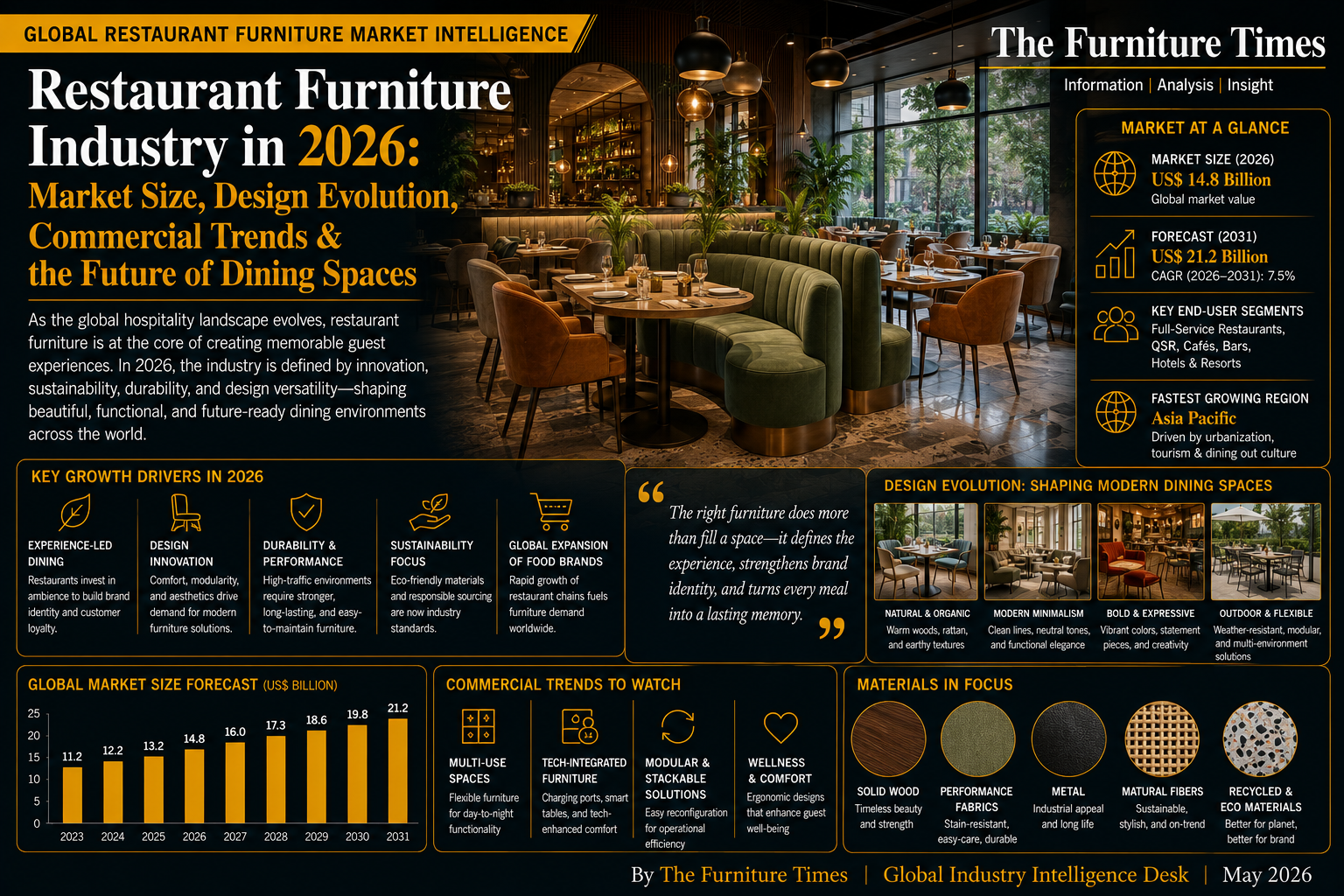
Restaurant Furniture Industry in 2026: Market Size, Design Evolution, Commercial Trends & the Future of Dining Spaces
Global Restaurant Furniture Market Intelligence | The Furniture Times
By The Furniture Times | Global Industry Intelligence Desk | May 2026
The global restaurant furniture industry is undergoing a major transformation as restaurants worldwide evolve from simple dining locations into experience-driven lifestyle environments.
Today, restaurant furniture is no longer viewed only as tables and chairs.
It has become:
- a branding tool
- an operational asset
- a customer experience driver
- a social media attraction
- a space optimization system
- a competitive differentiator
From luxury fine dining restaurants and boutique cafés to fast-growing quick-service chains and hospitality groups, furniture now plays a central role in shaping how customers:
- feel
- interact
- spend
- stay
- return
inside commercial dining environments.
Global Restaurant Furniture Market Size
The global restaurant furniture market is experiencing consistent growth, supported by:
- expanding foodservice industries
- hospitality recovery
- restaurant renovation cycles
- urbanization
- experiential dining trends
Industry estimates indicate the global restaurant furniture market could surpass:
- approximately US$16.6 billion in 2026 according to broader commercial furniture estimates
More focused restaurant furniture market studies project:
- approximately US$0.93 billion in specialized restaurant furniture segments in 2026
- expected to reach around US$1.46 billion by 2035 at over 5% CAGR
The wider hospitality furniture industry—which includes restaurants, hotels, bars, cafés, resorts, and lounges—is projected to continue expanding steadily through the next decade.
Why Restaurant Furniture Matters More Than Ever
Restaurant furniture now directly influences:
- customer comfort
- table turnover rates
- social media visibility
- interior identity
- operational efficiency
- customer retention
- brand perception
Modern restaurants increasingly compete on:
- ambiance
- interior storytelling
- visual identity
- customer experience
rather than food alone.
The Main Types of Restaurant Furniture
Restaurant furniture is now highly specialized based on:
- restaurant category
- dining concept
- customer demographics
- space size
- operational model
1. Dining Tables
The foundation of restaurant layouts.
Types:
- square tables
- round tables
- communal tables
- folding tables
- extendable tables
- bar-height tables
- marble-top tables
- solid wood dining tables
Popular Materials:
- solid wood
- MDF
- laminate
- marble
- sintered stone
- stainless steel
- aluminum
2. Restaurant Chairs
One of the most important experience elements.
Categories:
- wooden dining chairs
- upholstered chairs
- metal-frame chairs
- stackable chairs
- bentwood chairs
- luxury velvet chairs
- ergonomic commercial chairs
Key priorities:
- comfort
- durability
- stain resistance
- easy cleaning
- long-term usage
3. Booth Seating
One of the fastest-growing segments globally.
Especially popular in:
- cafés
- diners
- casual dining
- family restaurants
- luxury lounges
Advantages:
- space optimization
- privacy
- premium experience
- better customer retention
4. Bar Furniture
Used in:
- bars
- cafés
- rooftop lounges
- hospitality spaces
Includes:
- bar stools
- counter seating
- high tables
- cocktail tables
5. Outdoor Restaurant Furniture
A rapidly growing category globally.
Driven by:
- hospitality expansion
- rooftop dining
- resort dining
- café culture
- tourism growth
Popular Materials:
- teak wood
- aluminum
- rattan
- synthetic wicker
- weather-resistant fabrics
6. Lounge & Waiting Furniture
Restaurants increasingly create:
- waiting lounges
- social zones
- lounge-style experiences
Includes:
- sofas
- lounge chairs
- coffee tables
- modular seating
Major Market Segments
The restaurant furniture market divides into several major commercial segments.
Fine Dining Furniture
Focus:
- luxury
- craftsmanship
- premium materials
- exclusivity
Popular:
- leather upholstery
- marble tables
- handcrafted wood
- designer lighting integration
Café Furniture
Driven by:
- aesthetics
- Instagram-friendly interiors
- compact layouts
- flexibility
Popular:
- minimalist furniture
- Scandinavian design
- industrial themes
- compact seating
Quick-Service Restaurant Furniture (QSR)
Focus:
- durability
- efficiency
- easy maintenance
- high turnover
Popular:
- modular seating
- durable laminates
- lightweight furniture
Hospitality & Hotel Restaurants
Often use:
- customized furniture
- brand-specific interiors
- premium upholstery
- integrated lounge systems
Sustainability Becoming a Major Market Driver
Sustainability is increasingly influencing restaurant furniture purchasing globally.
Restaurants increasingly seek:
- FSC-certified wood
- recycled materials
- low-VOC finishes
- sustainable upholstery
- recyclable furniture systems
Younger consumers increasingly value:
- environmentally conscious interiors
- ethical sourcing
- natural materials
Social Media Is Reshaping Restaurant Design
Instagram, TikTok, and digital culture are massively influencing restaurant furniture trends.
Restaurants increasingly design interiors to:
- encourage photography
- create visual identity
- attract influencers
- generate organic marketing
Furniture now functions as:
“Visual Branding Infrastructure”
Technology Integration in Restaurant Furniture
The market is moving toward “smart dining environments.”
New furniture trends include:
- wireless charging tables
- integrated ordering systems
- QR-code embedded tables
- modular movable layouts
- smart lighting integration
Commercial furniture increasingly merges:
- technology
- hospitality
- efficiency
- experience
Regional Market Analysis
🇺🇸 North America
One of the largest restaurant furniture markets globally.
Driven by:
- chain restaurants
- hospitality investment
- renovation cycles
- experiential dining
🇪🇺 Europe
Strong focus on:
- craftsmanship
- sustainability
- premium interiors
- café culture
Italy remains highly influential in:
- restaurant design
- luxury furniture
- hospitality aesthetics
🇨🇳 China
Massive growth driven by:
- urban expansion
- café culture
- restaurant chains
- commercial real estate
China also dominates manufacturing supply chains for restaurant furniture globally.
🇮🇳 India
Fast-growing market driven by:
- café expansion
- middle-class growth
- hospitality development
- mall-based dining
🇦🇪 UAE & GCC
Strong luxury-driven demand:
- fine dining
- hospitality projects
- tourism infrastructure
- premium restaurant concepts
Key Restaurant Furniture Trends in 2026
Industry trends now focus heavily on:
1. Modular Furniture
Restaurants want:
- flexibility
- movable layouts
- event adaptability
2. Comfort-Centric Dining
Soft seating and lounge-style dining are growing globally.
3. Curved & Organic Designs
Rounded edges and sculptural seating are increasingly popular.
4. Sustainable Materials
Consumers increasingly prefer:
- natural wood
- eco fabrics
- recycled materials
5. Experience-Based Interiors
Restaurants increasingly build:
- immersive interiors
- theme-based environments
- storytelling spaces
Manufacturing Evolution
Restaurant furniture manufacturing is becoming more specialized.
Factories increasingly focus on:
- commercial durability
- fire resistance
- stain-resistant upholstery
- lightweight engineering
- fast assembly systems
The industry is also seeing increased OEM and customization demand.
E-Commerce & Digital Sourcing
Commercial buyers increasingly source furniture through:
- B2B platforms
- digital catalogs
- live commerce
- supplier ecosystems
The future market may increasingly depend on:
- discoverability
- digital visibility
- RFQ systems
- live product showcases
TFT Industry Insight
The restaurant furniture industry is evolving far beyond traditional commercial furniture manufacturing.
The future market is becoming a fusion of:
- hospitality
- branding
- interior storytelling
- technology
- operational efficiency
- digital commerce
- customer psychology
Restaurants are no longer buying furniture simply to seat people.
They are investing in:
- experiences
- identity
- retention
- atmosphere
- digital visibility
Final Thought
The future of restaurant furniture will not be defined only by durability or pricing.
It will be defined by how effectively furniture helps restaurants create experiences, optimize operations, strengthen branding, and connect emotionally with customers.
As dining spaces increasingly become lifestyle destinations, restaurant furniture may become one of the most influential elements shaping the future global hospitality ecosystem.
