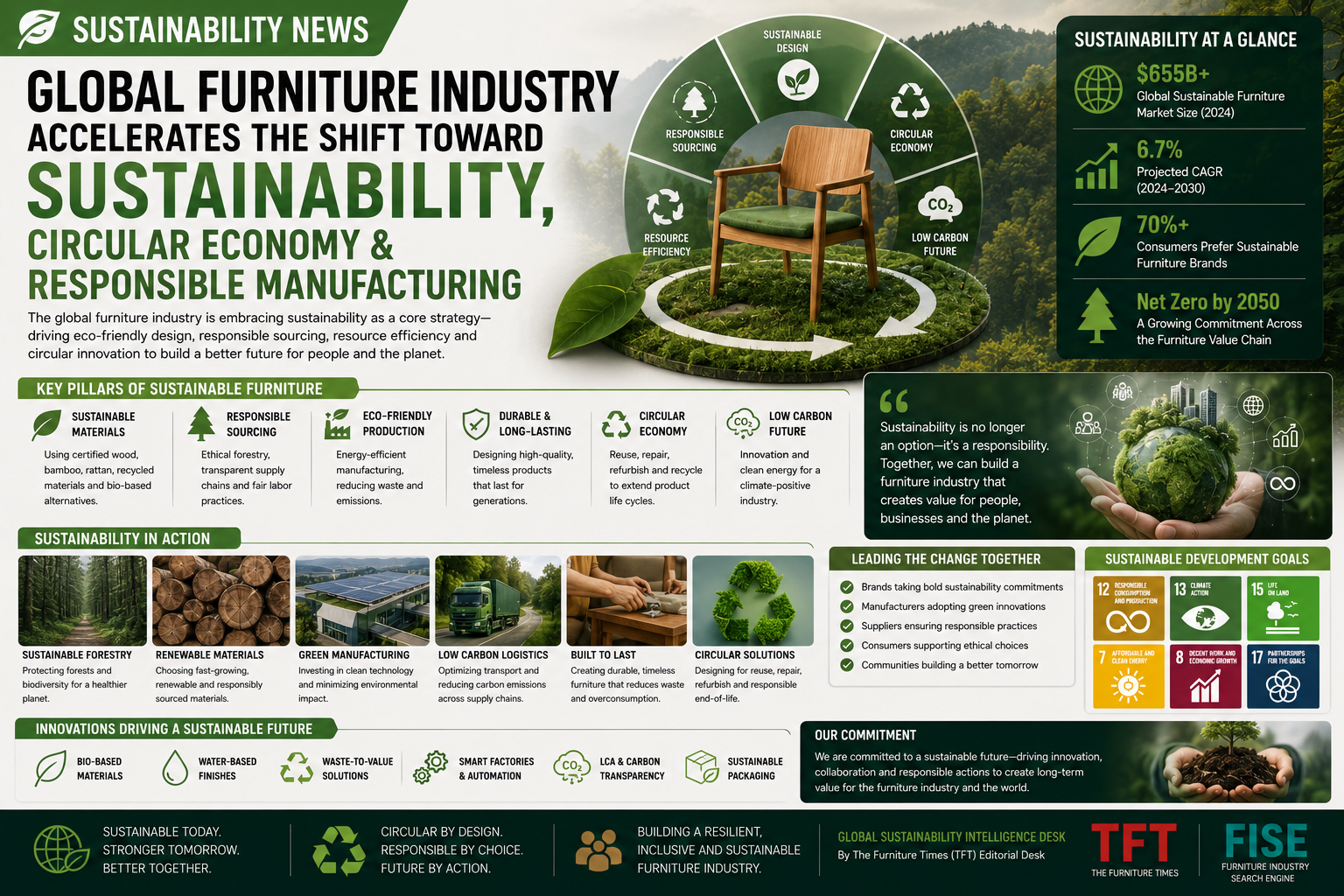
Global Furniture Industry Accelerates the Shift Toward Sustainability, Circular Economy & Responsible Manufacturing
Global Sustainability Intelligence Desk
By The Furniture Times (TFT) Editorial Desk
Executive Summary
Sustainability is no longer a trend within the global furniture industry.
It has become one of the industry’s most important business strategies.
Across every continent, manufacturers, retailers, designers, architects, governments and consumers are reshaping the future of furniture through environmentally responsible production, circular economy principles, renewable materials and smarter manufacturing technologies.
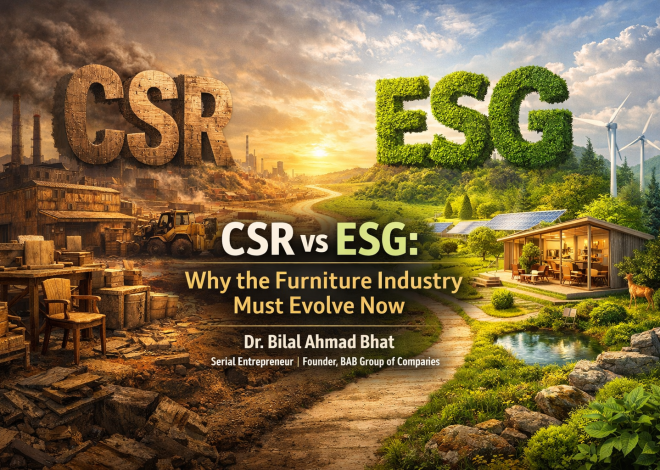
What was once considered a corporate social responsibility initiative has now become a competitive business advantage.
Customers increasingly ask:
- Where was this furniture made?
- Is the timber responsibly sourced?
- Can it be repaired?
- Can it be recycled?
- How long will it last?
- What is its environmental impact?
These questions are transforming how furniture is designed, manufactured, transported and marketed.
According to The Furniture Times (TFT), sustainability is no longer simply about protecting the environment.
It is about protecting the future of the furniture industry itself.
Sustainability Has Become a Business Imperative
The furniture industry is entering a new era where business success increasingly depends on balancing economic growth with environmental responsibility.
Manufacturers worldwide are investing in:
- Sustainable timber
- Recycled materials
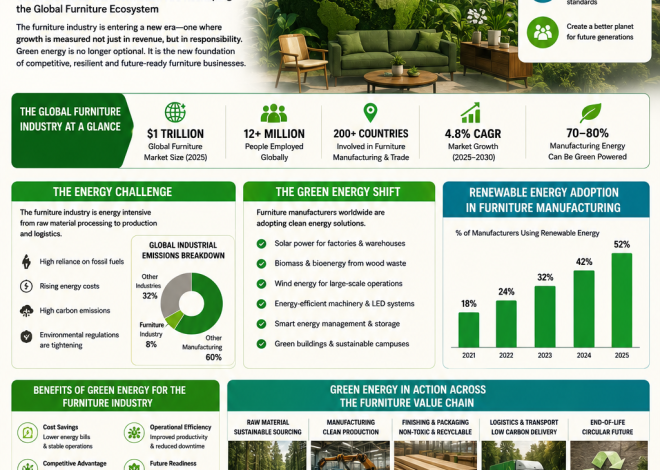
- Renewable energy
- Water conservation
- Low-carbon production
- Waste reduction
- Circular manufacturing
Major international furniture exhibitions are also placing greater emphasis on “low-carbon supply chains,” sustainable materials and environmentally responsible manufacturing as key themes for future industry growth.
The Rise of the Circular Furniture Economy
The traditional furniture business followed a linear model:
Extract.
Manufacture.
Sell.
Dispose.
Today’s industry is gradually moving toward a circular model.
Products are increasingly designed to:
Last longer.
Be repaired.
Be refurbished.
Be reused.
Be recycled.
This transition reduces waste while creating new business opportunities.
Studies indicate that adopting circular business models in the furniture sector could generate significant economic value and create thousands of new jobs while reducing landfill waste.
Sustainable Materials Are Reshaping Manufacturing
Furniture manufacturers increasingly use:
Certified timber.
Bamboo composites.
Recycled plastics.
Natural fibres.
Low-emission coatings.
Bio-based materials.
These materials reduce environmental impact while maintaining product quality and durability.
Industry events have reported growing adoption of bamboo-based composites, recycled plastics and zero-VOC finishes as manufacturers respond to customer demand for greener products.
Durability Is Becoming the New Luxury
Consumers increasingly understand that sustainability begins with products designed to last.
Rather than replacing furniture every few years, many customers now value:
Long product life.
Repairability.
Timeless design.
Quality craftsmanship.
Modular construction.
Longevity reduces waste while improving long-term value.
Responsible Forestry Supports the Entire Ecosystem
Wood remains one of the furniture industry’s most important raw materials.
Sustainable forestry helps ensure:
Healthy forests.
Biodiversity.
Responsible harvesting.
Long-term timber availability.
Ethical supply chains.
Responsible sourcing strengthens both environmental protection and long-term business resilience.
Manufacturing Is Becoming Greener
Furniture factories are reducing environmental impact through:
Energy-efficient machinery.
Solar power.
Waste recycling.
Water recycling.
Lean manufacturing.
Digital production planning.
Lower emissions.
Sustainability and productivity increasingly support one another rather than competing.
Artificial Intelligence Supports Sustainability
AI is helping manufacturers improve sustainability by:
Reducing production waste.
Optimising cutting patterns.
Forecasting demand.
Managing inventory.
Improving logistics.
Reducing unnecessary transportation.
Technology allows businesses to use resources more efficiently.
Digital Manufacturing Reduces Waste
Modern manufacturing technologies support:
Precision cutting.
Better material utilisation.
Reduced scrap.
Improved quality.
Lower energy consumption.
Every improvement contributes to both profitability and sustainability.
Consumers Are Driving Change
Today’s customers increasingly choose brands that demonstrate:
Environmental responsibility.
Transparency.
Ethical sourcing.
Product longevity.
Repair services.
Recycling initiatives.
Sustainability has become part of purchasing decisions rather than simply a marketing message.
Research indicates that consumers increasingly prioritise durable, sustainable and multifunctional furniture, helping drive long-term market growth.
Hospitality Is Embracing Sustainable Furniture
Hotels.
Resorts.
Restaurants.
Corporate offices.
Healthcare facilities.
Educational institutions.
These sectors increasingly request furniture that offers:
Long life.
Easy maintenance.
Recyclable materials.
Responsible sourcing.
Reduced environmental impact.
Commercial buyers increasingly include sustainability requirements within procurement decisions.
Repair & Refurbishment Create New Opportunities
The industry increasingly recognises that sustainability extends beyond manufacturing.
Growing business opportunities include:
Furniture repair.
Refurbishment.
Reupholstery.
Parts replacement.
Restoration.
Professional maintenance.
These services extend product life while creating new employment opportunities.
Packaging Is Becoming Smarter
Manufacturers continue reducing environmental impact through:
Recyclable packaging.
Reduced plastic use.
Flat-pack optimisation.
Space-efficient shipping.
Reusable transport materials.
Smarter packaging reduces waste while lowering transportation emissions.
Sustainability Supports Export Competitiveness
International buyers increasingly evaluate suppliers based on:
Environmental certifications.
Responsible sourcing.
Carbon reduction.
Supply chain transparency.
Compliance with international standards.
Sustainability is becoming a strategic export advantage rather than simply a regulatory requirement.
SMEs Can Also Lead Sustainability
Sustainability is not limited to large corporations.
Small and medium-sized manufacturers can contribute through:
Local sourcing.
Efficient production.
Repair services.
Waste reduction.
Energy conservation.
Digital documentation.
Continuous improvement.
Small changes often produce significant long-term results.
Education Remains Essential
The transition toward sustainability requires ongoing learning.
Industry stakeholders increasingly benefit from education in:
Circular economy.
Sustainable design.
Responsible procurement.
Green manufacturing.
Environmental regulations.
Innovation.
Knowledge accelerates industry transformation.
The Furniture Times Analysis
The global furniture industry is entering a sustainability-driven economy.
Future leaders will not compete only through:
Price.
Production volume.
Factory size.
They will increasingly compete through:
Innovation.
Environmental responsibility.
Product longevity.
Customer trust.
Operational efficiency.
Digital intelligence.
Sustainability has become both an environmental responsibility and a commercial opportunity.
Final Verdict
The future of the furniture industry will be shaped by businesses that recognise sustainability as a long-term investment rather than a short-term obligation.
Companies that invest in:
Responsible materials.
Circular economy.
Energy efficiency.
Digital manufacturing.
Product durability.
Repair services.
Innovation.
Will strengthen both their environmental performance and their business competitiveness.
The furniture industry has an opportunity to become one of the world’s leading examples of responsible manufacturing.
Because the furniture of tomorrow should not simply furnish homes.
It should also help build a healthier planet.
By The Furniture Times (TFT) Editorial Desk
Global Sustainability Intelligence Desk | July 2026
“TFT tells their story. FISE helps the world find them.”
The furniture industry ecosystem is a $1 Trillion Dollar Industry.