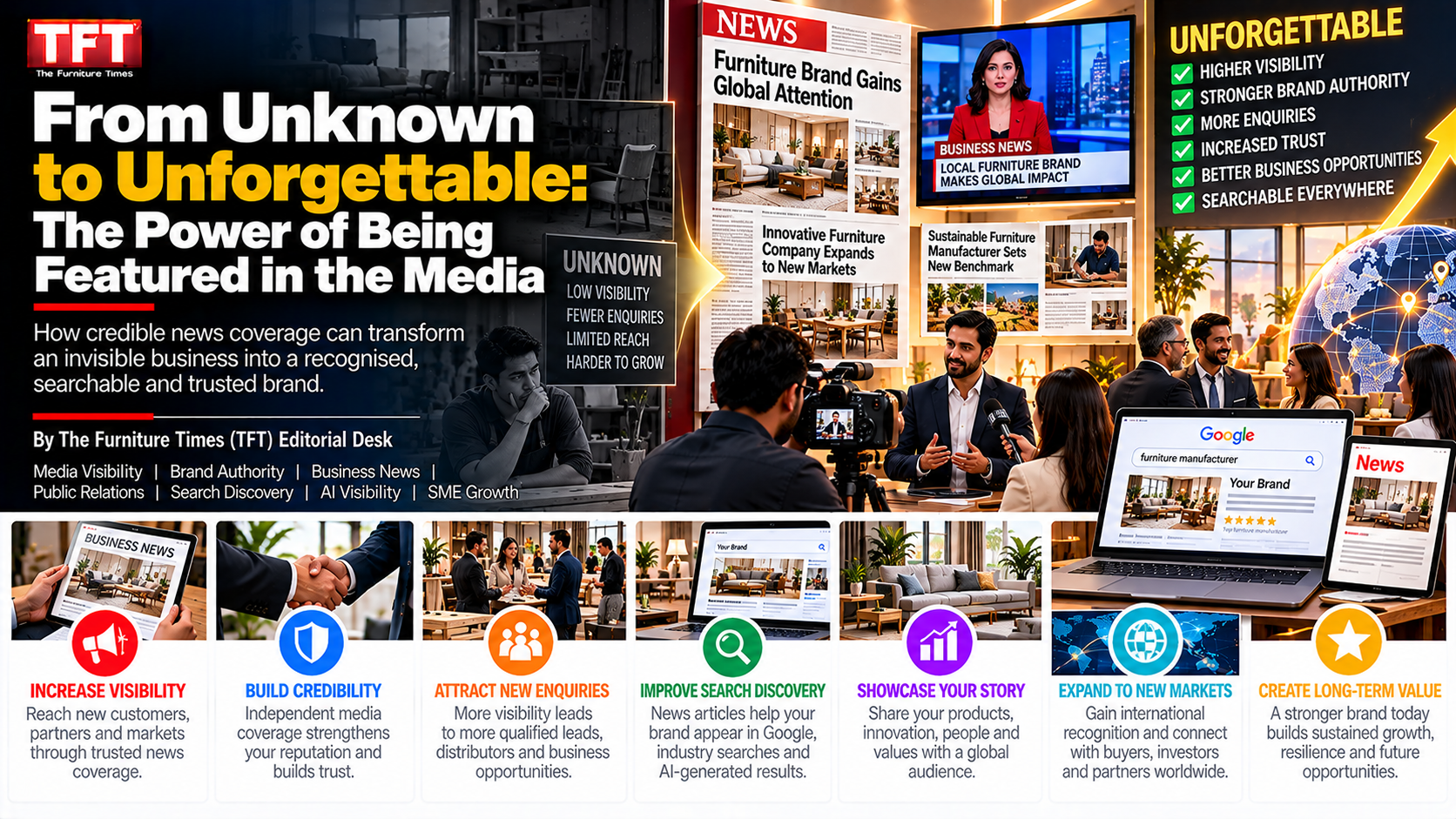
From Unknown to Unforgettable: The Power of Being Featured in the Media
From Unknown to Unforgettable: The Power of Being Featured in the Media
How credible news coverage can transform an invisible business into a recognised, searchable and trusted brand
By The Furniture Times (TFT) Editorial Desk
Media Visibility | Brand Authority | Business News | Public Relations | Search Discovery | AI Visibility | SME Growth
Every business begins unknown.
A factory may manufacture excellent furniture, but buyers outside its immediate network may never hear about it. A retailer may provide exceptional customer service, yet remain invisible beyond its neighbourhood. A supplier may possess specialised technical knowledge, but lose opportunities because larger competitors dominate public attention.
The business exists. Its people are working. Its products are available. Its customers may even be satisfied.
But the wider market does not know.
This is one of the most important differences between a capable business and a powerful brand: capability exists inside the organisation, while reputation exists in the minds of other people.
Media coverage helps carry a company’s capabilities into the public domain.
A credible feature can introduce the business, document its progress, explain its expertise and give potential customers a reason to remember its name. Over time, repeated and meaningful coverage can turn an unfamiliar company into a recognised industry participant.
The transformation can be summarised simply:
Unknown means the market has no information. Unforgettable means the market repeatedly encounters a clear, credible and valuable identity.
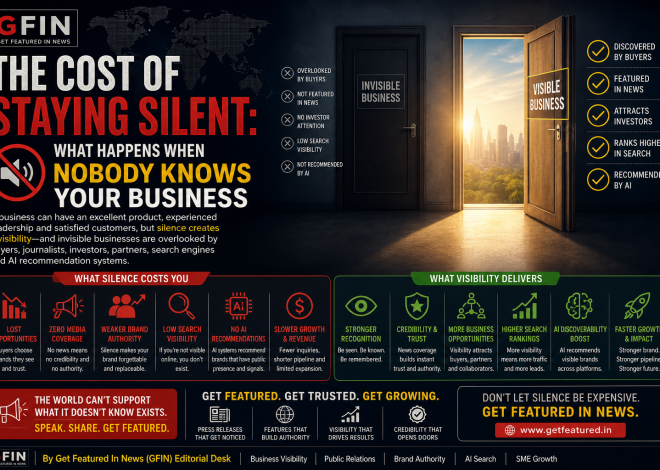
Media visibility is not about appearing famous for one day. It is about building a public record that helps customers, search engines, AI systems, investors, distributors, employees and industry partners understand why the business matters.
A great business can still be invisible
Many founders believe that a good product will eventually speak for itself.
Products do not speak independently. People, customers, journalists, reviews, photographs, case studies, search results and public stories communicate their value.
A manufacturer may possess:
- Decades of experience
- Skilled craftspeople
- Original designs
- Advanced machinery
- Strong quality control
- Export capacity
- Reliable delivery
- Sustainable materials
- Important certifications
- Successful projects
If none of this is publicly documented, the market cannot easily distinguish that manufacturer from an unknown supplier making unsupported claims.
The same problem affects retailers, designers, logistics companies, installers, material suppliers, technology providers, artisans and service businesses.
They may be successful through relationships and word of mouth, but their credibility remains trapped within a limited circle.
Media exposure helps convert private capability into public evidence.
Being excellent and being known are different business assets
Business performance depends on more than operational ability.
A company needs two forms of strength:
| Business strength | What it means |
|---|---|
| Operational strength | The ability to design, manufacture, deliver and support a product or service |
| Market strength | The ability to be discovered, remembered, trusted and selected |
A company can be operationally excellent but commercially weak because insufficient buyers know it exists.
Another company may have an ordinary product but stronger market visibility, clearer communication and greater familiarity. Customers may choose the more visible company because it appears easier to understand and safer to verify.
This does not mean publicity is more important than quality.
It means quality and visibility must work together.
Media coverage cannot permanently protect a poor product. But a strong product without visibility may never receive the opportunity it deserves.
What does being featured in the media actually mean?
Media coverage can take many forms:
- Company news
- Founder interviews
- Executive commentary
- Product-launch stories
- Factory profiles
- Project case studies
- Market-analysis articles
- Awards coverage
- Investment announcements
- Partnership news
- Sustainability stories
- Technology-adoption reports
- Customer-impact stories
- Expansion announcements
- Trade-show coverage
- Community initiatives
- Expert columns
- Podcast interviews
- Video features
A business does not need to wait until it becomes a multinational corporation.
An SME can possess legitimate news when it:
- Opens a new showroom
- Enters another city
- Installs new machinery
- Launches an original product
- Completes a major project
- Receives certification
- Appoints a distributor
- Creates employment
- Develops a sustainable process
- Reaches an anniversary
- Begins exporting
- Introduces a repair service
- Publishes original research
- Supports a community programme
- Solves an industry problem
The essential requirement is substance.
A company feature should communicate something specific, relevant and supportable—not simply announce that the business is “the best.”
The seven powers of media coverage
1. Media coverage creates awareness
A customer cannot consider a business that remains unknown.
Media exposure introduces the company to people who may never encounter its showroom, sales representative or social-media page.
One article can reach several audiences:
- Prospective customers
- Retail buyers
- Architects
- Designers
- Distributors
- Importers
- Investors
- Employees
- Government agencies
- Industry associations
- Technology partners
- Suppliers
Not every reader will purchase immediately. That is not the only purpose.
Awareness is the first stage of future demand.
The buyer may remember the company weeks or months later when a need arises.
2. Media coverage builds familiarity
People generally feel more comfortable with names they recognise.
Repeated exposure creates familiarity:
- The customer reads an interview.
- Later, the customer sees a project feature.
- A search reveals another company announcement.
- An industry contact mentions the same brand.
- Customer reviews confirm its activity.
Each contact strengthens recognition.
Familiarity is not automatic trust, but it makes the business less unfamiliar—and unfamiliarity is one of the biggest obstacles facing SMEs.
3. Media coverage provides credibility
Companies naturally describe themselves positively.
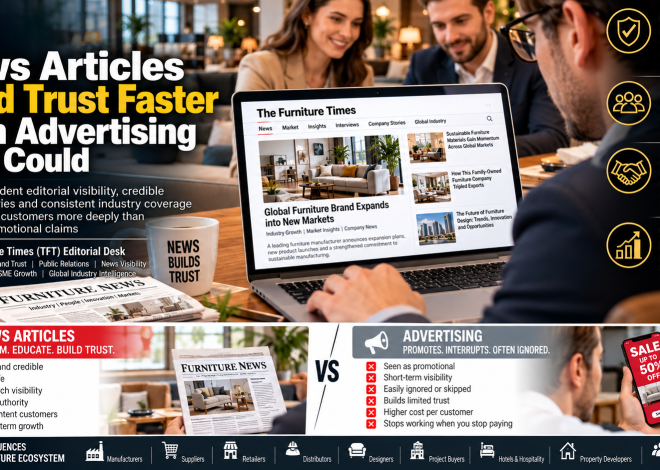
Independent coverage provides another reference point. A news feature is not necessarily an endorsement, but it shows that the company has an identifiable story, named people, documented activity and a public presence.
This can make claims easier to verify.
Consider the difference:
“We are an experienced hospitality-furniture manufacturer.”
Compared with:
“The company was featured for completing a 300-room hotel project, expanding its upholstery division and introducing a replacement programme for commercial clients.”
The second version contains evidence.
Credibility grows when media stories include:
- Names
- Dates
- Locations
- Project information
- Photographs
- Investment figures
- Production data
- Certifications
- Customer results
- Independent quotations
Specificity turns promotion into useful information.
4. Media coverage strengthens search visibility
A published article can become part of the company’s permanent digital footprint.
When a potential buyer searches the company’s name, the results may include:
- Official website
- Industry features
- Interviews
- Project coverage
- Business listings
- Reviews
- Social profiles
- Award announcements
This collection of information helps establish that the company is active and real.
A business with no searchable evidence creates uncertainty. The buyer may wonder:
- Is the company still operating?
- Has it completed any projects?
- Who manages it?
- Does it possess genuine expertise?
- Can its claims be verified?
- Does anyone outside the company know it?
Media coverage helps answer these questions before the first meeting.
5. Media coverage supports AI discovery
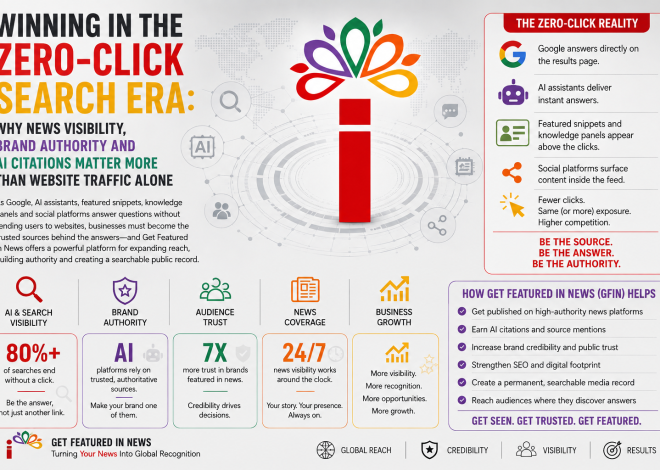
Business discovery is expanding beyond traditional search engines.
Customers increasingly use AI systems to ask:
- Which manufacturers produce hotel furniture in Malaysia?
- Who supplies outdoor furniture for resorts?
- Which companies manufacture ergonomic office chairs?
- Where can I find furniture exporters in Muar?
- Which brands offer repairable furniture?
- Who are the industry experts in this category?
AI systems require accessible and understandable public information.
A company cannot reasonably expect to appear in AI-generated answers if the internet contains little credible information about:
- What it does
- Where it operates
- What it produces
- Who it serves
- What it has achieved
- Why it is relevant
Media articles can help create this context.
They do not guarantee an AI recommendation, but they improve the company’s public information environment.
6. Media coverage gives sales teams stronger evidence
Salespeople perform better when the company is already known.
A media feature can be used in:
- Sales presentations
- Proposals
- Email follow-ups
- Distributor discussions
- Investor meetings
- Recruitment
- Tender submissions
- Customer newsletters
- Social-media campaigns
Instead of repeatedly saying, “Trust us,” the salesperson can provide evidence that the customer can review independently.
Media visibility can help turn a cold introduction into a warmer conversation.
7. Media coverage creates long-term brand memory
Advertisements stop when the budget stops.
A credible news story can remain discoverable for years.
It may continue appearing in:
- Search results
- Website archives
- Industry research
- Company profiles
- Social sharing
- AI-assisted discovery
- Future media reports
This creates a cumulative record of progress.
One article is a moment. A consistent collection of genuine coverage becomes reputation infrastructure.
From one-time publicity to permanent authority
A single media appearance can create attention, but authority requires continuity.
The strongest brands develop a public timeline:
- Company founded
- First major product launched
- Factory expanded
- Export market entered
- Certification achieved
- Partnership formed
- Project completed
- Leadership appointed
- Sustainability programme introduced
- New technology implemented
- Industry research published
Each story adds another layer.
Together, they show that the business is active, developing and contributing to its market.
This public history becomes valuable during:
- Customer verification
- Distributor negotiations
- Investment discussions
- Partnership assessments
- Recruitment
- Tender evaluation
- Business valuation
- Succession planning
Media coverage is therefore not only promotion. It can become part of the company’s institutional memory.
Why founder stories matter
People often remember people before they remember organisations.
A founder story can explain:
- Why the business was created
- What problem it solves
- Which obstacles were overcome
- What values guide it
- How the company developed
- What future it is building
A credible founder feature creates a human connection.
However, the story should not become exaggerated mythology. Strong founder coverage includes:
- Real experience
- Verifiable milestones
- Honest challenges
- Clear lessons
- Industry insight
- A meaningful vision
Founders who communicate only success may appear promotional. Founders who explain the difficult decisions, failures and learning behind the business can become more relatable and trustworthy.
Media visibility is especially important for SMEs
Large corporations already possess recognition through:
- Advertising
- Multiple locations
- Distribution networks
- Sponsorships
- Search visibility
- Long market histories
- Large customer bases
SMEs do not have the same accumulated awareness.
For a smaller company, media coverage can help reduce the recognition gap.
A well-developed feature can introduce an SME’s:
- Capabilities
- People
- Products
- Specialisation
- Local contribution
- Export readiness
- Project experience
- Customer service
- Growth plans
This does not make the SME equal in size to a multinational company. It makes the SME more understandable and easier to evaluate.
That can be enough to earn the first conversation.
Why media exposure matters during a difficult economy
When markets slow down, many businesses reduce communication.
They stop advertising, postpone announcements and become silent until sales improve.
This can create an opportunity for companies that continue communicating responsibly.
When competitors disappear, credible stories face less noise.
A business can use the slowdown to:
- Explain how it is adapting
- Introduce improved services
- Publish market intelligence
- Highlight customer value
- Strengthen its digital footprint
- Document operational improvements
- Build familiarity before recovery
The objective is not to pretend that economic conditions are easy.
It is to demonstrate leadership, stability and relevance while buyers are becoming more cautious.
When demand eventually strengthens, recognised brands may recover faster than companies that must reintroduce themselves.
Media coverage can reduce dependence on discounting
Unknown brands often struggle to defend their prices.
When customers see no meaningful difference between suppliers, they compare:
- Price
- Delivery
- Payment terms
- Promotions
A recognised brand has more opportunities to communicate value through:
- Expertise
- Product engineering
- Original design
- Materials
- Testing
- Service
- Warranty
- Reliability
- Reputation
- Customer experience
Media coverage makes these differences more visible.
It does not eliminate price comparison. It gives buyers more reasons to evaluate the company beyond the lowest quotation.
A brand becomes commercially stronger when customers understand why it deserves consideration before a discount is offered.
Not all publicity is good publicity
Media exposure creates value only when it is credible.
Businesses should avoid:
- Invented achievements
- Fake awards
- Misleading headlines
- Unsupported “number one” claims
- False sustainability statements
- Paid content presented dishonestly
- Fabricated customer quotations
- Exaggerated investment figures
- Articles copied from competitors
- Fake media logos
- Mass-produced content without substance
A misleading feature may attract temporary attention but can create long-term reputational damage.
The company should be able to support every important claim with:
- Documents
- Photographs
- Data
- Certifications
- Customer evidence
- Named sources
- Official records
Authority grows through accuracy.
Earned, owned and paid media
Businesses should understand three forms of media visibility.
| Media type | Description | Primary value |
|---|---|---|
| Earned media | Independent coverage obtained because the story is newsworthy | Credibility and wider reach |
| Owned media | Content published on the company’s website, newsroom or channels | Control and long-term information |
| Paid media | Sponsored coverage, native advertising or promoted content | Guaranteed placement and targeted reach |
All three can be useful when used transparently.
Paid publication is not automatically untrustworthy. The ethical requirement is that sponsorship or promotion should not mislead readers.
The strongest strategy connects all three:
- Publish accurate information through owned channels.
- Earn independent coverage through genuine news.
- Use paid distribution selectively to reach relevant audiences.
What makes a business story newsworthy?
A strong media pitch should answer several questions.
What is new?
Has the company launched, expanded, appointed, invested, completed, researched or changed something?
Why does it matter?
How will customers, workers, communities or the industry be affected?
What evidence exists?
Can the company provide figures, photographs, documents, demonstrations or named sources?
Why now?
Is the story connected to a current market development, regulation, consumer trend or industry problem?
Who should care?
Which readers will benefit from the information?
Without clear answers, the story may be promotional but not newsworthy.
The media-readiness checklist
Before approaching a publication, a business should prepare:
- Correct company name
- Website
- Location
- Founding year
- Founder and leadership names
- Clear business description
- Product categories
- Markets served
- High-resolution photographs
- Company logo
- Executive quotations
- Supporting statistics
- Project information
- Certifications
- Customer permission where required
- Media contact details
- Accurate social profiles
Inconsistent information weakens credibility.
If the company name, address, founder, product description and website differ across platforms, journalists, customers and search systems may struggle to identify the correct entity.
A 12-month media visibility programme
Businesses do not need to manufacture artificial news every week. A disciplined annual programme can be built around genuine developments.
Quarter 1: Establish the identity
Publish:
- Company profile
- Founder story
- Business mission
- Product specialisation
- Industry problem the company solves
Quarter 2: Demonstrate capability
Publish:
- Project case study
- Factory or showroom feature
- Product-development story
- Technical explainer
- Customer-impact report
Quarter 3: Build authority
Publish:
- Market commentary
- Research or survey
- Executive interview
- Sustainability initiative
- Industry trend analysis
Quarter 4: Document progress
Publish:
- Annual review
- Expansion announcement
- New partnership
- Award or certification
- Future outlook
The programme should remain flexible. Genuine breaking developments should take priority over a rigid calendar.
Measure the impact beyond immediate sales
A media feature should not be judged only by orders received on publication day.
Its influence may appear through:
- Increased branded searches
- Website traffic
- New backlinks
- Sales enquiries
- Distributor interest
- Media invitations
- Partnership discussions
- Recruitment applications
- Social engagement
- Proposal credibility
- Higher email response rates
- Shorter trust-building cycles
- AI and search visibility
Businesses should ask new prospects how they discovered the company.
Over time, this reveals which media appearances influence awareness and sales.
Media coverage cannot repair a broken business
Visibility amplifies what already exists.
If a company has poor products, unreliable delivery or weak customer service, increased attention may expose these problems more quickly.
Before seeking major publicity, a business should assess:
- Product quality
- Customer complaints
- Delivery performance
- Warranty handling
- Website accuracy
- Staff readiness
- Inventory availability
- Review profile
- Legal and regulatory compliance
Media attention should be supported by operational readiness.
The most sustainable sequence is:
Build genuine capability, document it accurately and communicate it consistently.
The furniture industry’s visibility problem
The global furniture ecosystem contains manufacturers, retailers, suppliers, designers, artisans, installers, logistics companies, repairers and technology providers.
Many possess decades of experience but remain digitally invisible.
Their capabilities may be known only through:
- Personal relationships
- Trade agents
- Local dealers
- Old catalogues
- Word of mouth
- Exhibition meetings
This limits their access to global opportunity.
A buyer in Dubai may never discover a capable factory in Muar. A hotel developer in Malaysia may overlook an outdoor-furniture specialist operating nearby. A retailer may import a product because it cannot find the appropriate domestic manufacturer.
The problem is not always missing capability.
It is missing visibility, structured discovery and trust.
The TFT–FISE–FurniReviewology visibility ecosystem
The Furniture Times is building an interconnected information ecosystem for the global furniture industry.
The Furniture Times (TFT) tells the stories of manufacturers, retailers, suppliers, designers, service providers and industry leaders.
Furniture Industry Search Engine—FurnitureIndustrySearchEngine.com helps the world discover and connect with furniture-industry businesses.
FurniReviewology—Review. Trust. Decide. helps build the trust layer through reviews, reputation and customer-experience intelligence.
The relationship is clear:
TFT tells their story.
FISE helps the world find them.
FurniReviewology helps the world trust them.
Media coverage creates awareness. Searchable industry profiles improve discovery. Reviews and reputation support decision-making.
Together, these elements help move a company:
- From invisible to searchable
- From unknown to recognised
- From recognised to considered
- From considered to trusted
- From trusted to selected
Get Featured in News: visibility beyond one industry
The need for credible visibility extends far beyond furniture.
Get Featured in News (GFIN) is built around a central business reality: capable founders, SMEs, professionals and organisations often remain unknown because their stories have not been documented and distributed effectively.
Businesses should not seek coverage merely to display a media logo.
They should use news to establish:
- Who they are
- What they do
- Which problem they solve
- What evidence supports their claims
- Why their work matters
- What direction they are taking
A media feature should become part of a larger credibility system—not an isolated vanity asset.
From unknown to unforgettable
Becoming unforgettable does not require appearing everywhere.
It requires being clear, consistent, credible and relevant wherever the business appears.
An unforgettable brand has:
- A recognisable identity
- A meaningful story
- Visible expertise
- Documented achievements
- Consistent messages
- Credible reviews
- Searchable information
- A reputation supported by evidence
Media can introduce the company, but the business must give people something valuable to remember.
The goal is not fame.
The goal is to become the name customers recall when a relevant need appears.
Final message
An unknown business is not necessarily an unsuccessful business. It may simply be a business whose value has never travelled beyond its immediate network.
Media coverage can change that.
It can transform:
- Experience into authority
- Achievements into public evidence
- Expertise into industry influence
- A founder into a recognised voice
- A local company into a searchable brand
- A business name into a trusted memory
The companies that become unforgettable are not always the largest.
They are often the companies that consistently document real work, communicate a clear purpose and give the market credible reasons to remember them.
Do not wait for people to discover your excellence accidentally.
Build the capability. Create the evidence. Tell the story.
Being featured is not only about appearing in the news. It is about becoming part of the market’s memory.
Visibility is the new currency.
If you are not searchable, you do not exist.