The Economic Impact of the Lighting Industry on Construction and Interior Design
By The Furniture Times (TFT) | Indoor & Outdoor Lighting | Global Lighting Industry & Market
Why Lighting Has Become One of the Most Valuable Investments in Modern Buildings
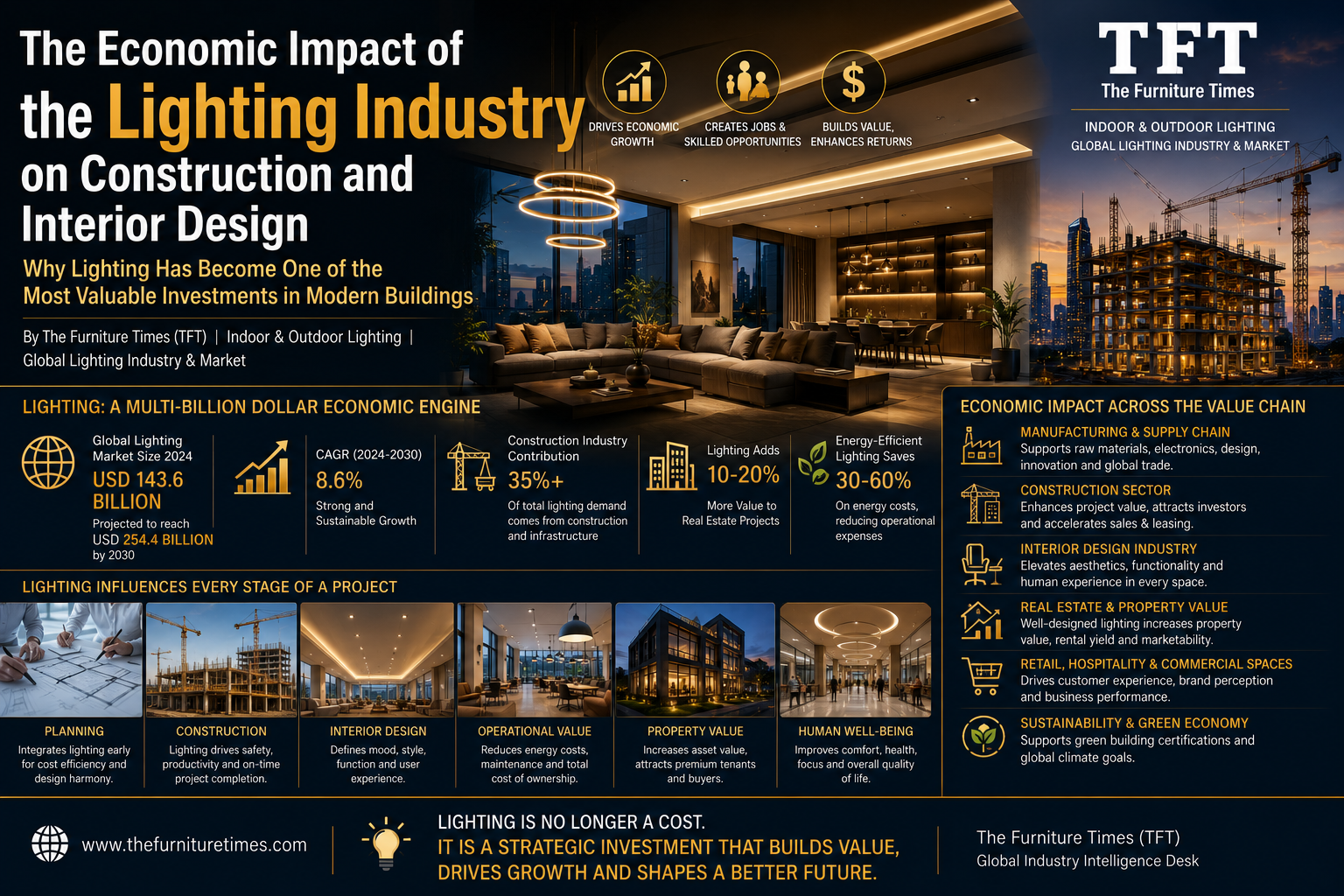
The global lighting industry has evolved far beyond the production of lamps, bulbs, and decorative fixtures. Today, lighting is a strategic economic driver that influences nearly every stage of the construction, architecture, furniture, real estate, hospitality, and interior design industries. Whether it is a residential home, luxury hotel, office tower, shopping mall, hospital, airport, educational institution, or industrial facility, lighting has become one of the most critical investments in determining a building’s functionality, efficiency, sustainability, market value, and user experience.
As the global construction sector continues to expand and urban populations grow, demand for advanced indoor and outdoor lighting solutions is increasing rapidly. At the same time, architects and interior designers are placing greater emphasis on lighting as an essential design element rather than simply a technical requirement.
The lighting industry now contributes billions of dollars to the global economy through manufacturing, engineering, technology, installation, maintenance, software development, energy management, smart building systems, and design services.
Construction Growth Fuels Lighting Demand
Every new building requires lighting.
From the earliest design stage through construction, commissioning, occupancy, and facility management, lighting remains one of the few building systems that influences nearly every occupant and every space.
Rapid urbanization continues to drive demand for:
- Residential housing
- Commercial office buildings
- Hotels and resorts
- Healthcare facilities
- Universities and schools
- Airports
- Industrial parks
- Warehouses
- Retail developments
- Public infrastructure
Each of these projects represents a significant opportunity for lighting manufacturers, distributors, consultants, contractors, and technology providers.
Large mixed-use developments often include thousands of lighting fixtures integrated across indoor and outdoor environments, creating substantial economic value throughout the supply chain.
Lighting Is No Longer a Cost—It Is an Investment
Historically, lighting was viewed as a necessary construction expense.
Today, developers increasingly recognize lighting as a long-term investment capable of generating measurable returns through:
- Lower energy consumption
- Reduced maintenance costs
- Increased property values
- Higher rental income
- Improved employee productivity
- Enhanced customer experiences
- Better hospitality ratings
- Stronger retail sales
- Sustainability certifications
- Greater building competitiveness
Well-designed lighting contributes directly to the financial performance of both commercial and residential properties.
Interior Design Begins with Light
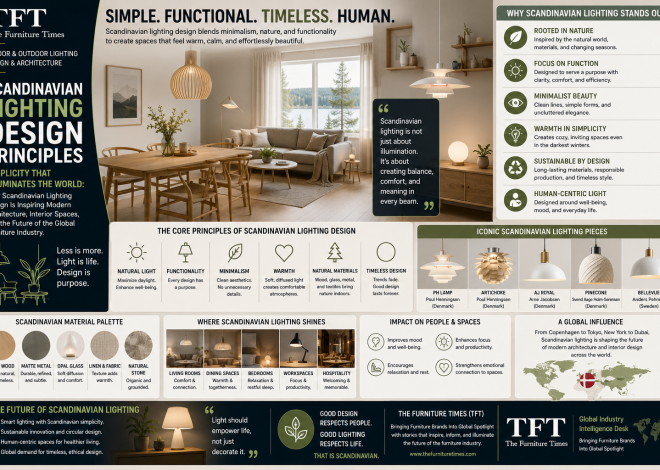
Interior designers understand that lighting shapes how every space is perceived.
The same furniture, flooring, wall finishes, artwork, and architectural details can appear dramatically different depending on lighting quality.
Lighting influences:
- Color perception
- Texture visibility
- Spatial depth
- Visual comfort
- Emotional atmosphere
- Luxury perception
- Brand identity
- Customer engagement
- Functional efficiency
- Occupant well-being
Modern interior design no longer treats lighting as an accessory. Instead, lighting is integrated into the design process from the earliest planning stages.
Increasingly, lighting designers collaborate closely with architects, furniture manufacturers, landscape designers, and technology consultants to create harmonious environments.
The Furniture Industry Depends on Quality Lighting
Furniture and lighting have become inseparable.
Furniture manufacturers invest heavily in showroom lighting because illumination directly influences how consumers evaluate craftsmanship, finishes, materials, and colors.
Quality lighting enhances:
- Wood grain visibility
- Upholstery textures
- Fabric colors
- Stone surfaces
- Metal finishes
- Glass features
- Decorative accessories
- Product photography
- Digital catalog presentation
- Customer confidence
Luxury furniture retailers recognize that exceptional lighting can significantly improve customer engagement and purchasing decisions.
Many furniture collections now include integrated LED systems within wardrobes, kitchen cabinets, display units, office furniture, entertainment centers, shelving, and hospitality products.
Smart Buildings Are Expanding Market Opportunities
The global shift toward smart buildings has created entirely new business opportunities for the lighting industry.
Modern intelligent buildings increasingly integrate lighting with:
- Artificial Intelligence
- Internet of Things (IoT)
- Occupancy sensors
- Building automation systems
- Climate control
- Security platforms
- Energy management
- Cloud analytics
- Mobile applications
- Predictive maintenance software
Lighting has become one of the largest contributors to intelligent building infrastructure.
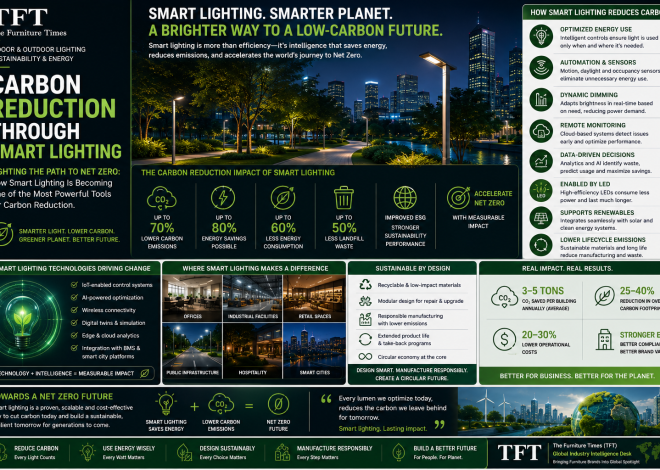
Rather than functioning independently, lighting now communicates with multiple building systems, improving operational efficiency while reducing long-term operating costs.
Sustainable Construction Is Accelerating Demand
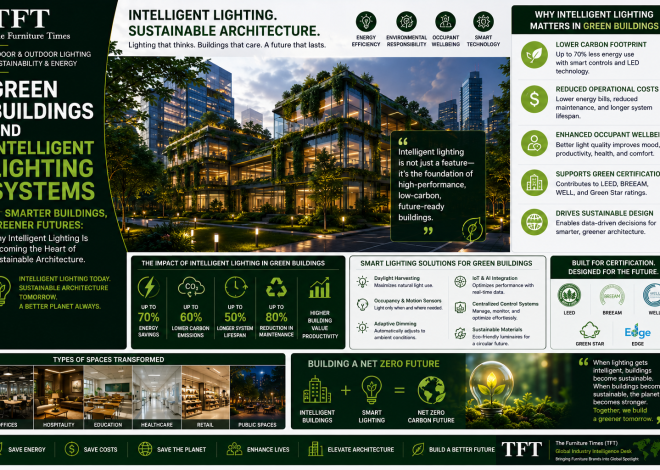
Governments worldwide continue strengthening environmental regulations aimed at reducing building energy consumption and carbon emissions.
Lighting plays a central role because electricity used for illumination represents a significant portion of building energy demand.
Developers increasingly prioritize:
- LED technology
- Smart controls
- Daylight harvesting
- Solar-powered lighting
- Motion sensors
- Adaptive brightness
- Energy monitoring
- Human-centric lighting
- Recyclable materials
- Low-carbon manufacturing
Green building certifications such as LEED, BREEAM, GreenRE, Green Star, and similar sustainability frameworks place considerable emphasis on efficient lighting systems.
Buildings equipped with advanced lighting solutions often command higher market values and attract environmentally conscious investors and tenants.
Hospitality Investments Depend on Lighting
Hotels, resorts, restaurants, cafés, and luxury residences increasingly compete through guest experience rather than accommodation alone.
Lighting influences every stage of the customer journey.
Proper lighting creates:
- Memorable first impressions
- Luxury ambiance
- Comfortable guest rooms
- Attractive dining experiences
- Instagram-worthy interiors
- Brand differentiation
- Improved guest satisfaction
- Higher occupancy rates
- Increased customer loyalty
- Stronger online reviews
For hospitality operators, lighting has become a strategic investment that directly supports revenue generation.
Retail Success Is Influenced by Illumination
Retail lighting affects customer psychology in ways that directly influence purchasing behavior.
Effective lighting encourages customers to:
- Spend more time inside stores.
- Notice premium products.
- Explore displays.
- Feel comfortable.
- Trust product quality.
- Make purchasing decisions.
Retailers increasingly use intelligent lighting systems that adjust brightness, highlight promotional products, and adapt to customer traffic patterns throughout the day.
As physical retail competes with e-commerce, lighting remains one of the most effective tools for creating immersive shopping experiences.
Commercial Offices Benefit Financially
Employers increasingly understand that workplace environments influence employee performance.
Modern office lighting contributes to:
- Improved concentration
- Reduced eye strain
- Better collaboration
- Employee wellness
- Higher productivity
- Lower absenteeism
- Flexible workspace design
- Reduced operating costs
AI-powered lighting systems further optimize energy usage by automatically responding to occupancy and natural daylight.
For large corporate campuses, these improvements generate measurable financial returns over time.
Infrastructure Development Creates Massive Opportunities
Governments continue investing heavily in infrastructure projects requiring sophisticated lighting systems.
Major opportunities include:
- Smart highways
- Airports
- Seaports
- Railway stations
- Stadiums
- Public parks
- Bridges
- Tunnels
- Industrial zones
- Smart city developments
These projects stimulate demand across manufacturing, engineering, installation, maintenance, and digital infrastructure services.
Digital Transformation Is Reshaping the Industry
The purchasing journey for lighting products has changed dramatically.
Architects, developers, contractors, designers, and consumers increasingly research products online before making purchasing decisions.
Manufacturers that invest in:
- Digital catalogs
- BIM libraries
- Virtual showrooms
- AI-powered product search
- Technical documentation
- Product configurators
- Interactive visualization
- Educational content
are significantly better positioned to compete in the global marketplace.
Digital visibility has become nearly as important as manufacturing quality.
Employment Across the Value Chain
The lighting industry supports millions of jobs worldwide.
Career opportunities extend far beyond manufacturing and include:
- Product design
- Industrial engineering
- Lighting design
- Interior architecture
- Electrical engineering
- Smart building consulting
- Software development
- AI engineering
- Construction management
- Installation services
- Facility management
- Maintenance
- Distribution
- Digital marketing
- Sustainability consulting
As technology advances, demand for multidisciplinary professionals continues to grow.
Investment Opportunities Through 2035
The economic outlook for the lighting industry remains highly positive.
Investment opportunities continue expanding across:
- Smart lighting platforms
- LED manufacturing
- AI-powered lighting software
- Human-centric lighting
- Outdoor infrastructure
- Renewable energy integration
- Building automation
- Hospitality lighting
- Healthcare lighting
- Smart city technologies
Companies capable of combining innovation, sustainability, digital intelligence, and exceptional design will lead future market growth.
Challenges Facing the Industry
Despite strong growth prospects, several challenges require attention.
These include:
- Global supply chain disruptions
- Semiconductor availability
- Skilled labor shortages
- Cybersecurity for connected lighting
- Electronic waste management
- Standardization across smart platforms
- Rising material costs
- Product quality assurance
- Consumer education
- Sustainability compliance
Organizations that proactively address these issues will strengthen customer trust and long-term competitiveness.
Lighting the Future of Construction and Design
The global lighting industry has become one of the most influential sectors supporting modern construction and interior design.
It shapes how buildings perform, how people experience spaces, how businesses operate, and how cities evolve.
From energy-efficient homes and intelligent offices to luxury hotels, retail destinations, hospitals, factories, and smart cities, lighting is creating economic value far beyond illumination.
For developers, architects, furniture manufacturers, designers, investors, governments, contractors, and technology companies, lighting represents one of the strongest opportunities to improve operational efficiency, environmental performance, user experience, and long-term profitability.
As construction becomes smarter, buildings become more connected, and sustainability becomes a global priority, the lighting industry will continue serving as one of the fundamental pillars of the built environment.
The future belongs to organizations that understand a simple reality: exceptional buildings are not only designed with architecture and furniture—they are brought to life through intelligent, sustainable, and beautifully integrated lighting.