
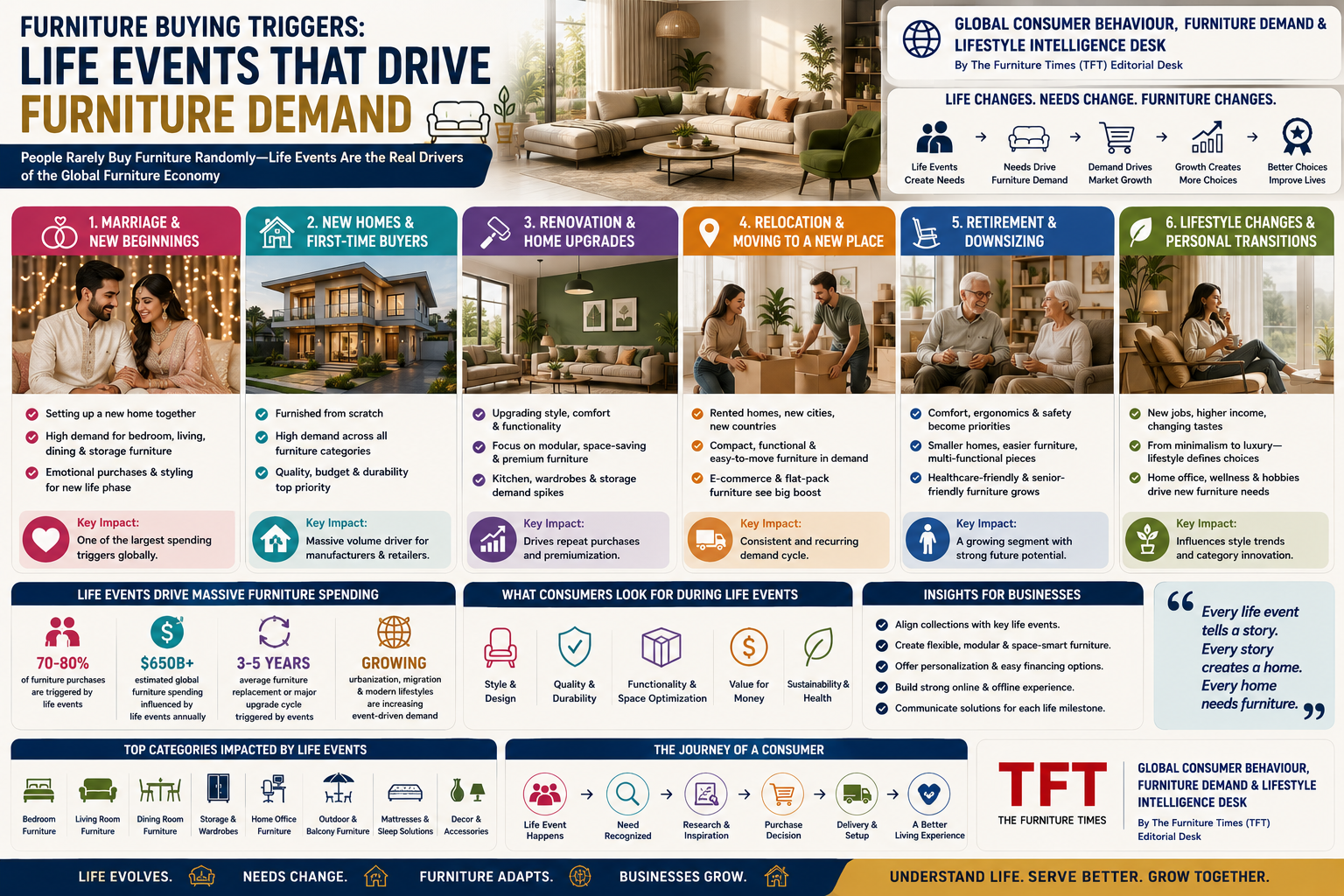
Furniture Buying Triggers: Marriage, New Homes, Renovation, Relocation, Retirement and Lifestyle Changes
People Rarely Buy Furniture Randomly—Life Events Are the Real Drivers of the Global Furniture Economy
Global Consumer Behaviour, Furniture Demand & Lifestyle Intelligence Desk
By The Furniture Times (TFT) Editorial Desk
The global furniture industry has traditionally focused on products.
Manufacturers develop new collections.
Retailers promote discounts.
Designers create beautiful interiors.
E-commerce platforms optimise online shopping experiences.
However, the biggest question is often overlooked:
Why do people decide to buy furniture in the first place?
Consumers rarely wake up one morning and decide to replace an entire living room without a reason.
Most furniture purchases are triggered by significant life events.
A marriage.
The purchase of a first home.
Moving into a new apartment.
The birth of a child.
A home renovation.
A promotion at work.
A growing family.
A business expansion.
Retirement.
Lifestyle changes.
These moments create urgency.
They change how people live, work, entertain and organise their daily lives.
The furniture industry should therefore focus less on simply selling products and more on understanding the moments that create demand.
When furniture companies understand buying triggers, they can predict future purchasing behaviour, improve marketing, strengthen product development and build stronger customer relationships.
Furniture demand is not random.
It follows the rhythm of people’s lives.
Life Events Create Furniture Economies
Every major life transition creates new furniture requirements.
The most common global buying triggers include:
- Marriage
- Buying a first home
- Renting a new apartment
- Building a house
- Renovating an existing property
- Relocating to another city or country
- Birth of children
- Children leaving home
- Career advancement
- Retirement
- Business expansion
- Hotel development
- Office relocation
- Lifestyle upgrades
Each trigger creates different purchasing priorities.
Understanding these differences allows manufacturers and retailers to offer better solutions.
Marriage: One of the World’s Largest Furniture Triggers
Marriage often marks the beginning of a new household.
Instead of purchasing individual furniture items, couples frequently buy complete home collections.
Typical purchases include:
- Bedroom furniture
- Sofas
- Dining tables
- Wardrobes
- Coffee tables
- TV units
- Mattresses
- Outdoor furniture
Marriage also increases demand for:
- Home décor
- Kitchen furniture
- Storage
- Home office products
In many cultures, furniture purchases are closely connected with wedding preparations or establishing a new family home.
This makes newly married couples one of the most valuable customer groups.
First Homes Create Complete Furniture Packages
Buying a first home is often the largest furniture purchasing event in a person’s life.
New homeowners may require furniture for:
- Living rooms
- Bedrooms
- Dining rooms
- Home offices
- Balconies
- Outdoor spaces
Rather than purchasing isolated products, they often seek coordinated packages.
Furniture companies can simplify the buying process by offering complete room collections.
Apartment Purchases
Urban apartment buyers frequently prioritise:
- Compact furniture
- Modular storage
- Space-saving products
- Multifunctional designs
- Affordable pricing
Apartment ownership creates strong demand for:
- Sofa beds
- Expandable dining tables
- Wall-mounted storage
- Foldable desks
Building a New House
Building a custom home often creates premium furniture demand.
Homeowners may invest in:
- Custom wardrobes
- Bespoke kitchens
- Luxury sofas
- Designer dining tables
- Home libraries
- Entertainment furniture
- Outdoor living collections
Construction and furniture purchasing frequently progress together.
Manufacturers that engage buyers before project completion gain competitive advantages.
Renovation Creates Replacement Demand
Many consumers replace furniture during renovation because:
- Existing furniture no longer matches the new design.
- Old products have reached the end of their useful life.
- Better layouts require different dimensions.
- Storage needs have changed.
- Lifestyle expectations have evolved.
Renovation creates opportunities for:
- Kitchen furniture
- Wardrobes
- Living-room furniture
- Bathroom storage
- Outdoor upgrades
- Home office furniture
Replacement demand often exceeds demand from completely new construction over time.
Relocation Changes Furniture Requirements
Moving to another city, country or property often requires furniture decisions.
Consumers may:
- Purchase new furniture.
- Sell existing furniture.
- Replace oversized products.
- Upgrade to premium collections.
- Downsize for smaller homes.
International relocation creates additional demand because transporting large furniture can be expensive.
Many expatriates choose to purchase locally instead.
Career Growth Influences Spending
Promotions and increased income frequently lead to furniture upgrades.
Consumers may replace:
- Sofas
- Dining tables
- Beds
- Office furniture
- Outdoor furniture
The purchase is not always driven by necessity.
It is often motivated by changing lifestyle expectations.
Remote Work Created New Demand
Hybrid work transformed furniture purchasing worldwide.
Consumers increasingly require:
- Ergonomic chairs
- Adjustable desks
- Home office storage
- Video-call backgrounds
- Acoustic solutions
Home offices have become permanent spaces rather than temporary arrangements.
Children Create Furniture Lifecycles
The arrival of a child creates demand for:
- Cribs
- Nursery storage
- Changing tables
- Children’s wardrobes
- Study desks
- Bunk beds
- Toy storage
Furniture demand evolves as children grow.
Parents replace products according to age, safety and educational needs.
Teenagers and Students
Growing children require:
- Study furniture
- Gaming desks
- Ergonomic chairs
- Bookshelves
- Storage systems
Student accommodation creates another furniture purchasing cycle.
Empty Nest Households
When children leave home, parents often:
- Renovate
- Upgrade furniture
- Convert bedrooms
- Create hobby rooms
- Expand home offices
This stage generates substantial replacement demand.
Retirement
Retirement changes furniture priorities.
Consumers increasingly value:
- Comfort
- Accessibility
- Easy maintenance
- Outdoor relaxation
- Wellness
Popular purchases include:
- Recliners
- Adjustable beds
- Garden furniture
- Reading chairs
- Accessible storage
The ageing global population makes retirement furniture a growing market.
Lifestyle Changes Drive Premium Purchases
Lifestyle upgrades include:
- Home entertaining
- Outdoor living
- Smart homes
- Wellness
- Minimalism
- Luxury living
Consumers purchase furniture that reflects personal identity.
Lifestyle often influences premium spending more than income alone.
Renovating for Social Media
Many homeowners renovate because they want spaces suitable for:
- Photography
- Video calls
- Content creation
- Social media
Furniture increasingly supports digital lifestyles.
Property Investment
Investors purchasing rental properties require:
- Durable furniture
- Easy maintenance
- Affordable replacement
- Standardised collections
Furnished rental properties create recurring furniture demand.
Holiday Homes
Second homes require:
- Outdoor furniture
- Compact kitchens
- Storage
- Weather-resistant products
Tourism growth increases this market.
Commercial Buying Triggers
Businesses purchase furniture when:
- Opening new offices
- Expanding operations
- Rebranding
- Renovating
- Relocating
- Increasing staff
Commercial triggers differ from residential demand because they focus on operational performance.
Hospitality Triggers
Hotels purchase furniture when:
- Opening new properties
- Renovating rooms
- Rebranding
- Expanding facilities
- Improving guest ratings
Restaurants purchase furniture to:
- Increase seating
- Refresh interiors
- Improve customer experience
Healthcare and Education
Hospitals purchase furniture because of:
- Expansion
- New equipment
- Patient comfort
- Compliance
Schools purchase furniture when:
- Building classrooms
- Upgrading facilities
- Increasing student numbers
Emotional Buying Triggers
Furniture purchases are influenced by emotions such as:
- Celebration
- Achievement
- Security
- Comfort
- Pride
- Family
- Belonging
Consumers often associate furniture with important memories.
This emotional connection makes furniture different from many consumer products.
Financial Buying Triggers
Furniture demand also responds to:
- Mortgage approvals
- Salary increases
- Government incentives
- Lower interest rates
- Tax benefits
- Consumer confidence
Economic conditions affect the timing of purchases.
Seasonal Buying Triggers
Many markets experience increased furniture demand during:
- Wedding seasons
- Festival periods
- Back-to-school
- Year-end holidays
- Property handovers
Retailers should align campaigns with local buying calendars.
Digital Buying Triggers
Consumers increasingly begin their journey online.
Common searches include:
- Furniture for first home
- Best furniture for newlyweds
- Apartment furniture ideas
- Home renovation furniture
- Home office setup
- Retirement furniture
- Outdoor living inspiration
Search intent often reveals buying triggers before purchases occur.
AI Will Predict Furniture Purchases
Future AI systems may identify likely buying triggers by analysing:
- Property purchases
- Family growth
- Relocation
- Renovation activity
- Consumer searches
Furniture marketing will become increasingly personalised.
Regional Differences
Asia-Pacific
Rapid urbanisation drives:
- First-home purchases
- Apartment living
- Young family demand
Europe
Strong renovation and replacement markets.
North America
Large suburban housing and relocation demand.
Middle East
Luxury villas, new developments and premium lifestyle upgrades.
Africa
Urban housing growth and first-time homeownership.
Latin America
Growing middle-class housing and renovation markets.
Every region has unique trigger patterns.
Furniture Brands Should Market Moments, Not Products
Instead of advertising only sofas, companies should communicate:
- Furniture for newlyweds
- Furniture for first apartments
- Furniture for growing families
- Furniture for retirement
- Furniture for home renovations
Life-event marketing creates stronger customer relevance.
Strategic Recommendations
Furniture companies should:
- Identify major buying triggers.
- Build life-stage marketing campaigns.
- Create complete furniture packages.
- Partner with developers.
- Work with wedding and relocation industries.
- Offer renovation collections.
- Strengthen digital search visibility.
- Personalise customer recommendations.
- Build long-term customer relationships.
- Measure customer lifetime value.
Furniture Demand Begins Before the Showroom
Consumers do not simply buy furniture.
They respond to changes in their lives.
Marriage creates bedrooms.
New homes create living rooms.
Children create nurseries.
Renovations create replacements.
Relocation creates fresh beginnings.
Retirement creates comfort.
Lifestyle changes create aspiration.
The companies that understand these life events will understand the future of furniture demand.
They will not simply sell products.
They will provide solutions at the moments when customers need them most.
The future of the global furniture industry belongs to businesses that recognise one fundamental truth: people buy furniture because life changes—not because furniture exists.
