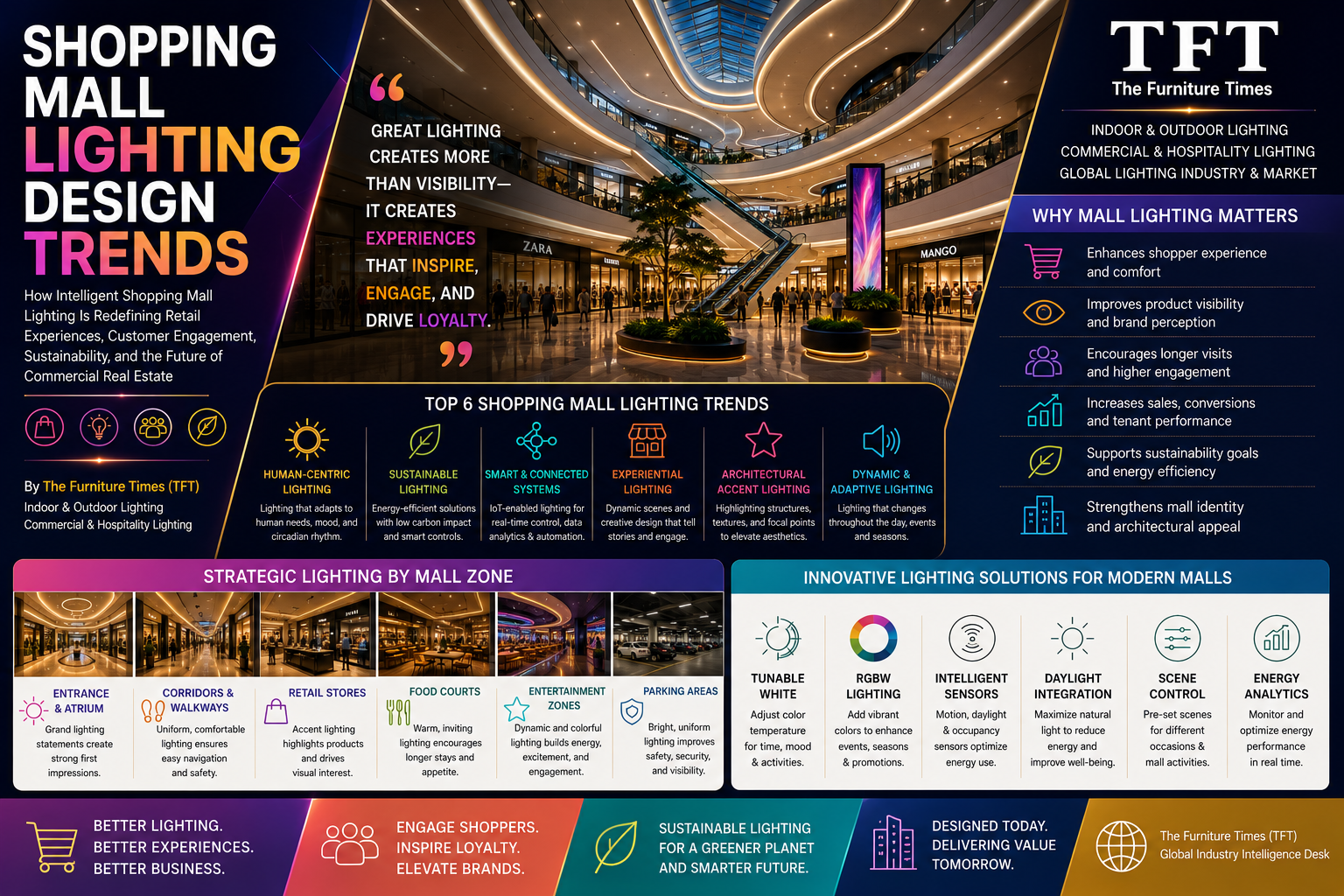
Shopping Mall Lighting Design Trends
By The Furniture Times (TFT) | Indoor & Outdoor Lighting | Commercial & Hospitality Lighting
How Intelligent Shopping Mall Lighting Is Redefining Retail Experiences, Customer Engagement, Sustainability, and the Future of Commercial Real Estate
The modern shopping mall has evolved far beyond being a collection of retail stores. Around the world, malls are transforming into lifestyle destinations where people shop, dine, work, socialize, attend events, experience entertainment, and connect with brands. As online shopping continues to grow, physical retail spaces must deliver memorable experiences that cannot be replicated through digital platforms.
One of the most influential elements driving this transformation is lighting.
Shopping mall lighting is no longer designed solely to illuminate corridors and storefronts. It has become an essential component of commercial architecture, customer psychology, wayfinding, brand storytelling, operational efficiency, sustainability, security, and immersive retail experiences. From luxury shopping centres and mixed-use developments to outlet malls, lifestyle centres, airport retail complexes, and entertainment hubs, lighting now shapes how visitors feel, move, interact, and spend.
Powered by Artificial Intelligence (AI), Internet of Things (IoT), LED innovation, smart building technologies, digital analytics, human-centric lighting, and environmentally sustainable solutions, shopping mall lighting is entering a new era where every lighting decision contributes to both customer satisfaction and commercial profitability.
For shopping mall developers, retail operators, architects, lighting manufacturers, furniture companies, interior designers, commercial property investors, smart city planners, hospitality consultants, and technology providers, intelligent lighting has become one of the most valuable investments in creating future-ready retail destinations.
Shopping Malls Have Become Experience Destinations
Modern consumers no longer visit malls only to purchase products.
Today’s shopping centres combine:
- Retail
- Dining
- Entertainment
- Wellness
- Community events
- Family activities
- Business meetings
- Lifestyle experiences
- Tourism attractions
- Digital engagement
Lighting helps unify these diverse functions into one seamless visitor experience.
Rather than serving as a background utility, lighting has become an active contributor to the mall’s identity and commercial success.
First Impressions Begin Before Entry
The customer journey starts long before shoppers enter the building.
Exterior lighting influences perceptions of:
- Safety
- Prestige
- Cleanliness
- Modern architecture
- Accessibility
- Luxury
- Brand confidence
- Professional management
- Innovation
- Destination appeal
Well-designed façades, illuminated entrances, landscaped lighting, parking guidance, and architectural highlights encourage visitors to choose one shopping destination over another.
Lighting Influences Customer Psychology
Human behaviour is strongly affected by environmental lighting.
Appropriate lighting encourages shoppers to:
- Stay longer
- Explore additional stores
- Feel comfortable
- Navigate easily
- Spend more time with products
- Visit restaurants
- Attend events
- Return in the future
- Recommend the destination
- Share experiences on social media
Comfortable lighting improves emotional connections while increasing overall visitor satisfaction.
Layered Lighting Creates Dynamic Shopping Environments
Successful malls rely on multiple lighting layers.
Ambient Lighting
Ambient lighting provides comfortable illumination throughout public areas.
Applications include:
- Main corridors
- Atriums
- Food courts
- Escalators
- Elevators
- Waiting areas
- Seating zones
- Public lounges
- Event spaces
- Children’s play areas
Balanced ambient lighting creates welcoming environments while supporting visual comfort.
Task Lighting
Task lighting supports operational activities.
Applications include:
- Information counters
- Concierge desks
- Customer service centres
- Security stations
- Maintenance areas
- Retail kiosks
- Payment counters
- Digital directories
- Staff offices
- Delivery zones
Proper task lighting improves productivity and operational efficiency.
Accent Lighting
Accent lighting directs customer attention.
Popular applications include:
- Retail storefronts
- Promotional displays
- Seasonal decorations
- Architectural features
- Art installations
- Luxury brand entrances
- Water features
- Decorative ceilings
- Premium furniture displays
- Event stages
Accent lighting strengthens the visual identity of the shopping centre.
Architectural Lighting Defines Modern Mall Design
Architectural lighting has become a signature feature of premium retail developments.
Designers increasingly incorporate:
- Linear LED systems
- Cove lighting
- Recessed lighting
- Dynamic façade lighting
- Illuminated ceilings
- Glass feature lighting
- Decorative wall washing
- Floating architectural elements
- Sculptural lighting installations
- Interactive lighting displays
Lighting enhances architecture while reinforcing brand prestige.
Smart LED Technology Powers Commercial Efficiency
LED technology has become the standard for modern shopping centres.
Its advantages include:
- High energy efficiency
- Long operational life
- Low maintenance
- Excellent colour rendering
- Smart automation compatibility
- Flexible fixture design
- Reduced heat generation
- Lower electricity costs
- Sustainable operation
- Enhanced customer comfort
LED systems allow shopping centres to balance aesthetics with operational savings.
Human-Centric Lighting Enhances Visitor Comfort
Shopping centres increasingly adopt human-centric lighting principles.
Proper lighting supports:
- Reduced eye fatigue
- Better orientation
- Improved mood
- Comfortable shopping
- Natural colour perception
- Family-friendly environments
- Extended dwell time
- Wellness
- Accessibility
- Positive customer experiences
Visitors who feel comfortable are more likely to spend additional time exploring the mall.
Digital Retail Requires Intelligent Lighting
Artificial Intelligence and IoT technologies continue transforming commercial environments.
Smart lighting systems allow mall operators to:
- Monitor occupancy.
- Adjust brightness automatically.
- Schedule lighting events.
- Coordinate seasonal displays.
- Optimise energy consumption.
- Integrate with security systems.
- Analyse visitor movement.
- Support predictive maintenance.
- Improve operational efficiency.
- Enhance customer experiences.
Lighting has become an intelligent component of smart commercial buildings.
Retailers and Lighting Work Together
Individual stores depend on mall lighting while maintaining their own visual identity.
Coordinated lighting strategies support:
- Fashion retailers
- Furniture showrooms
- Electronics stores
- Luxury boutiques
- Beauty brands
- Supermarkets
- Bookstores
- Lifestyle retailers
- Home décor stores
- Department stores
The relationship between mall lighting and retailer lighting creates a consistent customer journey.
Furniture Plays a Critical Role
Commercial furniture increasingly integrates lighting.
Applications include:
- Public seating
- Information kiosks
- Display shelving
- Lounge areas
- Exhibition spaces
- Waiting zones
- Event furniture
- Concierge counters
- Premium display cabinets
- Interactive installations
Integrated lighting improves usability while elevating the mall’s overall design quality.
Furniture manufacturers and lighting companies are collaborating to create multifunctional commercial environments.
Entertainment Zones Require Dynamic Lighting
Shopping centres increasingly include:
- Cinemas
- Gaming centres
- Indoor attractions
- Family entertainment venues
- Performance stages
- Interactive exhibitions
- Art galleries
- Event halls
- Children’s attractions
- Community spaces
Dynamic lighting systems create immersive experiences that encourage longer visits and repeat traffic.
Seasonal and Promotional Lighting Boosts Engagement
Lighting enables malls to celebrate:
- Holiday seasons
- Cultural festivals
- Product launches
- Brand collaborations
- Fashion events
- Community celebrations
- Charity campaigns
- Live performances
- Promotional activations
- Tourism initiatives
Programmable lighting provides flexibility throughout the year while keeping shopping centres visually fresh.
Sustainability Shapes Future Investments
Environmental responsibility has become central to commercial development.
Shopping centres increasingly invest in:
- Energy-efficient LEDs
- Renewable energy integration
- Smart occupancy sensors
- Intelligent energy monitoring
- Sustainable manufacturing
- Recyclable materials
- Green building certifications
- Reduced carbon emissions
- Water-efficient systems
- Responsible sourcing
Sustainable lighting supports both operational profitability and environmental stewardship.
Artificial Intelligence Will Transform Shopping Centres
Future lighting systems may automatically:
- Analyse customer traffic.
- Personalise lighting according to events.
- Adapt to weather conditions.
- Coordinate with digital advertising.
- Improve emergency response.
- Optimise maintenance schedules.
- Support autonomous cleaning systems.
- Enhance accessibility.
- Predict equipment failures.
- Integrate with smart city infrastructure.
Artificial Intelligence will transform lighting into an intelligent commercial management platform.
Opportunities Across the Industry
The evolution of shopping centres creates opportunities for:
- Shopping mall developers
- Retail brands
- Lighting manufacturers
- Furniture companies
- Architects
- Interior designers
- Smart building providers
- Technology companies
- Sustainability consultants
- Commercial property investors
Businesses capable of combining intelligent technology, architectural excellence, sustainability, and customer experience will continue leading the next generation of retail development.
Challenges Facing Shopping Mall Lighting
Despite remarkable progress, several challenges remain.
The industry continues addressing:
- Rising energy costs
- Smart system interoperability
- Cybersecurity
- Installation complexity
- Maintenance planning
- Product standardisation
- Skilled workforce shortages
- Sustainability compliance
- Long-term software support
- Changing consumer expectations
Continuous innovation and collaboration will be essential to future success.
Lighting the Future of Commercial Destinations
Shopping mall lighting has become one of the most influential drivers of commercial success.
It shapes customer experiences, strengthens retail brands, improves operational efficiency, enhances sustainability, supports security, and transforms shopping centres into vibrant lifestyle destinations.
From AI-powered automation and human-centric lighting to architectural illumination, intelligent LED systems, integrated commercial furniture, and interactive digital experiences, lighting continues redefining the future of retail real estate.
For developers, retailers, furniture manufacturers, lighting companies, architects, technology innovators, commercial investors, and city planners, the opportunity lies in creating shopping environments where every lighting decision contributes to customer engagement and business growth.
The shopping malls of tomorrow will not simply provide retail space.
They will become intelligent, sustainable, experience-driven destinations where lighting connects architecture, technology, commerce, entertainment, and human behaviour into one unified environment.
As commercial and hospitality lighting continues advancing, one truth becomes increasingly evident: successful shopping centres are built not only with stores and products—but with unforgettable experiences, and exceptional lighting is one of the most powerful tools for creating them.