Smart Apartment Lighting for Urban Living
By The Furniture Times (TFT) | Indoor & Outdoor Lighting | Indoor Residential Lighting
How Intelligent Apartment Lighting Is Redefining Urban Living, Space Optimization, Energy Efficiency, and the Future of Smart Residential Design
As cities continue to expand and urban populations grow at an unprecedented pace, apartments have become the dominant form of residential living across much of the world. From compact studio apartments and serviced residences to luxury condominiums and high-rise penthouses, urban homes are evolving to meet the demands of modern lifestyles, digital connectivity, sustainability, and intelligent living.
In this new era of residential design, lighting has emerged as one of the most influential elements shaping how people experience their homes.
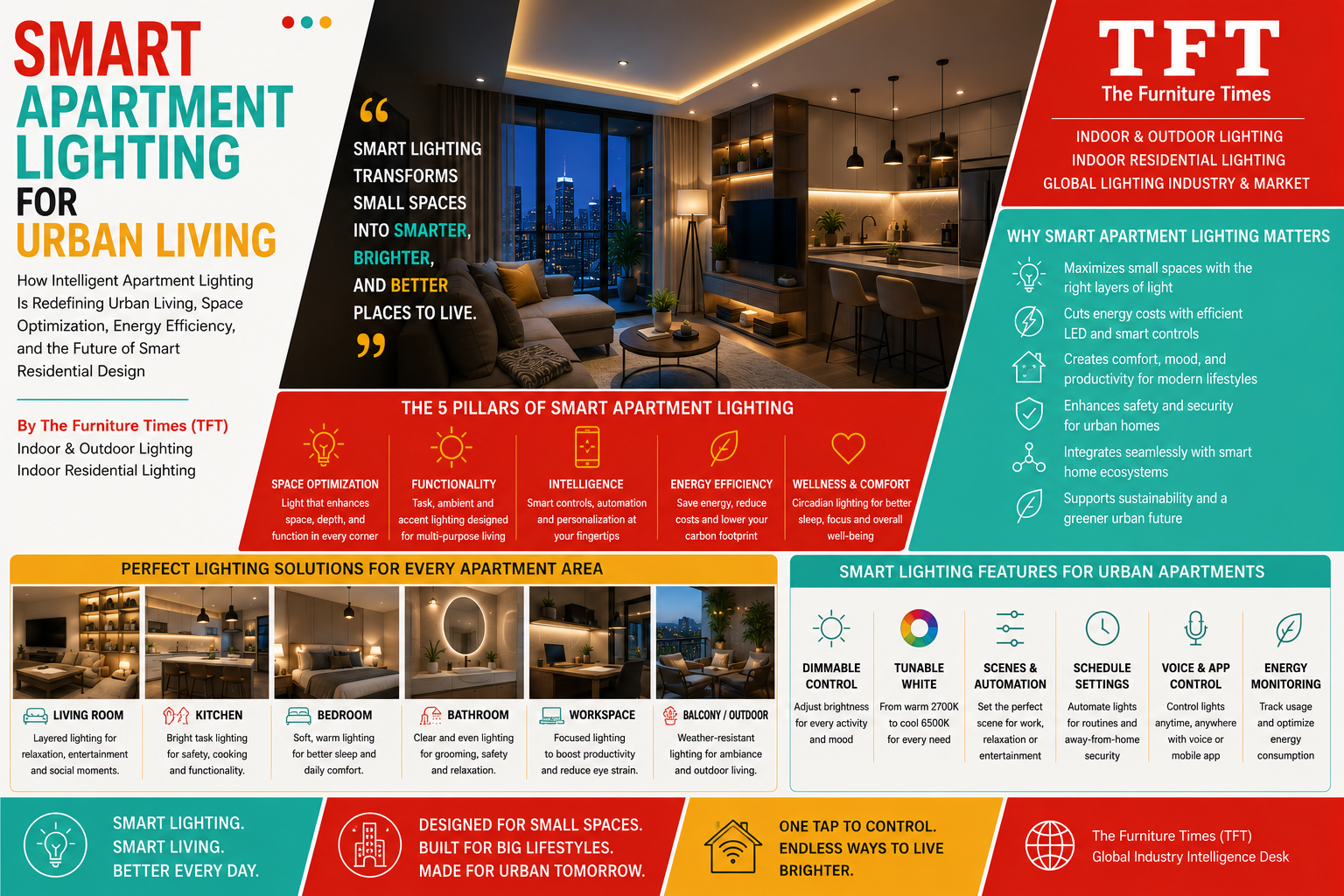
No longer limited to illuminating a room, modern apartment lighting enhances comfort, supports productivity, improves safety, creates visual spaciousness, optimizes energy consumption, integrates with smart home ecosystems, and contributes to healthier lifestyles. Intelligent lighting has become an essential feature of contemporary urban living, where every square metre must serve multiple purposes and every technological innovation adds value.
Powered by Artificial Intelligence (AI), Internet of Things (IoT), LED technology, wireless automation, voice control, sensors, and human-centric lighting, smart apartment lighting is transforming residential interiors into adaptive environments that respond to the needs of homeowners in real time.
For property developers, architects, interior designers, lighting manufacturers, furniture companies, smart home technology providers, real estate investors, and urban planners, the evolution of apartment lighting presents enormous opportunities to create homes that are more efficient, sustainable, and enjoyable to live in.
Urban Living Is Changing Residential Design
Rapid urbanisation has reshaped how people live.
Today’s apartments are designed to support a variety of daily activities, including:
- Remote work
- Family living
- Home entertainment
- Fitness routines
- Online learning
- Social gatherings
- Digital content creation
- Personal wellness
- Dining
- Relaxation
Unlike traditional homes with larger floor plans, apartments often require every room to perform multiple functions throughout the day.
Lighting plays a critical role in enabling these flexible living environments.
Lighting Maximises Small Spaces
One of the greatest design challenges in apartment living is making limited space feel larger, brighter, and more comfortable.
Well-designed lighting can visually expand interiors by:
- Reducing dark corners
- Creating depth
- Highlighting architectural features
- Emphasising ceiling height
- Improving room proportions
- Enhancing natural daylight
- Defining activity zones
- Creating visual continuity
- Reducing clutter perception
- Supporting open-plan layouts
Lighting has become one of the most effective tools for space optimisation in urban homes.
Layered Lighting Creates Flexible Apartments
Professional interior designers increasingly rely on layered lighting to accommodate changing daily activities.
Ambient Lighting
Ambient lighting provides the overall illumination for apartment interiors.
Common solutions include:
- Recessed LED lighting
- Ceiling-mounted fixtures
- Surface-mounted luminaires
- Indirect cove lighting
- Smart ceiling panels
Balanced ambient lighting creates comfortable environments while improving overall visibility.
Task Lighting
Task lighting supports specific activities throughout the apartment.
Applications include:
- Kitchen counters
- Home office desks
- Reading corners
- Dining tables
- Dressing areas
- Bathroom mirrors
- Wardrobes
- Study spaces
- Laundry areas
- Hobby stations
Focused lighting enhances efficiency while reducing eye strain.
Accent Lighting
Accent lighting adds personality and architectural interest.
Popular applications include:
- Shelving
- Artwork
- Decorative walls
- Display cabinets
- Floating furniture
- Indoor plants
- Entertainment units
- Feature ceilings
- Architectural niches
- Kitchen cabinetry
Accent lighting transforms compact apartments into visually sophisticated living environments.
Smart Lighting Is Transforming Urban Homes
Artificial Intelligence and IoT technologies are redefining apartment living.
Modern smart lighting systems allow residents to:
- Control lights through smartphones.
- Use voice assistants.
- Automate lighting schedules.
- Adjust brightness instantly.
- Change colour temperatures.
- Create customised lighting scenes.
- Integrate with security systems.
- Monitor energy usage.
- Control lighting remotely.
- Synchronise with smart appliances.
These technologies improve convenience while reducing energy consumption.
Human-Centric Lighting Supports Healthier Living
Urban lifestyles often involve long working hours, limited daylight exposure, and increased screen time.
Human-centric lighting helps address these challenges by adjusting colour temperature and brightness throughout the day.
Morning lighting promotes:
- Alertness
- Productivity
- Focus
- Energy
- Positive mood
Evening lighting encourages:
- Relaxation
- Better sleep preparation
- Reduced eye strain
- Emotional comfort
- Family bonding
Human-centric lighting is becoming a valuable wellness feature in modern apartments.
Furniture and Lighting Work Together
Contemporary apartment furniture increasingly incorporates integrated lighting solutions.
Applications include:
- Wardrobes
- Kitchen cabinets
- TV units
- Display shelves
- Floating furniture
- Bookshelves
- Beds
- Headboards
- Dining storage
- Study furniture
Integrated lighting improves functionality while maintaining clean, minimalist interiors.
Furniture manufacturers continue collaborating with lighting companies to create space-saving residential solutions.
LED Technology Continues Leading Apartment Design
LED lighting remains the preferred technology for urban apartments.
Advantages include:
- Low electricity consumption
- Long lifespan
- Excellent brightness
- Compact fixture designs
- Flexible installation
- Minimal heat generation
- Smart home compatibility
- Superior colour rendering
- Low maintenance
- Sustainable performance
LED technology supports both aesthetic excellence and energy efficiency.
Open-Plan Apartments Need Intelligent Lighting
Many urban apartments combine multiple living functions into open-plan layouts.
Lighting helps define individual zones without requiring physical walls.
Lighting can distinguish:
- Living areas
- Dining spaces
- Kitchens
- Workstations
- Reading corners
- Entertainment zones
- Relaxation spaces
- Children’s study areas
- Entryways
- Balconies
This flexibility enhances both usability and interior design.
Sustainability Drives Consumer Choices
Urban homeowners increasingly prioritise environmentally responsible lighting solutions.
Key considerations include:
- Energy-efficient LEDs
- Smart energy management
- Renewable energy compatibility
- Eco-friendly materials
- Recyclable components
- Long product lifespans
- Green building certifications
- Carbon footprint reduction
- Responsible manufacturing
- Sustainable packaging
Sustainability has become a major purchasing factor for apartment buyers.
Security Lighting Enhances Urban Safety
Smart apartment lighting also contributes to residential security.
Modern systems include:
- Motion sensors
- Entryway lighting
- Smart door integration
- Remote lighting control
- Occupancy simulation
- Emergency lighting
- Balcony illumination
- Corridor lighting
- Parking guidance
- Visitor detection
Lighting increasingly forms part of broader smart home security ecosystems.
Hospitality Design Influences Apartment Living
Luxury hotels and serviced apartments continue inspiring residential interiors.
Popular hospitality-inspired lighting features include:
- Layered ambient lighting
- Indirect ceiling illumination
- Smart bedside controls
- Designer decorative fixtures
- Integrated furniture lighting
- Premium dimming systems
- Automated scenes
- Mood lighting
- Architectural accents
- Wellness-focused illumination
Urban residents increasingly seek hotel-quality experiences within their own homes.
Artificial Intelligence Will Shape the Future
The next generation of apartment lighting will become increasingly intelligent.
AI-powered systems may automatically:
- Learn daily routines.
- Detect occupancy.
- Optimise energy usage.
- Synchronise with weather conditions.
- Adapt to natural daylight.
- Support remote working.
- Improve sleep quality.
- Integrate with wearable devices.
- Personalise lighting preferences.
- Connect seamlessly with entire smart home ecosystems.
Lighting will become predictive rather than reactive.
Real Estate Developers Recognise Smart Lighting’s Value
Developers increasingly understand that intelligent lighting enhances residential appeal.
Benefits include:
- Higher property values
- Increased buyer confidence
- Premium branding
- Smart home positioning
- Better marketing photography
- Sustainable certifications
- Competitive differentiation
- Customer satisfaction
- Lower operating costs
- Stronger long-term investment returns
Lighting has become an important selling feature in modern apartment developments.
Opportunities Across the Industry
The rapid growth of urban housing creates opportunities for:
- Lighting manufacturers
- Furniture companies
- Architects
- Interior designers
- Property developers
- Smart home providers
- AI technology companies
- Sustainable product manufacturers
- Real estate investors
- Urban planning specialists
Businesses capable of combining intelligent technology, sustainability, design excellence, and user experience will continue leading the market.
Challenges Facing Smart Apartment Lighting
Despite impressive innovation, several challenges remain.
The industry continues addressing:
- Product interoperability
- Installation complexity
- Cybersecurity
- Consumer education
- Software updates
- Smart home compatibility
- Cost accessibility
- Product standardisation
- Electronic waste
- Skilled workforce development
Continued collaboration across industries will accelerate adoption.
Lighting the Cities of Tomorrow
Urban living is changing the way homes are designed, experienced, and valued.
Lighting has become much more than a source of illumination—it is now a critical component of comfort, productivity, sustainability, security, and intelligent residential living.
From AI-powered automation and human-centric wellness to integrated furniture lighting, energy-efficient LED systems, and adaptive smart home technologies, apartment lighting is transforming the future of urban housing.
For homeowners, architects, furniture manufacturers, developers, interior designers, lighting companies, technology providers, and city planners, the opportunity lies in creating residential environments that are intelligent, adaptable, efficient, and inspiring.
The apartments of tomorrow will not simply be brighter.
They will be connected, responsive, sustainable, and personalised to every resident’s lifestyle.
As the global indoor residential lighting industry continues to evolve alongside smart city development, one reality becomes increasingly clear: the future of urban living will be illuminated by intelligent lighting systems that make compact homes feel larger, healthier, safer, and more enjoyable every day.