Global Lighting Market 2035: Trends, Forecasts, and Investment Opportunities
By The Furniture Times (TFT) | Indoor & Outdoor Lighting | Global Lighting Industry & Market
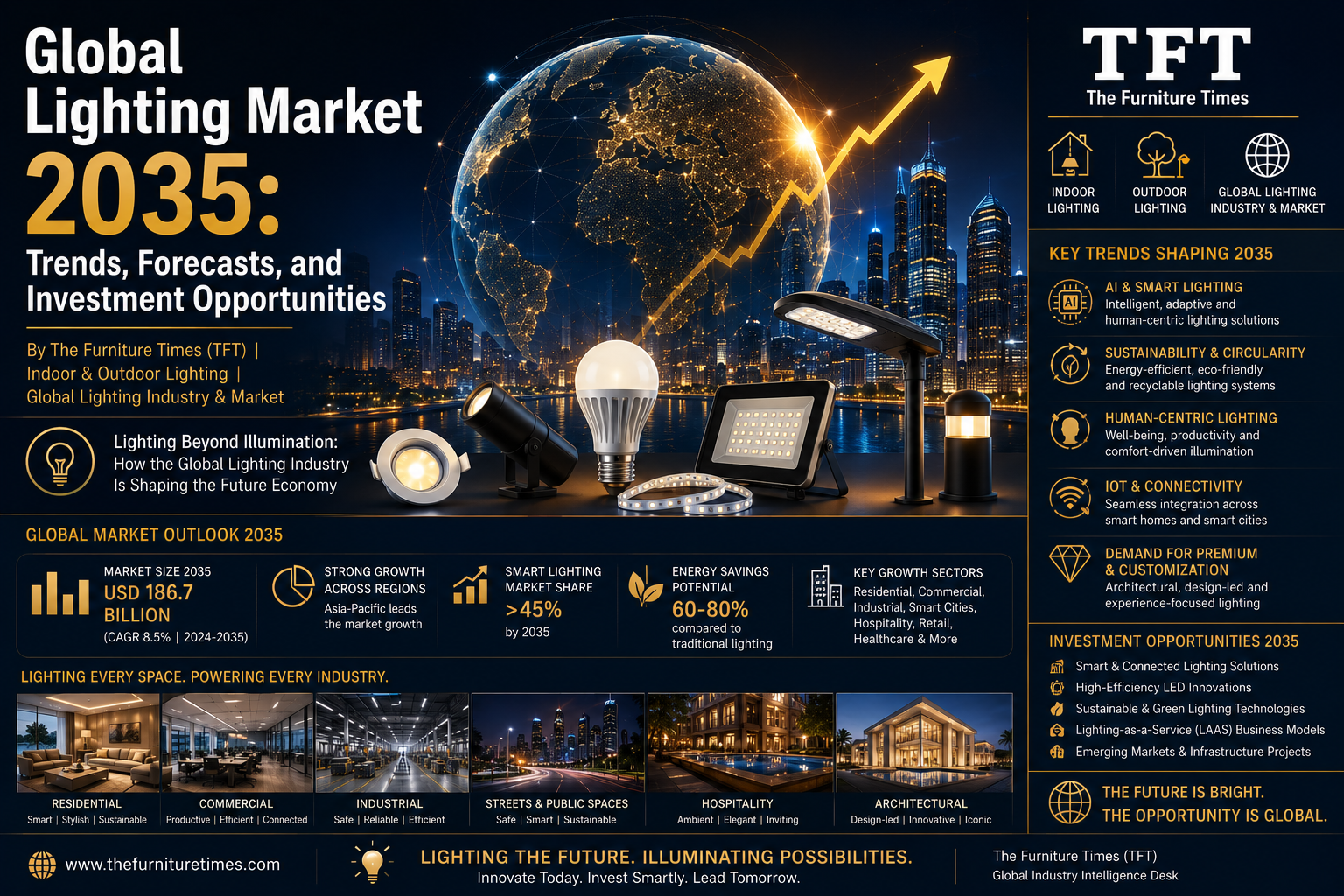
Lighting Beyond Illumination: How the Global Lighting Industry Is Shaping the Future Economy
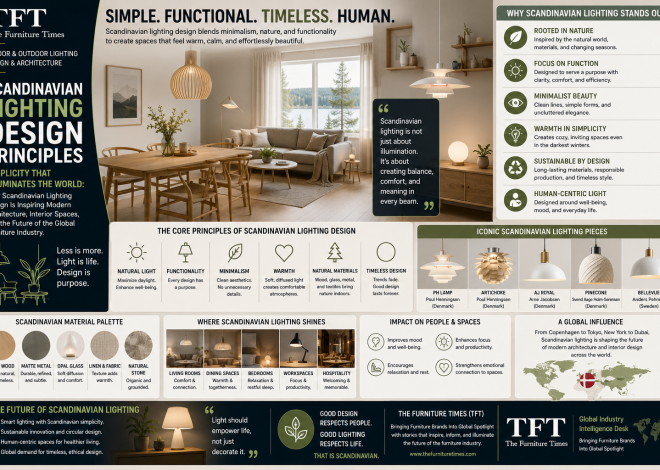
The global lighting industry is entering one of the most exciting and transformative decades in its history. By 2035, lighting will no longer be viewed simply as an electrical product or a construction component. It will become an intelligent digital infrastructure that powers smart homes, connected buildings, sustainable cities, industrial automation, healthcare innovation, and the future of urban living.
Driven by rapid advances in Artificial Intelligence (AI), the Internet of Things (IoT), smart sensors, renewable energy, advanced manufacturing, and environmental sustainability, the global lighting market is expected to experience sustained long-term growth. Governments, property developers, manufacturers, architects, hospitality operators, retailers, infrastructure planners, and technology companies are increasing investments in lighting solutions that deliver far more than illumination—they provide intelligence, efficiency, safety, data, and enhanced human experiences.
As the world moves toward carbon neutrality, digital transformation, and smarter infrastructure, the lighting sector stands at the intersection of construction, technology, energy, manufacturing, and design, making it one of the most attractive industries for innovation and investment.
A Market Transitioning from Products to Intelligent Solutions
The lighting industry has evolved dramatically over the past few decades. The shift from incandescent lamps to fluorescent technology and then to LED lighting fundamentally changed the economics of illumination. The next phase of growth, however, extends beyond hardware.
By 2035, the global lighting market will increasingly focus on integrated intelligent ecosystems that combine:
- AI-powered automation
- IoT connectivity
- Cloud-based monitoring
- Human-centric lighting
- Wireless controls
- Predictive maintenance
- Building analytics
- Smart energy management
- Digital twins
- Autonomous building operations
Lighting manufacturers are no longer competing solely on fixture quality. Success increasingly depends on software capabilities, connectivity, user experience, data intelligence, and sustainability.
Urbanization Will Continue Driving Global Demand
The world’s urban population continues to expand, creating enormous opportunities for the lighting industry.
New residential developments, commercial buildings, industrial parks, airports, hospitals, schools, logistics hubs, transportation networks, hotels, shopping centers, entertainment venues, and smart cities all require advanced lighting infrastructure.
Emerging economies across Asia, Africa, Latin America, and the Middle East are expected to contribute significantly to market expansion as governments invest in infrastructure modernization and urban development.
Rapid urban growth creates demand not only for indoor lighting but also for:
- Smart street lighting
- Public park illumination
- Highway lighting
- Airport runway systems
- Railway stations
- Ports
- Outdoor recreational lighting
- Industrial complexes
- Smart campuses
- Mixed-use developments
Lighting will become one of the most visible components of modern urban infrastructure.
Artificial Intelligence Will Reshape the Industry
Artificial Intelligence is expected to become the defining technology of the lighting market by 2035.
AI-powered lighting systems will continuously analyze occupancy patterns, daylight availability, environmental conditions, weather forecasts, user behavior, electricity pricing, and operational requirements.
Future lighting networks will automatically:
- Learn user preferences.
- Optimize energy usage.
- Predict equipment failures.
- Improve workplace productivity.
- Enhance public safety.
- Support elderly care.
- Improve healthcare outcomes.
- Reduce operational costs.
- Increase building efficiency.
- Generate valuable data for facility managers.
Lighting will increasingly function as an intelligent digital platform rather than a passive utility.
Smart Homes Will Become Mainstream
The next decade will see widespread adoption of smart home ecosystems where lighting acts as a central control system.
Consumers will expect lighting that automatically adjusts to daily routines, personal preferences, health needs, and security requirements.
Smart residential lighting will integrate seamlessly with:
- Voice assistants
- Smart appliances
- Home security
- Climate control
- Entertainment systems
- Electric vehicle charging
- Solar energy systems
- Battery storage
- Health monitoring devices
- Wearable technologies
The result will be highly personalized living environments that improve comfort while reducing energy consumption.
Commercial Buildings Will Become Data-Driven
Commercial real estate is undergoing significant transformation as building owners prioritize operational efficiency and occupant wellness.
By 2035, intelligent lighting systems will become standard across:
- Office towers
- Shopping malls
- Hospitals
- Universities
- Hotels
- Manufacturing facilities
- Distribution centers
- Airports
- Government buildings
- Convention centers
Lighting will continuously collect operational data that supports predictive maintenance, energy optimization, space utilization, and workforce productivity.
Building owners will increasingly view lighting as a strategic investment capable of generating long-term financial returns.
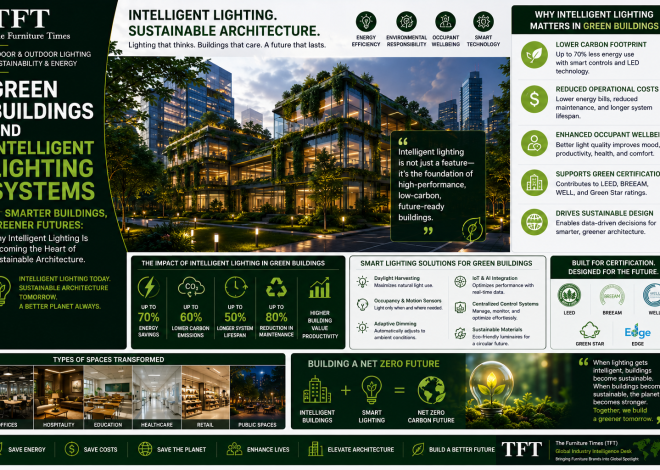
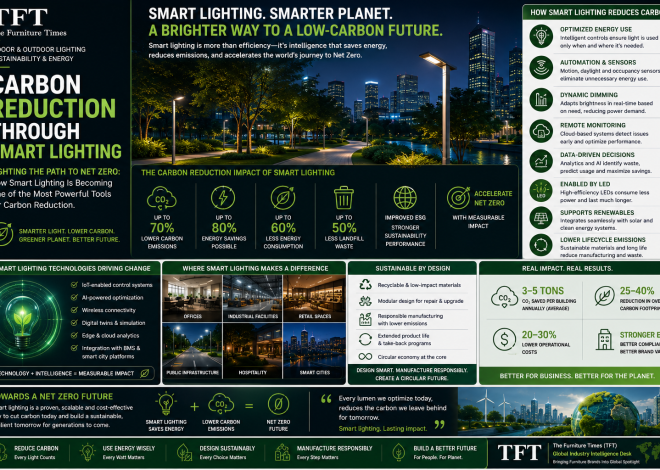
Sustainability Will Remain the Strongest Growth Driver
Global sustainability commitments continue reshaping construction, manufacturing, and infrastructure.
Governments are introducing stricter regulations targeting:
- Energy efficiency
- Carbon reduction
- Renewable energy
- Circular economy practices
- Green building certifications
- Environmental reporting
- Sustainable procurement
Lighting plays a critical role because it represents a major share of electricity consumption in buildings.
Future lighting systems will increasingly utilize:
- Ultra-efficient LED technology
- Solar-powered solutions
- Recyclable materials
- Low-carbon manufacturing
- Smart energy controls
- Adaptive lighting algorithms
- Renewable power integration
Manufacturers capable of delivering environmentally responsible products will enjoy significant competitive advantages.
Human-Centric Lighting Will Expand Rapidly
Scientific understanding of how light affects human health continues to advance.
Future lighting systems will increasingly support:
- Circadian rhythms
- Sleep quality
- Mental wellness
- Workplace productivity
- Student concentration
- Healthcare recovery
- Senior living
- Emotional well-being
- Visual comfort
- Cognitive performance
Human-centric lighting is expected to become standard across residential, healthcare, hospitality, education, and office environments.
Outdoor Lighting Will Become Digital Infrastructure
Outdoor lighting is evolving beyond illumination.
By 2035, smart lighting poles will function as multi-purpose digital infrastructure supporting:
- Traffic management
- Environmental monitoring
- Air quality sensors
- Public Wi-Fi
- Emergency communications
- Security cameras
- Electric vehicle charging
- Weather monitoring
- Public information systems
- Autonomous vehicle communication
Municipalities increasingly recognize lighting infrastructure as one of the most valuable assets within future smart cities.
Investment Opportunities Across the Value Chain
The lighting industry’s transformation creates opportunities far beyond fixture manufacturing.
Investors are increasingly exploring growth across:
Manufacturing
Advanced LED production, smart lighting components, optics, sensors, semiconductors, sustainable materials, and intelligent controls.
Software
AI algorithms, cloud platforms, lighting analytics, digital twins, cybersecurity, predictive maintenance, and building management software.
Smart Cities
Public infrastructure modernization, intelligent street lighting, transportation systems, municipal energy management, and digital urban platforms.
Renewable Energy
Solar lighting, off-grid systems, battery technologies, microgrids, and energy storage integration.
Commercial Real Estate
Building automation, facility management, workplace optimization, ESG compliance, and energy-efficient retrofits.
Hospitality and Retail
Luxury lighting experiences, personalized customer environments, smart hotel rooms, immersive retail displays, and entertainment venues.
Healthcare
Human-centric lighting, patient recovery environments, infection-control lighting, and intelligent clinical facilities.
The industry increasingly rewards companies capable of combining hardware, software, data, and customer experience into integrated solutions.
Digital Commerce Is Reshaping Market Competition
The lighting purchasing journey has changed dramatically.
Architects, contractors, developers, interior designers, facility managers, and homeowners increasingly research products through digital platforms before making purchasing decisions.
Manufacturers that invest in:
- AI-friendly websites
- Technical product content
- BIM libraries
- Digital catalogs
- Interactive configurators
- Virtual showrooms
- Online specification tools
- Educational resources
will enjoy stronger visibility, greater customer trust, and improved conversion rates.
Digital discoverability will become as important as product quality.
Opportunities for the Furniture Industry
The future lighting market also creates major opportunities for furniture manufacturers and interior designers.
Integrated lighting solutions are becoming increasingly common in:
- Kitchen cabinetry
- Wardrobes
- Display furniture
- Hospitality furniture
- Office workstations
- Retail shelving
- Bathroom vanities
- Entertainment units
- Luxury storage systems
- Smart home furniture
Consumers increasingly expect lighting to be built directly into furniture, enhancing both functionality and aesthetics.
This convergence creates new possibilities for collaboration between lighting manufacturers and the furniture industry.
Challenges That Will Shape the Market
Despite tremendous growth potential, several challenges remain.
Industry stakeholders must continue addressing:
- Supply chain resilience
- Semiconductor availability
- Cybersecurity risks
- Global standardization
- Product interoperability
- Workforce development
- Circular economy implementation
- Electronic waste management
- Data privacy
- Skilled installation capacity
Companies that proactively address these challenges will strengthen their market position over the coming decade.
Looking Toward 2035
The global lighting market of 2035 will look very different from today’s industry.
Lighting will no longer be judged solely by brightness, efficiency, or fixture design. Instead, value will increasingly be measured by intelligence, connectivity, sustainability, adaptability, and the ability to improve human experiences.
Artificial Intelligence, smart buildings, renewable energy, advanced manufacturing, digital commerce, and sustainable construction will continue redefining every segment of the lighting industry.
For manufacturers, investors, governments, architects, designers, developers, hospitality operators, retailers, and technology companies, the coming decade presents unprecedented opportunities to innovate, collaborate, and lead.
The future of lighting is not simply about illuminating spaces—it is about powering smarter cities, healthier buildings, more sustainable communities, and a connected global economy where light becomes one of the most intelligent technologies shaping modern life.