Bahrain Furniture Ecosystem Expands Across Core Supply Chain Segments
From Raw Materials to Smart Systems: A Full-Stack Industry Transformation in Motion
The Furniture Times | Bahrain
Global Industry Intelligence Desk | April 2026
Bahrain’s Furniture Industry Enters a New Phase of Integration
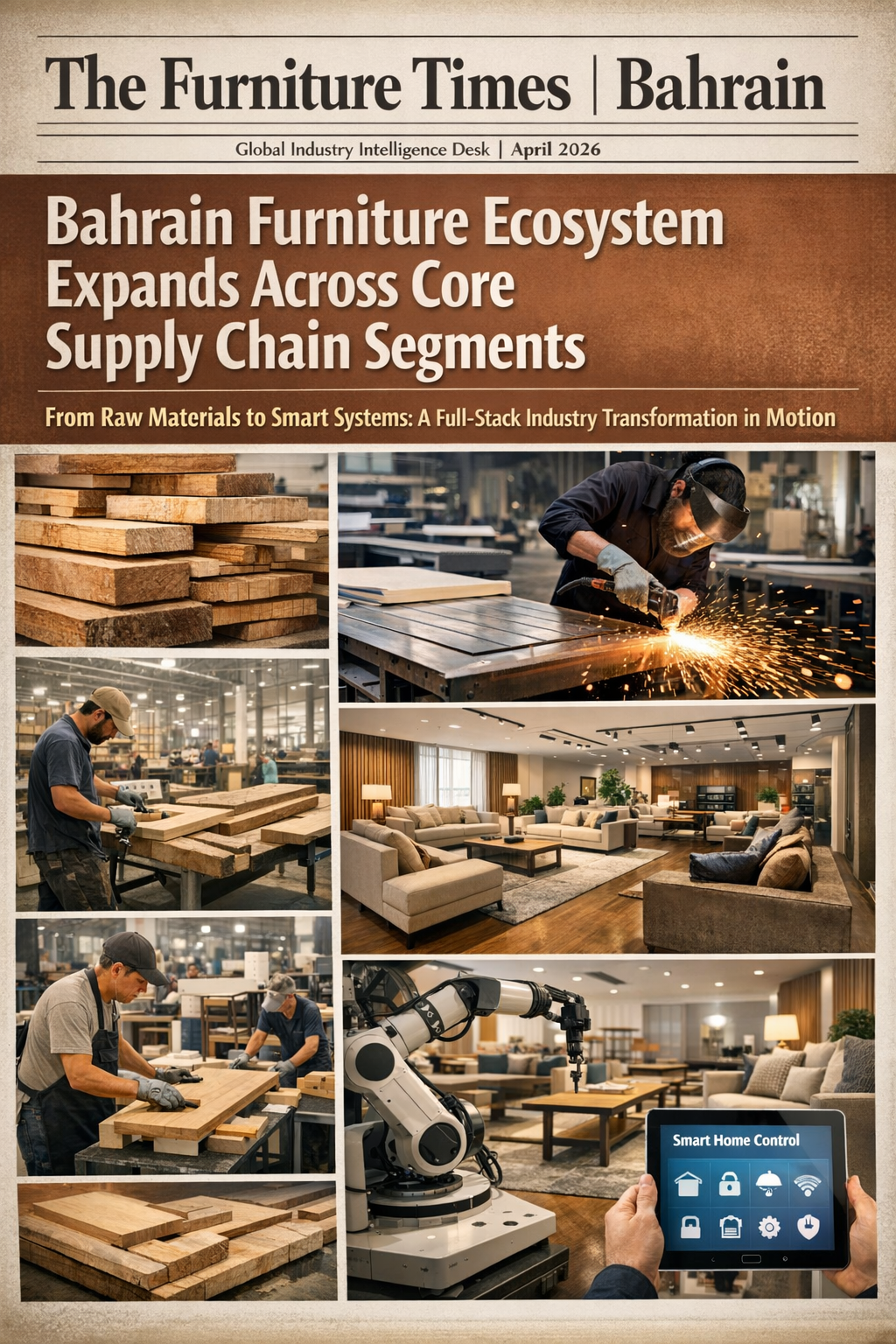
MANAMA, BAHRAIN — The furniture industry in Bahrain is experiencing a strategic transformation as it builds a comprehensive ecosystem that extends far beyond traditional manufacturing. The sector is now encompassing a wide range of upstream and downstream components, including raw materials, engineered boards, wood substitutes, foam, fabrics, leather, metal structures, hardware systems, glass elements, adhesives, fittings, machinery, packaging solutions, and digital tools.
This integrated approach signals Bahrain’s ambition to move from a consumption-driven market to a production-oriented and innovation-led ecosystem, aligning with broader Gulf economic diversification strategies.
Material Innovation Driving the Next Growth Wave
At the core of this transformation is the expansion of material categories. Traditional wood is increasingly being complemented—or replaced—by engineered boards, MDF, particle boards, and eco-friendly substitutes, reducing dependency on imports while improving sustainability.
Simultaneously, demand for foam, textiles, and premium leather is rising as Bahrain strengthens its presence in upholstery, bedding, and interior solutions. Metal frameworks and glass components are also seeing increased adoption, particularly in modern furniture design and commercial interiors.
This material diversification is enabling manufacturers to increase product range, improve cost efficiency, and meet global quality standards.
Hardware, Adhesives & Fittings: The Hidden Backbone
Often overlooked, hardware systems, fittings, and adhesives are emerging as critical enablers of quality and durability in furniture production. Bahrain’s growing supplier base in these segments is helping local manufacturers reduce reliance on imports while ensuring faster production cycles and customization capabilities.
From hinges and drawer systems to bonding technologies, these components are now central to precision manufacturing and modular furniture solutions.
Machinery & Automation: The Shift Toward Smart Manufacturing
The integration of advanced machinery and automation systems is redefining production efficiency across Bahrain’s furniture industry. CNC machines, automated cutting systems, and digital fabrication tools are enabling manufacturers to achieve higher precision, scalability, and cost control.
This transition is further supported by design software and digital tools, allowing for rapid prototyping, customization, and visualization—critical for meeting the demands of modern consumers and commercial clients.
Packaging, Warehousing & Logistics: Building End-to-End Efficiency
As the ecosystem matures, packaging solutions and warehouse management systems are becoming key areas of focus. Smart packaging is improving product protection and export readiness, while digital warehouse systems are optimizing inventory management, order fulfillment, and supply chain visibility.
These advancements are positioning Bahrain as a logistics-efficient furniture hub, capable of serving both domestic and regional markets.
Software & Design Tools: The Digital Layer of the Industry
The adoption of software platforms and design tools is transforming how furniture businesses operate. From CAD-based design systems to ERP and inventory management platforms, digital integration is enabling companies to streamline operations, reduce waste, and enhance customer experience.
This digital layer is expected to play a pivotal role in Bahrain’s ambition to build a smart, connected furniture ecosystem aligned with Industry 4.0 standards.
Strategic Outlook: A Unified Ecosystem with Global Potential
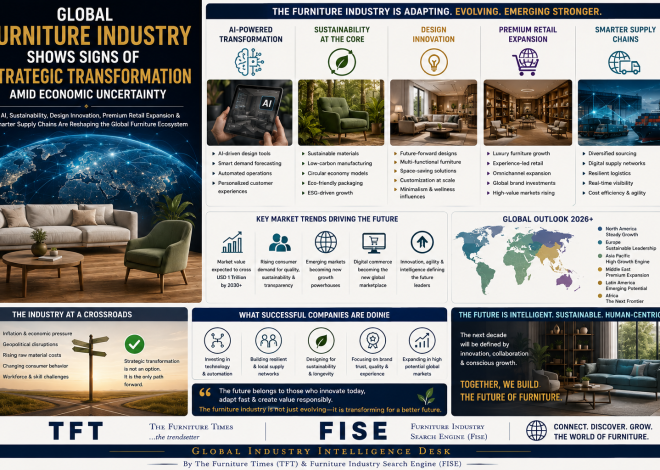
The Bahrain furniture ecosystem is no longer fragmented. It is evolving into a connected, full-stack industry, where materials, manufacturing, technology, and logistics operate in synergy.
However, industry experts highlight a critical need for centralized platforms, data systems, and global visibility tools to fully unlock this potential. Without integration and discoverability, many businesses risk remaining invisible in the global market.
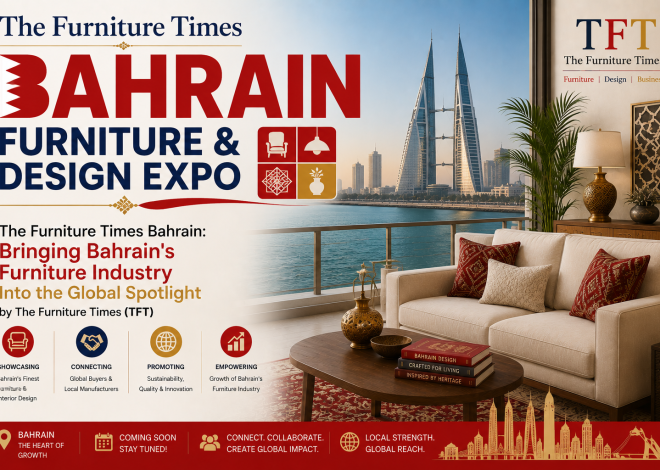
This is where The Furniture Times (TFT) and the Furniture Industry Search Engine (FISE) are positioned to play a transformative role—connecting every segment of the ecosystem, from raw material suppliers to digital solution providers, into one unified global platform.
Conclusion: From Fragmentation to Global Competitiveness
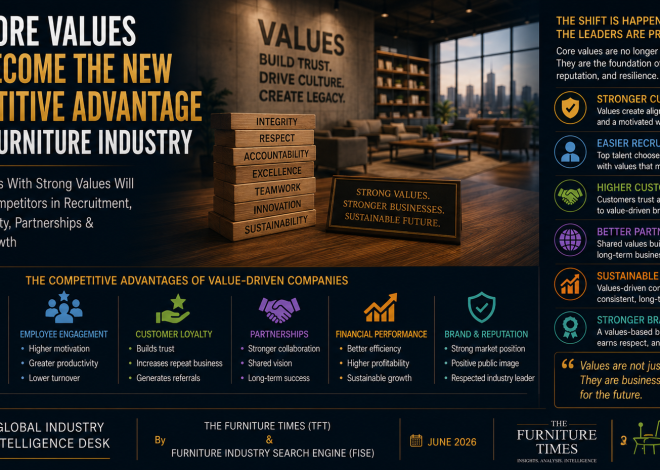
Bahrain’s furniture industry stands at a pivotal moment. With the expansion across raw materials, components, machinery, and digital infrastructure, the Kingdom has the foundation to become a regional leader in furniture production and innovation.
The next phase will depend on integration, visibility, and collaboration—ensuring that every player in the ecosystem is connected, discoverable, and empowered to compete on a global scale.