The Recovery Debt: Why Restarting Advertising Costs More Than Staying Visible
Examining the time, spending and effort required to rebuild awareness, customer confidence, search presence and market momentum after a prolonged marketing shutdown
By The Furniture Times (TFT) Editorial Desk | Advertising & Brand Visibility | Furniture Marketing | Business Strategy | SME Growth | Global Industry Intelligence
When economic conditions become difficult, advertising is frequently one of the first expenses companies reduce.
The decision appears logical. Advertising requires immediate spending, while its full financial return may take months—or even years—to become visible. Payroll, rent, materials, logistics and utilities seem more urgent. Management therefore pauses campaigns, stops publishing, abandons public relations, reduces search-engine investment and waits for conditions to improve.
The business may save money in the current quarter.
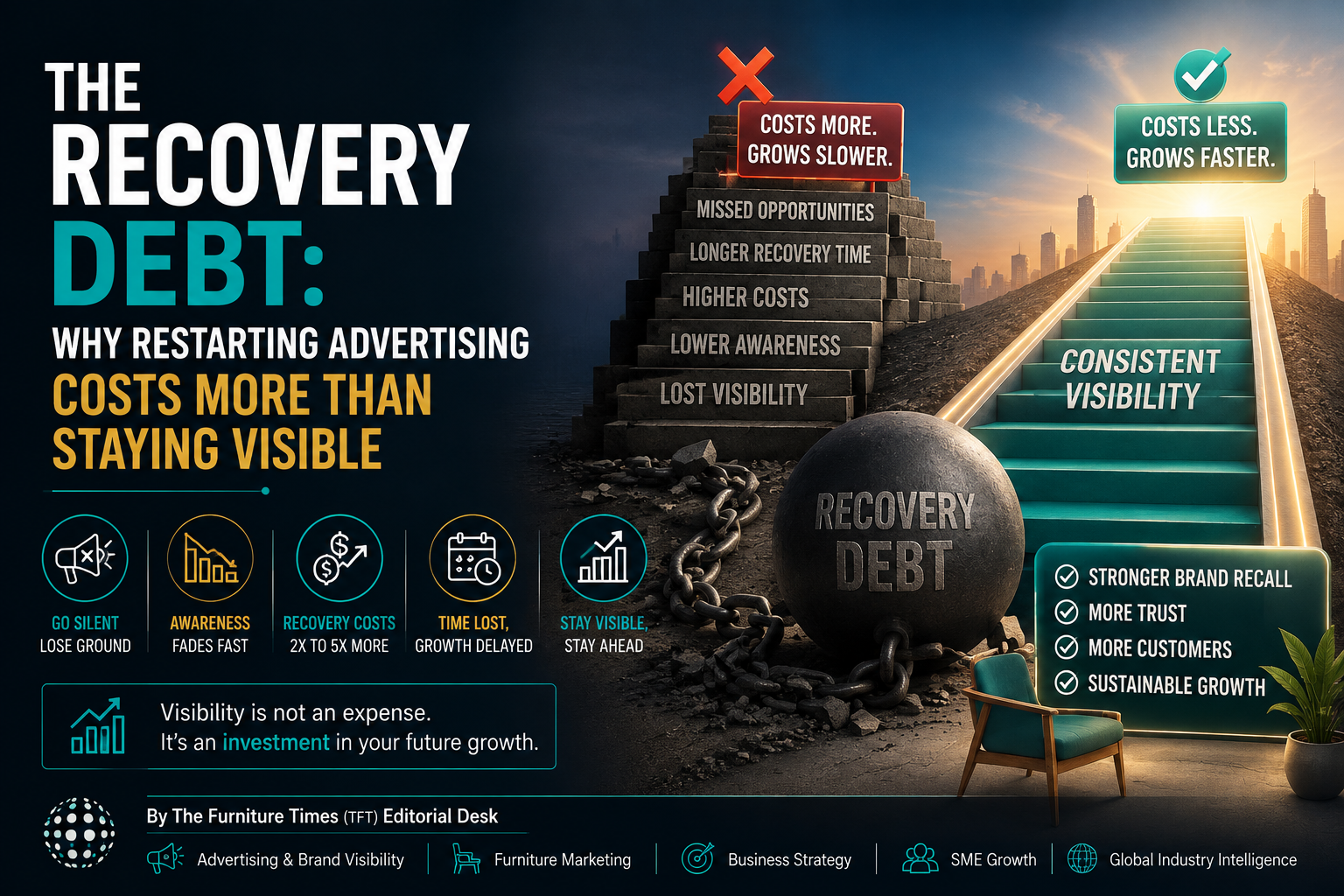
However, it can simultaneously create a much larger future obligation: recovery debt.
Recovery debt is the accumulated cost of rebuilding the awareness, visibility, customer confidence, media relationships, search authority, data, creative capacity and commercial momentum that a company loses while it remains silent.
It is similar to technical debt in software or deferred maintenance in a factory. The company avoids an expense today, but the neglected system deteriorates. When management eventually decides to restart, returning to the previous position requires more money, more work and more time than maintaining a basic level of continuity would have required.
This is particularly dangerous in the furniture industry ecosystem, where purchase cycles can be long, competition is fragmented and customers often research multiple suppliers before contacting anyone. A manufacturer, retailer, interior brand or component supplier may disappear from the buyer’s consideration long before it disappears as a registered business.
The company may still have a factory, workforce, showroom and product catalogue. But if customers, architects, dealers, procurement teams and AI-powered discovery systems no longer encounter its name, it begins losing commercial relevance.
The central strategic lesson is simple:
A brand that stays modestly visible does not have to reintroduce itself when demand returns. A brand that goes completely silent must pay to become familiar again.
Advertising is not a switch that immediately restores demand
One of the most damaging marketing assumptions is that advertising can be turned off during difficult periods and restarted later without consequence.
Advertising does not behave like electricity. A business cannot necessarily restore its former level of awareness simply by switching campaigns back on.
Effective marketing creates memory structures over time. Customers repeatedly encounter a company through:
- Search results.
- Industry publications.
- News coverage.
- Social media.
- Display advertising.
- Videos.
- Email communication.
- Dealer promotions.
- Trade exhibitions.
- Product reviews.
- Recommendations.
- Physical showrooms.
- Branded vehicles and packaging.
- Conversations with sales representatives.
Each encounter reinforces recognition.
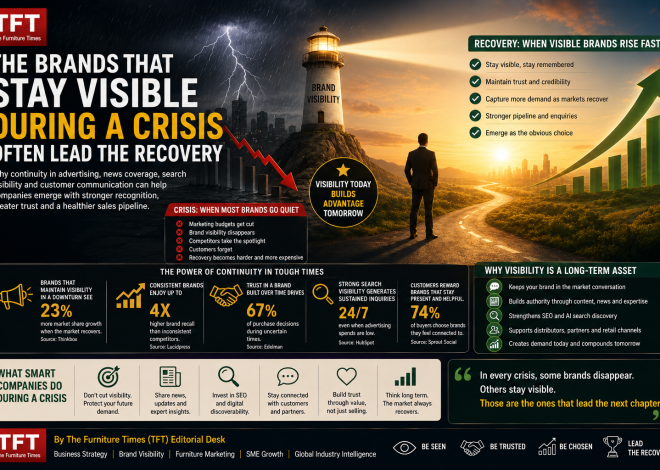
When these encounters stop, awareness does not always disappear immediately. The company may continue benefiting from previous advertising, its existing reputation and past customer relationships. This can create the illusion that silence is harmless.
But the brand is gradually spending previously accumulated recognition without replenishing it.
Nielsen has reported that halted advertising can create lasting equity and revenue consequences. Its analysis suggested that recovering lost brand equity may take three to five years, while every quarter without advertising can create a potential long-term revenue effect. These findings are averages rather than guarantees for every company, but they demonstrate why advertising continuity should be treated as a business asset rather than an optional monthly expense. Nielsen’s analysis of awareness and activation strategies also concluded that the long-term impact of marketing can substantially exceed its immediate impact.
The damage is delayed, which is precisely why it is underestimated.
What is recovery debt?
Recovery debt is not one expense. It is a collection of interconnected losses that emerge during a marketing shutdown.
It can include:
- Awareness debt: fewer customers remember the company.
- Search debt: competitors occupy stronger positions in traditional and AI-assisted discovery.
- Content debt: the website and social channels lack current, useful material.
- Trust debt: customers question whether the business is still active or competitive.
- Data debt: advertising platforms lose recent audience and conversion signals.
- Creative debt: campaigns, messages, photography and videos become outdated.
- Relationship debt: media, influencers, dealers and channel partners stop hearing from the brand.
- Talent debt: internal marketing capability weakens or disappears.
- Distribution debt: retailers and dealers prioritize brands that actively support demand generation.
- Competitive debt: rivals use the silent period to become more familiar.
- Pricing debt: reduced differentiation makes the company more dependent on discounts.
- Momentum debt: the sales pipeline becomes thinner and harder to rebuild.
These debts compound.
A weak search presence reduces website traffic. Lower traffic generates less behavioural data. Limited data makes future advertising less efficient. Reduced visibility lowers enquiries. Fewer enquiries pressure the sales team to discount. Discounting weakens profitability, leaving even less money for marketing.
What started as a temporary advertising pause can develop into a broader commercial decline.
The seven layers of recovery debt
01 — Brand-awareness debt
Customers cannot consider a brand they do not remember.
Furniture purchasing is often infrequent. A household may buy a sofa, bed, dining set or office system only occasionally. A hotel might refurbish rooms in cycles. An office may replace furniture after relocation, expansion or redesign. A school, hospital or government agency may purchase through scheduled procurement.
The brand must therefore remain visible between buying occasions.
A customer who sees a furniture company’s name today may not purchase for six months. However, that exposure can influence which brand the customer searches for when the buying occasion eventually arrives.
When advertising stops, the company loses these future memory-building opportunities.
Kantar estimated during its pandemic research that a six-month absence from television could cause a substantial reduction in overall brand communication awareness. Although the precise effect will vary by market, category, channel and starting strength, the underlying principle is important: communication awareness can deteriorate during prolonged silence.
The cost of rebuilding awareness can be much higher because the returning brand must compete against companies that continued communicating throughout the absence.
02 — Share-of-voice debt
A brand’s visibility is relative.
A company may believe it has merely reduced advertising. From the customer’s perspective, however, competitors have become more prominent.
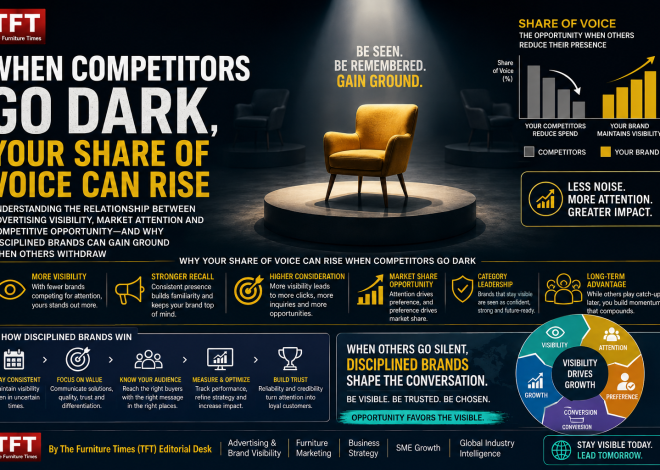
Consider a market with five major furniture retailers. If four reduce their marketing activity while one maintains a disciplined presence, the continuing advertiser may gain a greater relative share of attention without dramatically increasing its budget.
The company that remains visible appears more active, more confident and potentially more reliable.
When the silent brands return, they are no longer restarting from the same competitive position. They must overcome the memory and familiarity competitors accumulated during the shutdown.
This is share-of-voice debt: the additional investment required to regain attention that migrated to competing brands.
Recent market behaviour suggests that many companies understand this risk. The UK’s Q2 2026 IPA Bellwether Report found that 23.8% of surveyed companies increased marketing spending while 16.9% cut budgets, producing a positive net balance despite continuing economic and inflationary pressure. The IPA’s July 2026 report indicates that disciplined businesses are not uniformly retreating from visibility during uncertainty.
03 — Search-visibility debt
Modern advertising is closely connected to search.
A furniture company that stops publishing articles, product information, project stories, news releases, videos and customer guidance can gradually lose digital relevance.
Search debt can develop through:
- Outdated website pages.
- Declining branded searches.
- Fewer backlinks and media mentions.
- Reduced engagement.
- Missing product specifications.
- Discontinued content production.
- Unmaintained local business profiles.
- Poor review activity.
- Competitors publishing more useful content.
- Limited evidence for AI search systems to interpret.
Restarting paid search can immediately purchase some traffic, but it does not instantly restore lost organic authority.
Traditional search engines need time to crawl, evaluate and rank new material. AI discovery systems need clear, consistent and credible public information before they can confidently understand and recommend a business.
A company that stopped communicating for a year may need to rebuild:
- Its product catalogue.
- Technical specifications.
- Category pages.
- Location information.
- Brand descriptions.
- Media coverage.
- Expert articles.
- Frequently asked questions.
- Customer reviews.
- Industry citations.
- Structured data.
- Entity consistency across the web.
This cannot always be solved by increasing the advertising budget for one month.
04 — Customer-confidence debt
Silence communicates something, even when the company did not intend to send a message.
Customers may interpret prolonged inactivity as a sign that:
- The business has closed.
- The company is struggling.
- Products are no longer available.
- Customer support may be unreliable.
- The brand has stopped innovating.
- The website is not maintained.
- Delivery or warranty commitments may be uncertain.
- Competitors are more established.
These concerns are especially important in furniture because customers frequently pay deposits, wait for production, arrange delivery and depend on warranties. Commercial buyers may place large orders requiring installation and post-sale support.
The customer is not simply purchasing an object. The customer is accepting a future-performance promise.
Regular communication reassures the market that the company is operational, responsive and invested in its future.
Restarted advertising can announce that the company has returned, but confidence may take longer to rebuild than awareness. Customers need consistent proof through current projects, reviews, product updates, service communication and reliable delivery.
05 — Advertising-data debt
Digital advertising platforms learn from recent activity.
Campaigns can accumulate information about:
- Responsive audience segments.
- High-performing keywords.
- Effective geographic areas.
- Conversion patterns.
- Customer journeys.
- Creative performance.
- Seasonal behaviour.
- Retargeting audiences.
- Enquiry quality.
- Device and placement results.
When advertising stops for a prolonged period, some of this operational intelligence becomes less useful.
Consumer behaviour changes. Competitors change their bidding strategies. Media costs move. Products and prices evolve. Cookies expire. Retargeting pools shrink. Previous creatives lose relevance. Platform algorithms must adjust to new campaign conditions.
A restarted campaign may therefore experience:
- A new learning period.
- Higher initial customer-acquisition costs.
- Unstable performance.
- Reduced audience scale.
- Weak retargeting results.
- Limited conversion history.
- Incorrect assumptions based on outdated data.
The company is not merely paying for new advertisements. It is paying to relearn the market.
06 — Creative and capability debt
A company that stops advertising often reduces more than media expenditure.
It may also dismiss employees, end agency relationships, stop photography, suspend video production, abandon editorial calendars and discontinue campaign planning.
When marketing restarts, management must rebuild the supporting capability.
That can require:
- Hiring or reassigning personnel.
- Finding a new agency.
- Rebuilding brand guidelines.
- Photographing new collections.
- Updating showroom and factory images.
- Producing new catalogues.
- Rewriting website content.
- Redesigning advertisements.
- Creating videos.
- Updating customer databases.
- Training sales teams.
- Establishing new measurement systems.
- Reconnecting marketing and production departments.
A manufacturer may discover that the employee who understood its dealer network has left. The agency that knew its brand may now be committed to a competitor. The photographer may no longer be available. Product information may be scattered across departments.
The cost of restarting is therefore organizational as well as financial.
07 — Sales-pipeline debt
Advertising does not only generate immediate purchases. It helps fill future sales pipelines.
This is particularly important in business-to-business furniture markets. A hotel furniture project, institutional order, office fit-out or dealership agreement may take months to convert.
Marketing activity can create early-stage opportunities through:
- Brand discovery.
- Specification downloads.
- Sample requests.
- Dealer enquiries.
- Architect relationships.
- Tender awareness.
- Newsletter subscriptions.
- Exhibition appointments.
- Factory visits.
- Request-for-quotation submissions.
When communication stops, the business may continue closing opportunities created before the shutdown. Revenue initially appears stable.
Several months later, the pipeline becomes thinner because fewer new prospects entered at the top.
Management may then restart advertising in response to falling sales. But new prospects still require time to research, compare, obtain approval, negotiate and purchase.
This produces a dangerous timing gap: the company needs revenue immediately, while marketing must rebuild demand gradually.
Why restarting can cost more than continuity
Suppose a furniture company normally spends $10,000 per month on marketing.
During a difficult period, management considers two options.
Option A: Complete shutdown
The company stops advertising for 12 months and saves $120,000 in visible expenditure.
When it returns, it may need:
- A major reintroduction campaign.
- New photography and creative work.
- Website redevelopment.
- Search-engine optimization.
- Increased paid-search budgets.
- Dealer promotions.
- Public-relations activity.
- Discounting to stimulate demand.
- Marketing recruitment.
- Agency onboarding.
- Customer-data rebuilding.
- Several months of campaign learning.
The business may also have lost revenue and market share during the shutdown.
Option B: Reduced continuity
Instead of disappearing, the company reduces spending to $4,000 per month.
It maintains:
- Branded search campaigns.
- Essential content publishing.
- Customer emails.
- Social communication.
- Public relations.
- Local search profiles.
- Review collection.
- Retargeting.
- Dealer communication.
- Website updates.
The company spends $48,000 during the year rather than saving the entire $120,000.
However, it preserves much of its visibility infrastructure. When conditions improve, it can increase activity from a functioning base rather than rebuilding from zero.
This is the difference between maintenance spending and recovery spending.
The exact figures will differ for every company, but the strategic question remains:
Is the money saved through silence greater than the combined cost of lost demand, lost memory and future recovery?
In many cases, management calculates only the first number because the second is distributed across future budgets and departments.
The recovery-debt cycle
A complete advertising shutdown can create a self-reinforcing sequence:
- Management cuts advertising to protect cash.
- Brand visibility begins to decline.
- Website traffic and enquiries weaken.
- Competitors receive more customer attention.
- The sales pipeline becomes smaller.
- Revenue pressure increases.
- Management delays restarting because cash is still limited.
- Search presence and awareness deteriorate further.
- The company eventually restarts under emergency conditions.
- Short-term sales pressure encourages heavy discounting.
- Marketing is judged too quickly.
- Campaigns are stopped again before rebuilding momentum.
The organization becomes trapped between underinvestment and impatience.
Advertising cannot repair twelve months of silence in twelve days.
Why the furniture industry is especially exposed
Long buying cycles
Furniture customers may research for weeks or months. Commercial projects can take even longer. Visibility must therefore exist before the immediate sales opportunity appears.
High consideration
Customers compare design, dimensions, materials, comfort, delivery, price, warranty and reputation. Repeated exposure builds reassurance.
Fragmented competition
The furniture ecosystem contains large brands, SMEs, craftspeople, component suppliers, distributors, designers, retailers and installers. When one business becomes silent, many alternatives remain visible.
Dependence on trust
Furniture purchases may involve deposits, customization, manufacturing lead times and installation. A customer needs confidence that the seller will remain available.
Visual discovery
Furniture is highly dependent on imagery, video, social platforms, publications and digital catalogues. An inactive brand quickly looks dated.
Search-driven demand
Customers search for categories such as office chairs, custom kitchens, hotel furniture, wardrobes, outdoor furniture and nearby retailers. If the company is absent from these discovery moments, it may never enter the shortlist.
Dealer expectations
Retailers and distributors prefer brands that support them with advertising, product information, enquiries and promotional materials. A silent manufacturer can become less attractive to its own channel partners.
Staying visible does not mean spending blindly
The answer is not to preserve every campaign regardless of performance.
Businesses facing financial pressure should cut waste, duplication and poorly measured activity. They should protect the marketing functions that sustain discoverability, confidence and future demand.
A disciplined continuity strategy may include the following.
Protect branded search
Ensure customers searching for the company can find accurate, current and credible information.
Maintain the website
Keep products, contact details, delivery information, project references and company news updated.
Continue publishing useful content
Answer the questions customers ask about materials, sizing, maintenance, sustainability, delivery, warranties and product selection.
Preserve public relations
News articles and press releases can create credibility, backlinks, third-party validation and evidence that the company remains active.
Communicate with existing customers
Email and customer-relationship systems can maintain connections at a lower cost than rebuilding awareness from a cold audience.
Collect reviews continuously
Recent reviews demonstrate current activity and help customers evaluate trust.
Use retargeting carefully
Maintain contact with people who have already shown interest, provided that campaigns follow applicable privacy requirements.
Support dealers and partners
Provide updated content, images, product information and promotional material so channel partners continue presenting the brand.
Measure leading indicators
Do not judge marketing only by immediate sales. Monitor:
- Branded-search volume.
- Direct website traffic.
- Share of search.
- Enquiry volume.
- Cost per qualified lead.
- Dealer enquiries.
- Specification downloads.
- Email engagement.
- Review activity.
- Brand recall.
- Organic visibility.
- AI-search discoverability.
Nielsen’s research emphasizes the importance of brand recall in producing brand lift. In its study of emerging media, recall accounted for a significant portion of measured lift, reinforcing the value of memorable and repeated brand communication. Nielsen’s 2023 brand-recall analysis found that recall was a leading contributor across the channels evaluated.
If the brand has already gone silent: a recovery framework
A company returning after a prolonged absence should not simply reactivate its previous campaigns.
Phase One — Diagnose the damage
Audit:
- Current brand awareness.
- Search rankings.
- Website performance.
- Brand mentions.
- Review recency.
- Social activity.
- Customer database quality.
- Competitor visibility.
- Dealer relationships.
- Advertising account history.
- Conversion tracking.
- AI-search representation.
The company needs to understand what was lost before deciding how to rebuild it.
Phase Two — Restore the foundations
Correct outdated:
- Product information.
- Prices and availability.
- Contact details.
- Staff profiles.
- Showroom locations.
- Dealer lists.
- Technical documents.
- Photography.
- Company descriptions.
- Structured website data.
Advertising should not direct customers toward an outdated or confusing destination.
Phase Three — Reassure the market
Communicate evidence of current activity:
- New projects.
- Completed deliveries.
- Factory operations.
- Customer testimonials.
- Product innovations.
- Team expertise.
- Service capabilities.
- Certifications.
- Partnerships.
- Market expansion.
The message should not merely say, “We are back.” It should demonstrate why customers can trust the business now.
Phase Four — Rebuild mental availability
Use a consistent visual identity, message and brand promise across search, social media, publications, email and advertising.
Consistency reduces the effort customers require to recognize the business.
Phase Five — Relearn performance
Restart with controlled testing across audiences, messages and channels. Compare results carefully and allow sufficient time for campaign learning.
Phase Six — Balance brand and activation
Sales promotions may generate immediate attention, but a recovery strategy built entirely on discounts can damage positioning.
Nielsen has repeatedly argued for a balance between long-term brand building and short-term activation. Its analysis notes that marketing contributes meaningfully to brand equity and that awareness is critical to remaining top of mind when purchase decisions occur. Nielsen’s discussion of brand-building and awareness provides further context.
Phase Seven — Establish a minimum visibility floor
After recovery, define the minimum level of communication the company will maintain during future downturns.
This prevents temporary financial pressure from producing another complete disappearance.
What management should ask before stopping advertising
Before approving a shutdown, directors should ask:
01 — How much revenue originates from customers who discovered us through marketing?
02 — What proportion of current sales came from leads generated months earlier?
03 — Which competitors are likely to continue advertising?
04 — What will customers assume if our communication disappears?
05 — Which search rankings, audience data and media relationships could deteriorate?
06 — How long would it take to restore our current awareness?
07 — What would a credible relaunch cost?
08 — Can we reduce weak activities while preserving core visibility?
09 — Which marketing assets continue creating value after the original campaign ends?
10 — Are we cutting advertising because it is genuinely ineffective—or because its value is harder to measure than other costs?
These questions move the discussion from short-term expense reduction to long-term commercial risk.
The businesses that win during the recovery
The strongest position after an economic slowdown often belongs neither to the company that spent recklessly nor to the company that disappeared.
It belongs to the disciplined brand that remained useful, recognizable and reachable.
When demand returns, that company does not need to convince the market that it still exists. Customers have continued seeing its name, receiving its information and observing its activity.
Its competitors may be designing relaunch campaigns while it is already receiving enquiries.
Its rivals may be rebuilding search authority while its content continues ranking.
Others may be reconnecting with dealers while its channel relationships remain active.
Some companies will pay to re-enter the customer’s memory. The visible brand never fully left it.
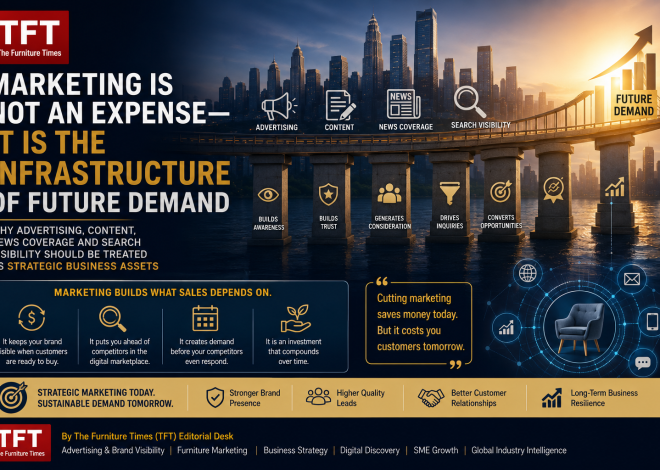
Visibility should be treated as business infrastructure
Factories maintain machinery even when production slows. Buildings require security even when occupancy falls. Digital systems need backups even when transaction volumes decline.
Brand visibility deserves similar treatment.
It is not simply a campaign expense. It is part of the infrastructure connecting the company to future demand.
A prolonged advertising shutdown can reduce current expenditure, but the resulting recovery debt may appear through weaker awareness, higher acquisition costs, lost market share, damaged confidence, declining search presence and delayed revenue.
This does not mean every business should maintain the same budget during every economic condition. Financial discipline remains essential.
It means the decision should be:
How can we preserve visibility efficiently?
—not—
How quickly can we disappear?
Conclusion: Do not borrow from your brand’s future without calculating the repayment
The savings created by an advertising shutdown are visible immediately. Recovery debt is largely invisible until the business attempts to grow again.
By then, competitors may own more attention. Customers may no longer remember the brand. Search engines may favor fresher sources. Dealers may prioritize more active suppliers. Advertising platforms may have lost useful signals. The company’s internal marketing capability may need to be rebuilt.
Restarting then requires more than buying media.
It requires reconstructing familiarity, evidence, confidence, content, relationships, data and momentum.
For furniture manufacturers, retailers, designers, component suppliers and service providers, the more resilient strategy is usually to preserve a minimum level of meaningful market presence—even when budgets must be reduced.
Cut waste. Refine targeting. Simplify campaigns. Renegotiate costs. Concentrate on the strongest channels.
But protect the company’s ability to be found, remembered and trusted.
Staying visible has a cost. Disappearing creates a debt—and the repayment may be far greater than the original saving.
The Furniture Times (TFT) & Furniture Industry Search Engine (FISE)
“TFT tells their story. FISE helps the world find them.”
FurniReviewology helps the world trust them.
The furniture industry ecosystem is a $1 trillion industry ecosystem.
Stay visible. Stay searchable. Stay remembered.