
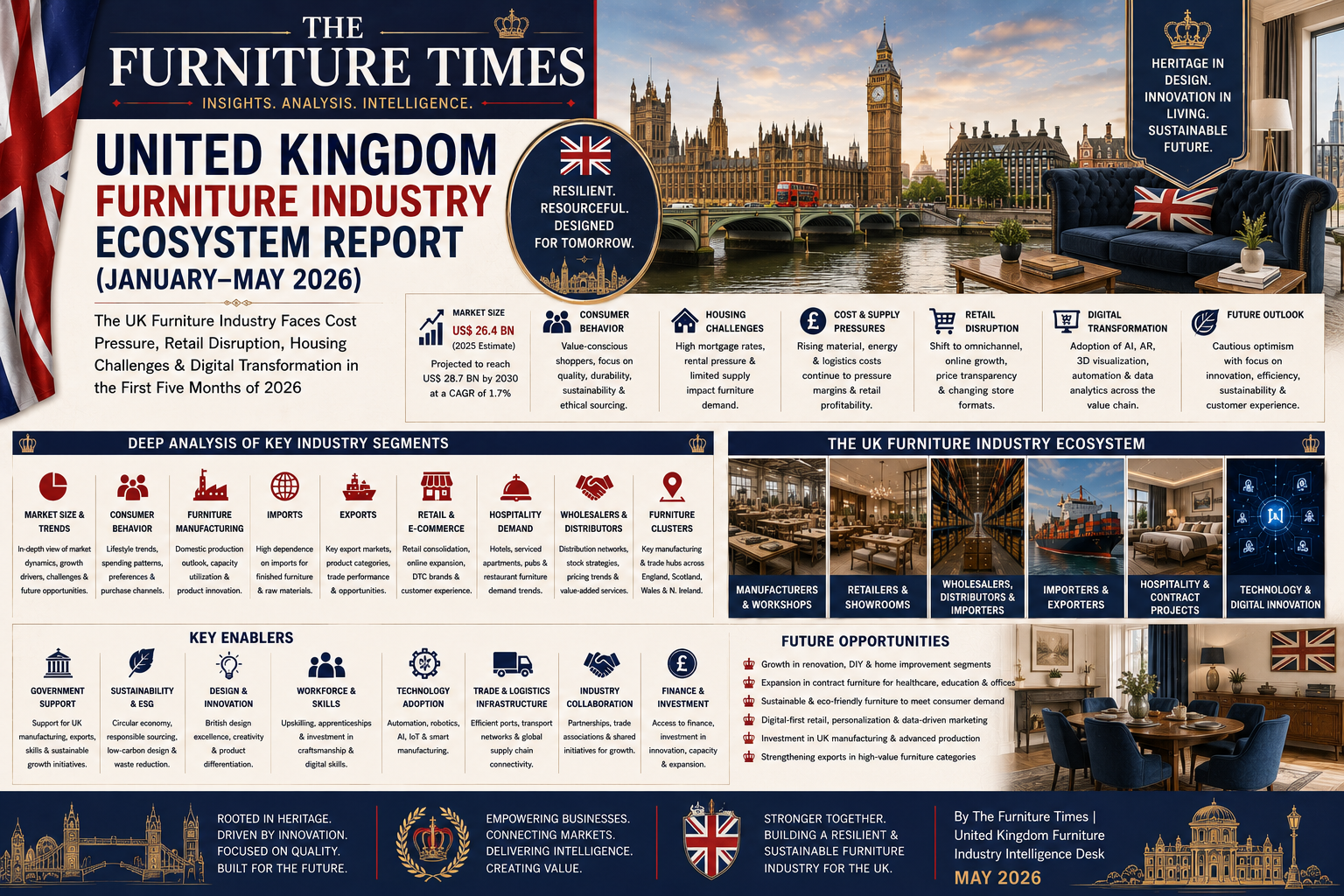
The UK Furniture Industry Faces Cost Pressure, Retail Disruption, Housing Challenges & Digital Transformation in the First Five Months of 2026
United Kingdom Furniture Industry Ecosystem Report (January–May 2026)
Deep Analysis of Market Size, Consumer Behavior, Furniture Manufacturing, Imports, Exports, Retail, Hospitality Demand, Wholesalers, Sustainability & Future Opportunities
By The Furniture Times | United Kingdom Furniture Industry Intelligence Desk | May 2026
The United Kingdom furniture industry entered 2026 facing one of its most delicate periods in recent years.
Between January and May 2026, the sector moved through a challenging environment shaped by cautious consumer spending, housing market pressure, retail restructuring, import dependence, rising operating costs, and changing buying behavior.
At the same time, the UK remains one of Europe’s most important furniture markets, supported by:
strong home improvement culture
interior design awareness
premium retail presence
commercial furnishing demand
hospitality renovation
online furniture sales
design-led manufacturing
The UK furniture ecosystem is no longer only about manufacturing or retail.
It is increasingly about:
Digital Visibility
Consumer Confidence
Sustainability
Design Value
Retail Experience
Supply Chain Resilience
January–May 2026 Industry Overview
The first five months of 2026 showed a market under pressure but not without opportunity.
Positive drivers included:
online furniture sales
demand for home improvement
premium interior design activity
hospitality refurbishment
sustainable furniture interest
growth in fitted and customized furniture
Key challenges included:
weak consumer confidence
high household costs
housing affordability pressure
furniture retail failures
import cost pressure
discount-driven competition
The UK furniture market remains valuable, but consumers are buying more carefully.
Market Size & Growth Outlook
The United Kingdom furniture market remains one of the largest in Europe.
The market includes:
household furniture
office furniture
fitted furniture
kitchen furniture
bedroom furniture
mattresses
outdoor furniture
contract furniture
hospitality furniture
The market continues to show long-term potential, but short-term growth remains highly dependent on housing transactions, interest rates, consumer confidence, and renovation spending.
Furniture demand in the UK is closely linked to:
moving homes
home upgrades
rental furnishing
hospitality projects
office redesign
lifestyle improvement
Consumer Behavior Is Becoming More Cautious
UK consumers are increasingly value-conscious.
Between January and May 2026, many buyers focused on:
durability
affordability
delivery speed
warranty
reviews
financing options
practical design
Consumers are comparing more before purchasing.
The customer journey increasingly follows:
Search → Compare → Read Reviews → Visit → Buy
This means furniture brands must compete through both price and trust.
Housing Pressure Is Affecting Furniture Demand
Furniture demand is strongly connected to the housing market.
When people move, renovate, or buy homes, furniture demand rises.
However, affordability concerns, mortgage pressure, and cautious household spending continue affecting major furniture purchases.
This impacts demand for:
sofas
bedroom sets
dining furniture
wardrobes
living room furniture
home office upgrades
Consumers may still buy furniture, but many are delaying large-ticket purchases or choosing lower-cost alternatives.
Retail Disruption Is a Major Story
The UK furniture retail sector has faced several disruptions.
Retailers are under pressure from:
high rent
weak footfall
online competition
rising costs
discount pressure
changing customer expectations
Traditional showroom-heavy business models are becoming more difficult.
The future furniture retailer must combine:
physical experience
online visibility
fast delivery
strong reviews
flexible finance
trusted service
E-Commerce Continues to Reshape Furniture Retail
Online furniture shopping continues growing in importance.
Consumers increasingly browse furniture online before visiting a store.
Furniture companies must now provide:
detailed product pages
accurate dimensions
high-quality images
delivery information
clear returns policies
customer reviews
style guidance
A weak online presence can now directly reduce sales.
In the UK market, digital trust is becoming as important as showroom display.
Showrooms Are Becoming Experience Spaces
Large showrooms are no longer only product warehouses.
They are increasingly becoming:
design studios
consultation spaces
lifestyle galleries
room inspiration centers
brand experience hubs
Customers still value seeing and touching furniture, but they expect digital research and showroom experience to work together.
The future showroom must be inspirational, not only transactional.
UK Furniture Manufacturing Remains Important but Pressured
The UK still has strong furniture manufacturing capabilities, especially in:
upholstered furniture
beds and mattresses
fitted furniture
kitchens
high-end cabinetry
contract furniture
office furniture
However, manufacturers face pressure from:
imported competition
raw material costs
labour costs
energy expenses
compliance demands
UK manufacturers increasingly compete through:
quality
customization
faster delivery
British design
sustainability
craftsmanship
Imports Remain Highly Important
The UK furniture market depends heavily on imported furniture.
Major sourcing regions include:
China
Poland
Italy
Türkiye
Vietnam
Malaysia
India
Indonesia
Imports support wide product availability and price competition.
However, import dependence also creates exposure to:
freight costs
currency fluctuations
customs procedures
geopolitical disruptions
supply chain delays
Retailers and wholesalers increasingly need stronger sourcing diversification.
Wholesalers & Distributors Continue Playing a Key Role
Wholesalers remain important in the UK furniture ecosystem.
They supply:
independent retailers
interior designers
landlords
hospitality buyers
contract furnishers
online sellers
However, wholesalers also need modernization.
The future wholesaler must provide:
digital catalogues
fast stock updates
online trade portals
product data
reliable delivery
flexible sourcing
The wholesale model is becoming more digital, more transparent, and more service-driven.
Hospitality Furniture Demand Remains a Bright Spot
Hospitality remains one of the stronger opportunities in the UK furniture ecosystem.
Demand comes from:
hotels
restaurants
cafés
pubs
serviced apartments
boutique accommodation
tourism-led refurbishment
Products in demand include:
restaurant chairs
hotel beds
lobby furniture
outdoor seating
bar stools
banquette seating
contract tables
durable upholstery
Hospitality buyers prioritize:
durability
cleanability
contract-grade strength
design identity
fast replacement ability
Office Furniture Is Still Changing
The UK office furniture sector continues adapting to hybrid work.
Demand is shifting toward:
ergonomic chairs
flexible desks
acoustic pods
collaboration spaces
modular office systems
smaller workplace footprints
home office products
Many companies are redesigning offices around flexibility, wellbeing, and collaboration rather than traditional fixed seating.
Outdoor Furniture Demand Continues Growing
Outdoor living remains a strong lifestyle category.
UK consumers increasingly invest in:
garden furniture
patio seating
outdoor dining
balcony furniture
weather-resistant lounge sets
Outdoor furniture demand is influenced by:
home improvement trends
garden culture
seasonal retail
hospitality outdoor spaces
Retailers that can combine affordability, durability, and style can benefit strongly.
Sustainability Is Becoming a Market Requirement
Sustainability is becoming increasingly important across the UK furniture market.
Consumers and commercial buyers are paying more attention to:
recycled materials
FSC-certified wood
low-emission finishes
product durability
repairability
circular furniture models
second-hand and refurbished furniture
The circular economy is becoming more important, especially among younger buyers and environmentally conscious consumers.
Furniture companies that ignore sustainability may lose relevance.
Second-Hand & Refurbished Furniture Is Growing
One major trend in the UK is the growth of resale, vintage, and refurbished furniture.
Consumers are increasingly open to:
pre-owned furniture
restored pieces
vintage designs
upcycled furniture
charity furniture shops
online resale platforms
This trend is driven by:
affordability
sustainability
individuality
design character
It creates both challenge and opportunity for new furniture retailers.
Design-Led Furniture Remains Strong
The UK has a strong design culture.
Demand remains healthy for:
premium interiors
fitted furniture
designer sofas
bespoke cabinetry
luxury kitchens
high-quality upholstery
Customers increasingly seek products that combine:
function
design
comfort
durability
identity
This creates strong opportunity for brands that can tell a compelling design story.
Technology Is Reshaping the Industry
Technology is increasingly influencing:
product discovery
online retail
inventory management
room visualization
customer service
delivery tracking
digital marketing
AI and digital tools are becoming important in:
customer recommendations
content creation
design visualization
search visibility
product descriptions
Furniture businesses must become technology-enabled to remain competitive.
AI Visibility Is Becoming Critical
The UK furniture buyer increasingly uses search engines, AI tools, and online comparison platforms.
This means furniture companies must become:
Searchable
Discoverable
Trustworthy
AI-Readable
Businesses with weak online visibility may lose customers before they even enter the buying journey.
The new rule is simple:
If customers cannot find you, they cannot buy from you.
Competition Is Intensifying
The UK furniture market is highly competitive.
Competition comes from:
national retailers
independent stores
online brands
imported suppliers
discount furniture chains
luxury furniture brands
second-hand platforms
direct-to-consumer companies
Businesses must compete through:
price
quality
service
trust
design
speed
visibility
The Furniture Times Industry Insight
The UK furniture industry between January and May 2026 revealed a clear reality:
The market is mature, competitive, and cautious.
Growth is still possible, but only for businesses that understand the new customer.
The future UK furniture business must combine:
Design
Value
Trust
Digital Visibility
Sustainability
Customer Experience
The old model of simply opening a showroom and waiting for customers is no longer enough.
Final Thought
The United Kingdom furniture industry entered 2026 under pressure but with long-term opportunity.
The country has:
strong design culture
mature retail networks
active home improvement demand
hospitality refurbishment opportunities
premium furniture buyers
growing digital commerce
But the industry must manage:
cautious consumers
cost pressure
retail disruption
import dependence
sustainability expectations
digital competition
The future UK furniture ecosystem will not only be measured by showroom size or product range.
It will be measured by how successfully companies become:
Visible
Trusted
Sustainable
Digitally Strong
Design-Led
Customer-Focused
Because the future of the UK furniture industry is not only about selling furniture.
It is about helping consumers make confident decisions in an uncertain economy.
