
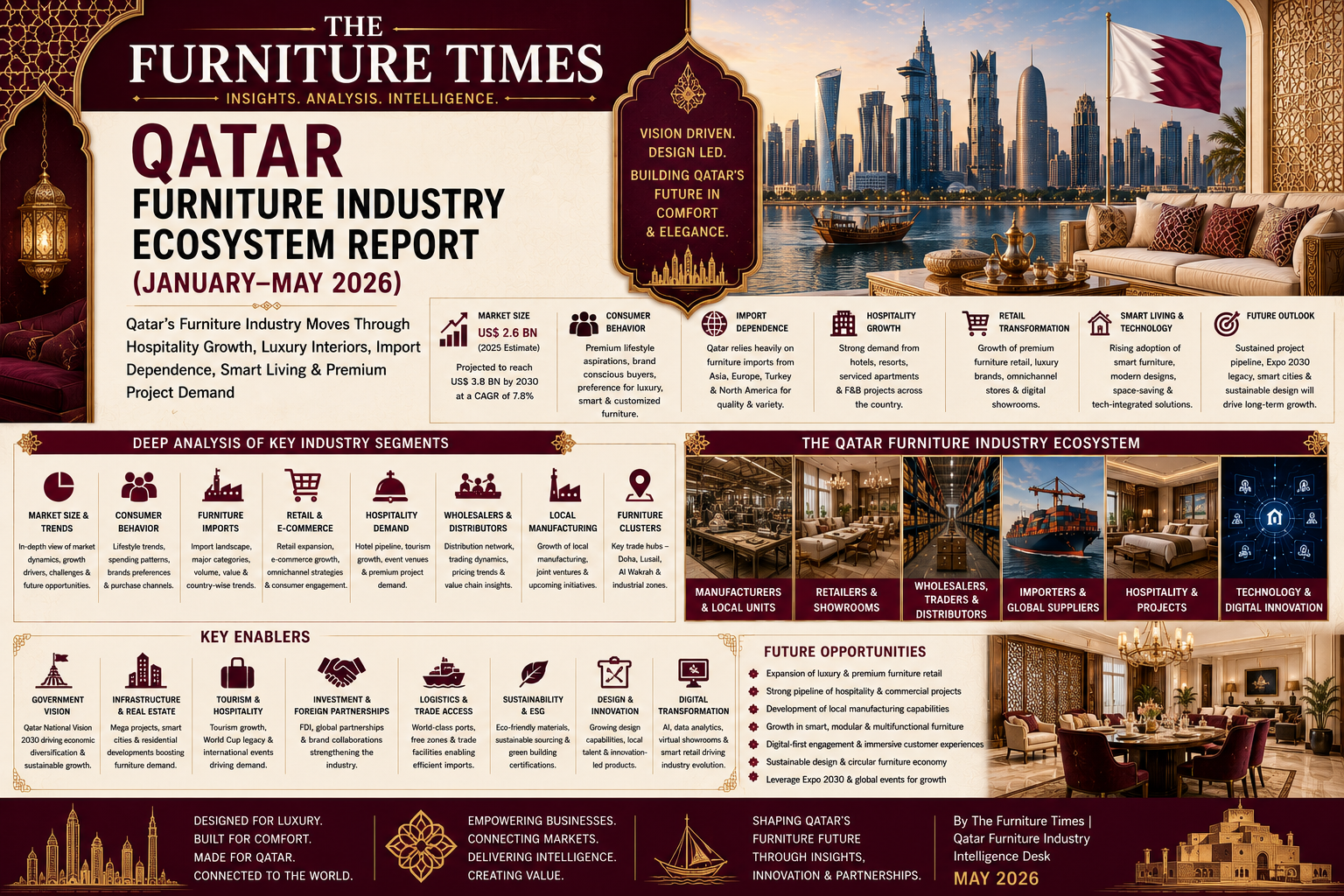
Qatar’s Furniture Industry Moves Through Hospitality Growth, Luxury Interiors, Import Dependence, Smart Living & Premium Project Demand
Qatar Furniture Industry Ecosystem Report (January–May 2026)
Deep Analysis of Market Size, Consumer Behavior, Furniture Imports, Retail, Hospitality Demand, Wholesalers, Local Manufacturing, Logistics, Sustainability & Future Opportunities
By The Furniture Times | Qatar Furniture Industry Intelligence Desk | May 2026
Qatar’s furniture industry entered 2026 as one of the most premium and project-driven furniture ecosystems in the Gulf.
Between January and May 2026, the market continued to benefit from:
luxury residential development
hospitality demand
commercial interiors
government-backed infrastructure
tourism positioning
high-income consumers
strong import networks
Qatar is not a mass-volume furniture manufacturing country like China, Vietnam, or Türkiye.
Its strength lies in:
Premium Demand
Hospitality Projects
Luxury Interiors
Imported Furniture
Custom Fit-Outs
High-Value Buyers
Smart Living Spaces
January–May 2026 Industry Overview
The first five months of 2026 showed Qatar’s furniture market remaining active, selective, and quality-driven.
Positive drivers included:
hotel renovation demand
luxury villa furnishing
apartment development
office and commercial interiors
outdoor furniture demand
premium imported furniture
custom joinery and fit-outs
Key challenges included:
import dependence
high logistics costs
regional competition
limited local manufacturing
price-sensitive mid-market buyers
sustainability expectations
Qatar’s furniture ecosystem remains smaller than the UAE and Saudi Arabia, but it is highly valuable because of premium purchasing power and project-based demand.
Qatar’s Furniture Market Outlook
Qatar’s furniture market is supported by:
high GDP per capita
strong urban development
tourism growth
hospitality investment
luxury lifestyle demand
real estate projects
government infrastructure planning
The market is expected to grow steadily as the country continues investing in tourism, housing, commercial spaces, and lifestyle infrastructure.
Demand is strongest in:
residential furniture
luxury interiors
hospitality furniture
office furniture
outdoor furniture
custom-made fit-outs
Doha Remains the Core Furniture Market
Doha is the center of Qatar’s furniture and interior design ecosystem.
The capital drives demand through:
luxury apartments
villas
hotels
restaurants
offices
embassies
retail spaces
serviced residences
Most furniture retail, wholesale, import, design, and project activity is concentrated in and around Doha.
This makes Doha the main visibility and business hub for Qatar’s furniture sector.
Hospitality Furniture Is a Major Growth Driver
Hospitality remains one of Qatar’s most important furniture demand segments.
Demand comes from:
hotels
resorts
restaurants
cafés
lounges
serviced apartments
tourism developments
Products in demand include:
hotel room furniture
lobby furniture
restaurant seating
outdoor lounge furniture
conference furniture
FF&E packages
custom joinery
Qatar’s tourism ambitions continue supporting the hospitality furniture ecosystem.
Hospitality buyers increasingly demand furniture that is:
durable
elegant
easy to maintain
culturally aligned
premium-looking
suitable for high-traffic use
Luxury Residential Furniture Demand Remains Strong
Qatar’s luxury residential sector continues driving premium furniture demand.
High-value buyers increasingly invest in:
luxury sofas
marble dining tables
designer beds
walk-in wardrobes
custom kitchens
decorative lighting
premium outdoor sets
bespoke interiors
Villa owners and premium apartment buyers often prefer:
Italian furniture
Turkish furniture
European luxury brands
custom-made interiors
high-end Middle Eastern design aesthetics
Furniture is treated not only as a household need but as a lifestyle statement.
Consumer Behavior Is Changing
Qatari consumers and expat buyers are increasingly design-aware.
They seek:
luxury
comfort
durability
customization
smart furniture
coordinated interiors
professional installation
fast delivery
The buying journey increasingly follows:
Search → Compare → Visit → Customize → Buy
Consumers often research brands online before visiting showrooms.
This means digital visibility is becoming critical.
Imported Furniture Dominates the Market
Qatar remains highly dependent on imported furniture.
Major sourcing countries include:
Türkiye
China
Italy
Malaysia
Indonesia
Vietnam
India
UAE
Imports dominate because Qatar has limited large-scale furniture manufacturing.
This creates strong opportunities for global exporters and regional suppliers.
However, import dependence also exposes the market to:
freight costs
customs delays
currency fluctuations
geopolitical uncertainty
delivery lead time challenges
Local Manufacturing & Custom Joinery Opportunity
Although large-scale furniture manufacturing is limited, Qatar has strong opportunity in:
custom joinery
wardrobes
kitchens
hotel fit-outs
office interiors
wall panels
bespoke furniture
project-based manufacturing
Local manufacturers can compete by offering:
faster delivery
customization
site measurement
installation
after-sales support
project coordination
This is where Qatar’s local furniture ecosystem can grow strongly.
Retail Transformation Is Accelerating
Qatar’s furniture retail market is becoming more hybrid.
Retailers increasingly use:
physical showrooms
websites
social media
WhatsApp inquiries
digital catalogues
interior design consultation
online advertising
Traditional showroom selling remains important, but customers increasingly discover options online first.
Furniture retailers must now compete through:
Store Experience + Digital Visibility
Wholesalers & Project Suppliers Remain Essential
Wholesalers and project suppliers are highly important in Qatar because much of the demand is project-based.
They serve:
hotels
contractors
designers
retailers
real estate developers
offices
restaurants
government projects
The future wholesaler must offer:
digital catalogues
quick quotations
specifications
delivery support
installation coordination
supplier reliability
Wholesalers that become searchable and project-ready will gain advantage.
Outdoor Furniture Demand Is Strong
Qatar’s outdoor furniture segment continues growing, especially for:
villas
hotels
cafés
terraces
rooftops
poolside spaces
majlis-inspired outdoor lounges
Products in demand include:
outdoor sofa sets
loungers
aluminium furniture
teakwood furniture
synthetic rattan
rope furniture
shade solutions
Outdoor furniture in Qatar must withstand:
heat
UV exposure
dust
humidity
intensive use
This creates demand for high-performance materials.
Office Furniture Is Evolving
Qatar’s office furniture demand is supported by:
corporate offices
government buildings
coworking spaces
commercial interiors
education institutions
Demand is rising for:
ergonomic chairs
modular workstations
meeting tables
acoustic solutions
executive desks
flexible office systems
The workplace is shifting toward comfort, flexibility, and productivity.
Smart Furniture & Technology Integration
Qatar’s smart city ambitions support demand for technology-integrated furniture.
Future demand may grow for:
smart desks
built-in charging systems
connected office furniture
hotel room smart furniture
multifunctional storage
adjustable ergonomic products
Furniture is increasingly becoming part of smart living and smart hospitality ecosystems.
Sustainability Is Becoming More Important
Sustainability is increasingly influencing Qatar’s furniture market.
Hotels, developers, and corporate buyers increasingly ask for:
sustainable wood
recyclable materials
low-emission finishes
durable furniture
ESG-friendly suppliers
environmentally responsible sourcing
Sustainable furniture will become especially important for:
hotels
commercial interiors
premium residences
government-related projects
Future suppliers must prove both quality and responsibility.
Logistics Ecosystem & Regional Supply
Qatar’s furniture logistics ecosystem depends heavily on imports through:
Hamad Port
air cargo
regional trucking
UAE re-export channels
direct international shipments
Hamad Port remains a major advantage for furniture imports and project cargo.
However, logistics planning remains critical because furniture is bulky, fragile, and timing-sensitive.
Project suppliers must manage:
container planning
customs clearance
warehousing
last-mile delivery
installation scheduling
Competition Is Increasing
Qatar’s furniture market is competitive because buyers have access to global choices.
Competition comes from:
local showrooms
UAE-based suppliers
Turkish brands
Italian luxury brands
Chinese imports
Indian manufacturers
Southeast Asian suppliers
online furniture platforms
Suppliers must compete through:
quality
delivery speed
design
pricing
trust
installation
after-sales service
Digital Visibility Is Now Critical
One of the biggest changes in Qatar’s furniture industry is online discovery.
Customers increasingly search for:
furniture stores in Doha
luxury furniture Qatar
outdoor furniture Qatar
hotel furniture suppliers Qatar
office furniture Qatar
custom wardrobes Doha
restaurant furniture Qatar
If a company is not visible online, it loses inquiries.
Digital visibility is now part of business survival.
Businesses must invest in:
SEO
product catalogues
professional websites
Google visibility
AI-readable content
social media authority
customer reviews
Qatar’s Future Furniture Opportunity
Qatar’s strongest future opportunities include:
1. Hospitality Furniture
Hotels, resorts, restaurants, and serviced apartments will continue creating demand.
2. Luxury Villas & Residences
Premium homes require high-end furniture and bespoke interiors.
3. Outdoor Living
Terraces, gardens, poolside areas, and majlis-style outdoor seating will grow.
4. Office & Institutional Furniture
Commercial and government projects will continue supporting demand.
5. Custom Joinery
Local workshops can grow through faster delivery and customization.
6. Sustainable Furniture
ESG and green building expectations will increase demand.
7. Digital Retail
Online visibility will reshape customer acquisition.
The Furniture Times Industry Insight
Qatar’s furniture industry between January and May 2026 revealed one clear reality:
The market is premium, project-driven, and highly dependent on trust.
Qatar rewards businesses that can deliver:
Quality
Customization
Speed
Luxury
Reliability
Digital Visibility
Project Capability
The market is smaller than some regional giants, but its purchasing power and project value make it highly attractive.
Final Thought
Qatar’s furniture industry entered 2026 with strong long-term opportunity.
The country has:
premium buyers
hospitality growth
luxury residences
strong import networks
project-based demand
outdoor lifestyle opportunities
smart living ambitions
But the industry must manage:
import dependence
intense competition
logistics planning
sustainability requirements
digital transformation
The future Qatar furniture ecosystem will not only be measured by showroom presence.
It will be measured by how successfully businesses become:
Visible
Trusted
Premium
Fast
Sustainable
Project-Ready
Digitally Discoverable
Because the future of Qatar’s furniture industry is not only about selling furniture.
It is about delivering lifestyle, luxury, comfort, and confidence in one of the Gulf’s most quality-conscious markets.
