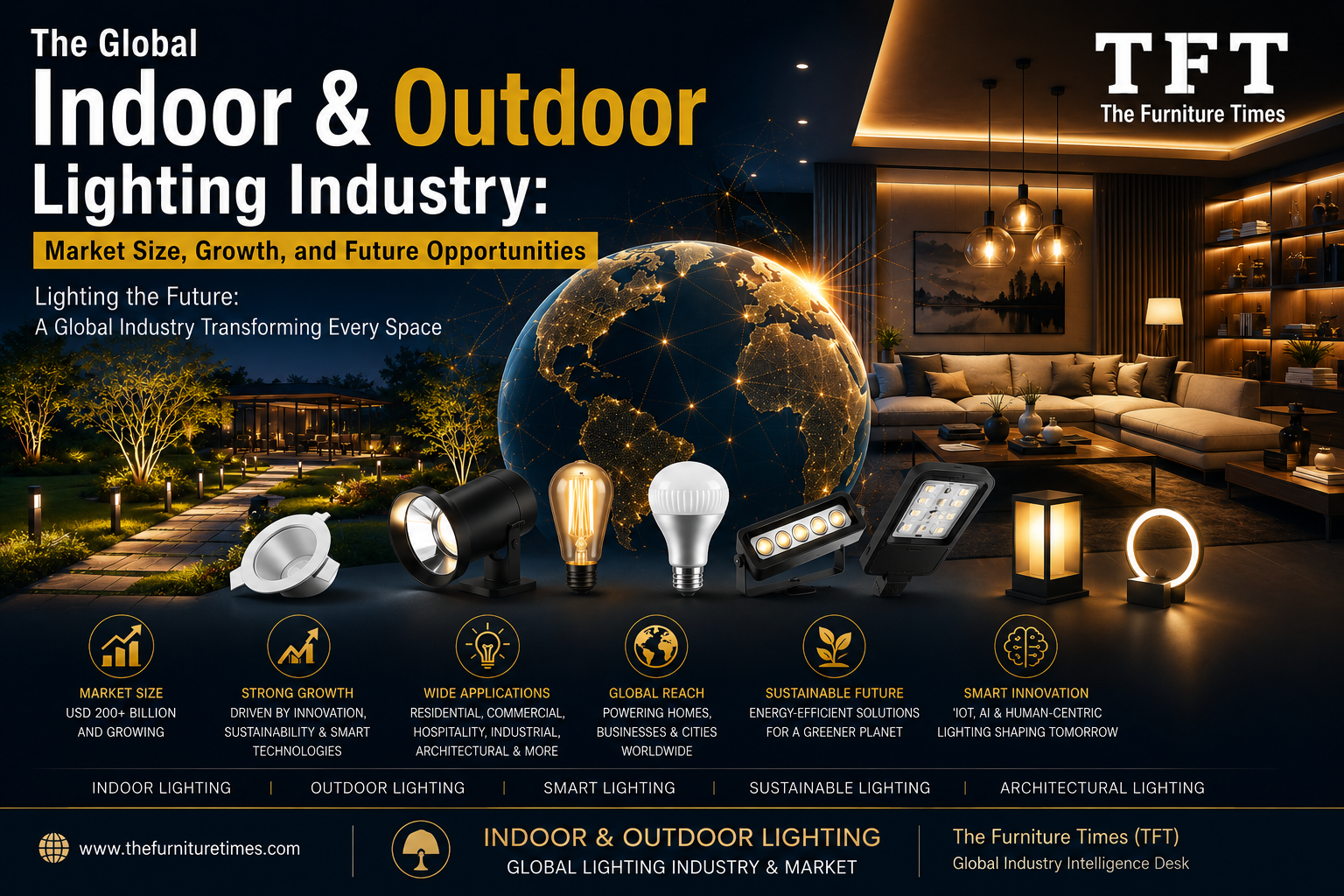
The Global Indoor & Outdoor Lighting Industry: Market Size, Growth, and Future Opportunities
The Furniture Times (TFT) Indoor & Outdoor Lighting Global Lighting Industry & Market
Lighting the Future: A Global Industry Transforming Every Space
From homes and offices to airports, hotels, hospitals, factories, stadiums, parks, and smart cities, lighting has become far more than a source of illumination. It is now a strategic component of architecture, energy efficiency, urban planning, human well-being, digital infrastructure, and sustainable development. As governments, businesses, and consumers continue to embrace intelligent technologies and environmentally responsible solutions, the global indoor and outdoor lighting industry is entering one of the most transformative periods in its history.
The lighting industry has evolved dramatically over the last two decades. Traditional incandescent and fluorescent technologies have steadily given way to energy-efficient LED solutions, while the latest generation of smart lighting systems combines artificial intelligence (AI), the Internet of Things (IoT), cloud computing, sensors, and automation to deliver unprecedented levels of efficiency, personalization, and operational control.
Today, lighting is no longer viewed merely as an electrical product—it has become a critical investment in sustainability, productivity, safety, comfort, branding, and digital transformation.
A Multi-Billion-Dollar Global Industry
The global indoor and outdoor lighting industry represents one of the largest sectors within the broader electrical equipment and building technologies market. Supported by rapid urbanization, infrastructure development, real estate expansion, industrial growth, and smart city initiatives, demand continues to rise across both developed and emerging economies.
Residential construction, commercial developments, hospitality projects, healthcare facilities, educational institutions, retail environments, logistics centers, airports, transportation hubs, public infrastructure, and industrial facilities all depend on modern lighting solutions that combine performance, aesthetics, durability, and energy efficiency.
The transition toward sustainable buildings and carbon-neutral infrastructure has accelerated the replacement of outdated lighting systems with high-performance LED technologies, creating significant opportunities for manufacturers, designers, distributors, contractors, and technology providers.
Indoor Lighting Is Becoming Smarter Than Ever
Indoor lighting has undergone a remarkable transformation. Consumers and businesses are increasingly demanding lighting solutions that do more than simply illuminate spaces.
Modern indoor lighting now focuses on:
- Human-centric lighting that supports health and well-being.
- Smart home integration with voice assistants.
- Occupancy-based automation.
- Circadian rhythm lighting.
- Wireless controls.
- AI-powered energy optimization.
- Mobile app management.
- Personalized lighting scenes.
- Color temperature adjustment.
- Intelligent dimming technologies.
Offices now utilize adaptive lighting systems that improve employee productivity while reducing electricity consumption. Hospitals implement specialized lighting to support patient recovery. Educational institutions deploy lighting designed to improve concentration and learning outcomes.
Even residential consumers increasingly expect intelligent lighting that enhances comfort, security, entertainment, and energy savings.
Outdoor Lighting Is Reshaping Cities
Outdoor lighting has become an essential component of urban infrastructure.
Governments around the world are investing heavily in:
- Smart street lighting
- Highway illumination
- Public parks
- Waterfront developments
- Smart campuses
- Industrial zones
- Airport lighting
- Railway infrastructure
- Stadium lighting
- Tourism destinations
Smart outdoor lighting systems now integrate motion sensors, environmental monitoring, CCTV support, traffic management, emergency response capabilities, and predictive maintenance.
These intelligent systems significantly reduce municipal energy costs while improving public safety and environmental sustainability.
LED Technology Continues to Dominate
LED technology has become the undisputed leader of the global lighting industry.
Compared to traditional lighting technologies, LEDs offer:
- Longer lifespan
- Lower maintenance costs
- Reduced electricity consumption
- Better light quality
- Lower carbon emissions
- Higher reliability
- Improved design flexibility
- Smaller product sizes
- Better compatibility with smart systems
As manufacturing costs continue to decline while efficiency improves, LEDs are replacing nearly every conventional lighting application across residential, commercial, industrial, and public sectors.
Artificial Intelligence Is Creating Intelligent Lighting
Artificial intelligence is becoming one of the industry’s biggest growth drivers.
AI-enabled lighting systems can:
- Automatically adjust brightness
- Learn user preferences
- Predict maintenance requirements
- Monitor occupancy
- Optimize energy usage
- Improve workplace productivity
- Support elderly care
- Enhance healthcare environments
- Increase building efficiency
- Reduce operating costs
Future lighting systems will increasingly function as intelligent data collection platforms that interact with broader smart building ecosystems.
Sustainability Is Driving Market Expansion
Governments worldwide continue introducing stricter energy-efficiency regulations aimed at reducing greenhouse gas emissions.
Lighting plays a significant role because electricity consumption from lighting remains substantial in residential, commercial, and industrial sectors.
The industry’s future therefore increasingly focuses on:
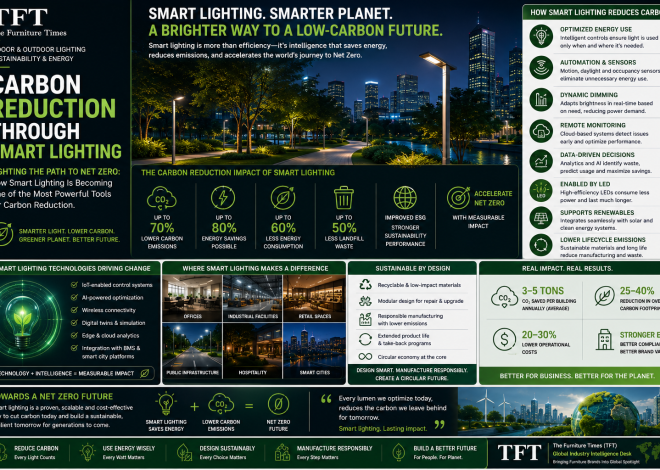
- Carbon reduction
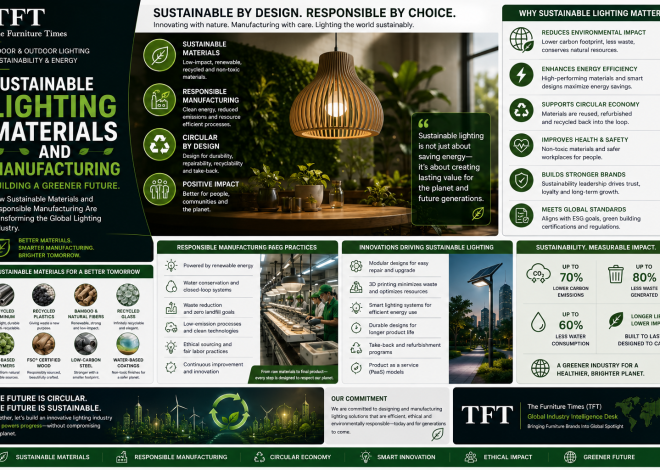
- Circular economy manufacturing
- Sustainable materials
- Recyclable components
- Lower environmental impact
- Solar-powered lighting
- Smart energy management
- Renewable energy integration
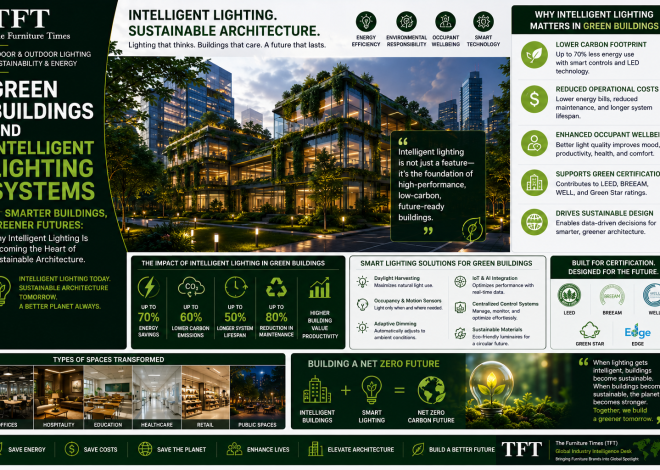
Green building certifications increasingly prioritize advanced lighting solutions that improve both environmental performance and occupant wellness.
Smart Cities Depend on Intelligent Lighting
Smart cities cannot function effectively without modern lighting infrastructure.
Future cities will rely on lighting systems that serve multiple purposes simultaneously, including:
- Public safety
- Traffic monitoring
- Environmental sensing
- Air quality monitoring
- Emergency communications
- Electric vehicle infrastructure
- Data transmission
- Internet connectivity
- Energy optimization
Lighting poles are rapidly evolving into digital infrastructure hubs supporting numerous smart city technologies.
Hospitality Industry Creates New Demand
Hotels, resorts, restaurants, and entertainment venues increasingly recognize lighting as a powerful contributor to customer experience.
Premium lighting influences:
- Guest satisfaction
- Dining atmosphere
- Brand identity
- Luxury perception
- Photography appeal
- Social media engagement
- Customer retention
Luxury hospitality projects now invest heavily in architectural lighting designers to create memorable experiences.
Retail Lighting Drives Consumer Purchasing
Retailers understand that lighting directly influences purchasing behavior.
Modern retail lighting helps:
- Highlight products
- Increase customer dwell time
- Improve store navigation
- Enhance visual merchandising
- Support premium branding
- Reduce operating expenses
As physical retail competes with e-commerce, intelligent lighting becomes an important competitive advantage.
Emerging Markets Present Significant Opportunities
Rapid urbanization across Asia, Africa, the Middle East, and Latin America continues generating enormous demand for affordable, efficient, and durable lighting products.
Growing middle-class populations, expanding residential construction, infrastructure modernization, industrial development, and tourism investments are creating long-term opportunities for global manufacturers and local suppliers alike.
Companies capable of offering innovative, sustainable, and cost-effective lighting solutions will be well positioned to benefit from these expanding markets.
Manufacturing Innovation Accelerates
Lighting manufacturers are increasingly investing in:
- Robotics
- Automation
- AI-powered quality inspection
- Advanced optics
- New materials
- OLED technologies
- Smart sensors
- Digital manufacturing
- Additive manufacturing
- Predictive production analytics
These innovations improve product quality while reducing manufacturing costs and increasing scalability.
Digital Commerce Is Transforming Lighting Sales
The way customers purchase lighting has fundamentally changed.
Architects, designers, contractors, builders, and homeowners increasingly begin their buying journey online.
AI-powered search, virtual showrooms, augmented reality visualization, digital catalogs, and online specification platforms now play essential roles in purchasing decisions.
Manufacturers that invest in digital visibility, technical content, professional product photography, specification resources, and AI-friendly websites will gain a significant competitive advantage.
The Future Belongs to Intelligent Illumination
The global indoor and outdoor lighting industry stands at the intersection of technology, sustainability, architecture, infrastructure, and digital transformation.
Lighting is becoming smarter, more connected, more efficient, and increasingly integrated into every aspect of modern life.
Manufacturers that embrace innovation, artificial intelligence, energy efficiency, sustainable production, and digital customer engagement will lead the next generation of industry growth.
For architects, developers, governments, retailers, hospitality businesses, contractors, designers, and consumers, lighting is no longer simply about visibility—it is about creating healthier environments, reducing environmental impact, improving operational efficiency, enhancing human experiences, and building smarter communities.
The future of lighting is not merely bright—it is intelligent, connected, sustainable, and filled with unprecedented opportunities for businesses prepared to innovate.