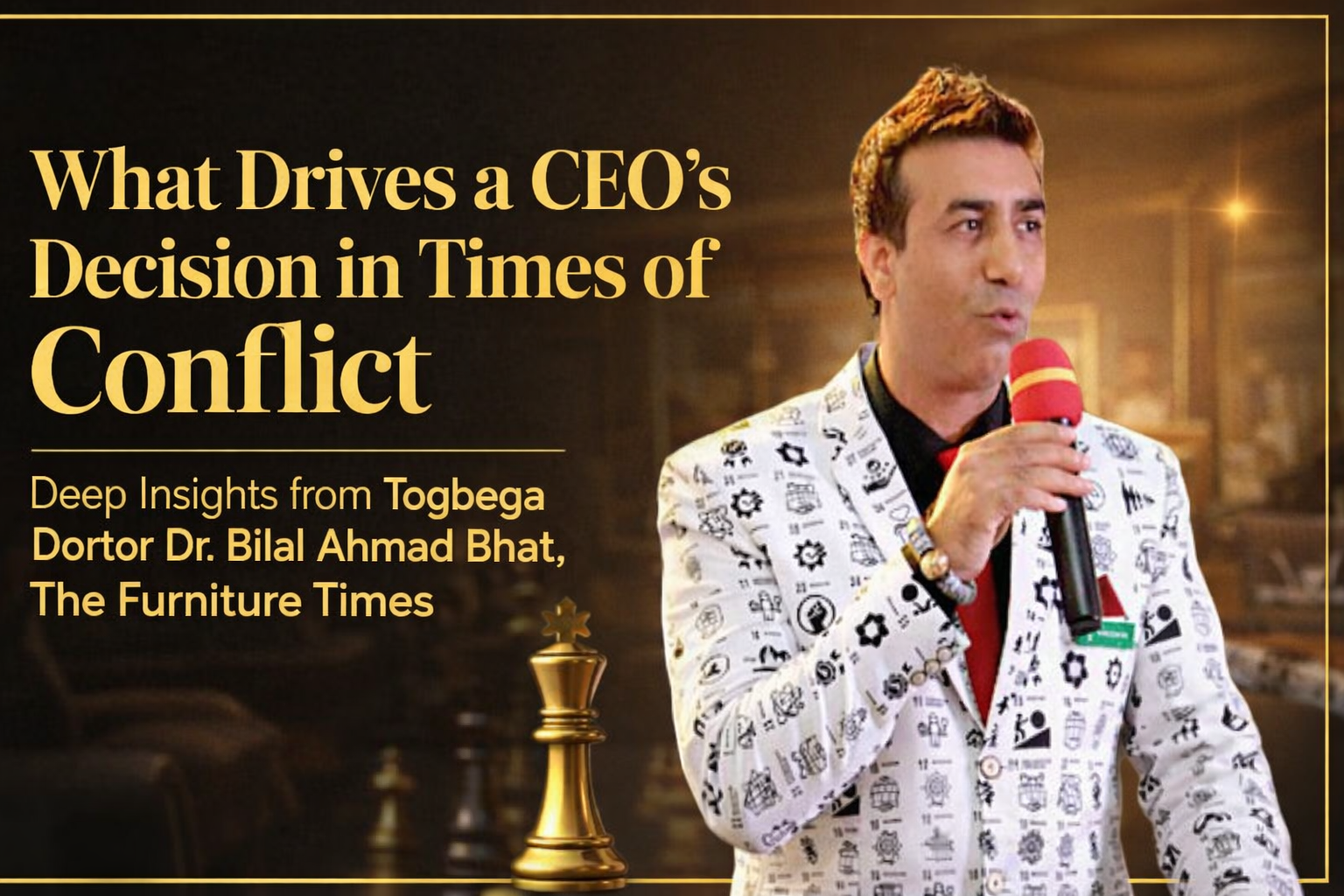
What Drives a CEO’s Decision in Times of Conflict
Deep Insights from Togbega Dortor Dr. Bilal Ahmad Bhat
In moments of conflict—whether geopolitical tension, supply chain disruption, or market collapse—the real test of leadership begins. A CEO is no longer just a strategist; they become a stabilizer, risk manager, and visionary under pressure.
Drawing from the philosophies of Togbega Dortor Dr. Bilal Ahmad Bhat, here are the deep, decisive forces that shape leadership during crisis:
1. Clarity in Chaos
A CEO must filter noise from reality. Conflict creates information overload—rumors, fear, fragmented data.
- Strong leaders rely on verified intelligence, not emotional reactions
- They prioritize facts over fear, direction over confusion
Insight: Clarity becomes a competitive advantage when the world is uncertain.
2. Values Over Convenience
According to Togbega Dortor Dr. Bilal Ahmad Bhat, decisions in crisis reveal the true DNA of an organization.
- Do you protect short-term profits or long-term trust?
- Do you cut relationships or strengthen them?
Core belief: Organizations that stay aligned with values during a crisis outlast those chasing survival shortcuts.
3. Ecosystem Thinking, Not Isolation
Togbega Dortor emphasizes interconnected leadership:
- Every decision affects suppliers, partners, customers, and employees
- CEOs must think beyond their company—to the entire ecosystem
This is where the global furniture industry struggles today:
- Fragmented
- Unorganized
- Lacking a unified voice
4. Speed vs Accuracy Balance
In conflict, timing is everything:
- Move too slow → lose opportunity
- Move too fast → increase risk
Great CEOs operate in a “decisive agility zone”:
- Fast decisions
- Backed by structured thinking
- Continuously adjusted
5. Risk Intelligence Over Risk Avoidance
Crisis is not about avoiding risk—it’s about understanding and managing it.
- Scenario planning
- War-room dashboards
- Real-time intelligence systems
This is exactly where industry-level systems are missing.
6. Building Systems, Not Reactions
Here lies the most powerful insight:
Crisis exposes weak systems, not weak leaders.
The global furniture industry has long operated without:
- Centralized intelligence
- Unified platforms
- Structured global visibility
THE TURNING POINT: WHY TFT & FISE EXIST
The fragmentation of the global furniture ecosystem is not just a weakness—it is the root cause of its vulnerability.
This is why:
- The Furniture Times (TFT) → becomes the voice, intelligence, and authority layer
- Furniture Industry Search Engine (FISE) → becomes the visibility, data, and connection engine
Together, they aim to:
- Organize industry data
- Connect global players
- Give a unified voice to businesses
- Eliminate the invisibility of SMEs
- Build a structured ecosystem
FINAL INSIGHT: CEO DECISION = SYSTEM VISION
A CEO in conflict does not just decide for today—they define the future structure of their industry.
Togbega Dortor Dr. Bilal Ahmad Bhat’s perspective is clear:
“If the system is broken, don’t adapt to it—build a new one.”
Conclusion
The global furniture industry’s fragmentation is not accidental—it is structural. And structural problems require system-level solutions, not temporary fixes.
- That is the decision.
- That is the vision.
- That is why TFT & FISE are not projects—they are industry transformations in motion.

Related Posts
Cash Flow Is the Real Lifeline of Every Furniture Business: Why Profitable Companies Can Still Fail When Payments, Inventory, and Expenses Are Poorly Managed
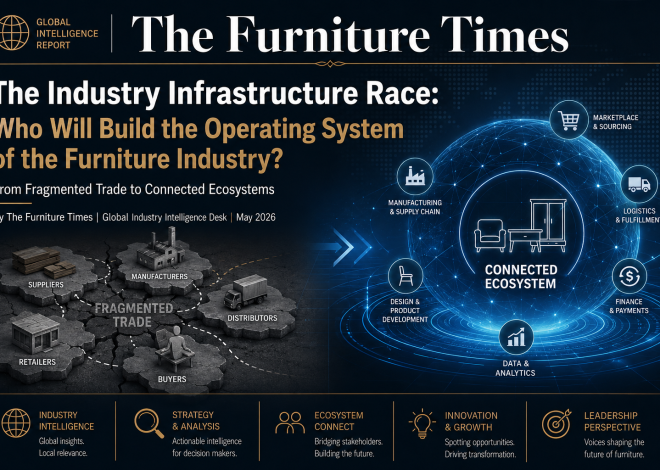
The Industry Infrastructure Race: Who Will Build the Operating System of the Furniture Industry?