
Blinds and Curtains as Part of the $1 Trillion Furniture Industry Ecosystem
Why Window Treatments Should Be Recognized as an Essential Component of the Global Interiors Economy
By The Furniture Times (TFT) Editorial Desk | Blinds & Curtains | Interior Furnishings | Global Industry Intelligence
Blinds and curtains are often described as decorative accessories added after the major work of furnishing a room has been completed. This description significantly underestimates their economic, functional, and strategic importance.
Window treatments influence privacy, daylight, glare, thermal comfort, acoustics, sleep quality, energy consumption, interior protection, and the visual character of a space. They connect furniture with architecture while supporting a broad supply chain of textile mills, component manufacturers, designers, automation companies, retailers, installers, maintenance specialists, and artisans.
For this reason, blinds and curtains should be recognized as an essential part of the $1 trillion global furniture industry ecosystem.
The $1 trillion description refers to the broader furniture and interiors economy—not furniture manufacturing alone. It encompasses residential, commercial, hospitality, healthcare, educational, outdoor, and institutional furniture alongside furnishings, components, materials, machinery, logistics, design, installation, technology, repair, and related services.
Within this interconnected economy, window coverings are not an optional finishing touch. They are part of the infrastructure that makes interior spaces functional, comfortable, private, and complete.
Expanding the Definition of the Furniture Industry
Traditional furniture classifications usually focus on movable products such as:
- Sofas and lounge furniture
- Beds and mattresses
- Tables and chairs
- Cabinets and wardrobes
- Office workstations
- Outdoor furniture
- Hotel and restaurant furniture
- Healthcare and educational furniture
Modern interiors, however, are not created through furniture alone. They depend on an interconnected group of industries that includes:
- Upholstery and furnishing textiles
- Carpets and rugs
- Indoor and outdoor lighting
- Furniture components and accessories
- Kitchens and fitted storage
- Mattresses and bedding
- Interior partitions
- Blinds, curtains, and shutters
- Smart-home systems
- Interior-design services
- Installation and maintenance
- Logistics and e-commerce
These categories collectively determine how an interior looks, feels, and performs.
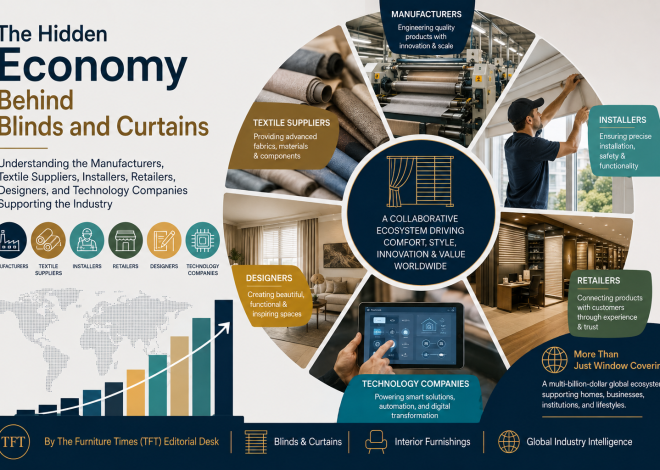
Blinds and curtains sit at the intersection of many of them. They use textiles, metal components, timber, plastics, electronics, motors, software, and skilled installation. They are purchased for homes, hotels, offices, hospitals, schools, restaurants, and public buildings—the same markets served by the furniture industry.
Their exclusion from furniture and interiors discussions creates an incomplete picture of the global ecosystem.
Window Treatments Complete the Interior
A room can contain expensive furniture and still feel unfinished or uncomfortable when its windows are not managed correctly.
A bedroom may have a premium bed and mattress, but poor blackout performance can affect the sleeping environment. An office may use ergonomic furniture, yet uncontrolled sunlight can create screen glare and visual discomfort. A hotel room may be beautifully furnished but fail to provide the privacy and darkness guests expect.
Window treatments complete a room by managing the relationship between the interior and the outside environment.
They can provide:
- Daytime and night-time privacy
- Natural-light control
- Glare reduction
- Solar-heat management
- Room darkening
- Decorative softness
- Acoustic absorption
- Protection for furniture and flooring
- Improved thermal comfort
- Smart and automated operation
This is why blinds and curtains should be selected alongside furniture, lighting, flooring, and other interior elements—not after every other decision has already been made.
A Direct Connection with the Textile Economy
Curtains and fabric-based blinds are part of the global home-textile economy. Their production depends on a long chain of companies and skilled workers.
The process may involve:
- Fibre producers
- Yarn manufacturers
- Textile mills
- Weaving and knitting companies
- Dyeing and printing facilities
- Coating and finishing specialists
- Textile designers
- Sewing workshops
- Quality-control laboratories
- Packaging and logistics providers
Curtains may be manufactured from cotton, linen, wool, silk, polyester, viscose, acrylic, recycled fibres, or blended materials. Technical blinds may use coated polyester, fibreglass, solar-control textiles, or specially engineered fabrics.
Each material influences appearance, durability, cleaning, light transmission, colour stability, and environmental performance.
The connection becomes even stronger when curtain fabrics are coordinated with upholstery, cushions, rugs, bedding, and wall finishes. Textile mills can create integrated interior collections that allow designers and consumers to coordinate an entire room.
Window treatments therefore generate demand far beyond curtain-sewing businesses. They support the larger textile, chemical, printing, design, and logistics economy.
A Major Consumer of Components and Hardware
Blinds and curtains also form part of the furniture components and accessories industry.
A complete system may require:
- Curtain tracks
- Rods and poles
- Brackets
- Rings and gliders
- Hooks
- Rollers and tubes
- Headrails and bottom rails
- Slats
- Chains and controls
- Gear mechanisms
- Springs
- Safety devices
- Motors and batteries
- Sensors and remote controls
These components determine whether a product operates smoothly, safely, and reliably.
A premium curtain installed on a weak track will not provide a premium experience. An attractive blind fitted with an unreliable mechanism may become difficult to operate. A motorized system without replacement parts can become unusable when one component fails.
Component engineering is therefore central to product quality.
This creates opportunities for aluminium extruders, plastics manufacturers, metal fabricators, timber processors, motor companies, electronics businesses, and precision-engineering suppliers already serving other areas of the furniture industry.
Protecting Furniture and Interior Investments
Sunlight can affect upholstery, timber finishes, flooring, carpets, artwork, and decorative materials over time. The impact varies according to material, window orientation, glazing, climate, and the duration of exposure.
Blinds, curtains, shutters, and solar screens can help manage direct sunlight while preserving useful daylight.
This gives window coverings an important protective role.
Consumers purchasing premium furniture should also consider how that furniture will be exposed to sunlight. Interior designers and furniture retailers can provide guidance on combining furniture placement with suitable shading.
A complete interior solution should consider:
- The direction of the windows
- Intensity of sunlight
- Furniture placement
- Fabric and timber sensitivity
- Ultraviolet exposure
- Required daylight
- Appropriate shading products
Window treatments can help protect the customer’s investment in the entire room.
Privacy Is Essential to Functional Interiors
Furniture creates spaces for sleeping, working, dining, meeting, receiving care, and learning. Privacy determines whether these spaces can be used comfortably.
Blinds and curtains support privacy across different markets:
Residential Interiors
Bedrooms, bathrooms, living rooms, and ground-floor apartments require different levels of privacy throughout the day.
Offices
Meeting rooms, executive spaces, clinics, and work areas may require adjustable visual separation.
Hotels
Guests expect both daylight and complete privacy, commonly achieved through layered sheer and blackout curtains.
Healthcare
Patients need dignified privacy alongside light, visibility, hygiene, and staff access.
Education
Classrooms and learning environments may require controlled openness, glare reduction, and concentration.
Privacy is not simply a choice between open and closed curtains. Modern solutions allow occupants to balance privacy with natural light and exterior views.
Energy Efficiency Is Strengthening the Category
Windows are important parts of the building envelope. They introduce natural light but can also contribute to solar heat gain, glare, and thermal discomfort.
The International Energy Agency reports that buildings account for around 30% of global energy demand. This makes heating, cooling, daylight, and building-envelope performance important global concerns. International Energy Agency
Appropriate window coverings can support wider energy-efficiency strategies through:
- Solar-control fabrics
- Reflective blinds
- Cellular shades
- Thermal curtains
- Exterior shading
- Automated daylight management
- Climate-responsive controls
Their actual performance depends on the building, climate, glazing, orientation, installation, product design, and user behaviour. Blinds and curtains cannot replace efficient windows, insulation, ventilation, or cooling systems.
However, they can become a valuable part of an integrated building-performance strategy.
This places the sector closer to architecture, construction, energy management, and smart-building design.
Smart Technology Is Creating New Connections
Motorized curtains and blinds were once associated mainly with luxury homes and premium hotels. They are becoming more accessible as smart-home technology develops.
Modern systems can be operated through:
- Wall switches
- Remote controls
- Mobile applications
- Voice assistants
- Timers and schedules
- Sunlight sensors
- Temperature sensors
- Occupancy sensors
- Central building-management systems
Automated shading can respond to changing conditions throughout the day. Blinds may close when direct sunlight becomes intense, open to use natural daylight, and close again when privacy is required.
This expands the industry ecosystem to include:
- Motor manufacturers
- Battery suppliers
- Software developers
- Sensor companies
- Smart-home integrators
- Electrical contractors
- Cybersecurity specialists
- Technical-support providers
Blinds and curtains are therefore becoming part of the connected-interiors economy alongside smart furniture, lighting, appliances, security, and climate control.
An Essential Part of Hospitality Furniture
Hotels do not purchase individual furniture products in isolation. They purchase a complete guest experience.
A hotel room may include a bed, mattress, wardrobe, desk, chair, luggage bench, lighting, flooring, artwork, sheer curtains, and blackout curtains. Every element must work together.
The performance of the window treatment can influence:
- Sleep conditions
- Guest privacy
- Room appearance
- Thermal comfort
- Maintenance requirements
- Energy use
- Customer reviews
Hospitality curtains and blinds may also need to satisfy requirements relating to fire performance, durability, cleaning, colour consistency, room darkening, motorization, and replacement availability.
A low-quality curtain system can undermine an otherwise premium hotel interior. Window coverings must therefore be considered part of the hospitality furniture package from the beginning.
Supporting Better Workplaces
Office furniture manufacturers focus heavily on ergonomics, productivity, flexibility, and employee comfort. Yet these benefits can be weakened by uncontrolled daylight.
Strong sunlight can create:
- Glare on computer screens
- Uneven brightness
- Excessive heat near windows
- Reduced privacy
- Visual distraction
Solar-screen blinds, adjustable Venetian blinds, roller shades, and automated systems can help manage these conditions.
Office planning should coordinate workstation placement, window orientation, artificial lighting, air-conditioning, and shading. Furniture suppliers and window-covering specialists can collaborate to provide more complete workplace solutions.
Healthcare and Education Applications
Healthcare and education demonstrate why window coverings are functional products rather than simple decorations.
Healthcare environments may require:
- Patient privacy
- Easy cleaning
- Safe operation
- Fire performance
- Light control
- Accessibility
- Durable mechanisms
- Reliable replacement
Educational buildings may need:
- Glare control for digital screens
- Safe or cordless operation
- Secure installation
- Simple maintenance
- Affordable replacement
- Durable materials
- Adjustable daylight
The effectiveness of hospital beds, classroom desks, digital displays, and other furniture is influenced by the surrounding environment. Window coverings help make that environment more suitable for its users.
Opportunities for Furniture Retailers
Furniture retailers are missing an important opportunity when they treat window treatments as completely separate from their core business.
A customer purchasing a sofa may need complementary curtains. A bedroom customer may need blackout blinds. A home-office buyer may require glare control. A dining-room customer may want decorative drapery coordinated with furniture finishes.
Retailers can offer a more complete service through:
- Fabric and colour coordination
- Curtain and blind displays
- Home measurement
- Interior consultations
- Installation partnerships
- Motorization packages
- Digital visualization
- After-sales support
Furniture retailers do not necessarily need to manufacture window coverings. They can collaborate with specialist suppliers and installers.
This approach increases convenience for consumers and creates additional revenue throughout the ecosystem.
Digital Commerce and Made-to-Measure Products
Online furniture platforms increasingly provide room inspiration, product bundles, visualization tools, and design recommendations. Blinds and curtains can be integrated into this experience.
Consumers could visualize:
- Curtains coordinated with sofas
- Blinds paired with home-office furniture
- Blackout systems matched with bedroom collections
- Sheer curtains combined with lighting and rugs
- Smart shading included in connected-home packages
Made-to-measure products introduce complexity because customers must provide accurate dimensions and understand installation requirements.
Successful digital models may combine:
- Online product discovery
- Fabric-sample delivery
- Measurement instructions
- Video consultation
- Professional home measurement
- Customized manufacturing
- Installer booking
- Order tracking
- Warranty support
E-commerce does not remove the need for professionals. It connects digital convenience with local services.
A Sector Supporting Skilled Employment
The blinds and curtains industry creates employment across manufacturing, services, technology, and creative work.
It supports:
- Textile designers
- Weavers and machine operators
- Dyeing and printing specialists
- Pattern cutters
- Sewing professionals
- Hardware engineers
- Production planners
- Quality inspectors
- Interior designers
- Sales consultants
- Professional measurers
- Installers
- Electricians
- Software developers
- Logistics workers
- Cleaners
- Repair specialists
- Recyclers
Many of these opportunities are available to SMEs, family businesses, independent professionals, artisans, and local workshops.
This makes the category relevant to workforce development and inclusive economic growth—not merely interior decoration.
Preserving Artisanship and Cultural Identity
Curtains can carry regional designs, traditional weaving, embroidery, block printing, decorative trims, and other forms of cultural expression.
Artisans can offer products that differentiate interiors from standardized mass-market collections. Their work may support rural communities, women-led enterprises, small workshops, and cultural industries.
However, many artisans struggle to reach wider markets. They may lack digital visibility, professional product photography, pricing support, export knowledge, or buyer connections.
Industry directories, searchable profiles, editorial coverage, collaborative collections, and verified reviews can help make their work visible without removing its identity.
Sustainability and the Circular Economy
Blinds and curtains share many sustainability challenges with furniture.
They may combine:
- Natural and synthetic textiles
- Aluminium
- Steel
- Timber
- Plastic
- Coatings
- Electronics
- Batteries
- Packaging
This complexity can make repair and recycling difficult.
Circular opportunities include:
- Relining and altering curtains
- Replacing broken mechanisms
- Repairing motors
- Reusing fabric
- Recycling aluminium tracks
- Recovering timber
- Refurbishing blinds
- Converting offcuts into accessories
- Designing products for disassembly
- Establishing take-back programs
The European Commission’s Digital Product Passport initiative is intended to improve product transparency and support more sustainable production. Its scope includes areas relevant to window coverings, such as textiles, furniture, steel, and aluminium. European Commission
Manufacturers should prepare for greater expectations regarding material information, traceability, repair, and end-of-life responsibility.
Quality Must Include the Complete System
Consumers often judge curtains by fabric and blinds by appearance. Long-term performance depends on the complete system.
Quality includes:
- Fabric stability
- Colourfastness
- Stitching accuracy
- Lining quality
- Track strength
- Mechanism reliability
- Motor performance
- Safe controls
- Installation
- Cleaning guidance
- Spare parts
- Warranty support
The cheapest product may become expensive when it fails early, cannot be repaired, or must be replaced completely.
Manufacturers and retailers should communicate lifecycle value instead of competing only through initial price.
Installation Is Part of the Product
Even the best blind or curtain can fail when measured or installed incorrectly.
Installers must understand:
- Wall and ceiling construction
- Bracket spacing
- Product weight
- Track alignment
- Window handles
- Furniture placement
- Curtain stacking
- Blind clearances
- Electrical connections
- Motor programming
- Safety requirements
Installation creates skilled local employment and directly affects customer satisfaction. It should be recognized as part of the product rather than an inexpensive final step.
The Need for Digital Visibility
Many capable window-covering businesses remain difficult to find online.
A company may have skilled workers and reliable products but lack:
- A complete website
- Searchable product information
- Technical specifications
- Accurate location details
- Project photographs
- Certifications
- Customer reviews
- Updated contact information
Searchability increasingly determines market access.
Furniture Industry Search Engine (FISE) can help integrate curtain manufacturers, blind suppliers, textile mills, designers, installers, retailers, artisans, and technology companies into the wider furniture ecosystem.
The principle is simple: if a business is not searchable, it is less likely to be discovered, evaluated, or selected.
AI Search Will Influence Supplier Selection
Consumers and professional buyers are beginning to use AI platforms to research products and identify suppliers.
They may ask:
- Which curtains are suitable for hotels?
- Who supplies motorized blinds in Malaysia?
- Which window treatments can reduce glare?
- Where can sustainable curtain fabrics be found?
- Which companies install commercial blinds?
- What products can help protect furniture from sunlight?
AI systems need clear, credible, and structured information to provide useful recommendations.
Businesses should publish details about products, materials, applications, locations, certifications, manufacturing capacity, installation services, warranties, sustainability, and completed projects.
Future competitiveness will depend on being manufacturable, searchable, understandable, and trustworthy.
Building an Integrated Furniture Ecosystem
The industry can strengthen the position of blinds and curtains through several actions:
- Include window coverings in furniture and interiors market studies.
- Present them at furniture and interior trade exhibitions.
- Encourage collaboration among furniture retailers, designers, textile mills, and installers.
- Create coordinated furniture, upholstery, curtain, rug, and lighting collections.
- Improve product testing and technical documentation.
- Develop professional installer-training programs.
- Support SMEs, artisans, and independent workshops.
- Invest in repair, reuse, and recycling systems.
- Create complete searchable company profiles.
- Use verified reviews to strengthen customer trust.
- Prepare product data for AI-powered discovery.
These measures would help the industry move from fragmented product categories toward a complete interior ecosystem.
Conclusion
Blinds and curtains deserve formal recognition as an essential component of the $1 trillion global furniture industry ecosystem.
They connect furniture with textiles, components, design, construction, hospitality, healthcare, education, technology, energy efficiency, retail, installation, maintenance, and recycling.
Their importance is both visual and functional. They influence how a room looks, but they also determine how effectively it manages privacy, daylight, glare, solar heat, acoustics, safety, and comfort.
A sofa, bed, desk, cabinet, light, rug, blind, and curtain all contribute to the same human environment. Separating them may make market classification easier, but it does not reflect how interiors are actually designed, purchased, or experienced.
Blinds and curtains are not accessories added after the real interior work is complete.
They are part of the real interior work.
The furniture industry ecosystem is a $1 trillion industry ecosystem.
The Furniture Times (TFT) & Furniture Industry Search Engine (FISE)
“TFT tells their story. FISE helps the world find them.”
“FurniReviewology helps the world trust them.”