
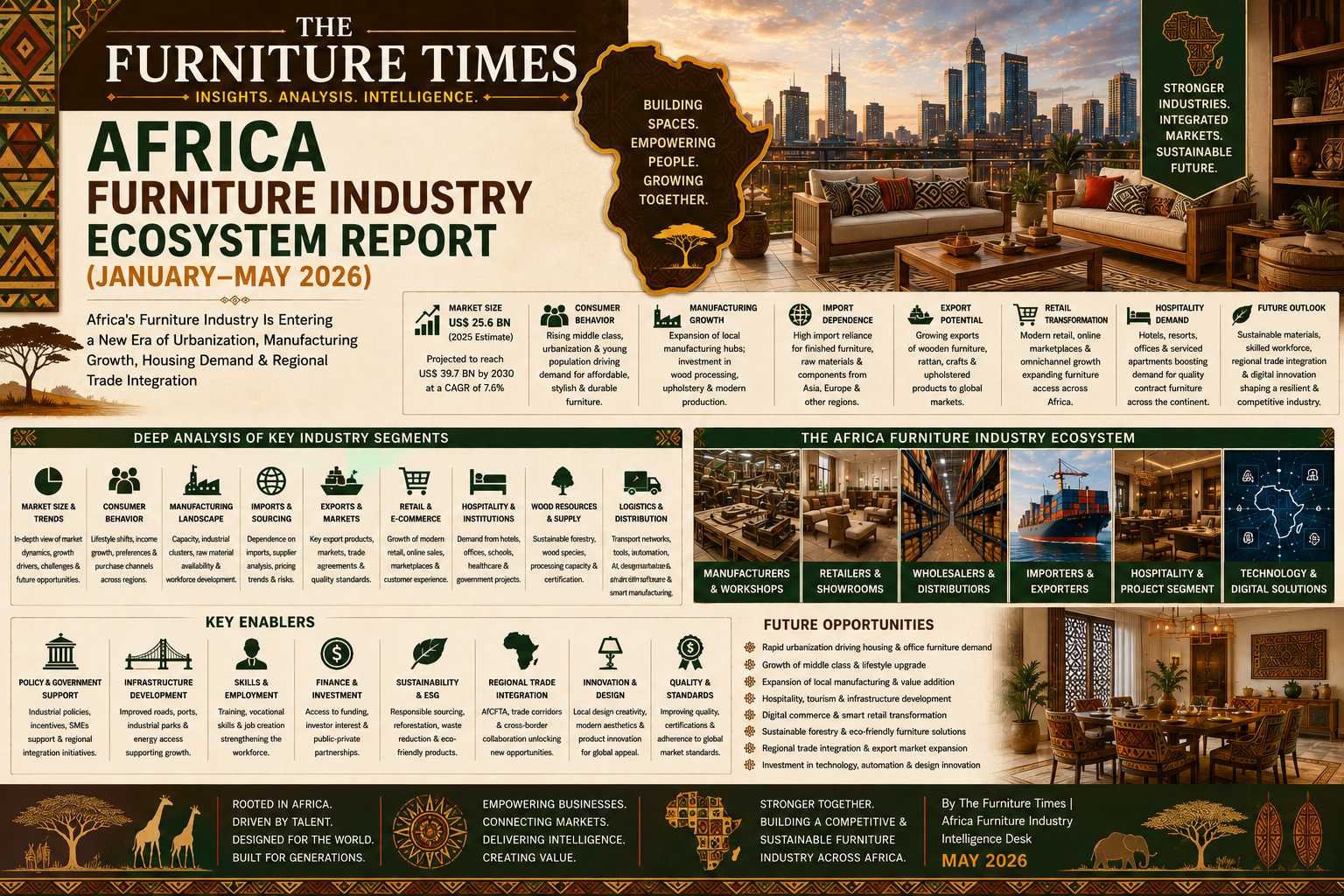
Africa’s Furniture Industry Is Entering a New Era of Urbanization, Manufacturing Growth, Housing Demand & Regional Trade Integration
Africa Furniture Industry Ecosystem Report (January–May 2026)
Deep Analysis of Market Size, Consumer Behavior, Manufacturing, Imports, Exports, Retail, Hospitality Demand, Wood Resources, Logistics, Digital Transformation & Future Opportunities
By The Furniture Times | Africa Furniture Industry Intelligence Desk | June 2026
Africa is becoming one of the most important future growth regions for the global furniture industry.
While much of the world’s furniture production remains concentrated in Asia, Europe, and North America, Africa is rapidly emerging as a strategic frontier for:
furniture manufacturing
housing-related demand
urban development
hospitality expansion
infrastructure growth
wood processing
interior design services
regional trade
Between January and May 2026, the African furniture ecosystem continued evolving despite global economic uncertainty.
The continent’s long-term growth story remains driven by:
Population Growth
Urbanization
Housing Demand
Industrialization
Regional Trade
Hospitality Expansion
Digital Commerce
Africa’s Furniture Industry Overview
Africa is not one furniture market.
It is a collection of 54 countries with different levels of development, manufacturing capability, consumer behavior, and purchasing power.
The continent’s furniture ecosystem can broadly be divided into:
North Africa
Egypt
Morocco
Algeria
Tunisia
Libya
West Africa
Nigeria
Ghana
Côte d’Ivoire
Senegal
East Africa
Kenya
Tanzania
Uganda
Rwanda
Ethiopia
Southern Africa
South Africa
Namibia
Botswana
Zambia
Zimbabwe
Central Africa
Cameroon
Democratic Republic of Congo
Gabon
Congo
Each region presents unique opportunities.
Africa’s Population Is Its Biggest Advantage
Africa’s population is expected to exceed:
2.5 Billion People
by 2050.
This creates enormous future demand for:
homes
apartments
offices
schools
hotels
hospitals
public infrastructure
All of which require furniture.
The furniture industry is directly linked to population growth.
Africa possesses one of the strongest demographic growth stories in the world.
Housing Demand Is Driving Furniture Growth
One of the biggest opportunities across Africa is housing.
Many countries continue facing significant housing shortages.
As governments and private developers invest in:
affordable housing
residential communities
apartments
urban developments
furniture demand naturally increases.
Products seeing strong demand include:
beds
wardrobes
sofas
dining sets
kitchen furniture
storage solutions
Housing remains the foundation of future furniture demand.
Urbanization Is Creating New Consumers
Africa’s urban population continues growing rapidly.
Cities such as:
Lagos
Cairo
Nairobi
Johannesburg
Accra
Casablanca
Addis Ababa
Dar es Salaam
continue expanding.
Urban consumers generally purchase more furniture than rural populations.
This trend supports:
Furniture Retail
Interior Design
Home Improvement
Office Furnishing
South Africa Remains the Continent’s Most Advanced Furniture Market
South Africa remains Africa’s most mature furniture ecosystem.
The country benefits from:
established retail chains
local manufacturing
developed logistics
commercial furniture demand
hospitality infrastructure
Major segments include:
residential furniture
office furniture
hospitality furniture
outdoor furniture
South Africa remains the benchmark market for the continent.
Nigeria Represents One of Africa’s Biggest Opportunities
Nigeria’s enormous population makes it one of Africa’s most attractive future furniture markets.
Key drivers include:
urbanization
housing demand
middle-class growth
commercial expansion
hospitality development
The country’s furniture sector remains fragmented but offers enormous long-term growth potential.
Egypt Is Emerging as a Manufacturing Hub
Egypt continues investing in:
industrial development
furniture manufacturing zones
export promotion
woodworking capability
The country increasingly serves both:
domestic demand
regional export markets
Egypt’s strategic location supports trade with:
Africa
Europe
Middle East
Kenya Leads East Africa’s Furniture Growth
Kenya continues emerging as East Africa’s furniture leader.
Demand is supported by:
Nairobi’s growth
hospitality projects
housing development
commercial expansion
Kenya increasingly serves as a gateway for East African furniture trade.
Ghana Continues Expanding
Ghana remains one of West Africa’s most promising furniture markets.
Growth is supported by:
real estate development
hospitality investment
urbanization
furniture retail expansion
Accra continues attracting investment in residential and commercial projects.
Hospitality Furniture Is One of Africa’s Biggest Opportunities
Tourism continues supporting furniture demand across:
Morocco
Egypt
Kenya
Tanzania
South Africa
Rwanda
Ghana
Demand includes:
hotel furniture
resort furniture
restaurant seating
outdoor furniture
FF&E packages
Hospitality remains one of the fastest-growing furniture segments on the continent.
Wood Resources Create Manufacturing Potential
Africa possesses significant natural resources including:
teak
mahogany
iroko
oak
eucalyptus
pine
Countries with strong timber resources include:
Ghana
Cameroon
Gabon
Congo
Tanzania
South Africa
The challenge is moving beyond raw material exports toward higher-value furniture manufacturing.
Imports Still Dominate Many Markets
Many African countries remain heavily dependent on imported furniture.
Major suppliers include:
China
Türkiye
Malaysia
Vietnam
Indonesia
India
Italy
This creates opportunities for:
local manufacturing
regional production
import substitution
Digital Retail Is Growing
African consumers increasingly use:
online marketplaces
social media
WhatsApp commerce
e-commerce platforms
The furniture buying journey increasingly follows:
Search → Compare → Contact → Buy
Digital discoverability is becoming more important across the continent.
Logistics Remains a Major Challenge
One of Africa’s biggest industry challenges remains logistics.
Issues include:
transportation costs
border delays
fragmented infrastructure
shipping complexity
However, improvements in:
ports
roads
regional trade agreements
are gradually improving connectivity.
AfCFTA Could Transform the Industry
One of the most important developments is:
African Continental Free Trade Area (AfCFTA)
AfCFTA has the potential to create:
larger markets
regional sourcing
manufacturing clusters
export opportunities
For furniture businesses, AfCFTA may become one of the most important growth catalysts over the next decade.
Sustainability Is Becoming Important
Consumers, hotels, and developers increasingly value:
sustainable wood
certified timber
durable products
responsible sourcing
Future furniture businesses will need stronger environmental credentials.
The Rise of the Visibility Economy
One of the biggest opportunities for African furniture businesses is:
Visibility
Many excellent manufacturers remain:
unknown
difficult to find
digitally invisible
The future industry increasingly rewards businesses that become:
Searchable
Discoverable
Connected
Trusted
Future Opportunities Through 2035
The strongest opportunities include:
Housing Furniture
Africa’s housing demand remains enormous.
Hospitality Furniture
Tourism growth supports long-term demand.
Office Furniture
Business expansion creates opportunity.
Outdoor Furniture
Hospitality and residential demand continue growing.
Wood Processing
Value-added manufacturing remains underdeveloped.
Digital Furniture Commerce
Online furniture discovery will expand rapidly.
Regional Manufacturing
AfCFTA may support new production hubs.
The Furniture Times Industry Insight
Africa’s furniture industry between January and May 2026 revealed a powerful reality:
The continent may represent one of the largest long-term furniture opportunities in the world.
The next generation of industry leaders will likely emerge from businesses that combine:
Manufacturing
Design
Sustainability
Digital Visibility
Regional Trade
Customer Trust
Final Thought
Africa’s furniture industry is still in the early stages of its transformation.
The continent has:
population growth
housing demand
timber resources
hospitality opportunities
expanding cities
growing middle classes
The future African furniture ecosystem will increasingly reward businesses that become:
Visible
Sustainable
Connected
Discoverable
Regionally Integrated
Because Africa’s furniture future is not only about selling products.
It is about building one of the world’s next great furniture ecosystems.
