
Sustainable Lighting Materials and Manufacturing
By The Furniture Times (TFT) | Indoor & Outdoor Lighting | Sustainability & Energy
Building a Greener Future: How Sustainable Materials and Responsible Manufacturing Are Transforming the Global Lighting Industry
The lighting industry has always been associated with innovation. From the invention of the incandescent bulb to the rise of LED technology and today’s AI-powered smart lighting systems, every generation has introduced solutions that are brighter, more efficient, and more intelligent.
Now, another transformation is reshaping the industry—one that goes beyond technology itself.
Manufacturers are no longer judged only by how well their lighting products perform. Increasingly, they are also being evaluated by how those products are made, which materials they use, where those materials come from, how much energy is consumed during production, and what happens when the products reach the end of their life.
This shift is placing sustainability at the centre of product development.
Across the world, governments are introducing stricter environmental regulations, businesses are strengthening Environmental, Social and Governance (ESG) commitments, investors are prioritising responsible manufacturing, and consumers are choosing brands that demonstrate genuine environmental responsibility.
For the global furniture industry ecosystem, this evolution presents significant opportunities. Furniture manufacturers, lighting companies, architects, interior designers, hospitality operators, property developers, retailers, and material suppliers are increasingly collaborating to create products that combine exceptional design with responsible manufacturing.
The future of lighting will not only be measured by how efficiently it uses electricity.
It will also be measured by how responsibly it uses the planet’s resources.
Sustainability Begins Long Before a Light Is Switched On
Many people associate sustainable lighting with lower electricity consumption.
While energy efficiency remains important, the environmental impact of lighting begins much earlier.
It starts with:
- Material sourcing.
- Product design.
- Manufacturing processes.
- Factory energy use.
- Supply chain management.
- Packaging.
- Transportation.
- Installation.
- Product maintenance.
- End-of-life recovery.
Every stage of a product’s lifecycle influences its environmental footprint.
Responsible manufacturers are now examining each step with greater care.
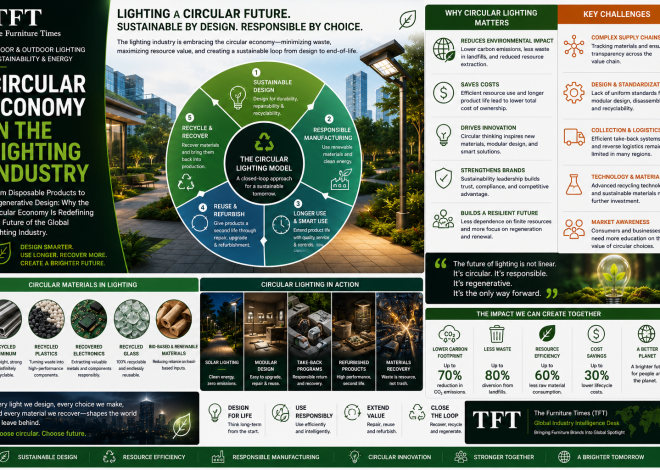
Choosing Better Materials
The materials used in lighting products play a major role in determining their environmental impact.
Manufacturers are increasingly selecting materials that are:
- Recyclable.
- Recycled.
- Responsibly sourced.
- Low in environmental impact.
- Durable.
- Lightweight.
- Non-toxic.
- Easy to repair.
- Suitable for remanufacturing.
- Compatible with circular economy principles.
Among the most widely adopted sustainable materials are recycled aluminium, recycled steel, responsibly sourced glass, bio-based plastics, bamboo composites, cork, recycled polymers, and environmentally certified timber used in decorative lighting applications.
Material innovation is becoming just as important as technological innovation.
Manufacturing Is Becoming Cleaner
Factories are also changing.
Modern lighting manufacturers are investing in cleaner production methods that reduce emissions, conserve resources, and improve operational efficiency.
Many facilities now focus on:
- Renewable energy.
- Energy-efficient machinery.
- Water conservation.
- Waste reduction.
- Smart factory automation.
- AI-powered production planning.
- Digital quality control.
- Carbon footprint reduction.
- Lean manufacturing.
- Responsible waste management.
Sustainability is becoming embedded throughout the production process rather than being treated as an afterthought.
Artificial Intelligence Is Improving Manufacturing Efficiency
Artificial Intelligence is helping manufacturers reduce waste while increasing productivity.
AI systems analyse production data in real time and can:
- Optimise material usage.
- Reduce manufacturing defects.
- Predict equipment maintenance.
- Improve production scheduling.
- Lower energy consumption.
- Reduce unnecessary inventory.
- Enhance quality control.
- Improve worker safety.
- Monitor carbon emissions.
- Support continuous process improvement.
The result is a factory that produces more with fewer resources.
Sustainable Design Extends Product Life
Design plays a crucial role in sustainability.
Products that are durable, repairable, and upgradeable remain useful for longer, reducing waste and conserving resources.
Manufacturers increasingly design lighting systems with:
- Replaceable LED modules.
- Modular construction.
- Serviceable drivers.
- Upgradeable electronics.
- Standardised components.
- Easy disassembly.
- Recyclable packaging.
- Long-life finishes.
- Reduced material complexity.
- Future technology compatibility.
A product designed to last often becomes the most sustainable product of all.
Furniture and Lighting Share the Same Sustainability Journey
Furniture manufacturers are increasingly integrating lighting into wardrobes, kitchens, shelving, hospitality interiors, retail displays, and smart home products.
This means both industries now share similar sustainability goals.
Designers are focusing on:
- FSC-certified wood.
- Low-emission finishes.
- Recycled metals.
- Energy-efficient LED integration.
- Modular construction.
- Circular product design.
- Repair-friendly assembly.
- Minimal packaging.
- Responsible sourcing.
- Long-term durability.
Consumers increasingly expect furniture and lighting to meet the same environmental standards.
Responsible Supply Chains Matter
Sustainability extends beyond the factory floor.
Companies are paying closer attention to how raw materials are sourced and transported.
Responsible supply chains prioritise:
- Ethical sourcing.
- Supplier transparency.
- Local procurement where practical.
- Carbon-efficient logistics.
- Environmental certifications.
- Responsible mining.
- Conflict-free materials.
- Waste reduction.
- Sustainable packaging.
- Traceability.
Consumers and investors increasingly expect businesses to understand every stage of their supply chain.
Certifications Build Customer Confidence
Independent certifications help customers identify products that meet recognised environmental standards.
Depending on the product and market, manufacturers may pursue certifications related to:
- Energy efficiency.
- Environmental management.
- Sustainable forestry.
- Recycled content.
- Indoor air quality.
- Product safety.
- Green building compatibility.
- Carbon reduction.
- Responsible manufacturing.
- Environmental product declarations.
These certifications help strengthen credibility while supporting responsible purchasing decisions.
Opportunities Across the Furniture Industry Ecosystem
Growing demand for sustainable manufacturing is creating opportunities for:
- Furniture manufacturers.
- Lighting manufacturers.
- Architects.
- Interior designers.
- Hospitality operators.
- Property developers.
- Retailers.
- Green building consultants.
- Material innovators.
- Sustainability technology providers.
Businesses that combine environmentally responsible materials with intelligent manufacturing will be better positioned in increasingly competitive global markets.
Challenges Still Facing the Industry
Despite encouraging progress, important challenges remain.
These include:
- Higher costs for sustainable materials.
- Limited availability of recycled resources.
- Global supply chain complexity.
- Regulatory differences between countries.
- Consumer price sensitivity.
- Technology investment requirements.
- Product standardisation.
- Skilled workforce shortages.
- Recycling infrastructure.
- Balancing performance with sustainability.
Addressing these challenges will require collaboration across governments, manufacturers, suppliers, and consumers.
Manufacturing Will Become More Transparent
The future of sustainable manufacturing is built on transparency.
Digital technologies will increasingly provide visibility into every stage of production.
Emerging innovations include:
- Digital product passports.
- Blockchain traceability.
- AI-powered lifecycle analysis.
- Carbon accounting.
- Smart factory monitoring.
- Renewable manufacturing systems.
- Circular material tracking.
- Predictive maintenance.
- Automated sustainability reporting.
- Digital supply chain management.
Customers will increasingly expect to know not only what they are buying but also how it was made.
Sustainability Is Becoming the New Standard
The lighting industry is entering a new era where environmental responsibility is becoming as important as innovation, design, and performance.
For the global furniture industry ecosystem, sustainable materials and responsible manufacturing create opportunities to produce products that meet growing expectations from homeowners, architects, developers, hospitality operators, businesses, and governments alike.
The companies that lead the future will not simply manufacture lighting.
They will manufacture trust.
They will prove that exceptional design and environmental responsibility can exist together.
Because the most valuable product is not only one that lights a room.
It is one that helps protect the world in which that room exists.
The Furniture Times (TFT) & Furniture Industry Search Engine (FISE)
“TFT tells their story. FISE helps the world find them.”
“FurniReviewology helps the world trust them.”
The furniture industry ecosystem is a $1 trillion industry ecosystem.