Energy-Efficient Lighting Solutions for Homes
By The Furniture Times (TFT) | Indoor & Outdoor Lighting | Sustainability & Energy
Smarter Homes Begin With Smarter Light: Why Energy-Efficient Lighting Is Becoming Essential for Modern Living
The modern home is changing faster than ever before. Consumers are investing in better furniture, smarter appliances, healthier living environments, and sustainable technologies that reduce both environmental impact and household expenses. Yet one of the most effective ways to create a greener, more comfortable home often receives less attention than it deserves—lighting.
Lighting is no longer simply about illuminating a room. It has become an important contributor to energy efficiency, home design, family wellbeing, property value, and environmental responsibility. As electricity costs continue to rise and governments strengthen energy-efficiency regulations, homeowners are increasingly looking for lighting solutions that deliver excellent performance while consuming less energy.
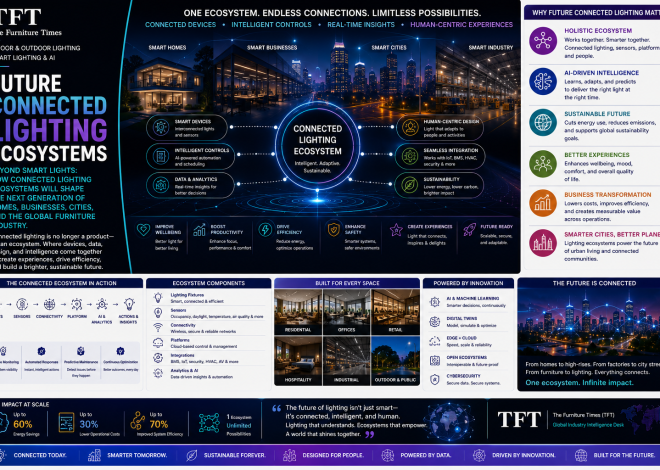
The global shift toward sustainability has accelerated the adoption of LED technology, smart lighting systems, occupancy sensors, daylight harvesting, solar-powered solutions, and intelligent home automation. Together, these innovations are helping families reduce electricity bills without compromising comfort, safety, or aesthetics.
For the global furniture industry ecosystem, this transformation represents more than a technological trend. It is creating opportunities for furniture manufacturers, lighting companies, architects, interior designers, home builders, retailers, and smart home innovators to design living spaces where furniture and lighting work together to create homes that are beautiful, intelligent, and environmentally responsible.
The homes of the future will not simply consume energy.
They will manage it wisely.
Why Home Energy Efficiency Matters More Than Ever
Across the world, households are facing increasing pressure to reduce electricity consumption.
Higher utility costs, climate concerns, urbanisation, and growing awareness of sustainable living have encouraged homeowners to rethink how energy is used every day.
Lighting remains one of the easiest and most cost-effective areas to improve.
Unlike major renovations, replacing outdated lighting systems with energy-efficient alternatives often requires relatively little investment while delivering long-term savings.
For many families, the transition begins with a simple decision—to use smarter light.
LED Lighting Has Changed the Industry
Few technologies have transformed residential lighting as dramatically as Light Emitting Diodes (LEDs).
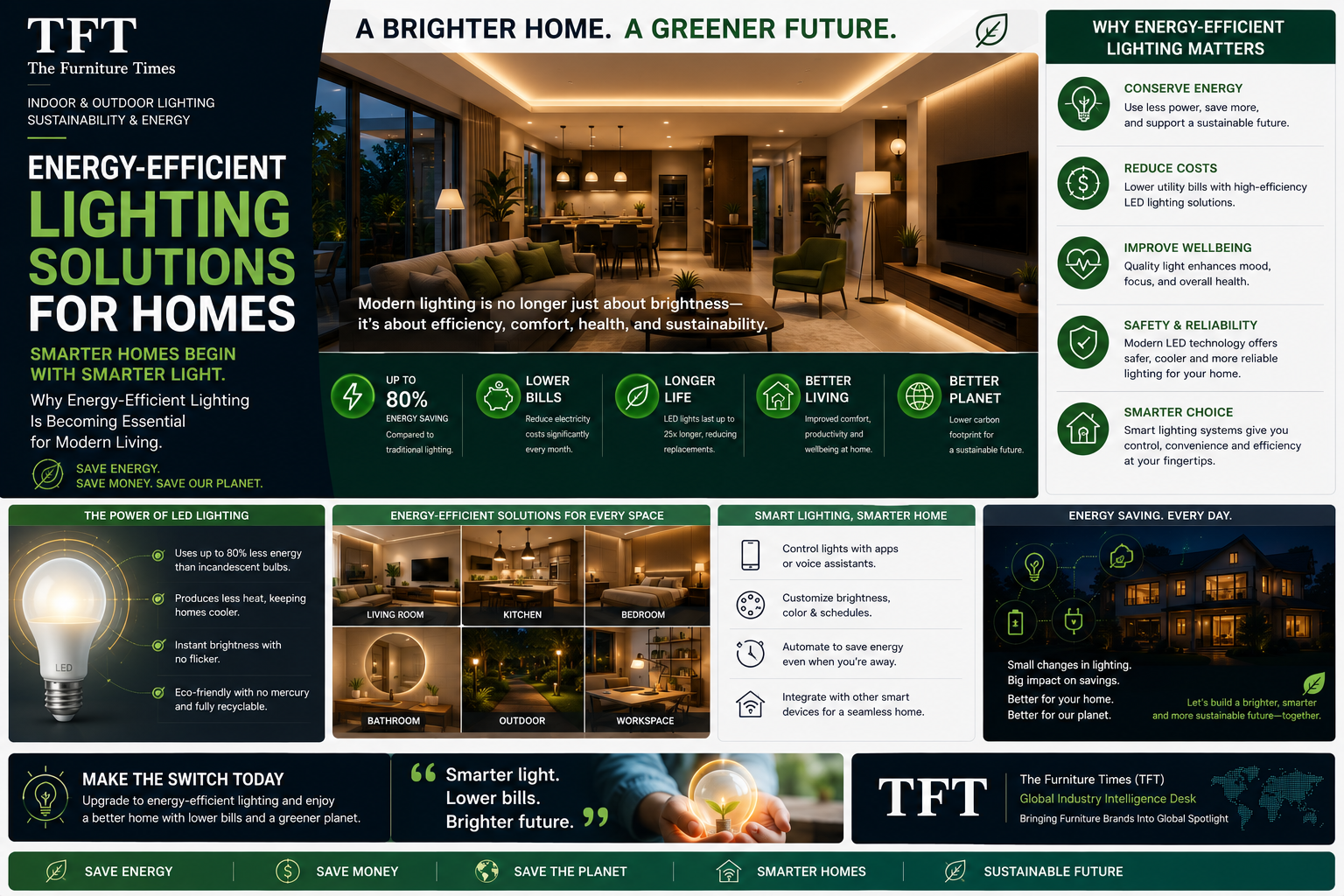
Compared with traditional incandescent and halogen bulbs, LED lighting offers significant advantages:
- Lower electricity consumption.
- Longer product lifespan.
- Reduced maintenance.
- Minimal heat generation.
- Improved brightness control.
- Better colour quality.
- Flexible design options.
- Smart home compatibility.
- Enhanced safety.
- Lower environmental impact.
Today, LED lighting has become the foundation of energy-efficient homes around the world.
Smart Lighting Prevents Energy Waste
Many households unknowingly waste electricity by leaving lights switched on in unused rooms.
Smart lighting systems solve this problem through intelligent automation.
Connected lighting can:
- Detect occupancy.
- Switch off automatically.
- Adjust brightness according to daylight.
- Follow customised schedules.
- Respond to voice commands.
- Enable remote control.
- Create energy-saving routines.
- Monitor electricity use.
- Optimise lighting scenes.
- Integrate with home automation systems.
Convenience and sustainability now work together.
Every Room Has Different Lighting Needs
A truly energy-efficient home recognises that different spaces require different lighting solutions.
Living Room
Layered lighting combines ambient, task, and accent illumination to create comfort while minimising unnecessary energy use.
Kitchen
Focused task lighting improves food preparation while reducing the need for excessive overhead illumination.
Bedroom
Warm, dimmable lighting creates a relaxing atmosphere while supporting healthier sleep patterns.
Home Office
Balanced lighting improves productivity, reduces eye strain, and minimises unnecessary electricity consumption.
Bathroom
Efficient LED mirrors and moisture-resistant fixtures provide bright illumination using less power.
Outdoor Spaces
Solar lighting, motion sensors, and LED landscape lighting improve safety while reducing operating costs.
Energy efficiency begins with designing each space according to its purpose.
Furniture and Lighting Are Becoming One Solution
The relationship between furniture and lighting is evolving rapidly.
Manufacturers increasingly integrate energy-efficient lighting into:
- Wardrobes.
- Kitchen cabinets.
- Shelving systems.
- Display units.
- Entertainment centres.
- Home office desks.
- Vanity mirrors.
- Walk-in closets.
- Storage furniture.
- Children’s furniture.
Integrated LED solutions improve functionality while consuming significantly less electricity than conventional alternatives.
Furniture is becoming an active contributor to sustainable living.
Natural Daylight Remains the Best Energy Source
The most energy-efficient light is often the one that costs nothing.
Architects and interior designers increasingly maximise natural daylight through:
- Larger windows.
- Skylights.
- Glass partitions.
- Open floor plans.
- Reflective interior finishes.
- Strategic furniture placement.
- Light-coloured materials.
- Daylight-responsive lighting.
- Smart blinds.
- Passive design principles.
Artificial lighting then supplements—not replaces—natural illumination.
Artificial Intelligence Makes Energy Savings Automatic
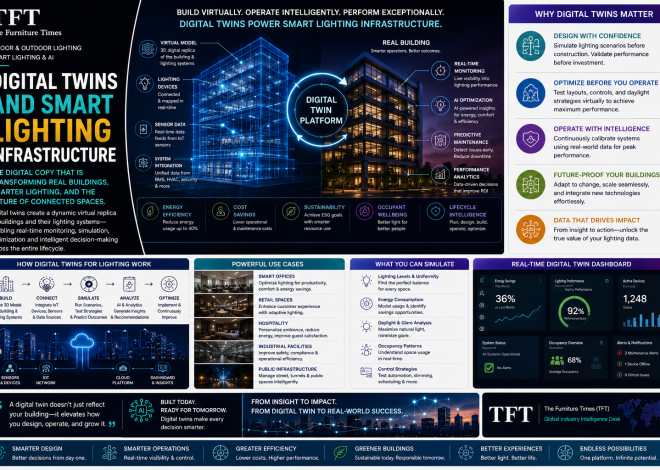
Artificial Intelligence is taking residential lighting to another level.
Rather than relying on fixed schedules, AI systems continuously learn household routines.
Future intelligent lighting may automatically:
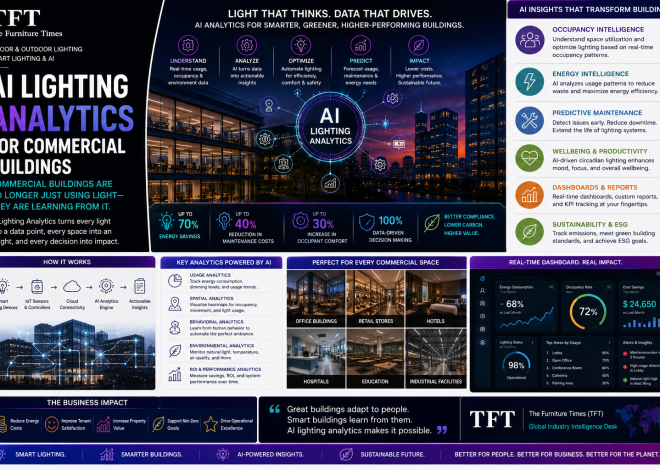
- Adjust brightness based on occupancy.
- Predict lighting preferences.
- Respond to weather conditions.
- Optimise electricity use.
- Balance daylight and artificial lighting.
- Reduce unnecessary consumption.
- Coordinate with renewable energy systems.
- Improve comfort.
- Extend equipment lifespan.
- Personalise every room.
The home becomes more efficient without requiring constant manual adjustments.
Sustainability Benefits Every Household
Energy-efficient lighting provides benefits beyond lower electricity bills.
Families also experience:
- Reduced carbon emissions.
- Longer-lasting lighting products.
- Lower maintenance costs.
- Improved indoor comfort.
- Better environmental performance.
- Higher property value.
- Increased safety.
- Reduced heat generation.
- Enhanced home aesthetics.
- Greater long-term savings.
Choosing efficient lighting becomes both an economic and environmental investment.
Opportunities Across the Furniture Industry Ecosystem
Growing demand for sustainable homes is creating opportunities for:
- Furniture manufacturers.
- Lighting manufacturers.
- Architects.
- Interior designers.
- Residential developers.
- Smart home companies.
- Retailers.
- Energy consultants.
- Property managers.
- Technology innovators.
Businesses that integrate sustainability into product design will be well positioned to meet future consumer expectations.
Challenges That Must Be Overcome
Although adoption continues to grow, several challenges remain.
These include:
- Consumer awareness.
- Upfront investment.
- Product quality differences.
- Compatibility between smart devices.
- Installation knowledge.
- Technology updates.
- Responsible recycling.
- Skilled workforce development.
- Standardisation.
- Long-term product support.
Education and collaboration will play an important role in accelerating global adoption.
The Future Home Will Use Less Energy—and Live Better
The next generation of homes will not simply feature energy-efficient light bulbs.
They will include intelligent ecosystems where lighting communicates with furniture, renewable energy systems, home batteries, smart appliances, occupancy sensors, cloud platforms, and Artificial Intelligence.
Every room will automatically deliver the right amount of light at the right moment while consuming the minimum amount of energy.
The result will be homes that are more comfortable, more economical, and significantly more sustainable.
Every Watt Saved Is an Investment in Tomorrow
Energy-efficient lighting is no longer a niche technology or a lifestyle preference.
It has become a practical necessity for homeowners seeking lower energy costs, healthier living environments, and greater environmental responsibility.
For the global furniture industry ecosystem, this transformation creates exciting opportunities to design products that combine aesthetics, technology, and sustainability into one integrated living experience.
As governments strengthen environmental policies and consumers become increasingly conscious of their energy choices, lighting will play a central role in shaping the sustainable homes of the future.
Because every watt saved today helps build a smarter, greener, and more resilient tomorrow.
The Furniture Times (TFT) & Furniture Industry Search Engine (FISE)
“TFT tells their story. FISE helps the world find them.”
“FurniReviewology helps the world trust them.”
The furniture industry ecosystem is a $1 trillion industry ecosystem.