Garden Lighting Trends Around the World
By The Furniture Times (TFT) | Indoor & Outdoor Lighting | Outdoor Lighting
How Global Garden Lighting Trends Are Transforming Residential Landscapes, Hospitality Destinations, Urban Green Spaces, Sustainability, and the Future of Outdoor Living
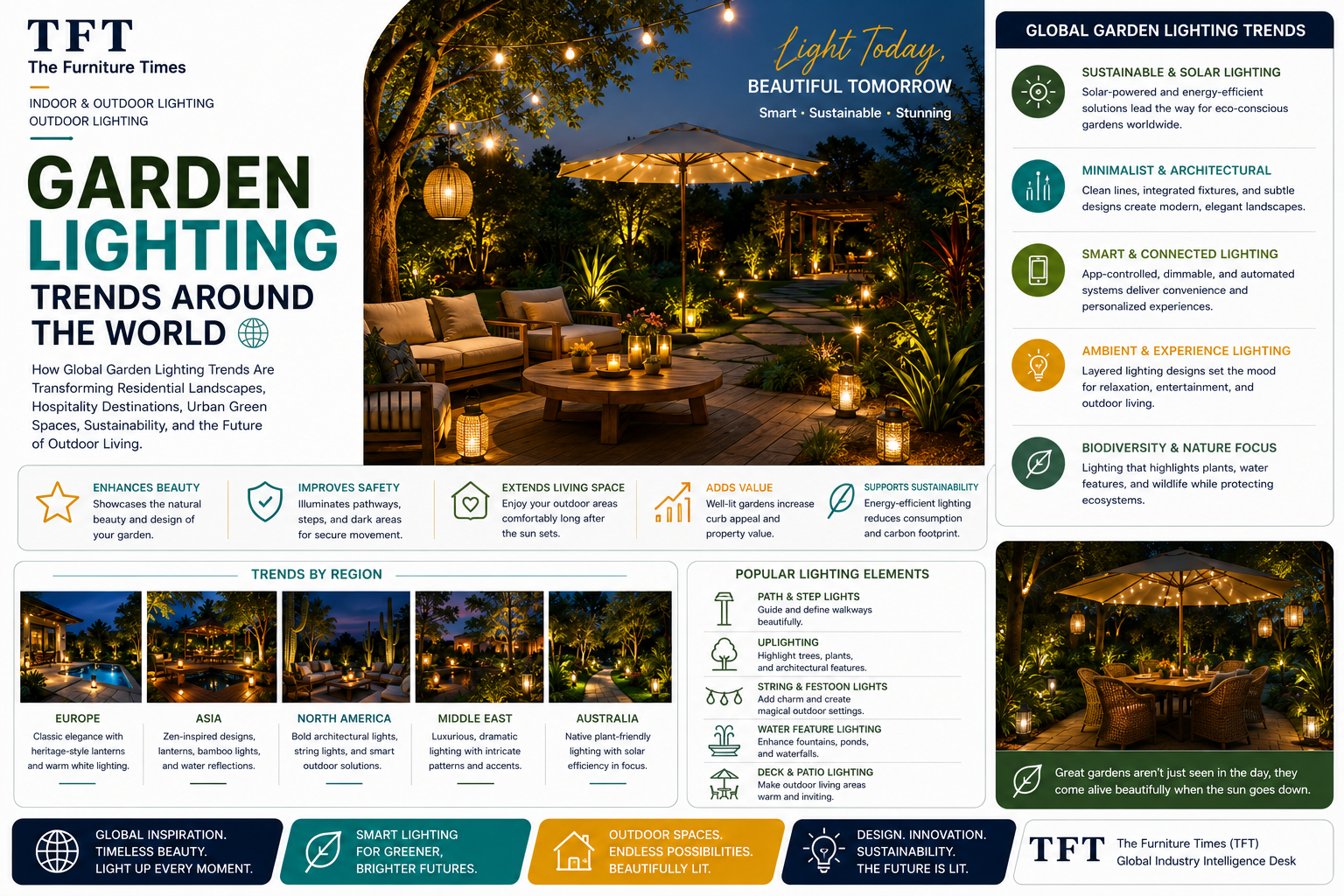
Gardens have always reflected culture, creativity, and the relationship between people and nature. From the tranquil Zen gardens of Japan and the formal palace gardens of Europe to tropical landscapes in Southeast Asia, Mediterranean courtyards, botanical parks, luxury resorts, rooftop gardens, and contemporary urban green spaces, gardens continue to evolve alongside architecture, technology, and lifestyle preferences.
Today, gardens are no longer appreciated only during daylight hours. Around the world, homeowners, hospitality operators, commercial developers, municipalities, and landscape architects are investing in intelligent garden lighting that transforms outdoor environments into vibrant, functional, and visually captivating destinations after sunset.
Garden lighting has become much more than decorative illumination. It enhances safety, highlights landscape architecture, extends outdoor usability, improves property value, supports biodiversity-conscious design, reduces energy consumption, and creates memorable outdoor experiences.
Driven by Artificial Intelligence (AI), Internet of Things (IoT), LED technology, solar-powered solutions, wireless controls, smart sensors, programmable lighting scenes, and sustainable landscape planning, global garden lighting is entering a new era of innovation.
For landscape architects, furniture manufacturers, lighting designers, hospitality brands, urban planners, commercial developers, technology companies, and homeowners, understanding worldwide garden lighting trends has become essential for creating future-ready outdoor environments.
Gardens Have Become Outdoor Living Destinations
The concept of the garden has changed dramatically.
Modern gardens now support:
- Family gatherings
- Outdoor dining
- Wellness activities
- Yoga and meditation
- Entertaining guests
- Children’s play
- Home offices
- Remote working
- Hospitality experiences
- Community engagement
Lighting enables these activities to continue comfortably from sunset into the evening, making gardens an integral extension of indoor living.
The Rise of Smart Garden Lighting
Across global markets, one of the fastest-growing trends is the adoption of smart lighting systems.
Smart garden lighting enables users to:
- Control lights remotely through mobile apps.
- Schedule lighting scenes.
- Adjust brightness levels.
- Change colour temperatures.
- Automate sunset and sunrise settings.
- Respond to weather conditions.
- Detect movement.
- Integrate with home automation.
- Monitor energy usage.
- Personalise outdoor experiences.
These technologies provide greater convenience while improving energy efficiency and security.
LED Lighting Continues to Dominate
LED technology remains the global standard for garden lighting because of its:
- Exceptional energy efficiency
- Long lifespan
- Low maintenance
- Flexible fixture designs
- Excellent colour rendering
- Weather resistance
- Smart control compatibility
- Low operating costs
- Minimal heat generation
- Environmental sustainability
As LED innovation advances, lighting fixtures are becoming smaller, more powerful, and architecturally discreet.
Solar-Powered Garden Lighting Gains Momentum
With growing environmental awareness and rising electricity costs, solar-powered garden lighting has become increasingly popular worldwide.
Modern solar lighting offers:
- Renewable energy use
- Lower electricity costs
- Easy installation
- Minimal wiring
- Sustainable operation
- Reliable battery storage
- Smart charging systems
- Improved durability
- Flexible placement
- Reduced environmental impact
Solar technology is making intelligent garden lighting more accessible for both residential and commercial projects.
Layered Lighting Defines Premium Garden Design
Leading landscape architects increasingly use layered lighting to create balanced outdoor environments.
Ambient Lighting
Ambient lighting provides comfortable overall illumination.
Applications include:
- Garden paths
- Lawns
- Outdoor seating
- Courtyards
- Patios
- Rooftop gardens
- Community parks
- Botanical gardens
- Hotel landscapes
- Residential outdoor spaces
Balanced ambient lighting creates welcoming environments without excessive brightness.
Task Lighting
Task lighting supports practical outdoor activities.
Applications include:
- Outdoor kitchens
- BBQ areas
- Dining spaces
- Garden workstations
- Walkways
- Staircases
- Entry gates
- Swimming pool decks
- Sports areas
- Service pathways
Proper task lighting improves functionality while enhancing safety.
Accent Lighting
Accent lighting highlights natural and architectural features.
Applications include:
- Mature trees
- Sculptures
- Water features
- Pergolas
- Garden walls
- Flower beds
- Outdoor furniture
- Artistic installations
- Architectural facades
- Decorative planting
Accent lighting creates visual depth while enhancing landscape character.
Outdoor Furniture and Lighting Work Together
The growing popularity of outdoor living has encouraged furniture manufacturers to integrate lighting into outdoor collections.
Examples include:
- Illuminated lounge seating
- Outdoor dining tables
- Garden benches
- Pergolas
- Fire pit furniture
- Poolside loungers
- Bar counters
- Decorative planters
- Modular seating
- Rooftop furniture
The integration of furniture and lighting creates cohesive outdoor environments that combine comfort with functionality.
Garden Lighting Supports Hospitality
Hotels, resorts, restaurants, and event venues increasingly rely on sophisticated garden lighting to create premium guest experiences.
Lighting enhances:
- Outdoor dining
- Wedding gardens
- Resort pathways
- Luxury villas
- Wellness retreats
- Courtyards
- Pool landscapes
- Rooftop venues
- Beachfront gardens
- Event spaces
Beautifully illuminated gardens strengthen brand identity while encouraging longer guest stays and higher customer satisfaction.
Urban Green Spaces Are Becoming Smarter
Cities worldwide are investing in intelligent lighting for public landscapes.
Smart urban gardens benefit from:
- Safer pedestrian movement
- Community recreation
- Evening tourism
- Cultural events
- Public wellness
- Accessible pathways
- Smart energy management
- Sustainable operations
- Environmental protection
- Enhanced city branding
Garden lighting has become a valuable element of smart city development.
Sustainability Shapes Global Garden Trends
Environmental responsibility is influencing every aspect of landscape lighting.
Modern projects increasingly adopt:
- Energy-efficient LEDs
- Solar-powered systems
- Motion sensors
- Daylight harvesting
- Recyclable materials
- Renewable energy
- Wildlife-friendly lighting
- Dark-sky principles
- Water-efficient landscaping
- Carbon reduction strategies
Sustainability is becoming a defining characteristic of premium outdoor environments.
Artificial Intelligence Will Shape Future Gardens
Artificial Intelligence is expected to redefine outdoor lighting over the coming decade.
Future systems may automatically:
- Learn user preferences.
- Adapt to seasonal changes.
- Respond to weather forecasts.
- Coordinate with irrigation systems.
- Support wildlife-friendly operation.
- Personalise outdoor scenes.
- Predict maintenance requirements.
- Optimise energy consumption.
- Integrate with autonomous landscape equipment.
- Connect with complete smart garden ecosystems.
AI will transform garden lighting into an intelligent environmental management platform.
Opportunities Across Multiple Industries
The rapid growth of outdoor living creates opportunities for:
- Landscape architects
- Furniture manufacturers
- Lighting companies
- Property developers
- Hospitality operators
- Urban planners
- Commercial builders
- Smart technology providers
- Sustainability consultants
- Municipal authorities
Businesses that combine innovative design, intelligent technology, environmental responsibility, and exceptional customer experiences will lead the future outdoor living economy.
Challenges Facing the Industry
Despite significant progress, garden lighting professionals continue addressing:
- Climate resilience
- Rising material costs
- Installation complexity
- Smart system interoperability
- Light pollution
- Wildlife conservation
- Maintenance planning
- Product standardisation
- Skilled workforce shortages
- Sustainability compliance
Addressing these challenges will support healthier, safer, and more environmentally responsible outdoor environments.
Lighting the Future of Gardens
Garden lighting has become one of the most influential investments in modern landscape design.
It extends outdoor usability, improves safety, enhances biodiversity-conscious planning, supports sustainability, strengthens property value, and transforms residential, hospitality, and public landscapes into extraordinary destinations after dark.
From AI-powered automation and intelligent LED systems to solar technologies, integrated outdoor furniture, adaptive controls, and smart landscape ecosystems, lighting continues redefining how the world experiences gardens.
For landscape architects, developers, furniture manufacturers, lighting companies, hospitality providers, urban planners, technology innovators, and homeowners, the opportunity lies in creating gardens where every lighting decision contributes to beauty, functionality, environmental responsibility, and unforgettable experiences.
The gardens of tomorrow will no longer disappear when the sun sets.
They will become intelligent living environments where nature, architecture, furniture, technology, sustainability, and lighting work together to create spaces that inspire relaxation, creativity, social connection, and year-round enjoyment.
As outdoor living continues to grow across every continent, one reality is becoming increasingly evident: the future of garden design will be defined not only by plants and landscapes, but also by intelligent lighting that transforms ordinary gardens into extraordinary living experiences.