Children’s Room Lighting: Safety, Creativity, and Comfort
By The Furniture Times (TFT) | Indoor & Outdoor Lighting | Indoor Residential Lighting
How Intelligent Children’s Room Lighting Is Shaping Safer Homes, Inspiring Creativity, and Supporting Healthy Growth
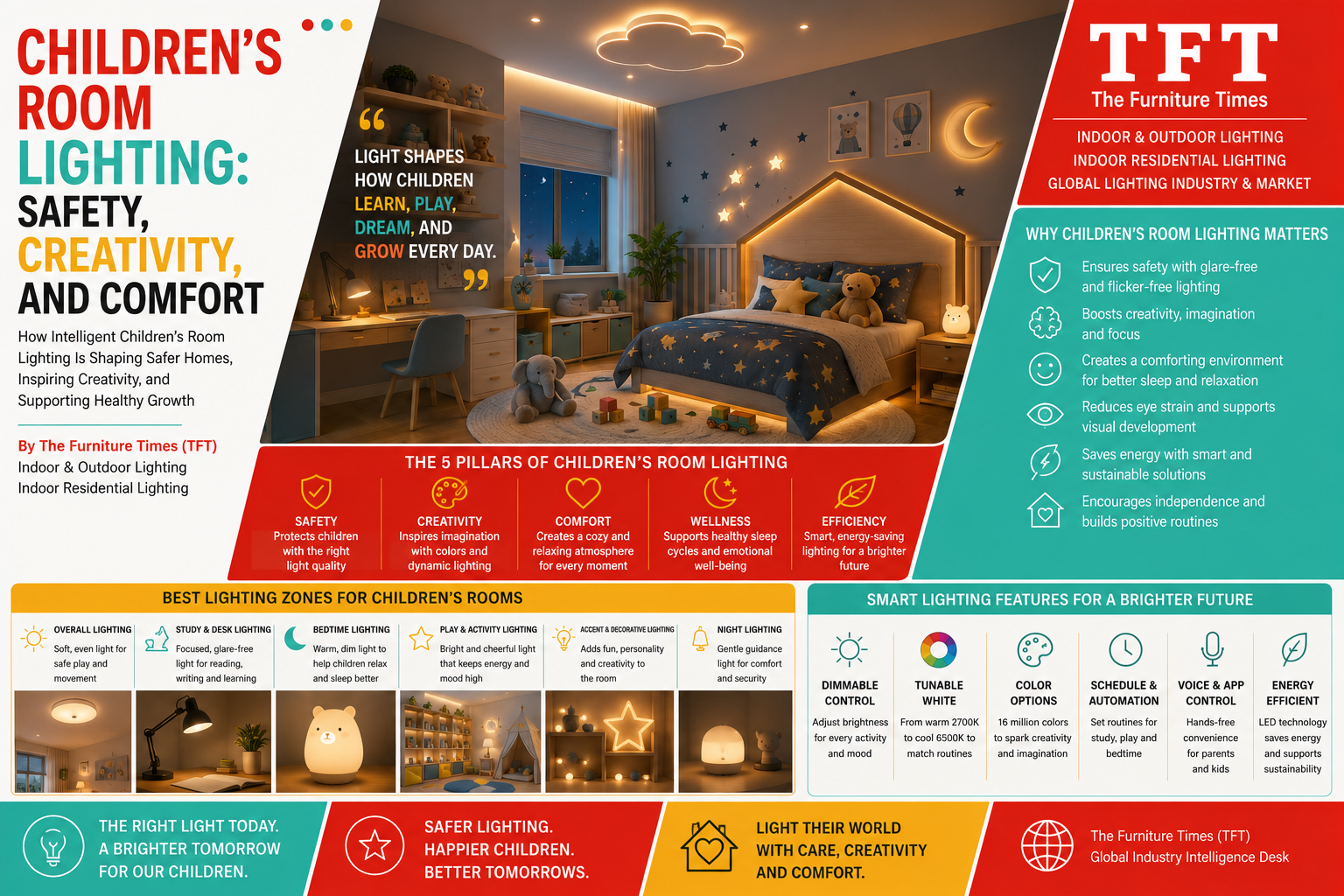
The design of children’s bedrooms has evolved dramatically over the past decade. Once viewed simply as places for sleeping and storing toys, today’s children’s rooms have become multifunctional environments where young minds learn, play, imagine, study, create, rest, and grow. As parents increasingly focus on child development, emotional well-being, education, and safety, lighting has emerged as one of the most important elements in designing healthy and inspiring spaces.
Lighting is no longer considered merely a practical necessity. It has become a powerful contributor to a child’s physical safety, visual comfort, cognitive development, creativity, emotional security, and sleep quality.
Advances in LED technology, Artificial Intelligence (AI), Internet of Things (IoT), smart home automation, human-centric lighting, sustainable materials, and child-friendly furniture are transforming children’s bedrooms into intelligent environments that adapt to different activities and stages of development.
From nurseries and toddler bedrooms to study spaces and teenage rooms, carefully designed lighting helps create environments that support learning, imagination, independence, and healthier daily routines.
For parents, architects, interior designers, furniture manufacturers, lighting companies, educators, pediatric specialists, real estate developers, and smart home technology providers, children’s room lighting has become one of the fastest-growing segments within residential interior design.
Children’s Rooms Have Become Learning Environments
Modern children spend more time learning, reading, creating, and exploring within their bedrooms than ever before.
A typical child’s room may serve as:
- Sleeping area
- Study room
- Reading corner
- Creative art space
- Playroom
- Music practice area
- Gaming zone
- Video learning space
- Family interaction area
- Personal retreat
Each activity requires different lighting conditions.
Rather than relying on one ceiling fixture, modern children’s rooms increasingly use flexible lighting systems that adapt throughout the day.
Safety Is the Highest Priority
Unlike other residential spaces, children’s rooms require lighting solutions that place safety above everything else.
Important safety considerations include:
- Low-heat LED technology
- Durable fixtures
- Secure electrical installations
- Rounded fixture designs
- Shatter-resistant materials
- Child-safe switches
- Hidden wiring
- Non-toxic materials
- Soft nighttime illumination
- Emergency lighting access
Parents increasingly choose lighting products specifically designed to minimize potential risks while maintaining comfort and functionality.
Layered Lighting Creates Better Spaces
Professional interior designers recommend layered lighting for children’s bedrooms because it provides flexibility for changing daily activities.
Ambient Lighting
Ambient lighting provides comfortable overall illumination.
Popular solutions include:
- Recessed LED ceiling lights
- Flush-mounted fixtures
- Surface-mounted luminaires
- Soft indirect lighting
- Smart ceiling panels
Even ambient lighting minimizes shadows while creating a welcoming atmosphere.
Task Lighting
Children require focused lighting for activities such as:
- Reading
- Homework
- Drawing
- Building models
- Crafts
- Computer learning
- Music practice
- Science projects
- Writing
- Creative hobbies
Adjustable desk lamps and reading lights improve concentration while reducing eye strain.
Accent Lighting
Accent lighting introduces personality and imagination.
Applications include:
- Bookshelves
- Display cabinets
- Wall art
- Decorative shelving
- Educational displays
- Play zones
- Feature walls
- Ceiling details
- Toy displays
- Themed decorations
Accent lighting encourages creativity while enhancing room aesthetics.
Human-Centric Lighting Supports Healthy Development
Growing research highlights the importance of circadian rhythms for children.
Human-centric lighting automatically adjusts brightness and color temperature throughout the day.
Morning lighting encourages:
- Alertness
- Energy
- Learning readiness
- Positive mood
- Concentration
Evening lighting gradually shifts toward warmer tones that support:
- Relaxation
- Calmness
- Storytime
- Family bonding
- Healthy sleep preparation
Parents increasingly recognize lighting as an important part of children’s wellness routines.
Better Lighting Supports Better Learning
Educational performance is influenced by many environmental factors, including lighting.
Well-designed study lighting helps improve:
- Reading comfort
- Visual clarity
- Concentration
- Attention span
- Writing accuracy
- Creative thinking
- Homework completion
- Digital learning
- Problem-solving
- Knowledge retention
As home learning becomes increasingly common, proper lighting plays a greater role in academic success.
Creative Lighting Inspires Imagination
Children naturally respond to environments that stimulate curiosity and creativity.
Modern lighting solutions encourage imagination through:
- Decorative fixtures
- Adjustable colors
- Creative wall lighting
- Interactive smart lighting
- Storytelling scenes
- Soft ambient effects
- Artistic ceiling illumination
- Personalized lighting themes
- Playful architectural details
- Custom room experiences
Lighting becomes part of a child’s creative environment rather than simply a functional necessity.
Smart Lighting Makes Parenting Easier
Artificial Intelligence and smart home technologies simplify everyday family life.
Modern children’s room lighting allows parents to:
- Control lights remotely.
- Schedule bedtime routines.
- Adjust brightness automatically.
- Activate night lighting.
- Create reading scenes.
- Monitor energy usage.
- Integrate with voice assistants.
- Set wake-up lighting.
- Manage multiple rooms.
- Improve household efficiency.
These systems provide greater convenience while supporting healthier daily routines.
Night Lighting Improves Comfort and Confidence
Soft nighttime lighting has become increasingly popular.
Benefits include:
- Reduced nighttime anxiety
- Improved navigation
- Greater independence
- Better safety
- Easier parental supervision
- Comfortable bedtime routines
- Gentle nighttime visibility
- Reduced sleep disruption
- Improved emotional comfort
- Better family experiences
Night lighting helps children feel secure without creating excessive brightness.
Furniture and Lighting Are Becoming Integrated
Children’s furniture increasingly incorporates built-in lighting.
Applications include:
- Beds
- Headboards
- Bookshelves
- Study desks
- Wardrobes
- Storage cabinets
- Reading corners
- Play furniture
- Display shelving
- Study stations
Integrated lighting improves functionality while maintaining clean and organized interiors.
Furniture manufacturers continue collaborating with lighting companies to create child-friendly products.
LED Technology Leads Children’s Lighting
LED technology remains the preferred lighting solution for children’s rooms.
Advantages include:
- Low energy consumption
- Long service life
- Low heat generation
- Excellent brightness
- Flexible installation
- Durable construction
- Minimal maintenance
- Smart home compatibility
- Wide color temperature options
- Sustainability
LED technology combines safety with outstanding performance.
Sustainable Choices Matter to Modern Families
Parents increasingly prioritize environmentally responsible products.
Popular considerations include:
- Energy-efficient LEDs
- Sustainable materials
- Eco-friendly packaging
- Recyclable components
- Renewable energy compatibility
- Long product lifespan
- Reduced carbon emissions
- Non-toxic finishes
- Responsible sourcing
- Green certifications
Sustainability increasingly influences purchasing decisions.
Hospitality and Healthcare Inspire Better Design
Children’s hospitals, pediatric clinics, and family-friendly hotels increasingly influence residential lighting trends.
Design priorities include:
- Calm environments
- Child-friendly colors
- Stress reduction
- Easy navigation
- Comfortable lighting
- Safe movement
- Emotional well-being
- Positive experiences
- Flexible controls
- Family-centered design
These concepts are increasingly applied within modern homes.
Artificial Intelligence Will Personalize Children’s Rooms
Future lighting systems will become increasingly adaptive.
AI-powered lighting may automatically:
- Learn family routines.
- Detect occupancy.
- Adjust for homework.
- Support bedtime.
- Optimize energy usage.
- Improve nighttime safety.
- Synchronize with educational activities.
- Personalize lighting preferences.
- Adapt as children grow.
- Integrate with broader smart home ecosystems.
Lighting will become increasingly responsive to changing developmental needs.
Real Estate Developers Recognize Family Living
Developers increasingly understand that thoughtfully designed children’s rooms enhance residential appeal.
Exceptional lighting contributes to:
- Family-friendly branding
- Higher property values
- Buyer confidence
- Smart home positioning
- Premium residential design
- Better interior photography
- Long-term marketability
- Sustainable certifications
- Customer satisfaction
- Competitive differentiation
Family-focused design has become an important selling point.
Opportunities Across the Industry
Growing awareness of child wellness creates opportunities for:
- Lighting manufacturers
- Furniture companies
- Architects
- Interior designers
- Educational product developers
- Smart home providers
- Childcare specialists
- Residential developers
- Sustainable product manufacturers
- Wellness technology companies
Businesses that combine safety, creativity, sustainability, and intelligent technology will continue leading innovation.
Challenges Facing Children’s Lighting
Despite rapid progress, several challenges remain.
These include:
- Product safety standards
- Smart home compatibility
- Installation complexity
- Consumer education
- Cost accessibility
- Product durability
- Recycling
- Software support
- Product interoperability
- Long-term maintenance
Continuous innovation and strong safety standards remain essential.
Lighting the Next Generation
Children deserve environments that encourage learning, creativity, confidence, safety, and healthy development.
Lighting plays a central role in achieving these goals.
From layered lighting and child-safe LED technology to AI-powered automation, integrated furniture, human-centric wellness, and sustainable design, children’s room lighting is transforming residential interiors around the world.
For parents, architects, interior designers, furniture manufacturers, developers, educators, lighting companies, and technology providers, the opportunity is clear: create spaces where lighting supports not only visibility but also imagination, education, emotional well-being, and lifelong development.
The children’s rooms of tomorrow will not simply be brighter.
They will become intelligent, adaptive environments designed to nurture curiosity, inspire creativity, strengthen learning, and provide the comfort and security every child deserves.
As residential lighting continues to evolve, one principle stands above all others: great lighting helps create great childhood experiences, and those experiences shape brighter futures.