The Rise of Intelligent Lighting Ecosystems Across Residential and Commercial Spaces
By The Furniture Times (TFT) | Indoor & Outdoor Lighting | Global Lighting Industry & Market
From Light Fixtures to Intelligent Ecosystems: How Smart Lighting Is Redefining Modern Living and Business
The global lighting industry is undergoing one of the most significant transformations in its history. Lighting is no longer viewed as a standalone electrical fixture that simply illuminates a room or outdoor space. Instead, it has become an intelligent ecosystem that communicates with buildings, responds to human behavior, optimizes energy consumption, improves health and well-being, enhances security, and integrates seamlessly with digital technologies.
Across residential homes, office buildings, hotels, hospitals, retail stores, educational institutions, manufacturing facilities, airports, and smart cities, intelligent lighting ecosystems are rapidly replacing conventional lighting systems. Powered by Artificial Intelligence (AI), the Internet of Things (IoT), cloud computing, sensors, wireless communication, and advanced analytics, these systems are transforming how people interact with the built environment.
For manufacturers, architects, interior designers, furniture companies, developers, facility managers, governments, and investors, intelligent lighting is no longer an emerging trend—it is becoming a fundamental pillar of modern construction and digital infrastructure.
Lighting Is Becoming the Digital Nervous System of Buildings
Historically, lighting systems operated independently. Their primary purpose was to provide visibility and basic functionality.
Today, lighting has evolved into one of the most connected systems within modern buildings.
An intelligent lighting ecosystem can communicate with:
- Building Management Systems (BMS)
- Heating, Ventilation, and Air Conditioning (HVAC)
- Security and surveillance systems
- Fire detection systems
- Access control platforms
- Occupancy sensors
- Environmental monitoring systems
- Smart elevators
- Energy management platforms
- Renewable energy systems
Rather than functioning in isolation, lighting now acts as a central component of integrated building intelligence, helping optimize building performance while improving occupant experiences.
Artificial Intelligence Is Driving the Transformation
Artificial Intelligence has become one of the most powerful technologies behind intelligent lighting ecosystems.
Unlike traditional lighting systems that operate based on fixed schedules or manual controls, AI-powered lighting continuously analyzes data from sensors and connected devices to make real-time decisions.
These systems can:
- Learn occupancy patterns.
- Adjust brightness automatically.
- Adapt color temperatures throughout the day.
- Respond to weather conditions.
- Optimize electricity usage.
- Detect unusual activity.
- Predict maintenance requirements.
- Improve emergency response.
- Reduce operating costs.
- Personalize lighting for individual users.
AI enables lighting to move from reactive operation to predictive and adaptive performance, making buildings more efficient, comfortable, and sustainable.
Smart Homes Are Leading Residential Adoption
Homeowners increasingly expect lighting systems that provide convenience, comfort, security, and energy savings.
Modern intelligent residential lighting ecosystems integrate seamlessly with:
- Smart speakers
- Voice assistants
- Mobile applications
- Home security systems
- Smart thermostats
- Window blinds
- Entertainment systems
- Solar power systems
- Battery storage
- Electric vehicle charging
Residents can control lighting remotely, create customized lighting scenes, automate schedules, and receive real-time energy consumption insights.
AI-powered homes can even anticipate residents’ routines, automatically adjusting lighting to support daily activities such as waking, working, relaxing, dining, and sleeping.
Human-Centric Lighting Is Improving Quality of Life
One of the most important innovations within intelligent lighting ecosystems is human-centric lighting.
Scientific research increasingly demonstrates that lighting directly influences:
- Sleep quality
- Mood
- Productivity
- Mental health
- Cognitive performance
- Circadian rhythms
- Visual comfort
- Emotional well-being
Intelligent lighting systems automatically adjust brightness and color temperature throughout the day to mimic natural sunlight.
Morning lighting encourages alertness and concentration, while warmer evening lighting helps prepare the body for restful sleep.
Applications continue expanding across:
- Homes
- Hospitals
- Senior living communities
- Schools
- Universities
- Corporate offices
- Hotels
- Wellness centers
- Healthcare facilities
- Rehabilitation centers
Human-centric lighting represents one of the fastest-growing segments within the lighting industry.
Commercial Buildings Are Becoming Smarter
Office buildings have become major adopters of intelligent lighting ecosystems.
Corporate organizations increasingly seek technologies that improve employee well-being while reducing operating expenses.
Modern commercial lighting systems can:
- Detect workspace occupancy.
- Harvest natural daylight.
- Optimize meeting room lighting.
- Reduce glare.
- Improve visual comfort.
- Monitor energy consumption.
- Generate occupancy analytics.
- Integrate with workspace booking systems.
- Enhance hybrid work environments.
- Predict maintenance requirements.
These capabilities improve operational efficiency while supporting Environmental, Social, and Governance (ESG) objectives.
Hospitality Is Creating Immersive Guest Experiences
Hotels and resorts increasingly use intelligent lighting to deliver personalized guest experiences.
Guests now expect hotel rooms that automatically adjust lighting based on their preferences.
Smart hospitality lighting ecosystems can:
- Welcome guests with personalized scenes.
- Synchronize lighting with entertainment systems.
- Create mood-based dining experiences.
- Enhance conference facilities.
- Improve outdoor landscape lighting.
- Reduce energy consumption in vacant rooms.
- Support wellness-focused accommodations.
- Strengthen luxury brand identity.
For hospitality operators, lighting has become an essential part of customer experience and competitive differentiation.
Retail Lighting Becomes Business Intelligence
Retailers increasingly recognize that lighting can generate valuable customer insights.
Intelligent lighting ecosystems now combine illumination with analytics.
These systems monitor:
- Customer movement.
- Shopping patterns.
- Dwell time.
- Product engagement.
- Store occupancy.
- Traffic flow.
Retailers use this information to improve merchandising strategies, optimize store layouts, highlight promotional products, and create more engaging shopping experiences.
Lighting has evolved from decoration into a strategic business intelligence tool.
Industrial Facilities Gain Operational Efficiency
Manufacturing plants, warehouses, logistics centers, and industrial facilities are increasingly deploying intelligent lighting ecosystems.
Benefits include:
- Reduced energy consumption.
- Automated warehouse illumination.
- Safer working environments.
- Equipment monitoring.
- Predictive maintenance.
- Improved operational visibility.
- Enhanced worker productivity.
- Lower maintenance expenses.
- Better inventory management.
- Integration with industrial automation.
Lighting now contributes directly to operational excellence and manufacturing efficiency.
Smart Cities Depend on Intelligent Lighting Networks
Cities around the world are rapidly replacing conventional streetlights with connected lighting systems.
Intelligent outdoor lighting supports:
- Traffic optimization.
- Public safety.
- Emergency response.
- Air quality monitoring.
- Environmental sensing.
- Public Wi-Fi.
- Electric vehicle charging.
- Security surveillance.
- Weather monitoring.
- Smart transportation infrastructure.
Lighting poles increasingly function as multifunctional digital platforms rather than simple sources of illumination.
Smart city investments continue driving rapid market expansion.
Sustainability Is Accelerating Adoption
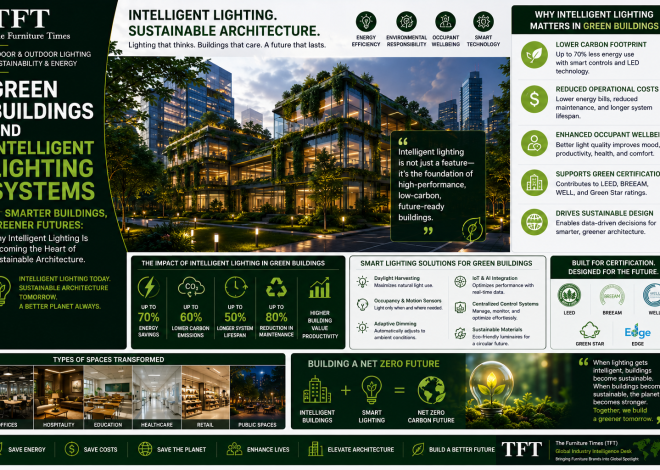
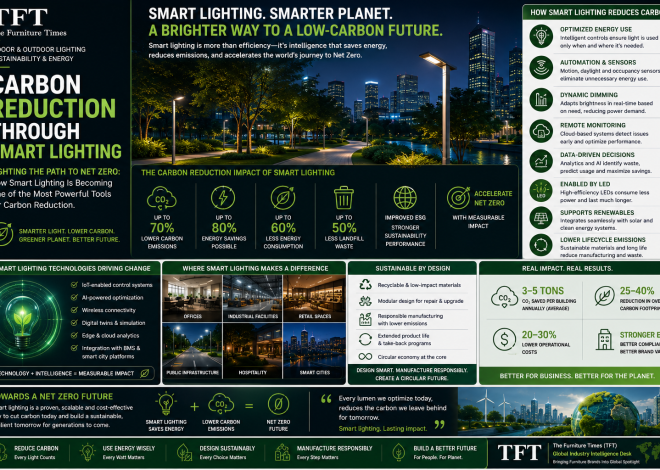
Energy efficiency remains one of the strongest drivers of intelligent lighting adoption.
Buildings account for a significant portion of global electricity consumption, making lighting optimization an important sustainability strategy.
Intelligent ecosystems contribute through:
- Occupancy-based controls.
- Adaptive dimming.
- Daylight harvesting.
- Energy analytics.
- Renewable energy integration.
- Carbon emission reduction.
- Extended product lifespan.
- Reduced maintenance.
- Lower operational costs.
- ESG compliance.
Organizations increasingly invest in intelligent lighting to achieve sustainability goals while improving financial performance.
Furniture and Lighting Are Becoming One
The furniture industry is increasingly integrating lighting directly into products.
Modern intelligent furniture includes:
- Illuminated wardrobes.
- Smart kitchen cabinets.
- Sensor-activated storage.
- Office workstations.
- Display furniture.
- Bathroom cabinetry.
- Hospitality furniture.
- Luxury shelving.
- Retail fixtures.
- Entertainment units.
These integrated solutions improve convenience, aesthetics, and user experience while creating higher-value products.
The collaboration between lighting manufacturers and furniture companies continues strengthening as connected living environments become more common.
Cloud Connectivity Changes Everything
Cloud-based lighting management platforms enable building owners to monitor and control thousands of lighting fixtures across multiple locations.
Facility managers can:
- Monitor performance remotely.
- Receive predictive maintenance alerts.
- Optimize energy usage.
- Generate sustainability reports.
- Update software.
- Analyze occupancy data.
- Benchmark building performance.
- Reduce operational costs.
- Improve asset management.
- Support enterprise-wide decision-making.
Cloud connectivity transforms lighting into an ongoing digital service rather than a static installation.
Investment Opportunities Across the Ecosystem
The rise of intelligent lighting ecosystems creates investment opportunities across numerous sectors.
Growth areas include:
- LED manufacturing.
- AI software.
- IoT platforms.
- Smart sensors.
- Wireless communication.
- Cloud analytics.
- Building automation.
- Smart city infrastructure.
- Renewable energy integration.
- Human-centric lighting.
Investors increasingly recognize lighting as one of the most promising segments within the broader smart building economy.
Challenges That Must Be Addressed
Despite rapid adoption, several challenges remain.
Industry stakeholders must continue improving:
- Cybersecurity.
- Data privacy.
- Platform interoperability.
- Installation expertise.
- Consumer education.
- Standardization.
- Software compatibility.
- Electronic waste management.
- Skilled workforce development.
- Long-term system support.
Addressing these issues will accelerate widespread adoption and strengthen customer confidence.
The Future Belongs to Intelligent Lighting Ecosystems
The future of lighting extends far beyond bulbs, fixtures, and decorative design.
Intelligent lighting ecosystems are becoming the digital foundation of modern homes, workplaces, hospitals, hotels, factories, retail environments, and cities.
Powered by Artificial Intelligence, IoT, cloud computing, advanced sensors, and sustainable technologies, these systems improve how people live, work, travel, shop, and interact with the built environment.
For manufacturers, architects, developers, furniture companies, technology providers, governments, investors, and facility managers, intelligent lighting represents one of the most exciting opportunities of the next decade.
As buildings become increasingly connected and cities become smarter, lighting will continue evolving into one of the most valuable digital infrastructures supporting sustainable economic growth.
The future of illumination is no longer about turning lights on and off. It is about creating adaptive, intelligent, data-driven ecosystems that make every space healthier, safer, more efficient, and more inspiring for generations to come.