
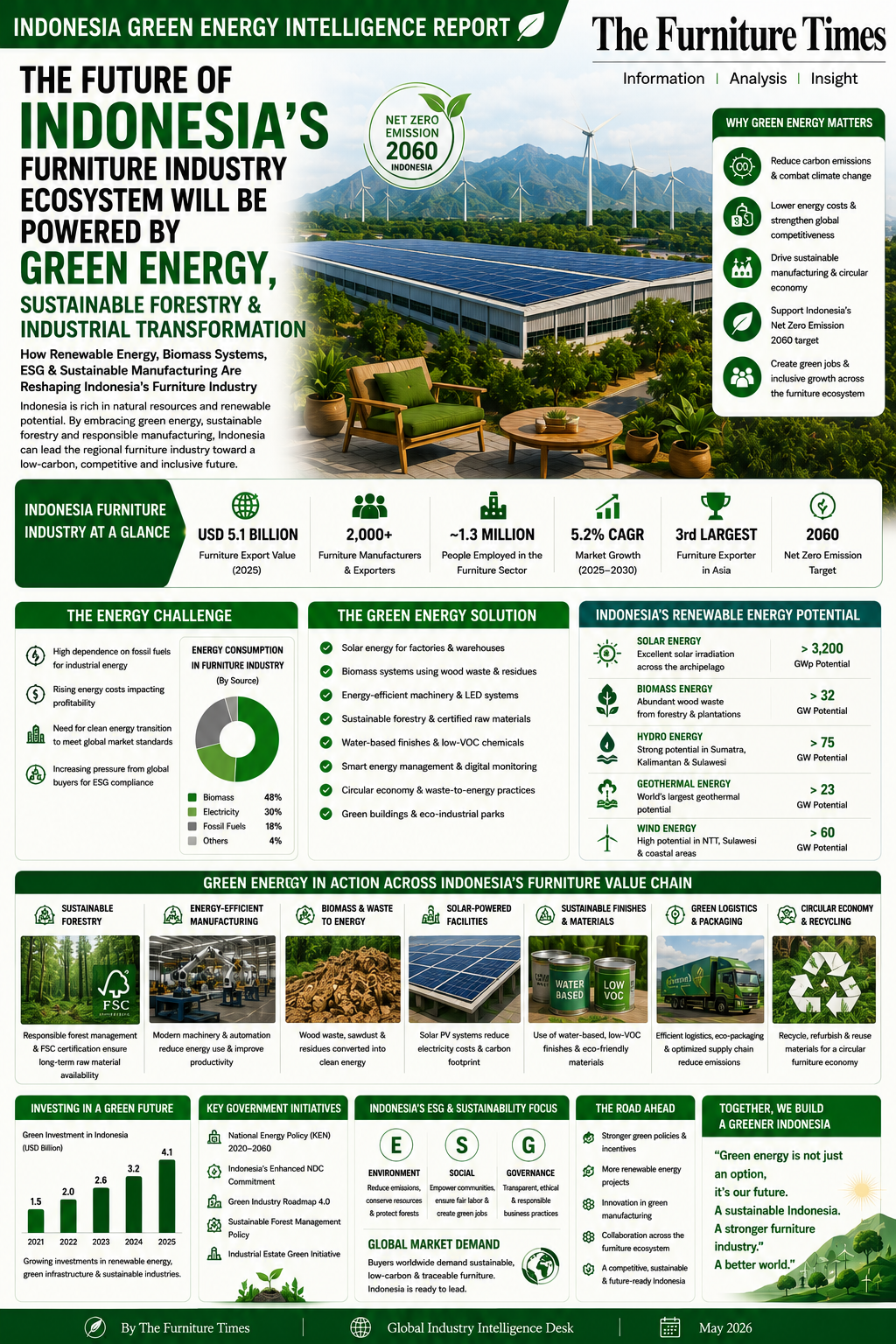
How Renewable Energy, Biomass Systems, ESG & Sustainable Manufacturing Are Reshaping Indonesia’s Furniture Industry
Indonesia Green Energy Intelligence Report | The Furniture Times
“The Future of Indonesia’s Furniture Industry Ecosystem Will Be Powered by Green Energy, Sustainable Forestry & Industrial Transformation”
By The Furniture Times | Global Industry Intelligence Desk | May 2026
Indonesia is entering one of the most important industrial transitions in its modern history.
For decades, Indonesia became globally recognized through:
rich natural resources
wood craftsmanship
teak furniture manufacturing
rattan furniture leadership
export furniture production
artisanal woodworking traditions
hospitality furniture manufacturing
Indonesia built a powerful reputation inside the global furniture ecosystem through:
Jepara craftsmanship
teakwood expertise
handcrafted furniture
outdoor furniture manufacturing
rattan innovation
hospitality and resort furniture
But now another transformation is emerging:
the green energy and sustainability revolution.
Across:
woodworking factories
rattan production
furniture export operations
hospitality furniture manufacturing
warehouses
logistics systems
industrial clusters
Indonesia’s furniture ecosystem is increasingly moving toward:
renewable energy
biomass systems
sustainable forestry
ESG-driven manufacturing
low-carbon production
environmentally responsible exports
And this transformation is becoming more than environmental responsibility.
It is becoming:
a strategic economic necessity.
🇮🇩 Indonesia Is One of the World’s Most Important Furniture Ecosystems
Indonesia is one of the world’s strongest furniture-producing nations because of:
natural resources
woodworking heritage
skilled craftsmanship
export infrastructure
rattan leadership
hospitality furniture capability
Indonesia is globally respected for:
teak furniture
rattan furniture
handcrafted products
outdoor furniture
resort furniture
luxury wood craftsmanship
Major manufacturing regions include:
Jepara
Surabaya
Jakarta
Semarang
Bali
Yogyakarta
Cirebon
The industry supports:
exports
SMEs
artisans
hospitality projects
global sourcing ecosystems
But behind this success lies:
enormous industrial energy consumption.
The Furniture Industry Quietly Consumes Massive Energy
Indonesia’s furniture ecosystem consumes energy through:
woodworking machinery
sanding systems
CNC operations
spray finishing
kiln drying
upholstery manufacturing
warehouse systems
logistics operations
export handling
container transportation
Every:
teak table
rattan chair
resort sofa
outdoor furniture system
hospitality fit-out
requires a long industrial chain powered by energy.
Why Green Energy Is Becoming Critical
Indonesia’s furniture industry now faces growing pressure from:
rising energy costs
environmental concerns
global ESG expectations
export sustainability requirements
deforestation scrutiny
climate instability
international buyer pressure
At the same time:
energy markets remain volatile
fuel prices fluctuate
logistics costs continue rising
environmental awareness grows globally
This means green energy is increasingly becoming:
“industrial survival through sustainability.”
Indonesia’s Greatest Green Advantage: Biomass Energy
Indonesia has one major advantage few industries globally possess:
massive organic material availability.
Furniture factories generate:
sawdust
wood chips
offcuts
rattan waste
sanding dust
organic production leftovers
Instead of treating these as waste, they can become:
renewable industrial fuel.
Biomass systems can generate:
industrial heat
production energy
kiln drying support
operational power alternatives
This creates:
“Circular manufacturing ecosystems.”
Why Biomass Is So Important for Indonesia
Indonesia’s furniture ecosystem naturally produces organic manufacturing byproducts.
This creates opportunity to:
reduce waste
lower fuel dependency
cut disposal costs
improve sustainability
reduce landfill pressure
Unlike industries dependent entirely on external energy, furniture manufacturing can partially generate energy from its own production waste.
Solar Energy: A Massive Untapped Opportunity
Indonesia’s tropical geography provides strong opportunity for:
rooftop solar systems
factory solar integration
warehouse renewable systems
sustainable industrial operations
Furniture factories often operate inside:
large industrial facilities
warehouse compounds
export manufacturing clusters
These are highly suitable for:
solar-powered industrial systems.
How Solar Energy Can Transform Furniture Factories
Solar systems can help power:
machinery
factory lighting
offices
warehouse operations
showroom systems
production support equipment
Benefits include:
lower electricity bills
long-term operational stability
improved ESG positioning
sustainability branding
reduced dependency on unstable energy costs
For export-oriented factories, this can significantly improve long-term competitiveness.
Sustainable Forestry Is Becoming Essential
Indonesia’s furniture identity is deeply connected to:
forests
wood resources
teak plantations
natural materials
This means sustainability is no longer optional.
Global buyers increasingly demand:
FSC-certified wood
legal timber sourcing
traceable materials
environmentally responsible production
The future furniture market increasingly rewards:
sustainable forestry leadership.
Deforestation Pressure & Global Scrutiny
Indonesia has faced global scrutiny regarding:
deforestation
illegal logging
environmental degradation
This means sustainability is becoming strategically important for:
export credibility
international partnerships
hospitality contracts
premium market access
Furniture suppliers without environmental responsibility may face:
weaker buyer confidence
export limitations
ESG-related pressure
ESG Is Reshaping Global Furniture Trade
ESG — Environmental, Social, Governance — is rapidly influencing global procurement systems.
International buyers increasingly evaluate suppliers through:
sustainability standards
carbon awareness
labour practices
environmental accountability
renewable energy usage
Large hospitality groups and retailers increasingly prioritize:
sustainable furniture ecosystems
low-carbon production
renewable manufacturing alignment
Hospitality Industry Is Driving Green Transformation
Indonesia’s hospitality ecosystem is enormous.
Bali, Jakarta, Lombok, and major tourism regions create strong demand for:
resort furniture
outdoor furniture
hospitality seating
eco-conscious interiors
sustainable luxury environments
Hotels and resorts increasingly market:
eco-tourism
sustainable hospitality
green luxury experiences
This directly affects furniture sourcing.
Hospitality operators increasingly seek:
sustainable suppliers
renewable-energy manufacturers
environmentally responsible furniture systems
Indonesia’s Outdoor Furniture Industry & Sustainability
Indonesia is one of the world’s strongest outdoor furniture producers.
Outdoor furniture increasingly requires:
weather resistance
recyclable materials
durable finishes
sustainable wood sourcing
eco-friendly production systems
Especially in Europe and North America, outdoor furniture buyers increasingly prioritize:
sustainability + durability.
The SME Sustainability Challenge
Indonesia’s furniture ecosystem is heavily driven by:
SMEs and artisan workshops.
Many smaller businesses struggle with:
rising operational costs
sustainability investment
green certification expenses
energy transition costs
This creates major need for:
financing support
sustainability education
industrial modernization programs
ESG awareness systems
Green Manufacturing Can Increase Export Strength
Global markets increasingly reward suppliers who demonstrate:
renewable energy usage
sustainable sourcing
environmental responsibility
low-carbon production systems
Indonesia has opportunity to position itself as:
“One of the World’s Leading Sustainable Furniture Manufacturing Nations.”
Especially because Indonesia already possesses:
craftsmanship
global recognition
raw material resources
export infrastructure
Climate Change Is Already Affecting the Industry
Climate instability increasingly affects:
timber supply
transportation
shipping
logistics costs
production operations
insurance systems
Floods, environmental instability, and weather disruptions can affect:
factories
ports
export schedules
wood availability
Green energy becomes part of:
industrial resilience strategy.
Smart Sustainable Factories: The Future of Indonesia
The future Indonesian furniture factory may increasingly combine:
solar systems
biomass energy
AI manufacturing
smart energy monitoring
automated efficiency systems
sustainable waste management
This creates:
“Intelligent green manufacturing ecosystems.”
The Consumer Mindset Is Changing
Modern consumers increasingly ask:
Was this furniture sustainably made?
Is the wood certified?
Was renewable energy involved?
Is the supplier environmentally responsible?
Especially younger consumers increasingly associate:
sustainability
with:
modern luxury
responsible living
ethical purchasing
Green Logistics & Furniture Exports
Furniture logistics are energy-intensive because products are:
bulky
container-heavy
export-dependent
Future transformation may include:
low-carbon logistics
energy-efficient warehousing
optimized shipping systems
electric transport solutions
This becomes important because Indonesia is strongly export-oriented.
Can Indonesia Become Asia’s Sustainable Furniture Leader?
Indonesia has strong opportunity because it combines:
natural resources
craftsmanship
export experience
sustainable material potential
hospitality leadership
renewable energy opportunity
If supported correctly, Indonesia can become:
“Asia’s Sustainable Furniture Manufacturing Powerhouse.”
Opportunity for Indonesian Furniture Brands
The future global furniture economy may increasingly reward brands that combine:
craftsmanship
sustainability
renewable energy
ethical sourcing
environmental responsibility
Indonesia is uniquely positioned to lead this transition.
Especially in:
teak furniture
rattan furniture
outdoor furniture
hospitality furniture
eco-conscious interiors
Role of TFT & FISE in Green Transformation
Indonesia’s furniture ecosystem increasingly needs:
sustainability visibility
ESG communication systems
supplier discoverability
green manufacturing transparency
FISE can help buyers search suppliers by:
FSC capability
renewable energy adoption
eco-friendly manufacturing
FISE.live can showcase:
green factories
sustainable craftsmanship
renewable-powered production
eco-conscious furniture innovation
TFT can educate the industry about:
ESG transformation
renewable energy
sustainable manufacturing
environmental accountability
TFT Philosophical Industry Insight
Indonesia’s furniture industry was built from nature:
forests
wood
rattan
natural craftsmanship
Therefore, the industry carries a deeper environmental responsibility.
An industry born from forests cannot survive long-term by ignoring the future of forests.
Green energy is not simply about electricity.
It is about:
protecting resources
preserving ecosystems
ensuring industrial survival
maintaining export competitiveness
building long-term sustainability
Final Thought
Indonesia’s furniture ecosystem now stands at a major industrial crossroads.
One path continues:
unstable energy dependency
environmental pressure
export sustainability risk
rising operational costs
The other path moves toward:
renewable energy
sustainable forestry
ESG leadership
green manufacturing
environmental responsibility
The future winners will not only manufacture furniture.
They will build:
sustainable ecosystems
renewable-powered factories
environmentally responsible brands
future-ready industrial systems
Closing Insight
“The next generation of Indonesia’s furniture leadership will not only be measured by craftsmanship and exports.
It will also be measured by how responsibly the industry protects the natural ecosystems that make the industry possible.”
