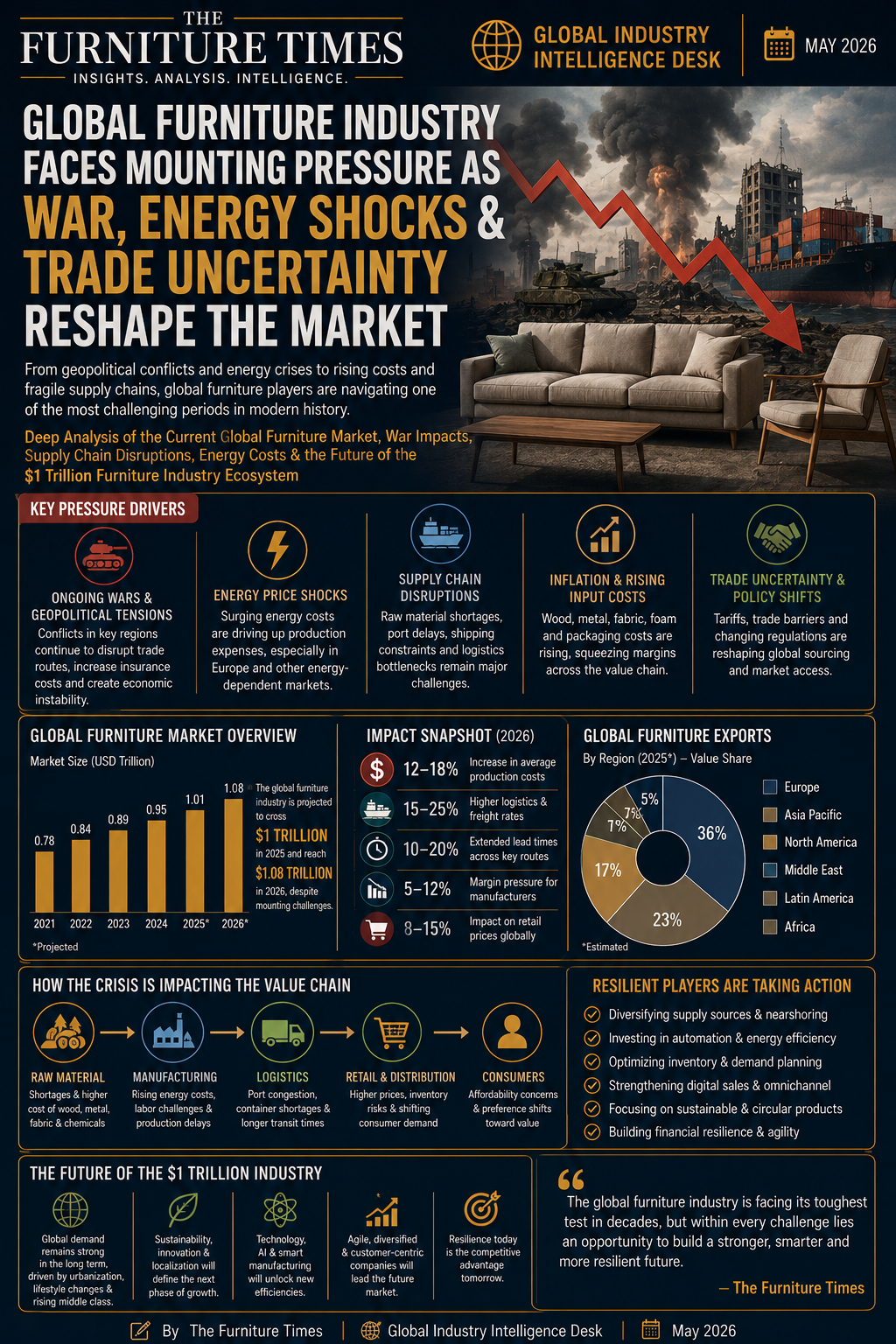
Global Furniture Industry Faces Mounting Pressure as War, Energy Shocks & Trade Uncertainty Reshape the Market
Deep Analysis of the Current Global Furniture Market, War Impacts, Supply Chain Disruptions, Energy Costs & the Future of the $1 Trillion Furniture Industry Ecosystem
By The Furniture Times | Global Crisis Report | Global Industry Intelligence Desk | May 2026
The global furniture industry is entering one of the most uncertain periods since the COVID-19 pandemic.
The industry, valued globally between:
US$670 billion to US$730 billion in 2025–2026 depending on market methodologies, is still expected to grow long term, potentially approaching US$950 billion–US$980 billion by the early 2030s.
But the current reality across the industry ecosystem is becoming increasingly difficult.
The global furniture market is now simultaneously facing:
geopolitical wars
energy instability
freight volatility
tariff uncertainty
inflation pressure
slowing retail demand
rising manufacturing costs
supply chain fragmentation
And the latest Iran–Israel–U.S. conflict is adding another layer of instability to an already fragile ecosystem.
The Furniture Industry Is Deeply Connected to Global Stability
The furniture industry depends heavily on:
global shipping
stable fuel prices
affordable raw materials
reliable logistics
consumer confidence
housing activity
When wars escalate,
the furniture industry immediately feels the impact.
This is because furniture is not an isolated industry.
It is connected to:
oil markets
container shipping
real estate
hospitality
construction
retail consumption
manufacturing supply chains
And today, nearly every one of these systems is under pressure.
The Strait of Hormuz Crisis Is Creating Fear Across Global Trade
One of the biggest current concerns is the instability surrounding:
the Strait of Hormuz.
This route is one of the world’s most critical shipping corridors for:
oil
gas
industrial materials
chemical supply chains
Reuters and global financial analysts reported that the ongoing Iran conflict has heavily disrupted shipping confidence and increased fears of prolonged energy instability.
Analysts warn that prolonged disruption could push oil prices significantly higher and trigger wider global recession risks.
For the furniture industry,
this creates:
immediate cost pressure.
Why Oil Prices Matter to Furniture
Many people think furniture is only about:
wood
sofas
beds
cabinets
But oil prices affect nearly every stage of furniture production:
shipping costs
foam manufacturing
plastic components
adhesives
synthetic fabrics
packaging materials
logistics operations
As oil prices rise,
the entire furniture ecosystem becomes more expensive.
Reuters reported Brent crude approaching nearly US$100 during recent escalation periods.
This creates:
thinner factory margins
rising retail prices
weaker consumer spending
Shipping Costs Are Again Becoming Unstable
The furniture industry heavily depends on container shipping.
The Iran conflict and Red Sea disruptions continue affecting:
transit routes
delivery schedules
freight reliability
Shipping analysts noted that instability around the Red Sea and Gulf region continues delaying any major normalization of global ocean shipping flows.
Longer shipping routes around Africa continue increasing:
transit time
fuel consumption
container shortages
freight surcharges.
For furniture businesses,
this creates major operational uncertainty.
Retailers Are Becoming More Careful
Furniture retailers globally are becoming increasingly cautious because consumers themselves are under pressure from:
inflation
energy bills
housing costs
economic uncertainty
Recent industry reports show:
flat orders
declining shipments
slower consumer confidence in several markets.
Showroom traffic in some regions is softening,
especially for:
premium furniture
discretionary purchases
renovation-heavy categories
The industry is entering:
a cautious demand environment.
SMEs Are Under Severe Pressure
Small and medium-sized furniture businesses remain among the most vulnerable.
Many SMEs already survived:
COVID-19
container crises
inflation waves
raw material shocks
Now they are facing:
war-driven uncertainty
rising energy costs
unstable logistics
tighter cash flow
For smaller businesses,
survival is becoming increasingly difficult.
Tariffs & Protectionism Continue Reshaping Trade
Trade fragmentation is also intensifying globally.
Many governments continue:
adjusting tariffs
tightening certifications
strengthening import controls
This impacts:
sourcing flexibility
furniture imports
manufacturing cost structures.
The global furniture industry is slowly shifting from:
globalization
toward:
regionalization.
The Industry Is Rebuilding Regional Supply Chains
One hidden outcome of the current crisis:
regional sourcing growth.
Furniture companies increasingly want:
shorter supply chains
nearby suppliers
lower geopolitical exposure
faster delivery control
This is accelerating growth in:
regional manufacturing hubs
nearshoring strategies
localized production ecosystems
The global furniture industry is quietly restructuring itself.
Energy Costs Are Reshaping Manufacturing
Furniture manufacturing is highly energy dependent.
Factories require:
electricity
machinery operations
kiln drying
logistics fuel
industrial production systems
As energy costs rise,
factories struggle with:
shrinking profit margins
higher operational costs
production slowdowns
This especially affects:
energy-intensive manufacturers
export-oriented factories
The Logistics Ecosystem Is Becoming More Strategic
The furniture logistics market itself remains enormous,
projected above:
US$120 billion in 2026.
But logistics is no longer viewed only as transportation.
It is becoming:
strategic survival infrastructure.
Companies increasingly prioritize:
warehouse positioning
regional inventory systems
supply chain visibility
shipping diversification
AI & Discoverability Are Becoming Survival Tools
During uncertainty,
visibility becomes even more important.
Businesses increasingly compete not only through:
products
but through:
discoverability
searchability
digital authority
AI visibility
The companies that remain:
searchable and visible
may survive better during difficult periods.
Hospitality & Luxury Segments Show Mixed Signals
The hospitality sector remains uneven globally.
Some regions continue expanding:
luxury hotels
tourism infrastructure
resort developments
while other markets slow due to:
uncertainty
declining travel confidence
geopolitical fear
This creates:
fragmented market behaviour.
The Workforce Crisis Continues
The furniture industry is also struggling with:
labour shortages
foreign worker restrictions
immigration tightening
rising labour costs
Factories increasingly face difficulty maintaining:
production capacity
skilled craftsmanship
operational continuity
Sustainability Pressures Continue Rising
Even during crisis,
global sustainability pressure continues increasing.
Manufacturers must now balance:
rising costs
with:
ESG compliance
environmental regulations
sustainable sourcing
carbon reduction expectations
This creates additional pressure on already strained businesses.
Yet the Industry Continues Moving Forward
Despite the uncertainty,
the global furniture industry remains remarkably resilient.
Why?
Because furniture remains deeply connected to:
housing
hospitality
emotional comfort
human lifestyle
interior environments
People may delay purchases,
but furniture demand never disappears completely.
The industry continues adapting.
The Industry Is Being Rewritten
The global furniture ecosystem is quietly transforming from:
volume-driven manufacturing
toward:
intelligent ecosystems
regional resilience
discoverability systems
AI visibility
flexible supply chains
The future winners may not necessarily be:
the biggest factories
but:
the most adaptable ecosystems.
TFT Industry Insight
The current war situation is exposing one major weakness inside the global furniture industry:
fragmentation.
Many businesses still operate:
without visibility systems
without supply chain intelligence
without crisis infrastructure
without discoverability architecture
The industry is now learning that:
resilience matters more than speed.
Final Thought
The global furniture industry is now standing at:
a historic crossroads.
The combination of:
wars
tariffs
inflation
logistics disruption
energy shocks
geopolitical uncertainty
is rewriting how the industry operates.
But every crisis also creates:
new opportunities.
The businesses that successfully adapt through:
regional resilience
digital visibility
operational flexibility
AI discoverability
strategic positioning
may emerge stronger from this uncertainty era.
Because the future furniture economy may no longer reward only:
production power.
It may increasingly reward:
intelligent adaptability.
Closing Insight
“The furniture industry has survived pandemics, recessions, wars, tariffs, and supply chain crises before. But 2026 may become the year the industry finally realizes that visibility, resilience, adaptability, and intelligent ecosystems are now as important as manufacturing itself.”