
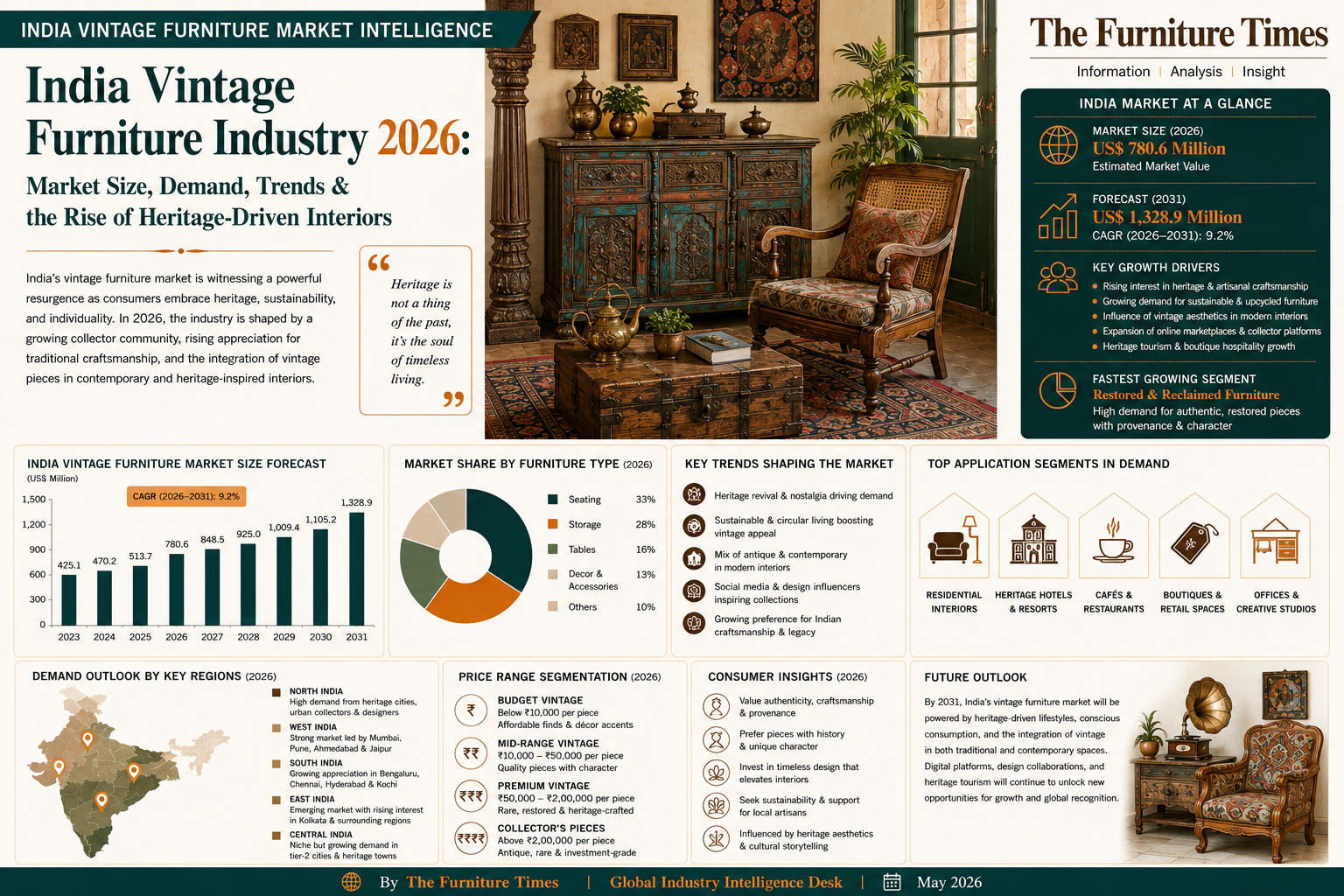
India Vintage Furniture Industry 2026: Market Size, Demand, Trends & the Rise of Heritage-Driven Interiors
India Vintage Furniture Market Intelligence | The Furniture Times
By The Furniture Times | Global Industry Intelligence Desk | May 2026
India’s vintage furniture market is entering a powerful revival phase as homeowners, collectors, interior designers, boutique hotels, cafés, architects, luxury developers, and younger consumers increasingly move toward timeless, handcrafted, story-driven interiors.
In India, vintage furniture is no longer viewed as outdated furniture.
It is becoming:
- cultural luxury
- heritage craftsmanship
- collectible décor
- sustainable furniture
- emotional interior design
- artisanal identity
- timeless living
Across Delhi, Mumbai, Jaipur, Bengaluru, Goa, Kolkata, Hyderabad, Chennai, Kochi, and heritage tourism destinations, vintage furniture is becoming one of the strongest lifestyle movements reshaping India’s interior design and furniture ecosystem.
🇮🇳 India Vintage Furniture Market Context
India’s vintage furniture market sits inside the broader:
- antique furniture market
- second-hand furniture market
- collectible décor market
- heritage luxury segment
- restoration ecosystem
- sustainable interiors movement
Globally, the second-hand furniture market is projected to exceed US$84 billion by 2035, while antique and collectible furniture categories continue gaining strong momentum due to sustainability, craftsmanship, and nostalgia-driven demand.
India is uniquely positioned because of:
- deep craft heritage
- historic woodworking traditions
- royal architecture
- colonial-era furniture influence
- handmade furniture culture
- strong domestic artisan ecosystem
India is not only a consumer of vintage furniture.
It is one of the world’s great sources of heritage furniture craftsmanship.
Why Demand Is Growing in India
1. Heritage & Cultural Revival
Indian consumers increasingly appreciate:
- handcrafted furniture
- royal aesthetics
- antique woodwork
- carved furniture
- traditional craftsmanship
- artisanal storytelling
Vintage furniture connects strongly with:
- Indian heritage
- royal architecture
- palace-inspired interiors
- cultural identity
2. Boutique Hospitality & Heritage Hotels
India’s hospitality sector is heavily supporting vintage furniture demand.
Strong demand from:
- heritage hotels
- palace hotels
- boutique resorts
- cafés
- luxury villas
- wellness retreats
Vintage furniture helps hospitality spaces create:
- authenticity
- nostalgia
- emotional atmosphere
- premium experience
- destination storytelling
3. Sustainability & Slow Living
Consumers increasingly reject disposable “fast furniture.”
Vintage furniture supports:
- reuse culture
- restoration
- long-lasting craftsmanship
- eco-conscious interiors
- circular economy values
This is especially important among:
- millennials
- Gen Z homeowners
- designers
- sustainability-conscious buyers
4. Social Media & Interior Design Influence
Instagram, Pinterest, YouTube, and design influencers are driving strong demand for:
- vintage décor
- retro furniture
- heritage-inspired homes
- antique styling
- curated interiors
Vintage furniture now functions as:
“Identity Furniture”
Most In-Demand Vintage Furniture Categories in India
1. Antique Carved Wood Furniture
One of India’s strongest categories.
Popular products:
- carved cabinets
- jharokha-inspired furniture
- traditional chests
- carved doors
- heritage consoles
- wooden swings (jhulas)
Strong demand in:
- luxury villas
- heritage hotels
- premium homes
2. Colonial-Era Furniture
Very popular in:
- Kolkata
- Chennai
- Mumbai
- Goa
- heritage hospitality spaces
Includes:
- British colonial desks
- cane chairs
- teak dining tables
- vintage cabinets
- plantation furniture
3. Mid-Century Modern Furniture
Strong urban demand among younger homeowners and designers.
Popular products:
- teak sideboards
- lounge chairs
- retro sofas
- vintage coffee tables
- Scandinavian-inspired pieces
4. Rattan & Cane Furniture
Strong revival in:
- cafés
- bohemian interiors
- tropical homes
- resort spaces
Popular products:
- peacock chairs
- woven seating
- cane lounge furniture
- natural fiber décor
5. Vintage Industrial Furniture
Growing café-driven trend.
Includes:
- distressed wood tables
- factory-style shelving
- vintage stools
- industrial lighting
- reclaimed furniture
6. Vintage Décor & Accessories
Strong demand for:
- antique mirrors
- brass décor
- old trunks
- heritage lighting
- rugs
- ceramic artifacts
- wall art
Materials Driving India Vintage Furniture Market
Wood
The most important material category.
Popular woods:
- teak
- rosewood
- sheesham
- walnut
- mango wood
- mahogany
India’s woodworking traditions strongly support premium vintage furniture.
Cane & Rattan
Strongly associated with:
- colonial furniture
- tropical aesthetics
- retro hospitality
- handcrafted interiors
Brass & Metalwork
Very important in:
- heritage interiors
- palace-inspired décor
- traditional Indian styling
Used in:
- handles
- tables
- mirrors
- lamps
- accessories
Upholstery & Textiles
Popular fabrics:
- velvet
- block prints
- embroidered textiles
- linen
- leather with patina
- woven fabrics
Major Demand Regions in India
Rajasthan
One of India’s strongest heritage furniture markets.
Strong demand for:
- carved wood furniture
- palace-inspired interiors
- heritage hospitality
- royal aesthetics
Key cities:
- Jaipur
- Udaipur
- Jodhpur
Delhi NCR
Large luxury and designer-driven market.
Strong demand from:
- luxury villas
- designers
- collectors
- hospitality projects
Mumbai
Strong premium residential and hospitality demand.
Popular for:
- modern-vintage fusion
- collectible décor
- boutique hospitality interiors
Goa
One of India’s strongest lifestyle and vintage markets.
Driven by:
- cafés
- beach hospitality
- villas
- bohemian interiors
- boutique resorts
Kolkata
Strong colonial-era vintage culture.
Demand for:
- antique wood furniture
- heritage interiors
- collectible furniture
Bengaluru
Young urban consumers driving:
- mid-century modern
- sustainable interiors
- retro apartments
- café aesthetics
Kerala
Strong for:
- teak furniture
- colonial influences
- tropical heritage interiors
- luxury resort styling
Price Range in India Vintage Market
Entry-Level Vintage
₹5,000–₹50,000
Includes:
- chairs
- side tables
- mirrors
- décor items
- small cabinets
Mid-Range Vintage
₹50,000–₹5,00,000
Includes:
- teak sideboards
- carved furniture
- dining sets
- restored cabinets
- lounge chairs
Premium Antique & Collectible
₹5,00,000–₹1 Crore+
Includes:
- rare antiques
- palace furniture
- collectible heritage pieces
- museum-quality furniture
Key Vintage Furniture Trends in India (2026)
1. Heritage + Modern Fusion
Consumers increasingly mix:
- modern architecture
- antique furniture
- brass décor
- handcrafted wood
- vintage textiles
2. Warm Natural Wood
Teak, sheesham, and walnut are making a major comeback.
3. Curated & Layered Interiors
Consumers increasingly prefer:
- collected spaces
- emotional interiors
- lived-in luxury
- personality-driven homes
instead of showroom-style interiors.
4. Boutique Hospitality Storytelling
Hotels increasingly use vintage furniture to create:
- authenticity
- destination identity
- emotional guest experiences
5. Sustainable Luxury
Vintage furniture increasingly aligns with:
- eco-conscious living
- anti-waste culture
- restoration
- artisanal craftsmanship
6. Revival of Indian Craftsmanship
Consumers increasingly value:
- handmade furniture
- artisan carving
- traditional joinery
- regional craftsmanship
Challenges in India Vintage Market
1. Authenticity Verification
Buyers often struggle to verify:
- genuine antiques
- reproductions
- restored furniture
- heritage provenance
2. Restoration Standards
Professional restoration quality varies heavily across markets.
3. Logistics & Preservation
Vintage furniture often requires:
- specialized transport
- climate care
- restoration
- maintenance
4. Digital Discovery Gap
Many vintage sellers still lack:
- searchable catalogues
- online visibility
- verified inventories
- global discoverability
This creates opportunity for:
- TFT
- FISE
- Furnipedia
- FISE.live
to support heritage furniture visibility and sourcing.
Connection to the Furniture Ecosystem
Vintage furniture strongly influences:
- interior design
- hospitality styling
- collectible décor
- heritage architecture
- café culture
- luxury real estate
It creates demand for:
- restoration services
- upholstery
- lighting
- handcrafted décor
- custom carpentry
- antique sourcing
Vintage furniture is becoming part of India’s:
“heritage experience economy.”
TFT Industry Insight
India’s vintage furniture market reflects a larger global movement:
Consumers increasingly want interiors with emotion, history, craftsmanship, and cultural depth.
India has a unique advantage because it combines:
- ancient craftsmanship
- artisan networks
- heritage architecture
- hospitality storytelling
- handcrafted furniture traditions
The future winners will combine:
- restoration
- heritage branding
- storytelling
- digital visibility
- collectible sourcing
- artisan ecosystems
inside connected furniture platforms.
Final Thought
Vintage furniture in India is no longer a niche category.
It is becoming a powerful expression of:
- heritage
- sustainability
- individuality
- craftsmanship
- timeless living
As consumers move away from mass-produced interiors, India’s vintage furniture market is becoming one of the strongest symbols of emotional luxury and cultural identity inside the global furniture ecosystem.
