

Global Furniture Industry in Motion: Innovation, E-Commerce, and New Opportunities Shape 2026
March 2026 — Global Furniture Industry Update
Across the world, the furniture industry is experiencing a powerful transformation. From innovative design competitions and global trade fairs to e-commerce expansion and startup growth, the sector is evolving rapidly. While some companies are navigating economic pressures and supply chain challenges, others are seizing new opportunities driven by technology, sustainability, and changing consumer lifestyles.
Today’s global furniture story is not just about products—it is about people, creativity, and the way homes and workplaces are being redesigned for a new generation.
Furniture Design and Innovation Take the Spotlight
One of the most visible trends shaping the industry is the growing importance of design innovation. Events like the Malaysian International Furniture Fair (MIFF) 2026 continue to highlight creativity and craftsmanship across the global furniture ecosystem.
At MIFF, designers and manufacturers showcased sustainable materials, multifunctional designs, and furniture tailored for modern lifestyles. The event has become a global meeting point where buyers, designers, and manufacturers collaborate to push the boundaries of furniture innovation.
Industry experts say consumers are increasingly demanding furniture that is not only stylish but also environmentally responsible, reflecting a broader global shift toward sustainability in manufacturing.
The Rise of E-Commerce Furniture Businesses
The digital transformation of the furniture industry is accelerating rapidly. Manufacturers in countries such as Vietnam are embracing direct-to-consumer e-commerce models, enabling them to sell furniture worldwide through online platforms.
This shift allows companies to reach global buyers without relying solely on traditional retail stores. Online furniture brands, especially those offering compressed mattresses and flat-pack furniture, are gaining popularity because they simplify shipping and reduce costs.
For consumers, this means furniture is now easier to purchase online than ever before—often delivered in compact packages and assembled at home.
Global Furniture Market Continues to Grow
Despite economic uncertainties, the long-term outlook for the furniture industry remains strong.
Industry reports suggest the global furniture market could exceed $1.3 trillion by 2033, driven by urbanisation, rising incomes, and growing demand for customised home interiors.
Several factors are fueling this growth:
- Increasing urban housing and apartment living
- Demand for space-saving and multifunctional furniture
- Rising interest in sustainable materials
- Growth in luxury and personalized furniture products
Modern consumers want furniture that reflects their lifestyle and identity—not just something functional.
Major Global Furniture Exhibitions Continue to Expand
Large furniture exhibitions remain essential for connecting global manufacturers and buyers.
Events such as the CIFF Guangzhou 2026 are expected to feature thousands of exhibitors and global industry leaders, highlighting new technologies, materials, and supply chain innovations.
These global fairs act as innovation hubs where designers, suppliers, and retailers collaborate to develop the next generation of furniture products.
Startups and New Brands Enter the Market
At the same time, new furniture brands are entering the global market with ambitious growth plans.
Australian furniture startup Koala is preparing for a $70 million IPO, aiming for a valuation of around $305 million as it expands into international markets including the United States and Japan.
The company began with mattresses but has grown into a broader furniture brand, reflecting a trend where startups disrupt traditional furniture retail through online sales and innovative packaging.
Challenges Still Exist in the Industry
While the industry is evolving, it also faces challenges.
Some furniture manufacturers are closing factories or restructuring operations due to rising costs, changing supply chains, and shifts in consumer demand. In one recent case, a furniture manufacturer announced the closure of a major facility, affecting around 200 workers.
These developments highlight the importance of innovation, efficiency, and adaptability for companies trying to remain competitive in a fast-changing global market.
A Human Industry Built on Craft and Creativity
Despite technological changes and global competition, the furniture industry remains deeply human. Behind every sofa, cabinet, or dining table is a designer’s vision, a craftsman’s skill, and a manufacturer’s dedication.
As the world continues to rethink how people live and work, furniture will play an increasingly important role in shaping spaces that are comfortable, sustainable, and inspiring.
And in 2026, one thing is clear: the future of furniture will belong to those who combine creativity, technology, and human-centered design.

Related Posts
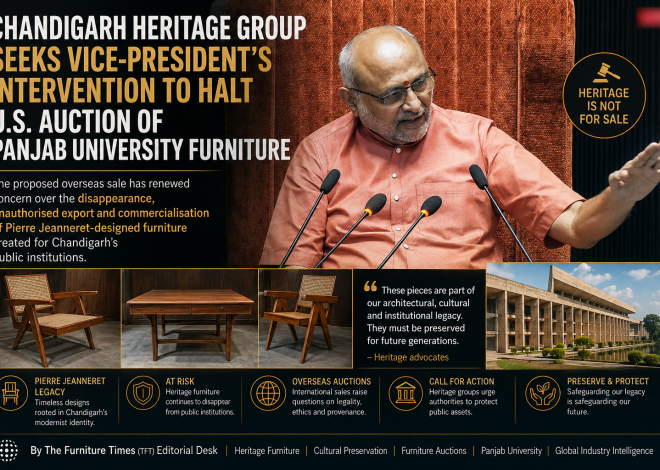
Chandigarh Heritage Group Seeks Vice-President’s Intervention to Halt U.S. Auction of Panjab University Furniture

Ethan Allen CEO Farooq Kathwari Defends Long-Term Leadership as Activist Challenge Revives Governance Debate