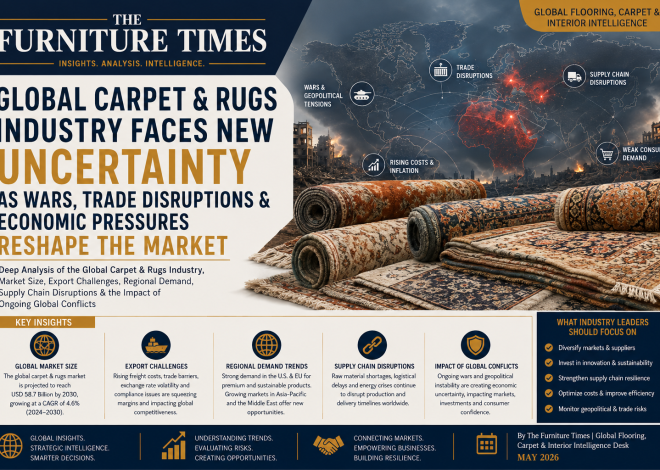
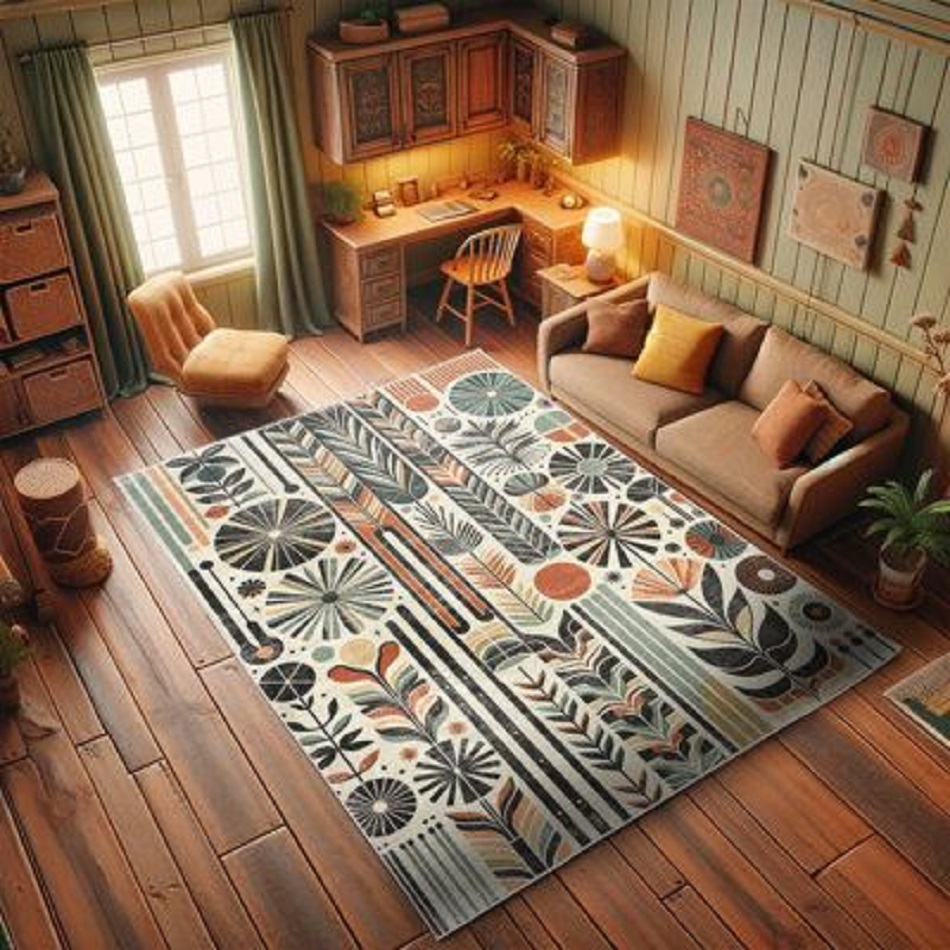
Carpets & Rugs: The Timeless Foundation of Comfort, Craft, and Contemporary Living
By Furniture Industry Desk
Carpets and rugs have long been more than simple floor coverings. They are cultural artifacts, design statements, acoustic solutions, and comfort enhancers that shape how spaces feel and function. From handwoven heritage rugs to high-performance, machine-made carpets engineered for modern lifestyles, the global carpets and rugs industry continues to evolve—driven by changing consumer preferences, sustainability demands, and advances in manufacturing technology.
Today, carpets and rugs sit at the intersection of interior design, lifestyle, and responsible manufacturing, making them a vital segment of the global furniture and home décor ecosystem.
A Market Rooted in Tradition, Driven by Innovation
Historically, carpets and rugs originated as handcrafted essentials, deeply embedded in regions such as Persia, Turkey, India, Central Asia, and parts of Europe. These early creations were woven from wool, silk, cotton, and natural dyes, often telling stories through intricate patterns passed down through generations.
In the modern era, while traditional craftsmanship remains highly valued, the industry has expanded significantly with machine-made carpets, modular carpet tiles, outdoor rugs, and custom solutions designed for residential, commercial, and hospitality applications.
Advancements in loom technology, digital printing, fiber engineering, and finishing processes have enabled manufacturers to scale production while maintaining consistency, durability, and design flexibility.
Carpets vs Rugs: Understanding the Difference
While often used interchangeably, carpets and rugs serve distinct roles:
- Carpets are typically wall-to-wall floor coverings, commonly used in homes, offices, hotels, and institutions. They provide insulation, noise reduction, and underfoot comfort.
- Rugs are movable, decorative pieces available in various sizes, often used to define spaces, add warmth, or introduce color and texture without permanent installation.
This distinction has allowed brands to diversify product portfolios and cater to both permanent flooring needs and flexible interior styling trends.
Material Evolution: From Natural Fibers to Smart Synthetics
Materials play a central role in performance, sustainability, and aesthetics. Today’s carpets and rugs are produced using a wide range of fibers:
- Natural fibers: Wool, cotton, jute, sisal, and silk remain popular for their breathability, softness, and premium appeal.
- Synthetic fibers: Nylon, polypropylene, polyester, and recycled PET are widely used for durability, stain resistance, and affordability.
- Blended fibers: Combining natural and synthetic materials to balance performance and comfort.
The growing adoption of recycled yarns and low-VOC materials reflects the industry’s shift toward environmentally responsible production, particularly in commercial and export-oriented markets.
Sustainability and Responsible Manufacturing
Sustainability has become a defining theme in the carpets and rugs segment. Manufacturers are increasingly adopting:
- Eco-friendly dyes and water-efficient dyeing processes
- Recycled and recyclable fibers
- Waste-reduction practices and closed-loop manufacturing
- Certifications related to indoor air quality, sustainability, and ethical sourcing
Consumers today are more informed and increasingly prefer flooring products that align with healthier indoor environments and long-term environmental responsibility.
Design Trends Shaping Modern Interiors
Design trends in carpets and rugs continue to reflect broader shifts in lifestyle and architecture:
- Neutral palettes and earthy tones for minimalist and biophilic interiors
- Geometric and abstract patterns for contemporary spaces
- Vintage and distressed looks inspired by traditional craftsmanship
- Texture-focused designs, including high-low piles and hand-finished effects
- Outdoor rugs engineered for weather resistance and UV stability
Customization has also gained momentum, with designers and consumers seeking made-to-order sizes, patterns, and colorways.
Commercial and Hospitality Demand on the Rise
Beyond residential use, carpets and rugs play a critical role in commercial interiors. Hotels, offices, airports, retail spaces, and healthcare facilities rely on specialized carpets for:
- Acoustic performance
- Safety and slip resistance
- Durability under heavy foot traffic
- Brand identity through custom patterns and colors
Carpet tiles and modular systems, in particular, have gained popularity for their ease of installation, replacement, and design flexibility.
Global Trade and Manufacturing Hubs
The carpets and rugs industry operates on a truly global scale. Key manufacturing and export hubs include:
- South Asia (India, Pakistan) for handmade and hand-tufted rugs
- Turkey and Iran for traditional woven carpets
- Europe for high-end design and commercial flooring solutions
- Southeast Asia and China for mass-market and export-oriented production
International trade fairs, buyer-seller meets, and digital marketplaces have further accelerated global visibility for manufacturers and designers alike.
Technology and the Digital Shift
Digital tools are reshaping how carpets and rugs are designed, marketed, and sold. Virtual room visualizers, AI-assisted design previews, and e-commerce platforms allow customers to experience products before purchase. At the manufacturing level, automation and data-driven quality control improve efficiency and consistency.
Looking Ahead: A Balanced Future of Craft and Technology
The future of carpets and rugs lies in balance—between tradition and technology, aesthetics and performance, comfort and sustainability. As homes become more design-conscious and commercial spaces prioritize well-being, carpets and rugs will continue to be essential elements of interior environments worldwide.
For the furniture and interiors industry, this segment remains a cornerstone—grounding spaces not just physically, but emotionally and culturally.
The Furniture Times will continue to track trends, innovations, and global developments shaping the carpets and rugs industry, keeping professionals and consumers informed in an ever-evolving market.

Related Posts
The Timeless Legacy of Iranian Carpets: A Journey Through History, Culture, Art & Civilization
Iran’s Carpet Industry Faces Historic Collapse: Why Visibility, Discoverability & Industry Connectivity Have Become More Important Than Ever