Top Global Markets for Airbnb and Homestay Furniture
Comparing Tourism, Rental Supply, Property Development and Furnishing Demand Across Leading Destinations
By The Furniture Times (TFT) Editorial Desk | Airbnb & Homestay Furniture | Global Markets | Short-Term Rentals | Hospitality Furniture | Tourism | Property Development | Global Market Intelligence
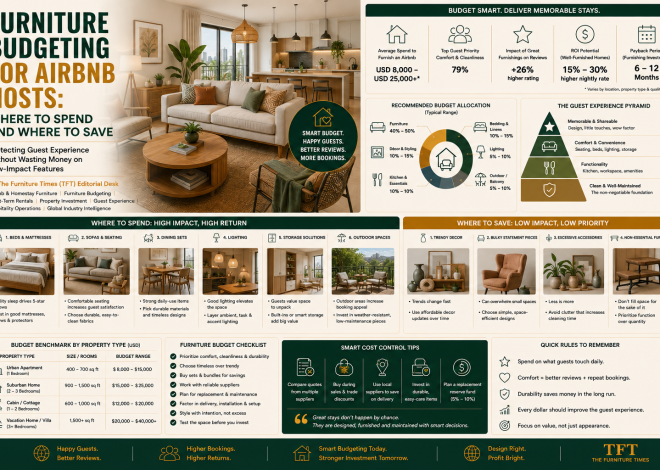
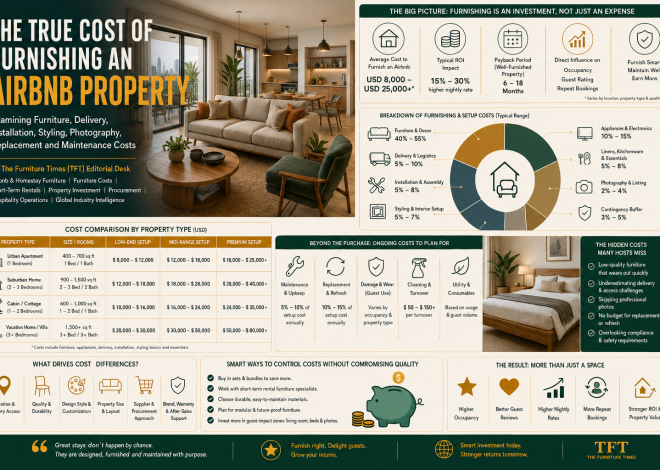
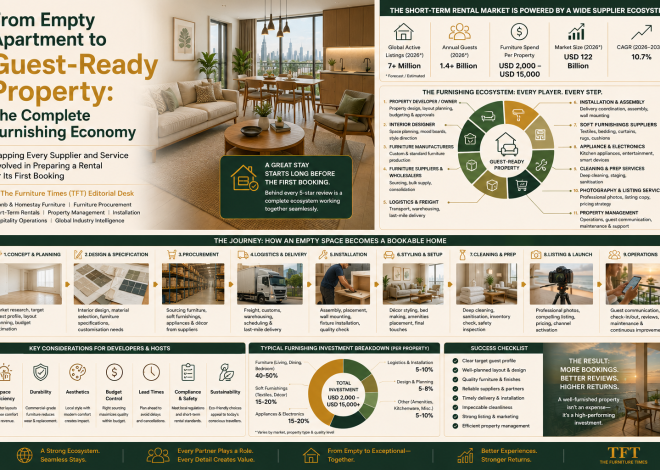
The global growth of Airbnb properties, homestays, vacation rentals, holiday villas and serviced apartments is opening a significant new market for furniture manufacturers, designers, distributors, installers and turnkey furnishing companies.
However, the opportunity is not distributed evenly.
Some countries combine enormous tourism volumes with mature short-term-rental inventories. Others have smaller accommodation bases but faster tourism growth, expanding middle classes and active property-development pipelines. Established destinations generate replacement, refurbishment and compliance-driven demand, while emerging markets create opportunities to furnish new properties from the ground up.
This distinction matters.
The best market for selling replacement mattresses to professional operators may differ from the best market for furnishing newly built villas. A country with millions of tourists may face strict restrictions on new short-term rentals, while a smaller destination may be encouraging homestays as part of rural-development or community-tourism policy.
Furniture companies must therefore look beyond tourist arrivals. A serious market assessment should examine:
- International and domestic tourism
- Existing short-term-rental supply
- New property development
- Platform adoption
- Local regulation
- Type of accommodation
- Guest profile
- Replacement frequency
- Climate and material requirements
- Distribution and installation capacity
- Purchasing power
- Local manufacturing competition
Taken together, these indicators reveal a global market with several distinct centres of opportunity.
Global Tourism and Rental Supply Establish the Demand Base
International tourism has moved beyond its post-pandemic recovery phase and returned to growth.
UN Tourism estimated that global international arrivals increased by 4% in 2025 to approximately 1.52 billion. Europe received about 793 million international arrivals, Asia-Pacific 331 million, the Americas 218 million, the Middle East 100 million and Africa 81 million. These numbers are provisional and may be revised, but they confirm the enormous scale of travel demand feeding hotels, vacation rentals and homestays. UN Tourism
Short-term accommodation has become an established part of this tourism infrastructure. Eurostat reported that guests spent approximately 951.6 million nights in short-stay accommodation booked through Airbnb, Booking.com and Expedia within the European Union during 2025—an increase of 11.4% from 2024. Eurostat
Airbnb, meanwhile, reported more than 9 million active listings across over 150,000 cities and towns in more than 220 countries and regions as of May 2026. Airbnb Newsroom
These figures confirm that short-term-rental furniture demand is not limited to a few tourist cities. It is distributed across urban apartments, beach houses, mountain cabins, rural homestays, heritage properties, suburban homes, serviced residences and luxury villas worldwide.
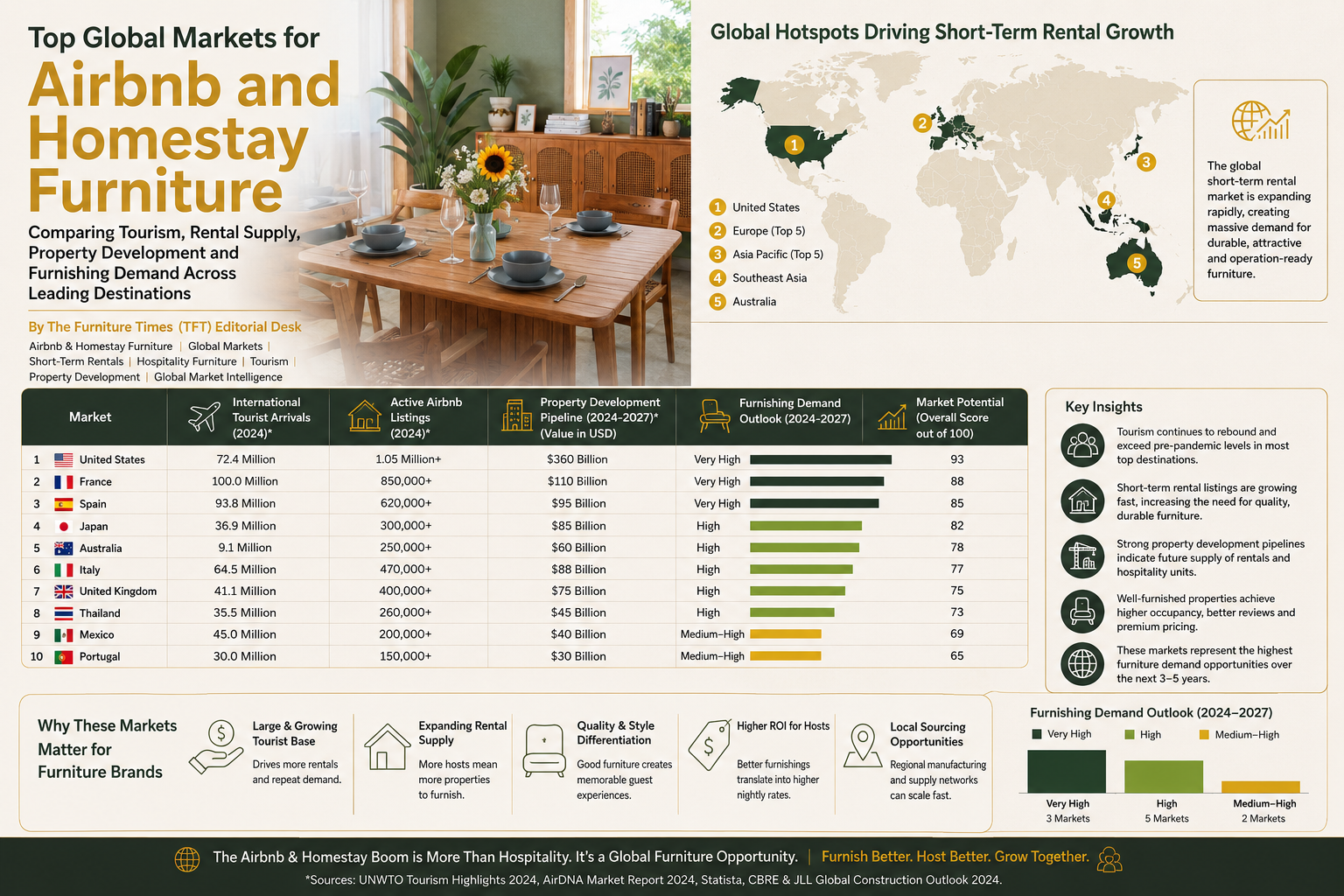
How the Leading Markets Compare
There is no single official ranking of national Airbnb and homestay furniture demand. The category is distributed across residential retail, contract furnishing, tourism investment, interior design and property development.
The following comparison therefore reflects a market-opportunity assessment rather than a precise revenue league table.
| Market | Tourism Strength | Rental-Supply Position | Primary Furniture Opportunity |
|---|---|---|---|
| United States | Very large domestic and international market | One of the world’s largest short-term-rental inventories | Portfolio furnishing, vacation homes, rapid replacement |
| France | World-leading international tourism | Europe’s largest available short-term-rental supply | Refurbishment, compact interiors, regional character |
| Spain | Extremely high tourism volume | Large but increasingly regulated supply | Replacement, premiumisation, outdoor and coastal furniture |
| Italy | Major cultural and leisure destination | Large and growing rental inventory | Heritage-sensitive design, villas, compact urban furnishing |
| United Kingdom | Strong urban and regional tourism | Large professionally managed inventory | Durable apartment furniture, workspaces, portfolio supply |
| Germany | Major business and leisure market | Significant rental supply | Functional interiors, extended-stay and urban furniture |
| Mexico | Major tourism destination | Large coastal and urban rental market | Resort, villa, outdoor and locally inspired furniture |
| Brazil | Fast-growing platform and tourism market | Large geographically diverse supply | New furnishing, outdoor living, regional manufacturing |
| Japan | Rapidly growing inbound tourism | Expanding regulated accommodation market | Compact, multifunctional and high-quality furniture |
| India | Fast-growing platform-origin demand | Large emerging homestay and villa opportunity | Affordable packages, local manufacturing, heritage tourism |
| Thailand | Major Asian tourism destination | Strong villa, condominium and resort rental market | Tropical outdoor, compact condo and hospitality furniture |
| Indonesia | Large archipelago tourism market | Significant villa and homestay supply | Rattan, timber, outdoor and locally crafted furniture |
| Portugal | Strong tourism relative to population | Established and expanding supply | Coastal, urban and refurbishment furniture |
| Greece | High seasonal tourism | Large villa and island-rental inventory | Outdoor, weather-resistant and seasonal-property furniture |
| Australia | Strong domestic travel and holiday-home culture | Significant mature supply | Coastal, durable outdoor and family-property furnishing |
| Malaysia | Growing tourism and property sector | Developing urban and leisure-rental supply | Condominium packages, tropical outdoor and turnkey furnishing |
1. United States: Scale, Diversity and Professional Management
The United States is one of the world’s most important short-term-rental furniture markets because it combines enormous domestic travel, international tourism, high property values and a large inventory of professionally managed accommodation.
The market extends far beyond the major cities. It includes:
- Florida beach homes
- California coastal properties
- Mountain cabins
- Desert villas
- Lake houses
- Ski accommodation
- Suburban family homes
- Urban apartments
- National-park gateways
- Large group-rental properties
This diversity creates demand across almost every product category.
Large vacation homes may need multiple bedroom packages, long dining tables, bunk rooms, outdoor lounges and high-capacity seating. Urban apartments require compact and multifunctional products. Mountain and rural properties favour durable timber aesthetics, while coastal markets need moisture- and corrosion-resistant furniture.
Major Opportunities
- Multi-property furniture standardisation
- Bulk bedroom packages
- Large-capacity dining furniture
- Bunk beds and family sleeping systems
- Outdoor and poolside furniture
- Commercial-quality mattresses
- Rapid replacement networks
- Furniture leasing
- Refurbishment
- Digital furniture asset management
Main Challenge
The United States is highly competitive and increasingly regulated at the state, county and city levels. Furniture suppliers must identify markets where professional operators remain active and where regulatory conditions support continued investment.
The strongest opportunity may come from established property managers who need recurring replacement, portfolio refreshes and dependable regional delivery rather than from one-time speculative hosts.
2. France: Europe’s Largest Short-Term-Rental Supply Market
France combines global tourism leadership with one of the largest short-term-rental inventories anywhere in the world.
AirDNA data reported by Travel Daily News placed France at approximately 1.06 million available short-term-rental listings in June 2026, up 2.9% year over year. This was the largest reported national supply among the major European markets included in the analysis. Travel Daily News/AirDNA
French demand is geographically diverse:
- Paris apartments
- Côte d’Azur properties
- Alpine chalets
- Atlantic coastal homes
- Provence villas
- Countryside cottages
- Wine-region accommodation
- Rural gîtes
- Heritage buildings
Furniture Characteristics
Paris and other dense urban centres create demand for compact furniture, storage beds, slim dining sets and multifunctional workspaces. Rural and coastal properties require larger communal furniture and outdoor products. Alpine accommodation needs durable materials capable of supporting seasonal equipment and heavy winter use.
France also offers strong potential for:
- Heritage-sensitive furniture
- Refurbishment
- Locally made products
- Sustainable furniture
- Repair services
- Replacement upholstery
- Apartment-space optimisation
Main Challenge
Major French cities are tightening rules because of housing pressure. This may restrict new rental supply in some urban areas while increasing demand for professionalisation, regulatory compliance and better asset utilisation among existing operators.
For furniture companies, France should be viewed as both a new-project and replacement market, with particularly strong recurring demand across its large installed property base.
3. Spain: Enormous Tourism Demand, but a Changing Regulatory Landscape
Spain welcomed a record 96.8 million international visitors in 2025, an increase of 3.2% over 2024, according to official data reported by the Associated Press. Foreign visitor spending rose by 6.8% to €134.7 billion. Associated Press
Its major short-term-rental areas include:
- Barcelona
- Madrid
- Málaga
- Costa del Sol
- Alicante
- Valencia
- Mallorca
- Ibiza
- Canary Islands
- Andalusian towns
- Rural tourism destinations
Spain creates substantial demand for balcony sets, outdoor dining, sun loungers, sofa beds, compact apartment furniture and villa packages.
Market Transition
Spain’s available short-term-rental supply reportedly declined by 12.5% year over year by June 2026 following delisting measures introduced in the second half of 2025. Travel Daily News/AirDNA
This illustrates an important market principle: high tourism does not automatically mean unrestricted growth in rental supply.
Nevertheless, Spain remains a major furniture opportunity because its existing accommodation base requires:
- Refurbishment
- Replacement
- Design upgrades
- Climate-resistant outdoor furniture
- Space-efficient urban products
- Portfolio standardisation
- Higher-quality products for premium positioning
The market may shift from rapid supply expansion toward improving the performance, sustainability and quality of existing properties.
4. Italy: Heritage, Urban Apartments and Villa Tourism
Italy combines major cultural cities with countryside estates, coastal homes, lake properties and luxury villas.
AirDNA-derived figures indicated approximately 556,000 available short-term-rental listings in Italy in June 2026, an increase of 3.4% from the previous year.
Important accommodation markets include:
- Rome
- Florence
- Venice
- Milan
- Tuscany
- Amalfi Coast
- Sicily
- Sardinia
- Lake Como
- Puglia
- Italian Alps
Italian properties often require furniture capable of respecting historic architecture while providing modern comfort.
Major Opportunities
- Compact furniture for historic apartments
- Custom products for irregular rooms
- Luxury-villa furnishings
- Outdoor dining and lounging
- Locally crafted furniture
- Heritage-sensitive restoration
- Premium mattresses
- Flexible storage
- Design-led refurbishments
Italy’s design reputation also creates higher expectations. Generic furniture packages may work in budget properties, but premium listings often need a stronger relationship between furniture, architecture and destination identity.
The challenge is balancing visual authenticity with durability, efficient cleaning and replacement availability.
5. United Kingdom: Urban Demand and Professional Portfolio Growth
The United Kingdom had approximately 404,000 available short-term-rental listings in June 2026, representing annual growth of 3.6%, according to AirDNA figures reported by Travel Daily News.
Demand spans:
- London apartments
- Edinburgh accommodation
- Coastal cottages
- Lake District properties
- Cotswolds homes
- Welsh holiday cottages
- Northern Ireland tourism
- Business-travel apartments
- University cities
The UK market is attractive because it combines individual holiday-home owners with professional serviced-accommodation and property-management companies.
Furniture Opportunities
- Durable upholstered furniture
- Compact dining sets
- Sofa beds
- Work-from-anywhere furniture
- Storage solutions
- Family-property packages
- Moisture-resistant coastal products
- Refurbishment
- Furniture leasing
- Rapid replacement
The relatively high cost of property and labour strengthens the need for products that reduce maintenance and housekeeping time.
Suppliers capable of offering consistent product ranges, replacement components and nationwide delivery may be particularly well positioned.
6. Germany: Functional Urban and Extended-Stay Demand
Germany had approximately 363,000 available short-term-rental listings in June 2026, an increase of 2.7% year over year.
Its market benefits from:
- Business travel
- Exhibitions and trade fairs
- Domestic tourism
- Cultural tourism
- Urban stays
- Extended accommodation
- Rural and nature-based travel
Berlin, Munich, Hamburg, Frankfurt and Cologne create demand for urban apartment furniture, while regional tourism supports holiday-home furnishing.
Product Priorities
- Functional design
- Ergonomic workspaces
- Modular storage
- Compact dining furniture
- High-quality sofa beds
- Durable mattresses
- Documented materials
- Repairable components
- Sustainable product systems
German buyers may place particular value on technical specifications, compliance, durability and environmental performance.
Manufacturers able to demonstrate lifecycle value rather than merely low initial prices can find meaningful opportunities in this market.
7. Mexico: Tourism Scale, Villas and Coastal Living
Mexico is one of the world’s leading tourism destinations and one of Latin America’s most important vacation-rental markets.
Its short-term-rental geography includes:
- Mexico City
- Cancún
- Tulum
- Playa del Carmen
- Puerto Vallarta
- Los Cabos
- Oaxaca
- San Miguel de Allende
- Riviera Maya
- Pacific coastal communities
Mexico’s property types range from urban apartments and colonial homes to beachfront condominiums and luxury villas.
Furniture Opportunities
- Tropical outdoor furniture
- Poolside furniture
- Large dining sets
- Villa bedroom packages
- Moisture-resistant products
- Locally crafted timber furniture
- Textiles and decorative accessories
- Outdoor daybeds
- Furniture for high-capacity group rentals
- Refurbishment
The market benefits from proximity to North American travellers and property investors. However, supply chains, coastal conditions, import costs and regional service availability must be considered.
Local production partnerships may offer an advantage by reducing delivery times and making replacement easier.
8. Brazil: A Major Expansion Market
Brazil is emerging as one of the most important platform-growth markets.
Airbnb reported particularly strong first-time-booker acceleration in Brazil during the first quarter of 2026. Nights originating in Brazil grew by more than 20% for the third consecutive quarter. Airbnb Q1 2026 Results
Brazil also recorded more than 9.2 million international arrivals during 2025, according to figures from Embratur and the Ministry of Tourism, representing substantial growth over 2024.
Its market includes:
- Rio de Janeiro
- São Paulo
- Florianópolis
- Salvador
- Recife
- Fortaleza
- Brasília
- Beach destinations
- Eco-tourism regions
- Rural and interior destinations
Brazil has a large domestic-travel base, extensive coastline and diverse accommodation stock.
Strategic Furniture Opportunities
- New-property furnishing
- Balcony and outdoor furniture
- Beach-house packages
- Locally made timber products
- Flexible urban furniture
- Large family dining
- Durable upholstery
- Rapid regional distribution
- Portfolio packages
Brazil’s geography is also a challenge. Serving different states may require decentralised warehousing, local manufacturing partnerships and regional installation networks.
9. Japan: Rapid Tourism Growth and Compact Design Demand
Japan has become one of the world’s most closely watched tourism markets.
It welcomed approximately 36.9 million international visitors in 2024, representing an increase of around 47% over 2023. Airbnb also identified Japan as one of its key expansion markets showing strong first-time-booker growth in early 2026. UN Tourism 2024 Overview,
Major markets include:
- Tokyo
- Osaka
- Kyoto
- Hokkaido
- Fukuoka
- Okinawa
- Ski destinations
- Rural cultural destinations
Japan presents a specialised furniture opportunity because urban spaces are often compact and guest expectations for cleanliness, organisation and quality are high.
Product Opportunities
- Multifunctional furniture
- Foldable dining systems
- Compact storage
- Sofa beds
- Modular sleeping arrangements
- Luggage furniture
- Minimalist interiors
- High-quality mattresses
- Easy-clean surfaces
- Products combining Japanese identity with modern hospitality
Regulation and licensing remain important, particularly for minpaku accommodation. Suppliers should prioritise legal operators and professional management companies.
Japan may favour carefully engineered products that deliver more functionality within limited space.
10. India: One of the Strongest Emerging Opportunities
India combines a large domestic tourism economy, growing international travel, a vast property-development sector and diverse homestay traditions.
Airbnb reported that nights originating in India increased by approximately 50% year over year in the first quarter of 2026. While outbound or origin bookings do not directly measure domestic furniture demand, the figure demonstrates rapidly growing platform familiarity among Indian travellers.
Key markets include:
- Goa
- Mumbai
- Delhi
- Bengaluru
- Jaipur
- Udaipur
- Kerala
- Himachal Pradesh
- Uttarakhand
- Kashmir
- Rajasthan
- North-East India
India’s opportunity is particularly diverse.
Urban serviced apartments need compact and functional furniture. Goa and Kerala require moisture-resistant villa and outdoor products. Mountain properties need durable timber-style furniture and heating-compatible layouts. Heritage destinations create demand for locally inspired design.
Strong Opportunity Areas
- Affordable turnkey packages
- Homestay furniture collections
- Locally manufactured beds and wardrobes
- Durable mattresses
- Balcony and garden furniture
- Regional craft products
- Family accommodation packages
- Furniture for heritage properties
- Repair and refurbishment
- Digital supplier discovery
India’s large manufacturing base offers the potential to build an entire domestic short-term-rental furniture industry rather than depend heavily on imports.
11. Thailand: Tourism Strength and Tropical Hospitality
Thailand remains one of Asia’s most important tourism and accommodation markets.
Its short-term-rental demand is concentrated across:
- Bangkok
- Phuket
- Chiang Mai
- Pattaya
- Koh Samui
- Krabi
- Hua Hin
- Island destinations
The market includes urban condominiums, resort residences, pool villas, guesthouses and boutique homestays.
Furniture Requirements
- Tropical outdoor furniture
- Poolside loungers
- Rattan and synthetic-rattan products
- Compact condominium furniture
- Moisture-resistant cabinetry
- Villa dining packages
- Daybeds
- Durable mattresses
- Balcony furniture
- Easy-clean upholstery
Thailand’s established hospitality supply chain provides access to manufacturers, designers and installers. However, local condominium and short-term-rental regulations require careful market selection.
Furniture businesses should distinguish between legally operated vacation properties, serviced apartments, hotel-licensed accommodation and informal listings.
12. Indonesia: Villas, Homestays and Local Craft Strength
Indonesia combines tourism growth with one of the world’s most distinctive furniture-manufacturing traditions.
Bali dominates international awareness, but opportunities extend to:
- Jakarta
- Yogyakarta
- Lombok
- Bandung
- Surabaya
- Labuan Bajo
- Rural cultural destinations
- Island resorts
Bali’s villas and guesthouses generate demand for timber, rattan, bamboo, outdoor lounges, dining furniture, daybeds and custom pieces.
Indonesia has the advantage of local access to:
- Rattan production
- Timber furniture
- Handcrafted products
- Carving
- Woven materials
- Custom manufacturing
- Outdoor-living design
Major Opportunity
The country can supply both its domestic short-term-rental market and international accommodation projects.
The challenge is ensuring consistency, responsible sourcing, moisture resistance, delivery reliability and contract-grade performance.
Artisan identity alone is not enough. Products must also be easy to maintain, replace and reproduce across multiple properties.
13. Portugal: A High-Intensity Tourism and Rental Market
Portugal has a large short-term-rental sector relative to its population and property base.
AirDNA-derived figures placed its available supply at approximately 121,000 listings in June 2026, an annual increase of 3.9%.
Key markets include:
- Lisbon
- Porto
- Algarve
- Madeira
- Azores
- Coastal towns
- Wine regions
Furniture Opportunities
- Compact city-apartment furniture
- Coastal outdoor products
- Moisture-resistant materials
- Refurbishment
- Locally inspired design
- Convertible furniture
- Balcony sets
- Villa packages
As in Spain and France, regulation is a significant factor. New supply may face restrictions in pressured urban areas.
The existing property base nevertheless creates ongoing demand for replacement, refurbishment and premiumisation.
14. Greece: Seasonal Villas and Outdoor-Living Demand
Greece is a major tourism destination with a substantial short-term-rental inventory.
Approximately 156,000 available listings were reported for June 2026, although supply had declined by 2.5% following regulatory changes introduced in late 2025.
The market includes:
- Athens apartments
- Santorini villas
- Mykonos properties
- Crete
- Rhodes
- Corfu
- Mainland coastal homes
- Island guesthouses
Product Demand
- UV-resistant outdoor furniture
- Wind-stable seating
- Poolside loungers
- Villa bedroom packages
- Compact urban products
- White and natural-material aesthetics
- Outdoor dining
- Seasonal storage solutions
Salt air, intense sunlight and seasonal closure create specific maintenance requirements.
Manufacturers serving Greece need products capable of surviving harsh outdoor conditions and periods of non-use.
15. Australia: Mature Holiday Homes and Domestic Tourism
Australia has a strong culture of domestic travel, coastal holiday homes and nature-based accommodation.
Major markets include:
- Sydney
- Melbourne
- Gold Coast
- Sunshine Coast
- Byron Bay
- Tasmania
- Perth
- Adelaide
- Wine regions
- Rural and coastal destinations
Furniture Opportunities
- Coastal-style interiors
- Outdoor dining
- Weather-resistant seating
- Family accommodation packages
- Bunk beds
- Large dining tables
- Barbecue-area furniture
- Durable mattresses
- Eco-tourism cabin furniture
- Refurbishment
Australian operators often face high labour, delivery and replacement costs. This strengthens demand for durable products, clear warranties and dependable local stock.
The market also offers opportunities for furniture leasing, refurbishment and asset-management services.
16. Malaysia: A Strategic Southeast Asian Growth Market
Malaysia presents a particularly interesting opportunity because it combines tourism, urban condominium development, tropical destinations and a strong domestic furniture-manufacturing base.
The country welcomed slightly more than 25 million international tourists in 2024, an increase of 24.2% from 2023. Reuters
Important short-term-accommodation markets include:
- Kuala Lumpur
- Penang
- Langkawi
- Melaka
- Johor Bahru
- Kota Kinabalu
- Kuching
- Genting Highlands
- Cameron Highlands
- Desaru
- Island destinations
Furniture Opportunities
- Turnkey condominium packages
- Space-efficient apartment furniture
- Tropical outdoor furniture
- Balcony sets
- Homestay bedroom packages
- Family dining furniture
- Durable mattresses
- Rattan and timber products
- Property refurbishment
- Rapid local delivery
Malaysia’s furniture manufacturing capacity allows it to serve local demand while developing export collections for other tropical short-term-rental markets.
The key opportunity is to connect manufacturers more directly with property developers, accommodation operators and furnishing companies.
Fast-Growing Secondary European Markets
Beyond the largest European destinations, several smaller markets are expanding their short-term-rental supply.
In June 2026:
- Poland increased available listings by 7.2%
- Denmark increased by 6.2%
- Norway increased by 8%
- Sweden increased by 8.3%
- Finland increased by 11.3%
- Czech Republic increased by 8.9%
These figures indicate growing opportunity outside the traditional southern European tourism centres.
Northern markets create demand for:
- Cabin furniture
- Durable timber products
- Heating-compatible layouts
- Indoor comfort
- Entryway storage
- Workspaces
- Sustainable materials
- Easy seasonal maintenance
Poland is also strategically important as both a growing accommodation market and a major European furniture-production centre.
Emerging African Opportunities
Africa received approximately 81 million international arrivals during 2025, with regional growth reportedly reaching 8%. Markets such as Morocco, South Africa, Kenya, Tanzania, Rwanda and Egypt are developing tourism accommodation across cities, coastal regions, wildlife destinations and cultural routes.
Potential Furniture Demand
- Safari lodge furniture
- Riad and heritage interiors
- Coastal outdoor furniture
- Eco-lodge products
- Urban apartment packages
- Locally crafted furniture
- Weather-resistant materials
- Repairable products for remote locations
The challenge is often not guest demand but fragmented logistics, access to replacement products and inconsistent installation support.
Local manufacturing and artisan partnerships may offer more resilient solutions than fully imported furnishing packages.
Middle East Opportunities
The Middle East combines luxury tourism, branded residences, religious travel, events and large-scale property development.
Important markets include:
- United Arab Emirates
- Saudi Arabia
- Türkiye
- Egypt
- Qatar
- Oman
- Jordan
Dubai, Abu Dhabi and Saudi tourism-development destinations create demand for premium apartments, villas and serviced residences. Türkiye combines major urban, coastal and cultural tourism.
Product Priorities
- Premium finishes
- Strong visual presentation
- Heat-resistant outdoor furniture
- Large villa packages
- Family and group accommodation
- Luxury mattresses
- Custom furnishing
- Rapid installation
- Documented quality and compliance
Geopolitical risk and changing local regulations remain important considerations, but the region’s property-development pipeline makes it difficult to ignore.
Market Opportunity Depends on Property Type
Furniture companies should not evaluate countries only at national level. The accommodation mix determines the actual product opportunity.
Urban Apartments
Need compact furniture, sofa beds, storage, desks and flexible dining.
Beach Properties
Need moisture-resistant, UV-resistant and corrosion-resistant products.
Luxury Villas
Need premium design, multiple bedroom packages, large dining sets and outdoor lounges.
Rural Homestays
Need locally appropriate, durable and easily repairable furniture.
Mountain Cabins
Need robust timber-style products, equipment storage and warm indoor comfort.
Family Vacation Homes
Need bunk beds, large tables, sufficient seating and easy-clean surfaces.
Serviced Apartments
Need standardisation, workspace furniture and rapid replacement.
Understanding the property mix is more useful than treating all short-term-rental listings as identical units.
Mature and Emerging Markets Require Different Strategies
Mature Markets
Countries such as the United States, France, Spain, Italy and the United Kingdom offer:
- Large installed property bases
- Professional operators
- Strong replacement demand
- Refurbishment opportunities
- Higher compliance expectations
- Intense supplier competition
The best entry strategy may involve distribution partnerships, specialist products, rapid replacement and measurable lifecycle value.
Emerging Markets
Countries such as India, Brazil, Malaysia, Vietnam and several African destinations offer:
- Growing platform adoption
- New property development
- Expanding domestic tourism
- Lower furnishing standardisation
- Opportunities for local production
- Need for turnkey packages
The best strategy may involve education, affordable packages, installation support and partnerships with developers or property managers.
Regulation Can Change the Opportunity Quickly
Short-term-rental regulation has become one of the most important market variables.
Rules may include:
- Registration requirements
- Zoning restrictions
- Limits on rental nights
- Owner-occupancy requirements
- Condominium restrictions
- Fire and safety standards
- Tourism taxes
- Minimum-stay rules
- Limits on new licences
- Removal of non-compliant listings
Spain’s recent supply decline demonstrates how quickly regulatory action can affect available inventory. France and several other European destinations are also increasing controls in pressured urban areas.
Furniture companies should therefore avoid basing investment decisions solely on current listing counts. They should assess whether the market’s regulatory direction supports new supply, professionalisation, conversion or contraction.
Even in contracting markets, however, existing legal properties still need refurbishment, maintenance and replacement.
What Manufacturers Should Prepare For
Furniture manufacturers targeting global Airbnb and homestay markets should develop strategies around specific regional needs.
They should consider:
- Climate-appropriate materials
- Flat-pack or knock-down logistics
- Local assembly networks
- Replaceable components
- Washable covers
- Standard room packages
- Portfolio pricing
- Digital catalogues
- Commercial specifications
- Furniture testing
- Rapid replenishment
- Regional warehousing
- Repair partnerships
- Sustainable end-of-life options
- Multilingual installation and care instructions
A product suitable for a Paris apartment may not work in a Bali villa. A coastal lounger designed for Spain may require different materials in a humid Malaysian environment. A sofa for a large American vacation home may be unsuitable for Tokyo.
Global opportunity requires local product intelligence.
Searchability Will Determine Which Suppliers Benefit
The Airbnb and homestay furnishing market is fragmented across millions of hosts and thousands of local service providers.
Property managers need to find:
- Furniture manufacturers
- Mattress suppliers
- Outdoor-furniture specialists
- Turnkey furnishing companies
- Interior designers
- Installers
- Repairers
- Upholsterers
- Cleaning specialists
- Refurbishment companies
Many capable businesses remain invisible because their websites and catalogues do not clearly identify short-term rentals as a market they serve.
Furniture Industry Search Engine (FISE) can help make these suppliers more discoverable within the global furniture ecosystem.
If you are not searchable, you do not exist in the moment the buyer needs you.
TFT tells their story. FISE helps the world find them. FurniReviewology helps the world trust them.
The Global Opportunity Map Is Still Being Formed
The leading short-term-rental furniture markets are not defined by tourism alone.
France and the United States offer scale. Spain and Italy combine major tourism with extensive existing inventory. Brazil, India and Japan show platform-growth momentum. Thailand, Indonesia, Mexico and Greece create strong villa and outdoor-furniture demand. Malaysia combines tourism growth with manufacturing capability. Northern Europe presents expanding secondary opportunities.
The most promising market will depend on the supplier’s strengths.
A compact-furniture manufacturer may prioritise Japan, France, Germany and the United Kingdom. An outdoor specialist may focus on Spain, Mexico, Thailand, Indonesia, Greece, Australia and Malaysia. A turnkey apartment-furnishing company may target India, Brazil, the United States and Southeast Asia. A repair and refurbishment network may perform best in mature markets with large installed inventories.
There is no single global winner. There are multiple opportunity clusters.
Conclusion
Airbnb and homestay furniture has become a global market shaped by tourism, property development, platform adoption, regulation and the professionalisation of short-term accommodation.
The United States, France, Spain, Italy and the United Kingdom remain major high-volume markets. Mexico, Brazil, Japan, India, Thailand, Indonesia, Portugal, Greece, Australia and Malaysia offer distinctive opportunities based on tourism growth, property type, manufacturing capacity and regional demand.
The future opportunity will not be captured simply by exporting the same furniture package everywhere.
Successful suppliers will understand:
- Who the guests are
- What type of property is being furnished
- How the climate affects materials
- How regulation affects rental supply
- How quickly products must be replaced
- Whether operators buy individually or in portfolios
- How furniture affects photography, reviews and pricing
- Which local services are available after installation
Airbnb and homestay furniture is entering a more professional phase. Markets with growing accommodation demand will require new products, while mature destinations will need replacement, refurbishment and performance upgrades.
For manufacturers, designers and suppliers, the message is clear: short-term-rental furnishing is no longer a local retail opportunity. It is a specialised global hospitality market requiring regional intelligence, operational understanding and visible, searchable supply networks.