
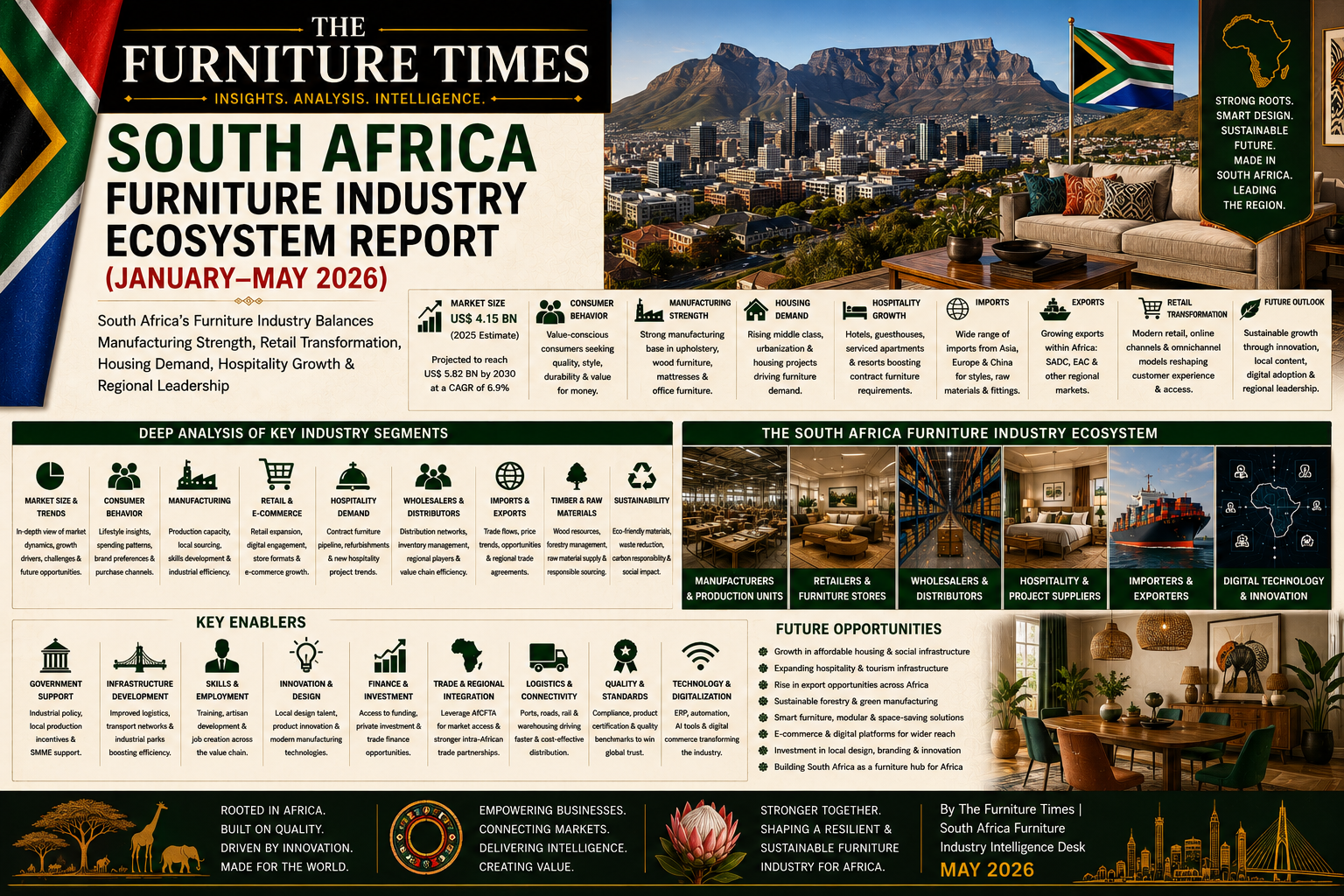
South Africa’s Furniture Industry Balances Manufacturing Strength, Retail Transformation, Housing Demand, Hospitality Growth & Regional Leadership
South Africa Furniture Industry Ecosystem Report (January–May 2026)
Deep Analysis of Market Size, Consumer Behavior, Manufacturing, Retail, Hospitality Demand, Imports, Exports, Wholesalers, Timber Resources, Sustainability & Future Opportunities
By The Furniture Times | South Africa Furniture Industry Intelligence Desk | May 2026
South Africa entered 2026 as Africa’s largest and most developed furniture industry ecosystem.
The country remains the continent’s leading furniture market due to:
established manufacturing infrastructure
developed retail networks
strong logistics systems
hospitality demand
commercial real estate activity
skilled workforce
access to regional markets
Between January and May 2026, South Africa’s furniture sector demonstrated resilience despite economic pressures, power challenges, rising operating costs, and cautious consumer spending.
The industry continues evolving from a traditional furniture market into a broader ecosystem driven by:
Manufacturing
Retail Innovation
Hospitality Growth
Sustainability
Digital Commerce
Regional Exports
AI Discoverability
January–May 2026 Industry Overview
The first five months of 2026 revealed both opportunities and challenges.
Positive Drivers
hospitality sector recovery
tourism growth
residential renovation demand
office redesign projects
e-commerce expansion
regional export opportunities
growing middle-income consumer demand
Key Challenges
electricity costs
logistics expenses
imported furniture competition
inflationary pressure
consumer affordability concerns
rising production costs
Despite these challenges, South Africa remains Africa’s furniture powerhouse.
South Africa Remains Africa’s Largest Furniture Market
South Africa possesses one of the largest furniture retail and manufacturing sectors on the continent.
The industry serves:
residential consumers
commercial offices
hospitality projects
educational institutions
healthcare facilities
government procurement
The market includes:
sofas
beds
mattresses
dining furniture
office furniture
kitchen furniture
outdoor furniture
hospitality furniture
South Africa remains the benchmark against which many African furniture markets are measured.
Johannesburg Drives Furniture Demand
Johannesburg remains the commercial heart of South Africa’s furniture ecosystem.
Demand comes from:
residential developments
office buildings
retail centers
hospitality projects
mixed-use developments
Johannesburg functions as:
The Commercial Capital
Furniture Distribution Hub
Procurement Center
Design Marketplace
The city influences furniture trends across much of Southern Africa.
Cape Town Leads Design & Lifestyle Furniture
Cape Town continues strengthening its reputation as South Africa’s design capital.
The city supports demand for:
premium furniture
luxury interiors
outdoor furniture
hospitality furnishings
bespoke furniture
designer collections
Cape Town’s tourism-driven economy creates strong demand for:
boutique hotel furniture
resort furniture
restaurant furnishings
luxury residential interiors
Durban Strengthens Logistics & Trade
Durban remains strategically important due to:
port infrastructure
import activity
export logistics
manufacturing connectivity
The Port of Durban continues serving as one of Africa’s most important gateways for furniture imports and exports.
Its logistics ecosystem supports:
Regional Distribution
International Trade
Furniture Imports
Manufacturing Supply Chains
Consumer Behavior Is Changing
South African consumers are becoming increasingly value-driven.
Purchasing decisions increasingly focus on:
durability
affordability
functionality
financing options
delivery speed
online reviews
The modern customer journey increasingly follows:
Search → Compare → Review → Visit → Purchase
Consumers are researching more before making major furniture purchases.
Housing Demand Supports Long-Term Growth
Housing remains one of the biggest drivers of furniture demand.
Products seeing continued demand include:
bedroom furniture
wardrobes
mattresses
sofas
dining sets
storage furniture
As residential developments continue expanding, furniture demand remains closely tied to housing activity.
Retail Transformation Continues
South Africa possesses one of Africa’s most developed furniture retail ecosystems.
The market includes:
large furniture chains
independent retailers
online furniture stores
specialist furniture brands
home improvement retailers
Retailers increasingly invest in:
e-commerce
digital catalogs
social media marketing
online financing
customer reviews
virtual consultations
The future retailer must combine:
Showroom Experience
Online Visibility
Delivery Efficiency
Customer Trust
E-Commerce Is Growing Rapidly
Furniture e-commerce continues expanding.
Consumers increasingly use:
online furniture stores
social media platforms
digital marketplaces
comparison websites
Furniture companies increasingly recognize that:
Visibility Creates Sales
Customers increasingly discover products online before entering physical stores.
Manufacturing Remains a Strategic Strength
South Africa possesses one of Africa’s most developed furniture manufacturing sectors.
Key manufacturing segments include:
upholstered furniture
mattresses
office furniture
kitchen furniture
cabinetry
hospitality furniture
Manufacturers benefit from:
skilled labor
established supply chains
access to timber resources
regional export opportunities
However, they face growing competition from imported products.
Timber Resources Support Production
South Africa benefits from substantial forestry resources.
The country produces:
pine
eucalyptus
hardwood materials
These resources support:
furniture manufacturing
cabinetry
wood processing
panel production
Local timber remains an important competitive advantage.
Imports Continue Increasing Competition
South Africa imports furniture from:
China
Vietnam
Malaysia
Indonesia
India
Türkiye
Europe
Imported products create intense competition, particularly in:
budget furniture
ready-to-assemble furniture
mass-market categories
Manufacturers increasingly compete through:
Quality
Service
Customization
Local Delivery
Hospitality Furniture Is One of the Strongest Opportunities
Tourism remains a major furniture demand driver.
Demand comes from:
hotels
resorts
lodges
guest houses
restaurants
wine estates
safari destinations
Products in demand include:
hotel beds
restaurant seating
outdoor furniture
hospitality sofas
lounge furniture
custom joinery
South Africa’s tourism industry continues creating opportunities for contract furniture suppliers.
Outdoor Furniture Continues Growing
Outdoor living remains deeply connected to South African lifestyles.
Demand remains strong for:
patio furniture
garden seating
outdoor dining
poolside furniture
resort loungers
Popular materials include:
aluminium
teakwood
synthetic wicker
rope furniture
weather-resistant upholstery
Outdoor furniture remains one of the fastest-growing lifestyle categories.
Office Furniture Continues Evolving
Office furniture demand remains supported by:
corporate offices
co-working spaces
educational institutions
government offices
Demand is shifting toward:
ergonomic chairs
adjustable desks
collaborative furniture
modular workstations
Employee wellbeing increasingly influences purchasing decisions.
Sustainability Is Becoming a Competitive Advantage
Environmental awareness is increasing among consumers, hospitality operators, and corporate buyers.
Demand is growing for:
FSC-certified wood
sustainable furniture
recyclable materials
low-emission products
durable designs
Sustainability is becoming part of procurement criteria.
Businesses that demonstrate responsible sourcing gain stronger credibility.
Regional Export Opportunities Continue Growing
South Africa serves as a furniture supplier to:
Namibia
Botswana
Zambia
Zimbabwe
Mozambique
Lesotho
Eswatini
The country’s infrastructure and manufacturing capabilities position it as Southern Africa’s furniture hub.
Future export opportunities may expand further under:
African Continental Free Trade Area (AfCFTA)
AfCFTA Could Transform Regional Furniture Trade
The African Continental Free Trade Area has the potential to:
reduce trade barriers
expand market access
encourage manufacturing
support regional sourcing
For South African furniture companies, AfCFTA represents one of the most significant long-term opportunities.
Digital Visibility Is Becoming Critical
South African consumers increasingly search online for:
furniture stores Johannesburg
luxury furniture Cape Town
office furniture South Africa
hospitality furniture suppliers
outdoor furniture South Africa
Businesses that are not visible online risk becoming invisible to future customers.
The industry increasingly rewards:
Searchability
Discoverability
Online Authority
Customer Reviews
Smart Furniture & Technology Trends
Technology is increasingly influencing furniture demand.
Growth opportunities include:
ergonomic workstations
adjustable desks
smart office furniture
technology-enabled hospitality furniture
home office solutions
The future furniture ecosystem will increasingly integrate technology into everyday living.
Future Opportunities Through 2035
The strongest opportunities include:
Hospitality Furniture
Tourism growth supports demand.
Housing Furniture
Urban development continues expanding.
Outdoor Furniture
Lifestyle trends remain favorable.
Office Furniture
Corporate transformation continues.
Regional Exports
AfCFTA expands opportunities.
Sustainable Furniture
Demand continues rising.
Digital Commerce
Online furniture discovery will accelerate.
The Furniture Times Industry Insight
South Africa’s furniture industry between January and May 2026 revealed one important reality:
The country remains Africa’s furniture leader.
Its strengths include:
manufacturing
retail
logistics
design
hospitality
regional influence
Future winners will combine:
Manufacturing Excellence
Digital Visibility
Sustainability
Customer Trust
Regional Expansion
Final Thought
South Africa entered 2026 as Africa’s most mature furniture ecosystem.
The country possesses:
manufacturing capability
strong retail infrastructure
tourism demand
timber resources
regional trade advantages
growing digital adoption
However, businesses must navigate:
imported competition
cost pressures
infrastructure challenges
changing consumer behavior
The future South African furniture ecosystem will increasingly reward businesses that become:
Visible
Trusted
Sustainable
Discoverable
Export-Ready
Customer-Focused
Because the future of South Africa’s furniture industry is no longer only about manufacturing products.
It is about building a connected ecosystem that can lead Africa’s next generation of furniture growth.
