MATECIA 2026 Set to Open at Yashobhoomi
Delhi, Bringing India’s Furniture, Interiors and Building-Materials Ecosystem Together
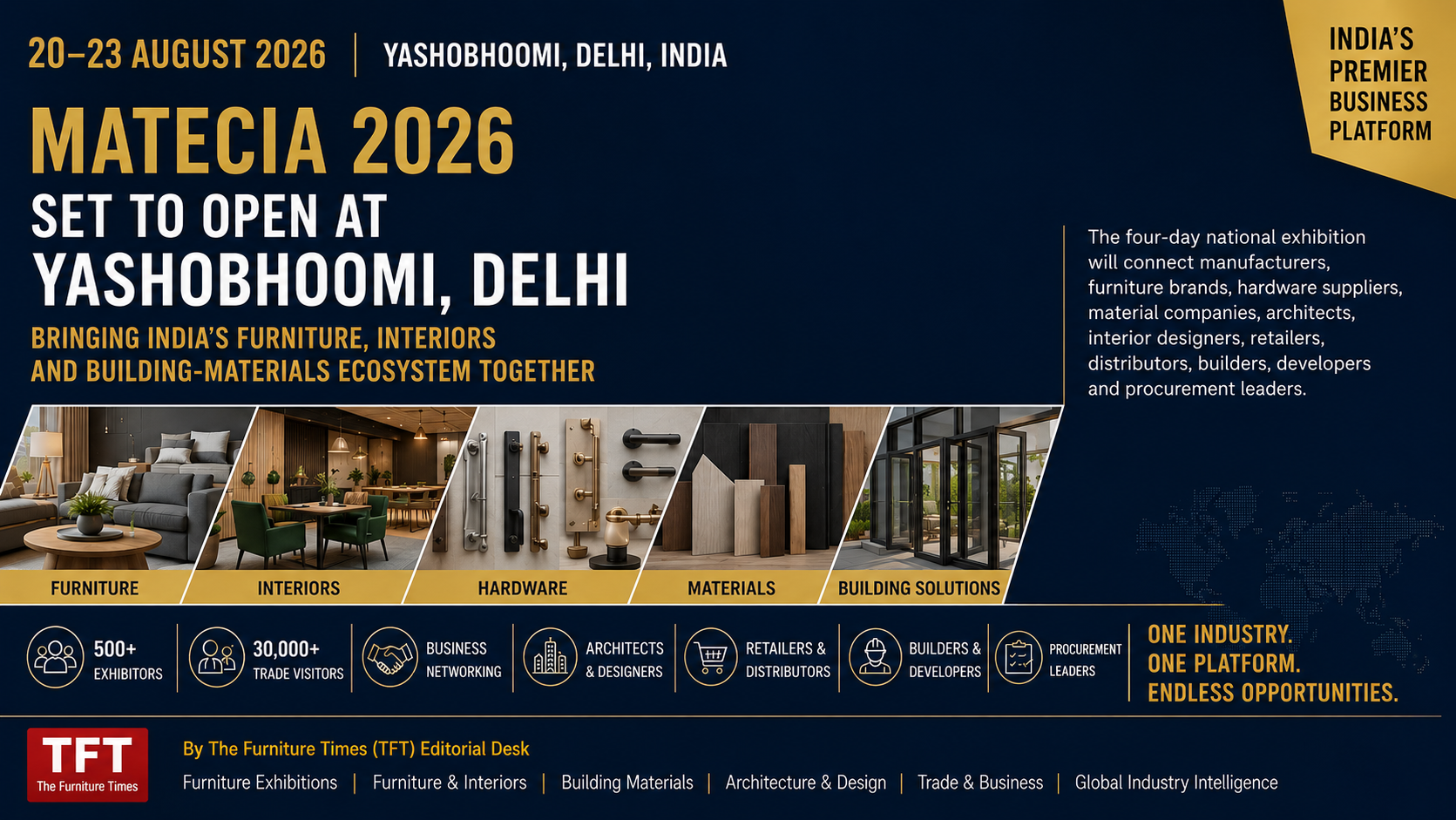
The four-day national exhibition from 20–23 August 2026 will connect manufacturers, furniture brands, hardware suppliers, material companies, architects, interior designers, retailers, distributors, builders, developers and procurement leaders
By The Furniture Times (TFT) Editorial Desk | Furniture Exhibitions | Furniture & Interiors | Building Materials | Architecture & Design | Trade & Business | Global Industry Intelligence
India’s furniture, interiors and building-materials community is preparing for one of its most important national business gatherings as MATECIA 2026 gets ready to open at Yashobhoomi—India International Convention and Expo Centre in Dwarka, Delhi—from 20 to 23 August 2026.
The four-day exhibition is positioned as a meeting point for the industries that collectively shape homes, offices, hotels, restaurants, retail environments, institutional buildings and large real-estate developments.
MATECIA describes itself as one of India’s leading building-material and interior exhibitions. Its purpose extends beyond displaying finished products. The event is designed to connect the complete value chain—including manufacturers, raw-material suppliers, component companies, furniture businesses, retailers, distributors, architects, interior designers, developers, contractors, consultants and procurement professionals.
The 2026 National Edition arrives at an important time for India’s furniture and interiors economy.
Urban growth, hospitality investment, office transformation, premium housing, branded retail, domestic manufacturing, new quality regulations and the rapid digitisation of procurement are changing how products are designed, specified, distributed and purchased.
Against this backdrop, MATECIA 2026 can serve as more than a trade fair. It can become a place where the industry evaluates new materials, understands changing customer expectations, develops dealer networks, compares technologies, discovers manufacturing partners and discusses the future direction of Indian furniture and interior products.
According to the official event website, MATECIA is a flagship initiative of Bigsea Marcom India Pvt. Ltd., backed by 25 years of involvement in the industry. MATECIA official website
MATECIA 2026 event details
| Event | MATECIA National Event 2026 |
|---|---|
| Dates | 20–23 August 2026 |
| Duration | Four days |
| Venue | Yashobhoomi, India International Convention and Expo Centre |
| Location | Dwarka, Delhi, India |
| Industry focus | Furniture, interiors, building materials, surfaces, hardware, manufacturing and design |
| Organiser | Bigsea Marcom India Pvt. Ltd. |
| Format | Exhibition, conferences, presentations, networking and recognition programmes |
| Official website | www.matecia.com |
Visitors should confirm admission requirements, exhibition hours, conference schedules and updated programme information directly through the organiser’s website before travelling.
From product exhibition to industry marketplace
The traditional purpose of a trade exhibition was straightforward: suppliers displayed products, buyers walked through the halls, and sales teams collected contact details.
The modern furniture and building-materials business is more complex.
A product may be influenced by dozens of decision-makers before it reaches a project. An architect may propose the design. An interior designer may choose the finish. A consultant may examine performance. A developer may approve the budget. A procurement team may evaluate suppliers. A contractor may manage installation. A dealer may handle regional availability, while an end user ultimately judges performance.
MATECIA’s relevance comes from bringing these connected but often fragmented stakeholders onto the same platform.
The event is intended to connect:
- Manufacturers with dealers and distributors.
- Product companies with architects and designers.
- Furniture brands with builders and developers.
- Raw-material suppliers with OEM manufacturers.
- Hardware companies with kitchen, wardrobe and furniture producers.
- Machinery businesses with factories seeking capacity upgrades.
- Retailers with new domestic and international brands.
- Procurement professionals with project-ready suppliers.
- Designers with emerging materials and manufacturing technologies.
- Start-ups and smaller manufacturers with national market opportunities.
This cross-industry approach is important because the furniture sector does not operate in isolation. Furniture depends on panels, timber, hardware, adhesives, coatings, machinery, textiles, surfaces, lighting, flooring, doors, electrical systems and design services.
MATECIA gives these interconnected industries an opportunity to see themselves as part of one larger ecosystem.
A wide product spectrum
The organiser identifies a broad range of exhibition categories, demonstrating that the show is designed to cover both finished interior products and the materials, components and technologies behind them.
The published product categories include:
- Hardware, fittings and related solutions.
- Furniture, wardrobes, rugs and carpets.
- Laminates.
- Plywood.
- Particleboard.
- Medium-density fibreboard.
- Wood-plastic composites.
- Acrylic materials.
- Decorative veneers and surfaces.
- Furniture and woodworking machinery.
- Flooring.
- Ceilings and wall features.
- Lumber and timber.
- Doors and windows.
- Premium interior products.
- Bath products, faucets and sanitaryware.
- Paints, coatings and adhesives.
- Lighting and electrical products.
- Kitchens and cabinets.
- Countertops and appliances.
- Tiles, marble and stone.
- High-pressure laminates.
- Aluminium composite panels.
- Façade systems.
- Louvers and cladding.
This product diversity gives visitors the ability to examine individual products and understand how they interact within a complete interior or building project. MATECIA exhibitor and product information
Furniture takes a strategic place within MATECIA
For the furniture industry, MATECIA presents opportunities across several layers of the value chain.
Finished furniture manufacturers
Furniture brands and manufacturers can present products to retailers, distributors, architects, hospitality buyers, developers and project companies.
Relevant categories may include:
- Residential furniture.
- Office furniture.
- Hospitality furniture.
- Institutional furniture.
- Modular furniture.
- Wardrobes.
- Kitchens.
- Storage systems.
- Contract furniture.
- Premium furniture.
- Custom-made solutions.
The event gives manufacturers an opportunity to demonstrate not only design, but also materials, production capability, customization, lead times, quality systems and project experience.
Furniture components and hardware suppliers
Modern furniture depends on the performance of components that consumers rarely see.
These can include:
- Hinges.
- Drawer slides.
- Connectors.
- Fasteners.
- Wardrobe mechanisms.
- Kitchen systems.
- Lift-up fittings.
- Sliding-door systems.
- Castors.
- Locks.
- Handles.
- Gas springs.
- Table mechanisms.
- Bed fittings.
- Cabinet accessories.
- Furniture lighting.
- Security solutions.
Component companies can use the exhibition to demonstrate how better hardware improves product safety, durability, functionality and user experience.
Panel and surface manufacturers
Wood-based panels and decorative surfaces influence furniture appearance, production efficiency, durability and price.
Exhibitors across laminates, veneers, plywood, MDF, particleboard, WPC and acrylic materials can reach:
- Furniture factories.
- Interior contractors.
- Modular-furniture manufacturers.
- Kitchen companies.
- Wardrobe producers.
- Architects.
- Designers.
- Retailers.
As Indian consumers demand more colour, texture, personalization and finish options, surface suppliers are becoming increasingly important partners in furniture-product development.
Machinery and manufacturing technology
Indian furniture manufacturing is moving gradually from craft-dominated and highly fragmented production toward a more mixed landscape that includes automated, semi-automated and digitally controlled factories.
Machinery exhibitors can connect with companies evaluating:
- CNC production.
- Panel-sizing equipment.
- Edge-banding machinery.
- Drilling and boring systems.
- Sanding.
- Surface finishing.
- Dust extraction.
- Material handling.
- Packaging.
- Upholstery production.
- Digital manufacturing.
- Factory software.
- Quality-control systems.
Manufacturers should examine machinery not only for production speed but also for accuracy, repeatability, waste reduction, worker safety, energy consumption and after-sales support.
Who is expected to visit?
MATECIA’s published visitor profile illustrates the event’s emphasis on professional and trade participation.
According to the organiser:
- 48% of visitors are represented by dealers, distributors, retailers, showroom owners, manufacturers, suppliers and service companies.
- 29% include architects, architectural consultants, interior designers, product designers, high-net-worth individuals, corporate clients and design enthusiasts.
- 13% include builders, OEMs, engineers, consultants, government agencies, procurement heads and project-management consultants.
- 10% include students, international buyers and B2C home-material buyers.
The broader visitor list includes:
- Architects.
- Interior designers.
- Furniture designers.
- Product designers.
- Dealers.
- Distributors.
- Buying and selling agents.
- Showroom owners.
- OEMs.
- Manufacturers.
- Importers.
- Consultants.
- Builders and developers.
- Civil engineers.
- Contracting companies.
- Project-management consultants.
- Façade and roofing consultants.
- Machinery buyers.
- Government departments.
- Green-building professionals.
- Lighting consultants.
- MEP consultants.
- Project managers.
- Procurement heads.
- Structural engineers.
- Raw-material buyers.
- Product specifiers.
This mix creates the possibility of multiple business conversations within one event. A hardware company could meet an OEM, designer, retailer and developer on the same day—but the message presented to each must be different.
Building on the scale of MATECIA 2025
The organiser reports that the fifth National Edition, held from 21 to 24 August 2025, covered approximately 450,000 square feet and featured more than 300 exhibitors.
MATECIA says that the previous event attracted more than 55,000 business visitors from over 600 Indian towns and cities and 14 countries.
These are organiser-reported figures for the 2025 edition, not attendance projections for 2026. Nevertheless, they provide an indication of the platform’s recent scale and national reach. MATECIA National Event information
The 2026 edition’s return to Yashobhoomi reinforces the event’s national ambition.
Why Yashobhoomi matters
Yashobhoomi gives exhibitors the ability to build more than conventional product stands.
The venue’s large exhibition and convention facilities can support:
- Full-scale product installations.
- Furniture environments.
- Material libraries.
- Kitchen and wardrobe mock-ups.
- Façade presentations.
- Machinery demonstrations.
- Interior experience zones.
- Conference programmes.
- Business meetings.
- Brand launches.
Furniture and interior products are difficult to understand through a brochure alone.
Buyers often need to touch a surface, operate a hinge, sit on a chair, inspect a drawer, assess a finish, examine edge quality or understand the scale of a complete installation.
A physical exhibition allows products to be evaluated through direct experience.
Conferences expand the event beyond exhibition stands
MATECIA’s published programme structure includes multiple conferences and concurrent initiatives.
The organiser highlights:
- Four large conferences.
- More than 300 speakers.
- An architecture event.
- Live product presentations.
- A retailers and dealers conference.
- A furniture conference.
- A materials and technology conference.
Programme details may change, so visitors should consult the current schedule. However, the conference structure demonstrates that MATECIA is intended to combine product discovery with industry discussion.
The associated platforms listed by the organiser include:
- THE WADE ASIA.
- India Interior Retailing Conference and Awards.
- India Furniture Conclave.
- Material and Technology Conclave.
- SR Architecture Event.
India Furniture Conclave creates a dedicated industry dialogue
The India Furniture Conclave is particularly relevant to The Furniture Times audience.
According to MATECIA, the conclave aims to help participants understand trends, manufacturing processes, best practices, materials, challenges and growth opportunities within furniture and interiors.
It is intended for:
- Furniture manufacturers.
- OEMs.
- Retailers.
- Designers.
- Buyers.
- Luxury-solution providers.
- Hardware companies.
- Kitchen companies.
- Wardrobe businesses.
- Wood-panel companies.
Published discussion themes include:
- What consumers want from modern kitchens.
- Customization and personalization.
- New customer expectations.
- The current furniture market in India.
- Industry growth, challenges and opportunities.
- Whether brand image helps furniture manufacturers.
- The role of hardware, fittings and security solutions.
- Changing wardrobe requirements.
- Building brands for the next decade.
- The perspective of architects and builders on luxury kitchens, wardrobes and furniture.
These topics reflect the industry’s transition from basic product supply to design-led, brand-led and technology-supported business.
The conclave also creates a space to discuss issues that may not be visible on exhibition stands, including:
- Profitability.
- Market positioning.
- Consumer behaviour.
- Compliance.
- Production capacity.
- Dealer relationships.
- Brand development.
- Sustainability.
- Digital visibility.
- Risk management.
THE WADE ASIA strengthens the architecture connection
Architecture and design are integrated into the MATECIA National Edition through THE WADE ASIA and the WADE ArchiDesign National Competition.
THE WADE ASIA was founded in 2016 by Verticaa Dvivedi and Maddhu Chowdhury with the purpose of strengthening the position and recognition of women in architecture and design.
The platform reports that it has recognized more than 1,000 women through awards and features, hosted more than 100 talks and networking initiatives, and developed a pan-India community of architects and designers.
Its presence is commercially relevant to exhibitors because architects and interior designers frequently influence material and product selection long before procurement begins.
A strong relationship with designers can help a manufacturer enter:
- Residential projects.
- Hospitality developments.
- Offices.
- Retail interiors.
- Institutional buildings.
- Luxury homes.
- Public spaces.
The architecture component gives brands an opportunity to explain the design thinking, technical performance and project applications behind their products.
India Interior Retailing connects brands with channels
The India Interior Retailing Conference and Awards is aimed at dealers, distributors, retailers and showroom operators in the building-materials and interior-products industries.
This channel deserves attention.
Even as online commerce expands, dealers and showrooms remain central to India’s furniture and materials economy. They provide:
- Regional access.
- Local market knowledge.
- Installation coordination.
- Product demonstrations.
- Customer credit.
- After-sales service.
- Inventory support.
- Relationships with architects and contractors.
For manufacturers seeking national expansion, finding the right channel partners can be more valuable than collecting thousands of unqualified contacts.
The conference can help brands understand what retailers need in terms of:
- Margins.
- Territory protection.
- Display support.
- Marketing materials.
- Product training.
- Stock availability.
- Lead times.
- Warranty handling.
- Digital leads.
- After-sales response.
What visitors should look for at MATECIA 2026
The exhibition can provide enormous information, but visitors need a plan.
Furniture retailers and distributors
Retailers should identify:
- New brands.
- Exclusive product opportunities.
- Fast-moving categories.
- Regional distribution rights.
- Commercial margins.
- Minimum-order requirements.
- Stock availability.
- Product warranties.
- Marketing support.
- Replacement-part policies.
Architects and interior designers
Design professionals should examine:
- Material performance.
- Technical documentation.
- Sample availability.
- Customization.
- Project lead times.
- Compliance.
- Sustainability evidence.
- Installation systems.
- BIM and CAD resources.
- Manufacturer responsiveness.
Manufacturers
Furniture and interior-product manufacturers should explore:
- New materials.
- Alternative suppliers.
- Machinery.
- Hardware.
- Process automation.
- Component standardization.
- Finishing technology.
- Quality-control tools.
- Packaging.
- Manufacturing partnerships.
Builders and developers
Developers should assess:
- Project capacity.
- Multi-site supply capability.
- Standardization.
- Mock-up support.
- Installation resources.
- Warranty management.
- Delivery scheduling.
- Vendor stability.
- Technical documentation.
- Lifecycle cost.
Hospitality procurement professionals
Hotels and restaurants should look beyond appearance and examine:
- Commercial-use suitability.
- Maintenance.
- Replaceable parts.
- Fabric and finish performance.
- Cleaning requirements.
- Warranty exclusions.
- Refurbishment options.
- Lead times.
- Product consistency across multiple properties.
What exhibitors should do before the doors open
Exhibition success depends heavily on preparation.
A beautiful stand can attract attention, but it does not automatically generate business.
Exhibitors should ensure that their teams can answer:
- What problem does the product solve?
- Who is the ideal buyer?
- What makes it different?
- What is the price position?
- What production capacity is available?
- What are the lead times?
- Which regions are served?
- What certifications or test reports are available?
- Can products be customized?
- Is dealer or distributor support offered?
- Are project references available?
- Who manages follow-up after the event?
Every displayed product should have a clear identity.
Useful information can include:
- Product name.
- Model number.
- Materials.
- Dimensions.
- Finish options.
- Intended application.
- Technical data.
- Warranty.
- Maintenance.
- Contact or QR code.
Visitors should not have to photograph an unidentified product and hope to find it later.
The real exhibition begins after the exhibition
One of the greatest weaknesses in trade-fair participation is poor follow-up.
Companies invest in:
- Stand rental.
- Construction.
- Samples.
- Travel.
- Hotels.
- Staff.
- Printing.
- Hospitality.
- Transportation.
- Promotions.
Yet many collect business cards and allow them to sit unanswered after the event.
Every contact should be classified according to:
- Buyer type.
- Product interest.
- Project stage.
- Order potential.
- Geographic market.
- Urgency.
- Follow-up responsibility.
- Next action.
High-potential enquiries should receive a personalized response. Retailers may need price lists and territory information. Architects may need samples and technical files. Developers may need project references and quotations.
A generic “thank you for visiting” message is rarely enough.
MATECIA arrives as BIS compliance changes furniture manufacturing
The 2026 event also takes place during a major regulatory transition for India’s furniture sector.
Six furniture categories have been brought under compulsory Indian Standards through the Furniture Quality Control Order:
- Work chairs.
- General-purpose chairs and stools.
- Tables and desks.
- Storage units.
- Beds.
- Bunk beds.
Manufacturers, suppliers, importers and buyers should therefore use industry gatherings to discuss:
- Product classification.
- BIS licensing.
- Testing.
- Factory readiness.
- Model grouping.
- Component control.
- Traceability.
- Marking.
- Supplier documentation.
Compliance is becoming part of market access.
Furniture brands exhibiting notified categories should ensure that their certification claims are accurate and supported. Visitors should distinguish between a product being “tested,” an application being filed and a valid BIS licence covering the actual model and manufacturing location.
Sustainability will be visible—but evidence matters
Exhibitions increasingly feature products described as green, eco-friendly, natural, recycled or sustainable.
These terms can be meaningful, but buyers should ask for evidence.
Relevant questions include:
- What percentage of the product is recycled?
- Is the timber responsibly sourced?
- Can components be replaced?
- Can materials be separated at end of life?
- Are repair services available?
- What is the expected lifespan?
- Are environmental declarations available?
- Can the supplier prove the claim?
- Is the packaging recyclable?
- What happens to damaged products?
The next stage of sustainable furniture and interiors will depend less on slogans and more on traceable information.
Digital visibility must extend the value of the exhibition
A four-day exhibition creates concentrated physical visibility. However, buyers continue searching after the stands are dismantled.
They may search for:
- Furniture manufacturers in India.
- Hardware suppliers.
- Wardrobe fittings.
- Hotel furniture.
- Office chairs.
- Kitchen systems.
- MDF suppliers.
- Decorative surfaces.
- Interior-material brands.
- Regional distributors.
If an exhibitor cannot be found after the event, much of the opportunity is lost.
Companies should ensure that their:
- Websites are updated.
- Product pages are complete.
- Contact details are correct.
- Product photographs are searchable.
- Specifications are available.
- Exhibition announcements are published.
- News coverage is secured.
- Social channels are active.
- Business listings are consistent.
- Follow-up content is planned.
This is where TFT and FISE can extend the value of trade exhibitions.
The Furniture Times can document the stories, launches, companies and industry intelligence emerging from MATECIA. Furniture Industry Search Engine can help the market find manufacturers, suppliers and products long after the event closes.
FurniReviewology can strengthen the trust layer by helping buyers understand market experience, service reliability and customer feedback.
India’s furniture ecosystem needs more connected platforms
India possesses a vast network of:
- Skilled furniture makers.
- Interior-product manufacturers.
- Hardware suppliers.
- Timber businesses.
- Panel companies.
- Machinery providers.
- Designers.
- Contractors.
- Dealers.
- Retailers.
- Installers.
- Artisans.
- Technology businesses.
Many of these businesses are capable but difficult to discover outside their local markets.
An exhibition such as MATECIA gives them a temporary national platform. The larger opportunity is to convert exhibition visibility into permanent discoverability.
Every participating manufacturer should ask:
- Can an architect find our technical information?
- Can a retailer understand our distribution offer?
- Can a developer verify our project capacity?
- Can a buyer locate us after the exhibition?
- Can search engines understand our products?
- Can AI systems identify and recommend our business?
- Can the market verify our reputation?
Physical presence and digital presence must now work together.
Four days that can influence years of business
MATECIA 2026 is expected to place furniture, hardware, surfaces, building materials, machinery, architecture and interior design under one roof from 20 to 23 August at Yashobhoomi in Delhi.
For visitors, it offers an opportunity to compare products, meet suppliers and understand where the market is heading.
For exhibitors, it offers access to the people who influence distribution, specification, projects and purchasing.
For the broader industry, it offers a chance to discuss some of the most important questions affecting India’s future:
- How can manufacturing become more competitive?
- How can quality and compliance improve?
- How can Indian brands expand nationally and globally?
- How can smaller manufacturers gain visibility?
- How can retailers remain relevant?
- How can architects access better product information?
- How can sustainability claims become more credible?
- How can the furniture ecosystem become easier to search and trust?
The exhibition will last four days, but the commercial relationships, intelligence and ideas created there could influence business decisions for years.
The Furniture Times (TFT) & Furniture Industry Search Engine (FISE)
“TFT tells their story. FISE helps the world find them.”
FurniReviewology helps the world trust them.
The furniture industry ecosystem is a $1 trillion industry ecosystem.
Visit. Discover. Connect. Get visible. Turn four exhibition days into years of opportunity across the global furniture ecosystem.

Related Posts
IFMAC WOODMAC 2026 Set to Showcase the Future of Woodworking and Furniture Manufacturing in Indonesia

CBD Guangzhou 2026 Expands Global Focus as China Strengthens Its Position in the Future Furniture & Interior Design Ecosystem