The Key Pages Economy: Why Most Furniture Businesses Are Invisible in the Search Era
Global Digital Visibility Intelligence Report | The Furniture Times
“The Key Pages Economy: Why Most Furniture Businesses Are Invisible in the Search Era”
Deep Analysis of Website Infrastructure, Search Visibility, AI Discovery & Digital Brand Positioning in the Global Furniture Industry Ecosystem
By Togbega Dortor Dr. Bilal Ahmad Bhat
Founder of Markative Domains
The global furniture industry is entering one of the most important digital transformations in its history.
For decades, furniture businesses focused mainly on:
showrooms
physical retail
exhibitions
catalogs
walk-in customers
distributors
trade relationships
But today, the global economy is rapidly shifting toward:
digital discovery.
Modern customers increasingly search online before they:
buy furniture
contact suppliers
compare brands
request quotations
visit showrooms
trust companies
And yet, despite this reality:
millions of furniture businesses remain digitally invisible.
One of the biggest reasons is surprisingly simple:
they do not have properly structured key pages.
The article “How to Identify Key Pages for Your Furniture Business” explains that important website pages — including homepage, category pages, product pages, landing pages, and blogs — directly support business goals and search visibility.
But the deeper issue goes far beyond SEO.
The modern furniture industry is now entering:
the Key Pages Economy.
The Invisible Crisis in the Furniture Industry
Across:
Asia
Africa
Middle East
Europe
Latin America
millions of furniture businesses still operate with:
outdated websites
incomplete pages
poor digital structure
weak product visibility
no content systems
no search optimization
Many companies still believe:
“having a website is enough.”
But in the modern AI-driven search economy,
a website without proper page infrastructure becomes:
digitally invisible.
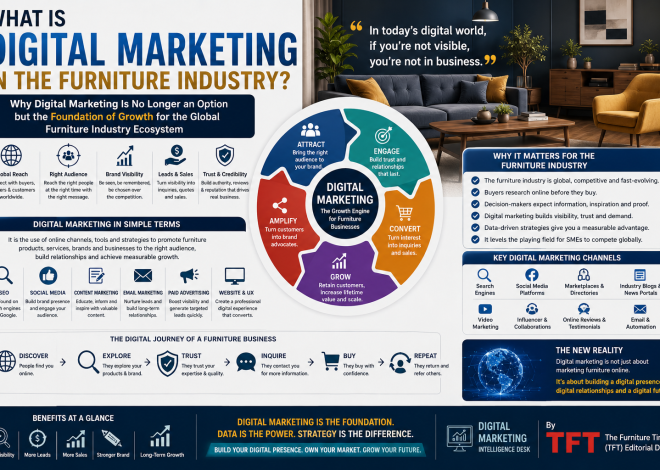
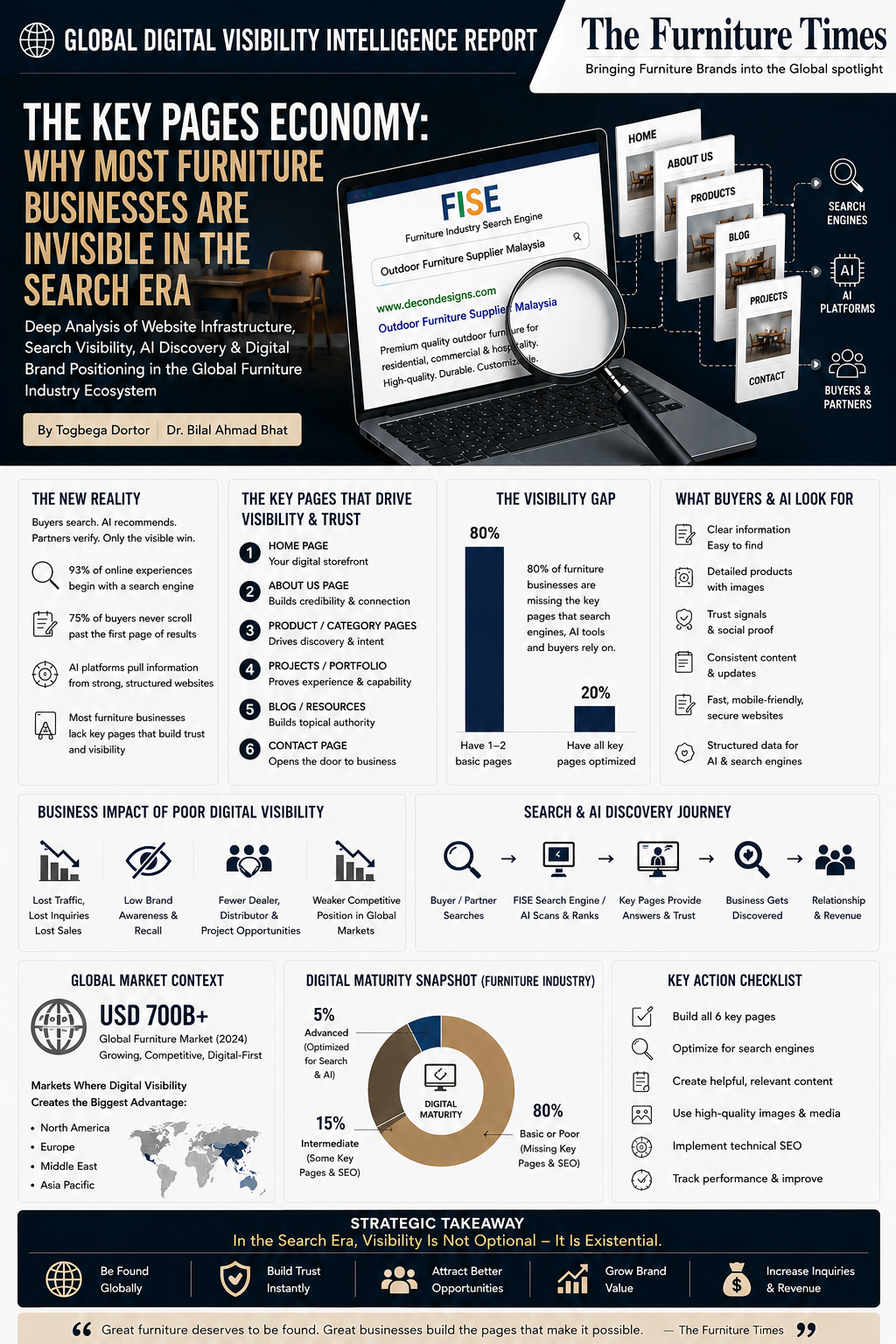
What Are Key Pages?
Key pages are the core digital assets that define:
discoverability
trust
visibility
conversion
authority
customer navigation
These include:
homepage
product pages
category pages
about pages
contact pages
blog pages
landing pages
service pages
location pages
Each page acts like:
a digital doorway into the business.
Why Most Furniture Websites Fail
Many furniture websites fail because they are designed like:
digital brochures
instead of:
search ecosystems.
Common problems include:
poor product organization
missing category structures
weak descriptions
low-quality content
lack of customer intent understanding
no AI search optimization
poor mobile experience
As AI search evolves, these weaknesses become even more dangerous.
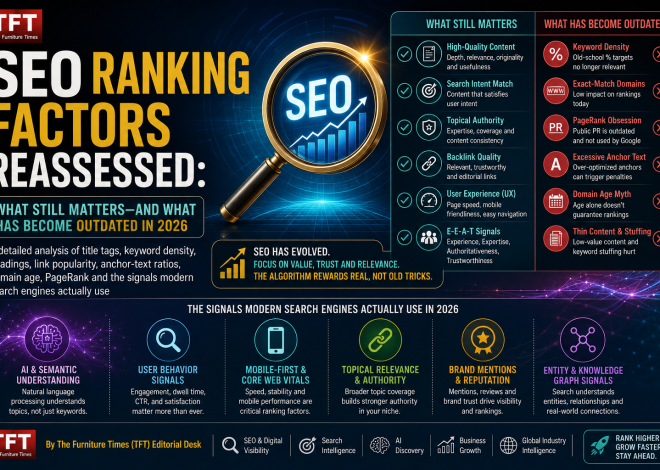
The AI Search Revolution Is Changing Everything
The digital landscape is no longer controlled only by traditional search rankings.
AI systems increasingly:
summarize information
recommend brands
answer customer questions
cite trusted websites
prioritize structured content
Furniture Fuel explains that businesses must now optimize not only for rankings but also for AI citations and AI-generated search experiences.
This changes the game completely.
Search Is No Longer Just Search
Search is becoming:
predictive
conversational
intelligent
contextual
Modern customers search using:
voice
natural language
AI assistants
image-based discovery
This means furniture businesses must rethink:
website architecture itself.
Product Pages Are Becoming Digital Salespeople
One of the biggest transformations happening globally:
product pages are becoming sales infrastructure.
Furniture product pages no longer simply display products.
They now must:
educate customers
answer questions
build trust
explain dimensions
describe materials
visualize usage
reduce hesitation
improve conversions
Research increasingly shows that detailed product content strongly influences buyer confidence and conversion behavior.
Why Furniture Businesses Are Losing Visibility
Many furniture businesses still rely on:
PDFs
social media posts
WhatsApp catalogs
incomplete listings
instead of:
searchable digital ecosystems.
This creates:
fragmented visibility
poor indexing
weak AI recognition
limited discoverability
If a business is not structured digitally,
AI systems may never properly understand:
products
categories
expertise
trustworthiness
The Homepage Is No Longer Enough
In the past:
the homepage dominated website importance.
Today:
category pages and product pages often drive more visibility.
Why?
Because customers search specifically for:
“wooden dining table Malaysia”
“outdoor sofa Dubai”
“hotel furniture supplier Vietnam”
“modular kitchen manufacturer India”
The businesses that create targeted, optimized pages increasingly dominate visibility.
The Category Page Revolution
Category pages are becoming:
digital market territories.
Strong category pages:
organize products
improve search discoverability
increase AI understanding
guide customer journeys
improve authority positioning
A company without strong category architecture becomes:
digitally fragmented.
Why Blogs Matter More Than Ever
Many furniture companies still underestimate:
educational content.
But blogs increasingly influence:
search visibility
AI citation
authority recognition
customer trust
Content explaining:
materials
design trends
maintenance
ergonomics
sustainability
buying guides
helps businesses become:
knowledge authorities.
AI Prefers Structured Expertise
Modern AI systems increasingly reward:
clear information
structured organization
trustworthy expertise
topic consistency
This means businesses need:
organized content systems
semantic structure
authority pages
connected digital ecosystems
The future of visibility increasingly belongs to:
information architecture.
Mobile Optimization Is No Longer Optional
Modern furniture buyers browse heavily through:
smartphones
tablets
social media referrals
Research consistently shows poor mobile experience reduces conversions dramatically.
Furniture businesses with:
slow websites
poor mobile design
unoptimized pages
will increasingly lose:
visibility + trust simultaneously.
Visual Commerce Is Reshaping Furniture Discovery
Furniture is highly visual.
Consumers increasingly expect:
3D visualization
AR experiences
immersive product displays
interactive customization
Research shows interactive visualization systems increasingly improve customer confidence and conversions.
The future furniture website may increasingly become:
immersive commerce infrastructure.
The Rise of Smart Furniture Ecosystems
Furniture is evolving beyond static products.
Research into smart furniture highlights integration between:
sensors
intelligent systems
user adaptation
connected environments
smart homes
as part of future living ecosystems.
This means future furniture businesses will increasingly need:
advanced digital infrastructure
smart product pages
AI-readable systems
connected visibility ecosystems
Why SMEs Are at Risk
Large corporations increasingly invest heavily in:
SEO
AI optimization
structured websites
digital ecosystems
content infrastructure
But SMEs often remain:
digitally weak
poorly indexed
invisible in AI systems
This creates:
visibility inequality.
The companies visible digitally increasingly dominate:
traffic
inquiries
trust
market attention
The Future Belongs to Searchable Ecosystems
The modern economy is no longer driven only by:
manufacturing capacity
product quality
showroom size
It is increasingly driven by:
discoverability.
If businesses cannot be found:
they increasingly struggle to compete.
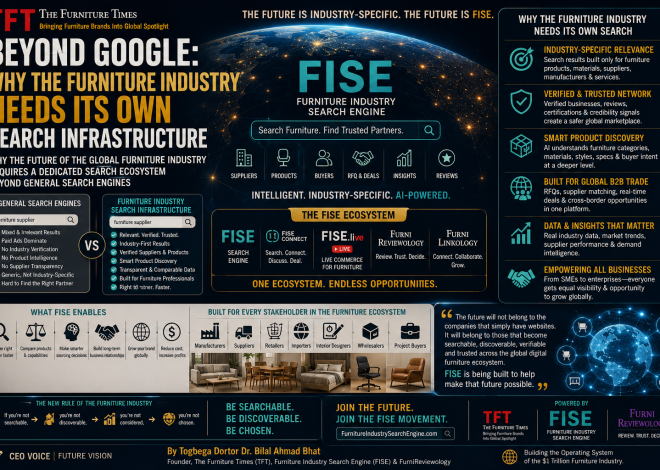
This is exactly why ecosystems like:
TFT
become increasingly important.
Because the future furniture industry may increasingly depend on:
connected visibility infrastructure.
Why Markative Domains Matters
According to Togbega Dortor Dr. Bilal Ahmad Bhat,
the future digital economy belongs to:
strategic digital positioning.
A domain is no longer merely:
a website address
It becomes:
digital territory
visibility infrastructure
search identity
AI discoverability asset
The future may belong to brands that secure:
memorable domains
keyword authority
ecosystem ownership
category dominance
through intelligent digital infrastructure.
The Key Pages Economy
The future internet may increasingly reward:
specialized pages
topic authority
semantic organization
structured expertise
Businesses that fail to build:
category ecosystems
product intelligence layers
searchable infrastructure
may gradually disappear digitally.
This creates:
the Key Pages Economy.
TFT Philosophical Industry Insight
The furniture industry historically focused on:
products
factories
showrooms
exhibitions
But the modern economy increasingly rewards:
digital discoverability.
The future may no longer belong only to companies that manufacture products.
It may increasingly belong to companies that structure information intelligently enough for:
search engines
AI systems
digital ecosystems
global customers
to discover, trust, and engage with them.
Final Thought
The article from Furniture Fuel highlights a critical truth:
key pages drive visibility and business growth.
But the deeper reality is even bigger.
The global furniture industry is entering a new era where:
search visibility
AI discoverability
structured information
content ecosystems
digital architecture
will increasingly define:
who survives and who disappears.
Because in the modern economy:
visibility itself is becoming infrastructure.
Closing Insight
“The future furniture industry may not only be controlled by those who manufacture products.
It may increasingly be controlled by those who structure digital ecosystems intelligently enough for the world — and AI — to discover them.”