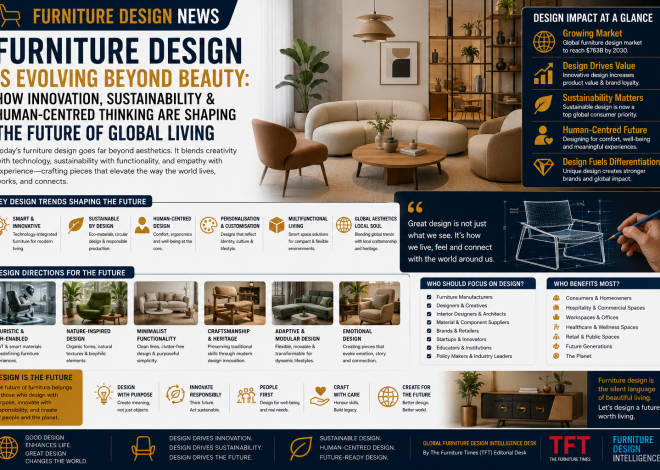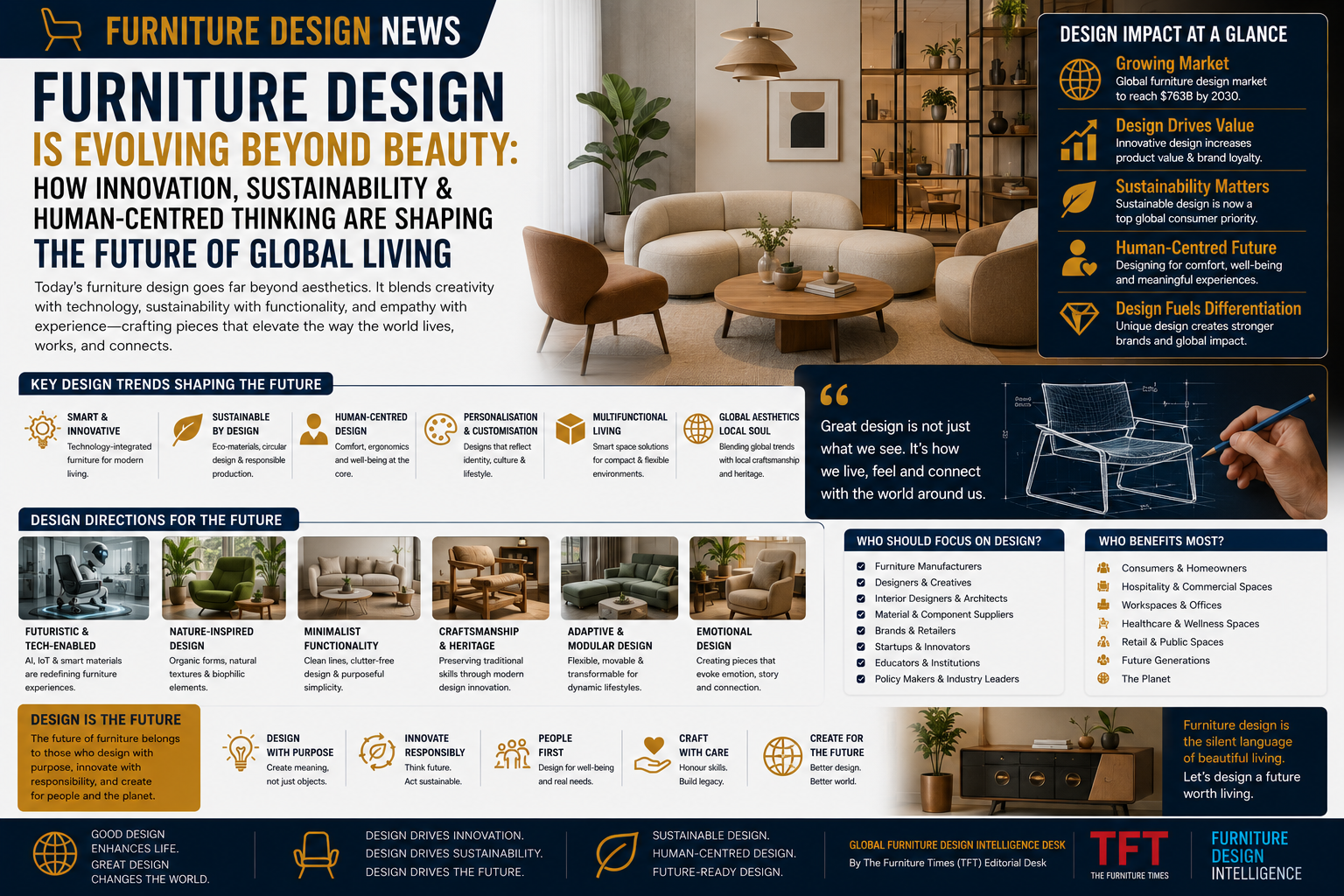
Furniture Design Is Evolving Beyond Beauty: How Innovation, Sustainability & Human-Centred Thinking Are Shaping the Future of Global Living
Global Furniture Design Intelligence Desk
By The Furniture Times (TFT) Editorial Desk
Executive Summary
Furniture design has always reflected the way people live.
From handcrafted wooden chairs and heritage craftsmanship to contemporary minimalist interiors and intelligent workspaces, furniture has evolved alongside human lifestyles, culture and technology.
Today, the industry is entering a new design revolution.
Furniture is no longer created solely for appearance.
It is now designed to improve:
- Everyday living
- Productivity
- Wellness
- Sustainability
- Accessibility
- Flexibility
- Smart living
- Emotional connection
Around the world, designers are combining creativity with Artificial Intelligence (AI), sustainable materials, digital manufacturing and ergonomic research to create furniture that responds to changing lifestyles rather than simply occupying space.
According to The Furniture Times (TFT), furniture design is no longer just about creating beautiful products.
It is about designing better lives.
Design Is the Soul of the Furniture Industry
Manufacturing builds furniture.
Design gives it identity.
Every successful furniture product begins with a question:
How can this improve people’s lives?
Design influences:
- Comfort
- Functionality
- Aesthetics
- Durability
- User experience
- Emotional value
It transforms ordinary materials into meaningful products that people use every day.
The Evolution of Furniture Design
Furniture design has evolved through many eras.
Traditional craftsmanship focused on:
Quality.
Handmade artistry.
Natural materials.
Long-lasting construction.
Modern design now combines these strengths with:
Technology.
Sustainability.
Engineering.
Digital manufacturing.
Global lifestyles.
The future blends heritage with innovation.
Human-Centred Design Leads the Future
Modern furniture is increasingly designed around people rather than products.
Designers study:
Daily routines.
Movement.
Comfort.
Work habits.
Family living.
Accessibility.
Health.
The goal is to create furniture that adapts to people—not the other way around.
Minimalism Meets Functionality
Consumers increasingly prefer furniture that is:
Simple.
Functional.
Flexible.
Space-efficient.
Timeless.
Rather than excessive decoration, many buyers now value clean lines, intelligent storage and practical everyday use.
Minimalism continues influencing residential, office and hospitality furniture worldwide.
Sustainability Is Reshaping Design
Environmental responsibility has become one of the strongest influences on furniture design.
Designers increasingly consider:
Certified timber.
Recycled materials.
Modular construction.
Repairability.
Long product life.
Low-emission finishes.
Circular economy principles.
Sustainable design begins at the drawing board.
Products designed to last reduce waste while improving long-term customer value.
Artificial Intelligence Is Assisting Designers
AI is becoming an important creative partner.
Design teams increasingly use AI to:
Generate concepts.
Explore colour combinations.
Analyse trends.
Predict customer preferences.
Create prototypes.
Improve ergonomics.
Accelerate product development.
AI enhances creativity while allowing designers to focus on innovation and human experience.
Smart Furniture Is Expanding
Technology is becoming part of furniture design.
Examples include:
Height-adjustable desks.
Wireless charging tables.
Smart beds.
Sensor-enabled seating.
Integrated lighting.
Connected home furniture.
The future of design combines aesthetics with intelligent functionality.
Ergonomics Has Become Essential
Furniture design increasingly supports health and wellbeing.
Manufacturers invest in:
Ergonomic seating.
Standing desks.
Healthy sleeping systems.
Supportive sofas.
Workplace wellness.
Senior-friendly furniture.
Well-designed furniture contributes to productivity while improving quality of life.
Small Spaces Inspire Innovation
Urban living continues changing how people use space.
Designers increasingly create:
Foldable furniture.
Modular systems.
Convertible furniture.
Hidden storage.
Multi-functional products.
Compact living solutions.
Flexibility has become a major design principle.
Hospitality Drives Premium Design
Hotels.
Restaurants.
Resorts.
Luxury residences.
Corporate offices.
Healthcare facilities.
These sectors continue influencing furniture design trends through demand for:
Comfort.
Durability.
Brand identity.
Premium experiences.
Custom solutions.
Commercial projects increasingly require furniture that balances aesthetics with operational performance.
Digital Design Accelerates Innovation
Modern designers increasingly use:
3D modelling.
Virtual reality.
Augmented reality.
Digital rendering.
Cloud collaboration.
Rapid prototyping.
Digital tools reduce development time while improving collaboration between designers, engineers and manufacturers.
Local Culture Creates Global Identity
Consumers increasingly appreciate furniture inspired by:
Local craftsmanship.
Traditional techniques.
Natural materials.
Cultural heritage.
Regional identity.
Authentic design helps brands differentiate themselves in global markets.
Customisation Is Becoming Standard
Customers increasingly expect furniture tailored to their needs.
Modern design supports:
Custom finishes.
Material selection.
Colour options.
Flexible dimensions.
Modular configurations.
Personalised experiences strengthen customer satisfaction while reducing unnecessary consumption.
Circular Design Creates Long-Term Value
Future furniture is increasingly designed for:
Easy repair.
Component replacement.
Material recovery.
Refurbishment.
Recycling.
Circular design extends product life while supporting sustainability goals.
Furniture Design Supports Brand Identity
Strong design creates memorable brands.
Businesses increasingly differentiate themselves through:
Unique collections.
Signature aesthetics.
Consistent quality.
Innovation.
Customer experience.
Design becomes one of the most valuable business assets.
Education Shapes Future Designers
The next generation of furniture designers requires education in:
Industrial design.
Sustainable materials.
AI-assisted design.
Manufacturing processes.
Digital technology.
Consumer behaviour.
Global market trends.
Continuous learning strengthens innovation.
The Future of Furniture Design
Over the next decade, furniture design may increasingly include:
AI-assisted creativity.
Digital product passports.
Adaptive furniture.
Smart materials.
Biomaterials.
Carbon-neutral products.
Health-monitoring furniture.
Fully integrated smart living environments.
Innovation will continue redefining how furniture supports everyday life.
The Furniture Times Analysis
Furniture design is entering one of its most exciting periods in history.
Success will increasingly depend upon balancing:
Creativity.
Technology.
Craftsmanship.
Sustainability.
Human wellbeing.
Manufacturing excellence.
Designers who understand both aesthetics and functionality will shape the future of the industry.
Final Verdict
Furniture design is no longer simply about creating attractive products.
It is about solving real-world challenges through thoughtful innovation.
The future belongs to businesses that design furniture that is:
Beautiful.
Functional.
Sustainable.
Intelligent.
Comfortable.
Adaptable.
Human-centred.
Because great furniture is remembered not only for how it looks.
But for how it improves people’s lives.
The next generation of furniture design will inspire homes, workplaces and communities around the world—and it will continue proving that design is one of the furniture industry’s greatest competitive advantages.
By The Furniture Times (TFT) Editorial Desk
Global Furniture Design Intelligence Desk | July 2026
“TFT tells their story. FISE helps the world find them.”
The furniture industry ecosystem is a $1 Trillion Dollar Industry.