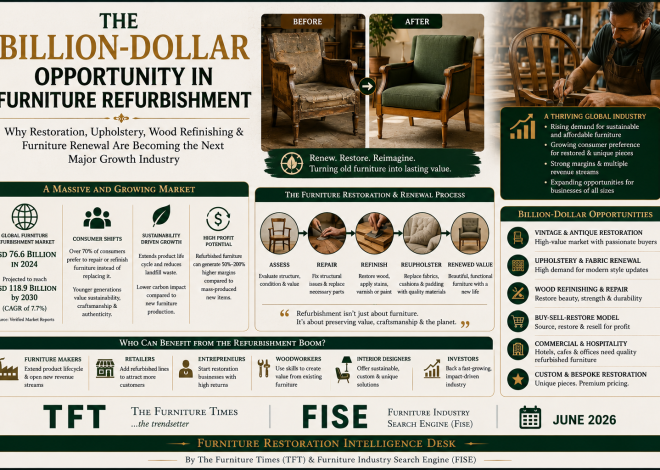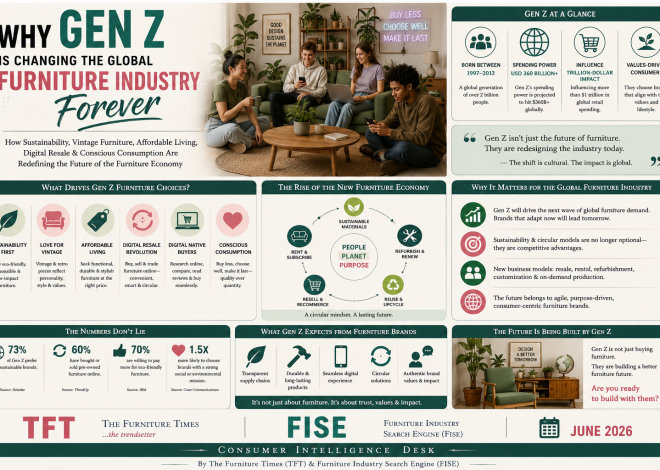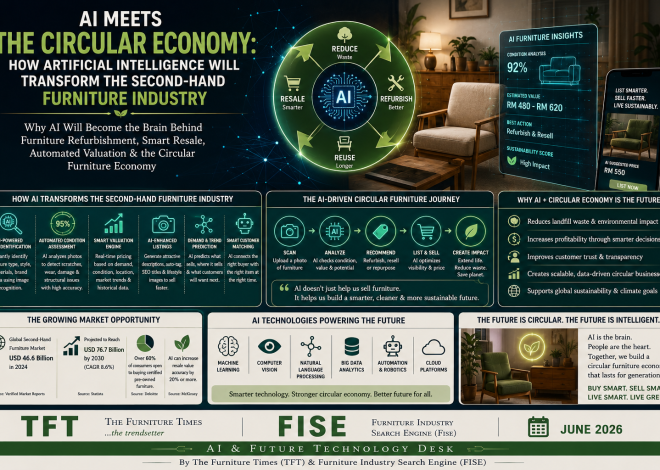
Furniture Rental vs Furniture Ownership: Which Business Model Will Win by 2035?
How Student Housing, Corporate Living, Hospitality, Expat Communities, Millennials & Digital Nomads Are Reshaping the Future of Furniture Consumption
Global Market Intelligence Desk
By The Furniture Times (TFT) & Furniture Industry Search Engine (FISE)
June 2026
For generations, furniture ownership represented stability.
A family bought a sofa.
A dining table.
A bed.
A wardrobe.
An office desk.
Furniture was purchased, placed, and expected to remain for years.
Sometimes decades.
But the world is changing.
People are moving more frequently.
Cities are becoming more expensive.
Apartments are becoming smaller.
Work has become more flexible.
International relocation has become more common.
Younger generations are delaying home ownership.
Digital nomads are redefining lifestyle.
And businesses are rethinking long-term asset ownership.
This raises one of the most important questions in the future furniture economy:
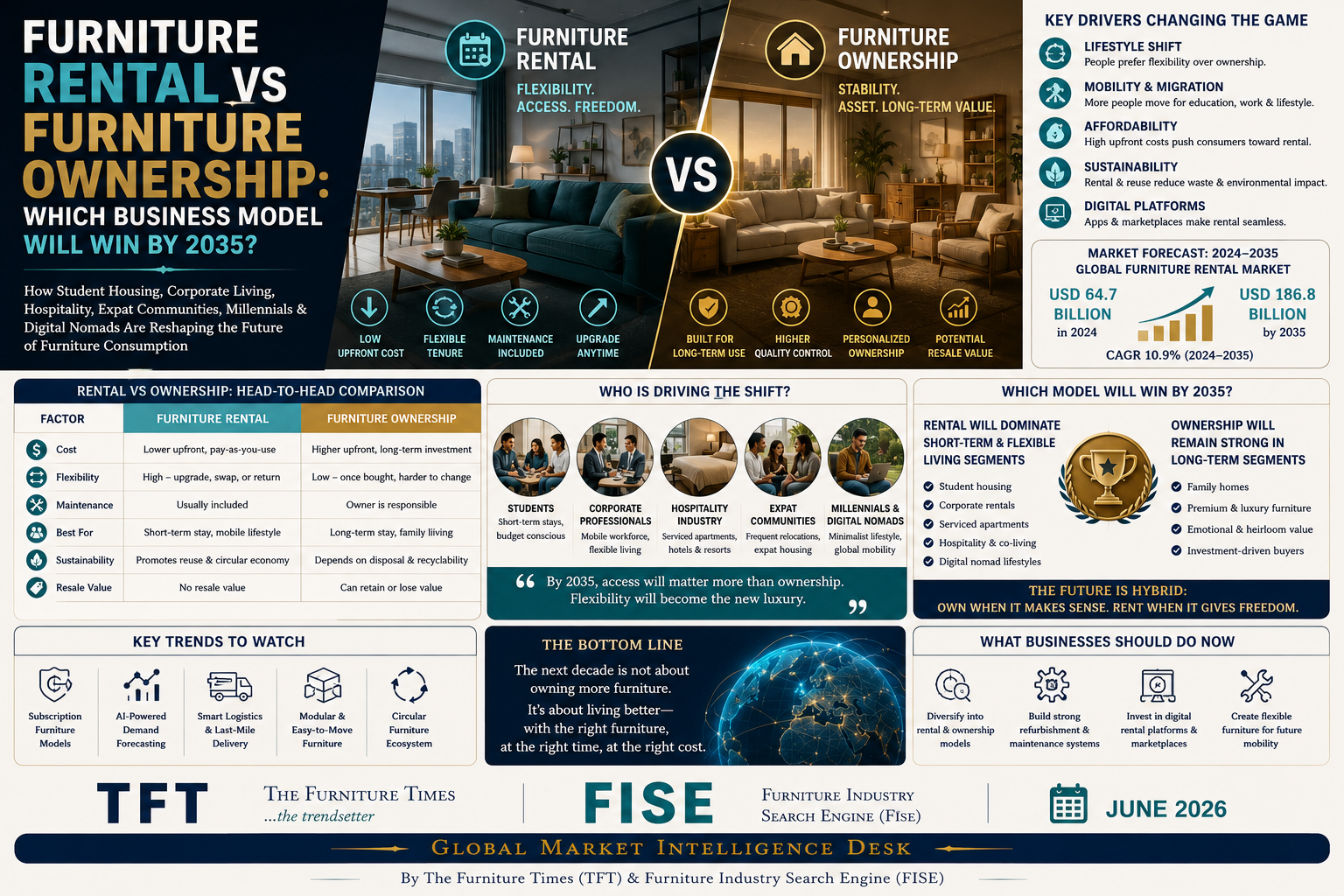
Will furniture ownership remain dominant, or will rental and subscription models reshape the industry by 2035?
The answer is not simple.
Ownership will not disappear.
But rental, leasing, and subscription models will become far more important than they are today.
The future will not be ownership versus rental.
The future will be choice.
The Traditional Ownership Model
For decades, furniture businesses followed one main model.
Manufacture.
Retail.
Sell.
Own.
This model worked because consumers lived more stable lives.
People bought homes earlier.
Families stayed in one location longer.
Furniture was viewed as a long-term investment.
Ownership made sense.
For many customers, it still does.
Homeowners, families, luxury buyers, and long-term residents will continue to prefer ownership.
But not every customer lives this way anymore.
Why Rental Is Rising
Furniture rental is growing because lifestyles are becoming more flexible.
Consumers increasingly want:
- Lower upfront costs
- Faster setup
- Easier relocation
- Flexible upgrades
- Less responsibility
- Convenience
Instead of spending heavily on furniture they may not need long-term, many consumers prefer access.
This shift reflects a broader global movement from ownership to usage.
People subscribe to entertainment.
Lease cars.
Rent homes.
Use co-working spaces.
Furniture is entering the same conversation.
Student Housing: A Major Growth Driver
Student housing is one of the strongest markets for furniture rental.
Students often move frequently.
They may study in another city or country.
They need furniture quickly.
They may not want to invest in products they will use for only a few years.
Rental furniture solves this problem.
Student packages may include:
- Bed
- Desk
- Chair
- Wardrobe
- Bookshelf
- Mattress
- Dining essentials
Universities, private student accommodation providers, and landlords can all benefit from rental models.
By 2035, furnished student living may become a standard expectation in many markets.
Corporate Housing and Employee Mobility
Companies increasingly relocate employees across cities and countries.
Corporate housing often requires fast furnishing solutions.
Purchasing furniture for temporary assignments can be inefficient.
Rental and subscription models allow businesses to furnish accommodation without long-term asset burdens.
This is particularly useful for:
- Multinational companies
- Project teams
- Construction firms
- Oil and gas companies
- Technology companies
- Consulting firms
Furniture rental supports workforce mobility.
Hospitality: Rental, Leasing & Refurbishment Will Grow
The hospitality sector is one of the most important future markets.
Hotels, serviced apartments, resorts, and co-living operators constantly need furniture.
Traditionally, they purchased furniture outright.
By 2035, many may consider hybrid models.
These may include:
- Furniture leasing
- Refurbishment contracts
- Maintenance subscriptions
- Upgrade programmes
- Buy-back agreements
Instead of replacing furniture every renovation cycle, hotels may work with suppliers who manage furniture lifecycle services.
This creates recurring revenue for furniture companies.
Expat Communities Need Flexible Furniture
Expatriates represent another major opportunity.
Expats often live in a country for limited periods.
They may not want to purchase large furniture items.
They need fast, reliable, stylish, functional furnishing solutions.
Rental models are ideal for:
- Expat apartments
- Diplomatic housing
- Corporate relocation
- International schools
- Short-term professionals
- Retirement migration
Markets such as Malaysia, UAE, Singapore, Qatar, Thailand, and Portugal may see growing demand from expatriate communities.
Millennials Are Redefining Ownership
Millennials have already changed multiple industries.
They delayed home ownership.
Prioritized experiences.
Adopted digital commerce.
Became comfortable with subscriptions.
For many Millennials, ownership is still important, but flexibility matters more than it did for previous generations.
They may own certain meaningful furniture pieces while renting others.
This creates a mixed consumption model.
Ownership for emotional or premium products.
Rental for temporary, practical, or transitional needs.
Digital Nomads Are the New Furniture Consumer
Digital nomads are one of the most important emerging customer groups.
They work remotely.
Move between countries.
Live in furnished apartments.
Stay in co-living spaces.
Rent short-term homes.
They rarely purchase furniture traditionally.
Yet they influence demand indirectly.
Landlords, serviced apartments, co-living operators, and hospitality businesses must furnish spaces to attract them.
This creates demand for durable, flexible, replaceable, rental-friendly furniture.
Furniture-as-a-Service Will Expand
Furniture-as-a-Service, or FaaS, is a model where customers pay monthly or annually for furniture access.
The provider handles:
- Delivery
- Installation
- Maintenance
- Replacement
- Collection
- Refurbishment
This model is especially powerful for B2B sectors.
By 2035, FaaS could become common in:
- Offices
- Hospitality
- Student housing
- Corporate housing
- Co-living
- Property management
The furniture company becomes a service provider, not just a product seller.
Ownership Will Still Win in Some Categories
Furniture rental will grow, but ownership will remain strong.
Ownership will continue leading in:
- Luxury furniture
- Custom furniture
- Family homes
- Heritage pieces
- Designer collections
- Long-term residential interiors
- Built-in wardrobes
- Kitchen cabinets
Consumers still want permanence for meaningful spaces.
The future will be segmented.
Not all furniture categories will shift equally.
The Business Model Shift
Traditional furniture revenue is transactional.
Sell once.
Move on.
Rental revenue is recurring.
Serve monthly.
Maintain relationship.
This shift changes everything.
Furniture companies can build:
- Long-term customer relationships
- Predictable cash flow
- Lifecycle revenue
- Refurbishment operations
- Resale channels
One product can generate revenue across multiple users.
This is the power of circular business models.
Challenges of Furniture Rental
The rental model also has challenges.
Businesses must manage:
- Delivery costs
- Damage risk
- Cleaning
- Storage
- Repairs
- Inventory tracking
- Depreciation
- Customer defaults
- Logistics
Rental is not easy.
It requires operational excellence.
Companies entering this sector must understand that furniture rental is not just sales.
It is logistics, maintenance, finance, service, and technology combined.
Technology Will Decide the Winners
Rental and subscription models require strong digital systems.
Companies need:
- Inventory tracking
- Customer portals
- Subscription billing
- Condition monitoring
- Delivery scheduling
- Maintenance records
- AI demand forecasting
Technology will separate serious players from small informal operators.
Sustainability Advantage
Rental supports sustainability when products are designed for multiple lifecycles.
A well-built sofa used by multiple customers over ten years may create better environmental value than short-life furniture repeatedly replaced.
Rental companies will need durable, repairable, modular furniture.
This will influence manufacturing design.
What Manufacturers Should Do Now
Manufacturers should begin preparing by designing products that are:
- Durable
- Repairable
- Easy to clean
- Easy to transport
- Easy to refurbish
- Modular
- Standardized in parts
The rental economy will reward furniture built for service life, not just showroom appeal.
What Retailers Should Do Now
Retailers should explore:
- Rental packages
- Subscription bundles
- Trade-in programmes
- Refurbished collections
- Upgrade plans
- Partnership with landlords and property managers
Retailers that rely only on one-time sales may miss future growth opportunities.
The Role of TFT & FISE
The future furniture economy will include:
- New furniture
- Rental furniture
- Subscription furniture
- Refurbished furniture
- Certified pre-owned furniture
- Hospitality lifecycle services
This ecosystem will need visibility.
FISE can help buyers discover providers across every model.
TFT can tell the stories of companies building the next generation of furniture commerce.
TFT & FISE Analysis
By 2035, ownership will remain important.
But it will no longer be the only dominant model.
The furniture industry will become more flexible, circular, service-driven, and digitally managed.
The companies that adapt early will benefit.
Those that remain locked in old thinking may struggle.
The future customer will not always ask:
“Where can I buy furniture?”
They may ask:
“Where can I access furniture for my lifestyle?”
That question changes the industry.
Final Verdict
Furniture rental will not destroy furniture ownership.
But it will reshape the global furniture economy.
Ownership will remain strong where permanence, emotion, luxury, and customization matter.
Rental will grow where flexibility, affordability, mobility, and convenience matter.
By 2035, the winning businesses will not choose one model.
They will offer multiple pathways.
Buy.
Rent.
Subscribe.
Trade in.
Refurbish.
Upgrade.
The future belongs to furniture companies that understand lifestyle.
Because customers are no longer simply furnishing homes.
They are furnishing changing lives.
By The Furniture Times (TFT) & Furniture Industry Search Engine (FISE)
Global Market Intelligence Desk | June 2026
“TFT tells their story. FISE helps the world find them.”
The furniture industry ecosystem is a $1 Trillion Dollar Industry.