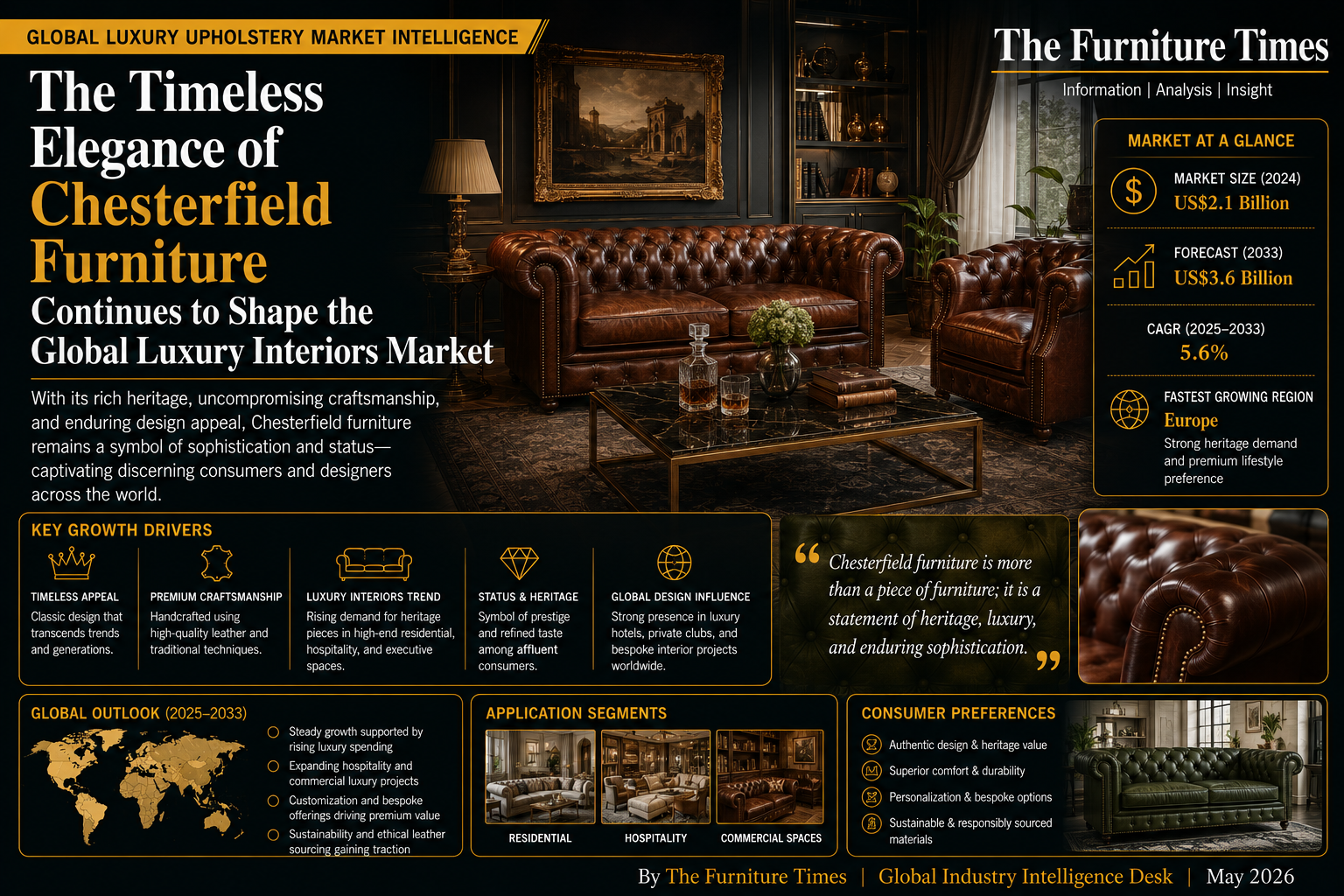
The Timeless Elegance of Chesterfield Furniture Continues to Shape the Global Luxury Interiors Market
Global Luxury Upholstery Market Intelligence | The Furniture Times
By The Furniture Times | Global Industry Intelligence Desk | May 2026
The global market for Chesterfield furniture continues to demonstrate enduring strength as consumers worldwide increasingly seek timeless luxury, handcrafted upholstery, heritage-inspired interiors, and statement furniture pieces that transcend short-term design trends.
Long associated with sophistication, prestige, and classic craftsmanship, Chesterfield sofas and upholstered furniture remain among the most recognizable luxury furniture categories globally. Industry trends indicate rising interest in both traditional leather Chesterfields and modern interpretations using velvet, performance fabrics, and sustainable materials.
Chesterfield Furniture Remains a Symbol of Timeless Luxury
The Chesterfield sofa has maintained its iconic identity for centuries through its:
- deep button tufting
- rolled arms
- structured silhouette
- handcrafted upholstery
- premium material finishes
Despite rapidly changing furniture trends, the Chesterfield design continues evolving across:
- luxury homes
- hospitality spaces
- executive offices
- premium lounges
- boutique hotels
- high-end commercial interiors
Industry experts continue describing Chesterfield furniture as one of the few sofa categories capable of fitting both:
- traditional interiors
- modern contemporary spaces
without losing its identity.
Global Luxury Furniture Demand Driving Market Expansion
The growth of the luxury interiors market globally is contributing significantly to continued Chesterfield demand.
Rising interest in:
- premium living spaces
- heritage aesthetics
- handcrafted furniture
- personalized interiors
- luxury hospitality environments
has strengthened the position of Chesterfield furniture within the global upholstery market.
The style remains especially popular across:
- United Kingdom
- United States
- Europe
- Middle East luxury interiors
- premium hospitality projects
- executive office environments
where timeless furniture aesthetics continue holding strong value.
Chesterfield Market Evolving Beyond Traditional Leather
Historically associated primarily with brown leather upholstery, modern Chesterfield furniture has expanded into multiple design categories.
Current market trends show increasing demand for:
- velvet Chesterfields
- jewel-tone upholstery
- modular Chesterfield concepts
- compact urban Chesterfields
- sustainable upholstery materials
- performance fabrics
Industry trend reports suggest rich colors such as:
- emerald green
- sapphire blue
- burgundy
- terracotta
- warm neutrals
are becoming increasingly popular within modern Chesterfield collections.
Urban Living Creating Demand for Compact Chesterfield Designs
The global shift toward:
- apartment living
- compact urban homes
- multifunctional interiors
is also reshaping the Chesterfield category.
Manufacturers are increasingly introducing:
- 2-seater Chesterfields
- apartment-scale Chesterfields
- modular Chesterfield systems
- space-efficient luxury upholstery
to meet the demands of younger urban consumers seeking timeless aesthetics within smaller spaces.
Sustainability Becoming Important in Luxury Upholstery
Sustainability is also influencing the evolution of Chesterfield furniture manufacturing.
Modern luxury buyers increasingly seek:
- responsibly sourced materials
- long-lasting craftsmanship
- eco-friendly upholstery
- recyclable components
- durable furniture investments
Manufacturers are responding with:
- vegan leather alternatives
- recycled fabrics
- low-emission production
- sustainable wood frames
while preserving the iconic Chesterfield identity.
Hospitality & Commercial Interiors Supporting Market Growth
Luxury hotels, executive offices, lounges, and premium commercial spaces continue driving strong demand for Chesterfield furniture globally.
The Chesterfield style remains strongly associated with:
- prestige
- authority
- luxury hospitality
- timeless professionalism
making it highly attractive within:
- hotel lobbies
- private clubs
- luxury offices
- cigar lounges
- boutique hospitality environments
Social Media & Interior Design Culture Reviving Heritage Furniture
Digital interior design culture has also contributed to renewed global interest in Chesterfield furniture.
Interior designers and luxury home influencers increasingly feature Chesterfield pieces inside:
- modern classic interiors
- dark academia aesthetics
- luxury office spaces
- vintage-modern hybrid environments
This has helped the category remain highly relevant among younger design-conscious audiences.
The Market Is Shifting Toward “Timeless Investment Furniture”
One of the biggest changes in luxury furniture consumption is the growing preference for:
- timeless furniture
- durable craftsmanship
- long-term investment pieces
rather than fast-changing furniture trends.
Industry reports increasingly highlight consumer movement toward:
- quality over quantity
- longevity over trend cycles
- craftsmanship over mass production
The Chesterfield category aligns naturally with these values.
TFT Industry Insight
The continued global demand for Chesterfield furniture reflects a larger transformation occurring across the furniture industry:
Consumers are increasingly seeking furniture with identity, heritage, craftsmanship, and emotional permanence.
The future luxury furniture market may increasingly favor brands that combine:
- timeless design
- sustainable craftsmanship
- personalization
- digital discoverability
- premium storytelling
- luxury experience ecosystems
inside connected global furniture platforms.
Final Thought
In a world dominated by fast-moving trends, the Chesterfield remains one of the few furniture designs that continues evolving without losing its timeless identity.
Its enduring presence across homes, hospitality spaces, executive interiors, and luxury environments demonstrates that true craftsmanship and timeless elegance never go out of style.

Related Posts
Global Furniture Industry Shows Signs of Strategic Transformation Amid Economic Uncertainty
Why Core Values Will Become the New Competitive Advantage in the Furniture Industry