Scandinavian Lighting Design Principles
By The Furniture Times (TFT) | Indoor & Outdoor Lighting | Design & Architecture
Simplicity That Illuminates the World: How Scandinavian Lighting Design Is Inspiring Modern Architecture, Interior Spaces, and the Future of the Global Furniture Industry
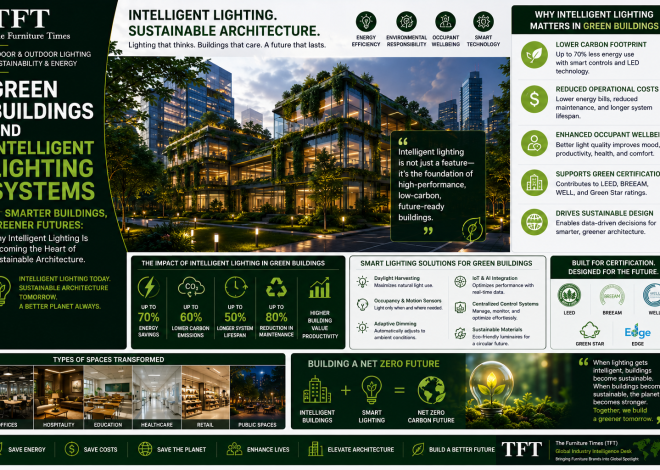
Some of the world’s most influential design movements did not begin with extravagance or complexity. Instead, they emerged from necessity, climate, and a deep understanding of how people interact with their surroundings. Scandinavian lighting design is one of those timeless philosophies.
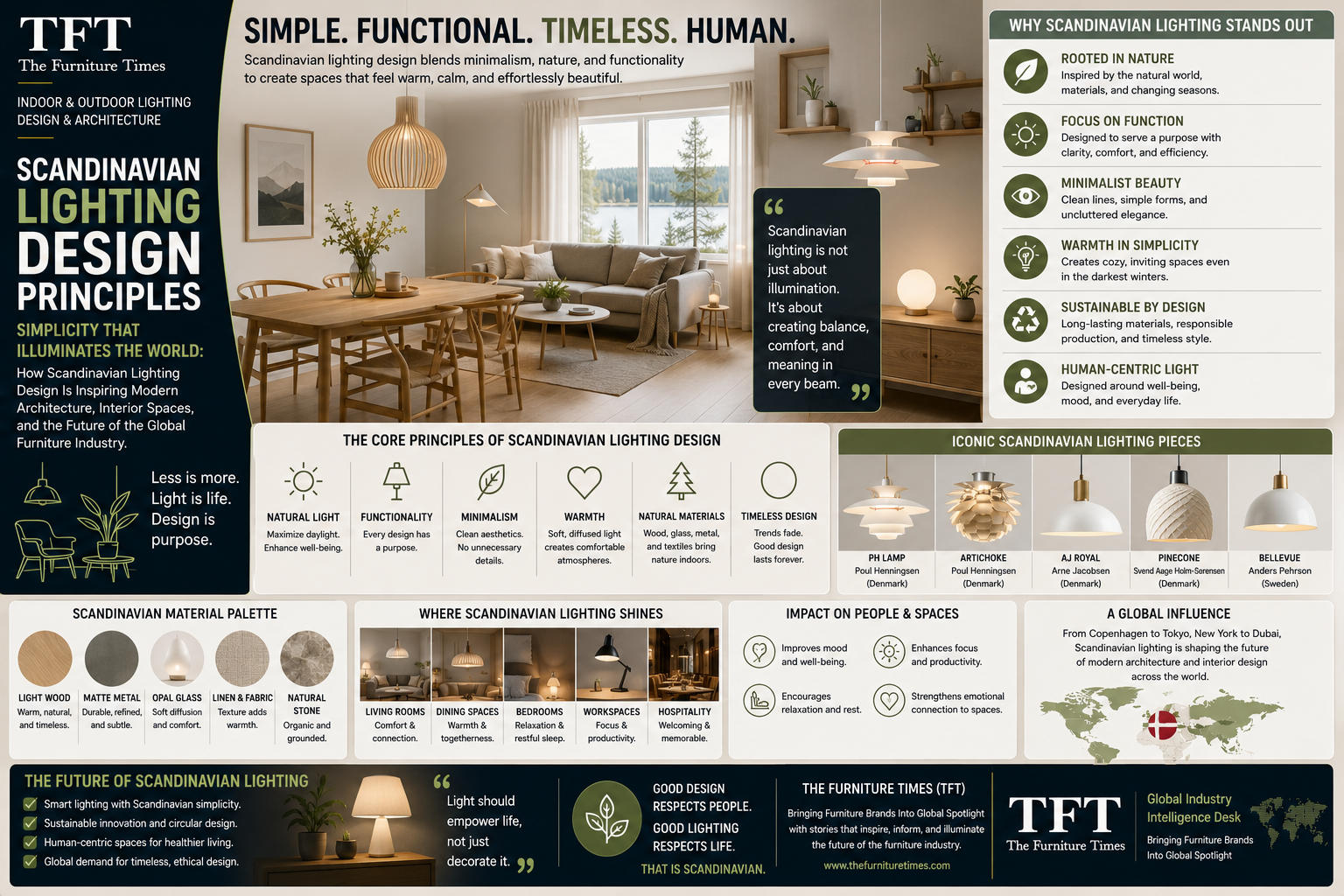
Born in the Nordic countries of Denmark, Sweden, Norway, Finland, and Iceland, Scandinavian lighting design reflects a unique relationship with nature. Long, dark winters and limited daylight encouraged designers to think differently about illumination—not simply as a technical requirement but as a tool for comfort, wellbeing, functionality, and human connection.
Today, Scandinavian lighting principles have become a global benchmark for residential, commercial, hospitality, and workplace design. Architects and interior designers across continents embrace its emphasis on simplicity, natural materials, soft illumination, sustainability, and purposeful living.
Its influence extends well beyond Europe.
From luxury apartments in Singapore and boutique hotels in Dubai to creative offices in New York, minimalist homes in Tokyo, and premium furniture showrooms in Milan, Scandinavian lighting has become a universal design language that balances beauty with practicality.
For the global furniture industry ecosystem, this philosophy presents tremendous opportunities. Furniture manufacturers, lighting designers, architects, interior designers, hospitality operators, retailers, and smart technology companies are increasingly combining Scandinavian design principles with modern innovations such as Artificial Intelligence (AI), smart lighting controls, energy-efficient LEDs, and sustainable manufacturing to create environments that are elegant, efficient, and deeply human.
The future of lighting is not about making spaces brighter.
It is about making them feel better.
Light Is Designed Around People
One of the defining characteristics of Scandinavian lighting is its human-centred approach.
Rather than overwhelming a space with excessive brightness, designers focus on creating environments that promote comfort and wellbeing.
Lighting is carefully planned to enhance:
- Relaxation.
- Productivity.
- Social interaction.
- Reading.
- Dining.
- Creativity.
- Rest.
- Wellness.
- Visual comfort.
- Emotional balance.
Every lighting decision begins with the needs of the people using the space.
Simplicity Is a Design Philosophy
Scandinavian interiors demonstrate that simplicity does not mean emptiness.
Instead, it reflects thoughtful design where every element has a clear purpose.
Lighting fixtures typically feature:
- Clean lines.
- Soft curves.
- Balanced proportions.
- Minimal ornamentation.
- Functional elegance.
- Timeless aesthetics.
- Neutral colours.
- Organic forms.
- Understated sophistication.
- Honest craftsmanship.
The goal is not to attract attention through excess but to create harmony throughout the interior.
Natural Materials Create Warmth
Scandinavian lighting celebrates authenticity.
Designers frequently use materials such as:
- Oak.
- Ash.
- Birch.
- Walnut.
- Linen.
- Cotton.
- Glass.
- Stone.
- Brass.
- Recycled materials.
These materials soften the visual experience while strengthening the connection between interiors and nature.
Layered Lighting Creates Comfortable Living
Rather than relying on a single ceiling fixture, Scandinavian interiors use multiple layers of light.
Typical combinations include:
- Ambient lighting.
- Table lamps.
- Floor lamps.
- Pendant lighting.
- Wall sconces.
- Reading lights.
- Under-cabinet lighting.
- Accent lighting.
- Decorative lighting.
- Daylight integration.
This layered approach creates flexibility while allowing spaces to adapt throughout the day.
Furniture and Lighting Work Together
Scandinavian design treats furniture and lighting as complementary elements.
Instead of competing for attention, they enhance one another.
Examples include:
- Dining tables paired with statement pendants.
- Reading chairs complemented by adjustable floor lamps.
- Minimalist shelving with integrated LED lighting.
- Kitchen cabinetry featuring concealed illumination.
- Home offices with ergonomic task lighting.
- Floating furniture enhanced by indirect lighting.
- Hospitality lounges with warm accent lighting.
- Luxury wardrobes with intelligent lighting.
- Retail displays with integrated illumination.
- Contemporary storage systems with adaptive lighting.
The result is a unified and calming interior experience.
Daylight Remains the Most Important Light Source
Scandinavian architecture maximises natural daylight wherever possible.
Artificial lighting is designed to complement rather than replace sunlight.
Design strategies include:
- Large windows.
- Open floor plans.
- Light-reflective surfaces.
- Bright interior finishes.
- Transparent materials.
- Minimal window coverings.
- Strategic furniture placement.
- Daylight-responsive lighting controls.
- Skylights.
- Seasonal lighting adjustments.
Natural light remains the foundation of Scandinavian design.
Artificial Intelligence Modernises Scandinavian Principles
Although rooted in tradition, Scandinavian lighting continues to evolve.
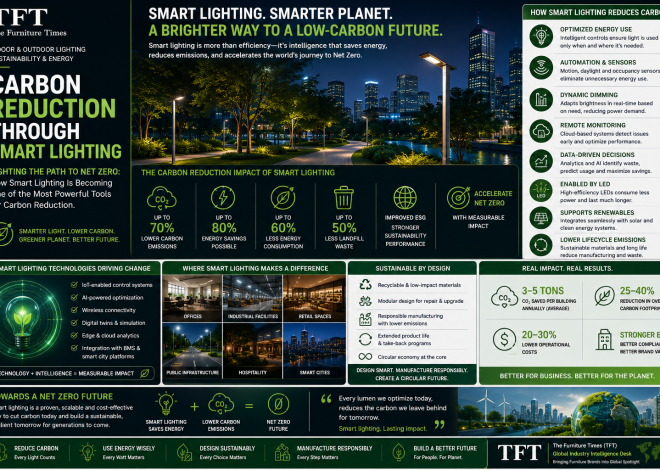
Artificial Intelligence now enhances these timeless principles through:
- Automatic brightness adjustment.
- Circadian lighting.
- Occupancy detection.
- Personalised lighting scenes.
- Energy optimisation.
- Predictive maintenance.
- Daylight harvesting.
- Smart home integration.
- Cloud-based control.
- Adaptive lighting systems.
Technology quietly supports comfort without disrupting simplicity.
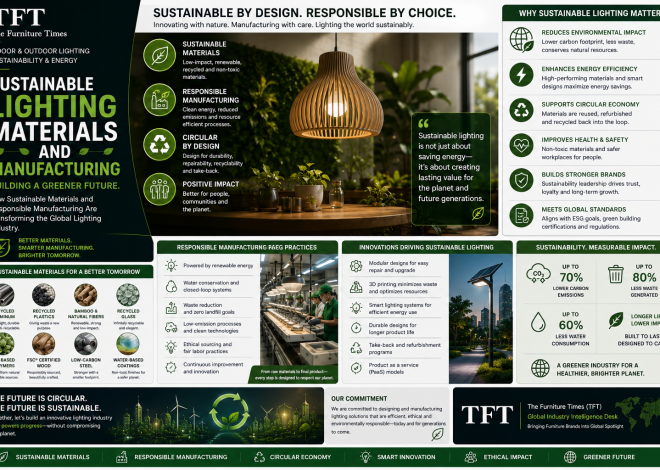
Sustainability Is Built into Every Decision
Environmental responsibility has long been central to Scandinavian design.
Lighting manufacturers increasingly prioritise:
- High-efficiency LEDs.
- Renewable energy integration.
- Long-lasting products.
- Modular construction.
- Repairability.
- Circular manufacturing.
- Recyclable materials.
- Low-carbon production.
- Sustainable packaging.
- Responsible sourcing.
Sustainability is viewed as essential rather than optional.
Hospitality Around the World Adopts Nordic Design
Hotels and resorts increasingly embrace Scandinavian lighting because it creates welcoming and relaxing environments.
Applications include:
- Boutique hotels.
- Wellness retreats.
- Luxury apartments.
- Spa facilities.
- Restaurants.
- Cafés.
- Corporate lounges.
- Residential developments.
- Co-working spaces.
- Premium serviced residences.
The atmosphere encourages guests to slow down, connect, and feel at ease.
Opportunities Across the Furniture Industry Ecosystem
The global popularity of Scandinavian lighting creates opportunities for:
- Furniture manufacturers.
- Lighting manufacturers.
- Interior designers.
- Architects.
- Hospitality operators.
- Residential developers.
- Commercial builders.
- Retail furniture brands.
- Smart home technology providers.
- Sustainable material suppliers.
Companies that combine Nordic design values with innovation will remain highly competitive in international markets.
Challenges in Applying Scandinavian Design
Successful Scandinavian lighting requires balance rather than imitation.
Designers must carefully consider:
- Climate differences.
- Cultural preferences.
- Building orientation.
- Material selection.
- Lighting quality.
- Energy efficiency.
- Smart technology integration.
- Product durability.
- Budget considerations.
- Long-term sustainability.
Authenticity matters more than simply adopting a minimalist appearance.
The Future Is Human-Centred, Intelligent, and Sustainable
Scandinavian lighting continues to inspire the future of architecture and interior design.
Emerging developments include:
- AI-powered lighting environments.
- Human-centric illumination.
- Digital twins.
- Smart furniture integration.
- Renewable energy systems.
- Adaptive architectural lighting.
- Wellness-focused interiors.
- Intelligent material selection.
- Carbon-conscious manufacturing.
- Personalised living environments.
The philosophy continues to evolve while remaining true to its original values.
Timeless Design Never Goes Out of Style
Design trends come and go, but principles rooted in human wellbeing, craftsmanship, and simplicity endure.
That is why Scandinavian lighting remains one of the world’s most respected design philosophies.
For the global furniture industry ecosystem, it offers more than visual inspiration. It provides a framework for creating spaces that combine architecture, furniture, lighting, sustainability, and intelligent technology into environments that improve everyday life.
Because exceptional lighting is not about drawing attention to itself.
It is about helping people feel comfortable, connected, and inspired.
That is the true essence of Scandinavian design.
The Furniture Times (TFT) & Furniture Industry Search Engine (FISE)
“TFT tells their story. FISE helps the world find them.”
“FurniReviewology helps the world trust them.”
The furniture industry ecosystem is a $1 trillion industry ecosystem.