Architectural Lighting That Defines Modern Buildings
By The Furniture Times (TFT) | Indoor & Outdoor Lighting | Design & Architecture
Beyond Illumination: How Architectural Lighting Is Shaping Modern Buildings, Human Experiences, and the Future of the Global Furniture Industry
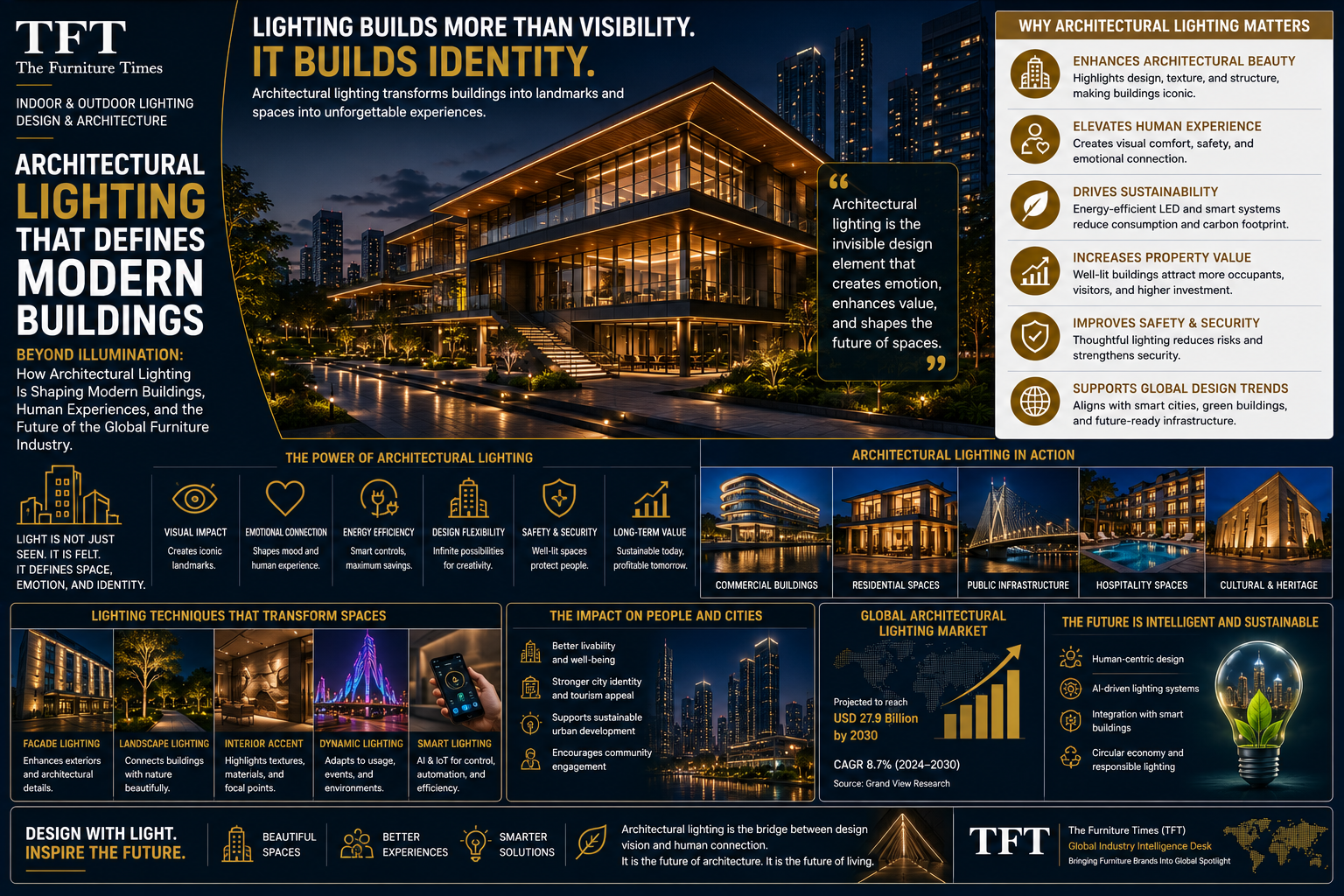
Walk through any iconic skyline after sunset and one truth becomes immediately apparent—architecture is no longer defined only by concrete, steel, glass, or timber. Increasingly, it is defined by light.
From luxury hotels and contemporary residences to museums, airports, corporate headquarters, shopping centres, and cultural landmarks, architectural lighting has become one of the most influential elements in modern design. It has evolved beyond its traditional role of simply making spaces visible. Today, lighting shapes identity, creates emotion, enhances functionality, strengthens sustainability, and transforms ordinary structures into memorable experiences.
Modern architects no longer ask only, “How should this building look?”
They also ask, “How should this building feel when people experience it during the day, at night, and throughout every season?”
The answer increasingly lies in architectural lighting.
For the global furniture industry ecosystem, this transformation is opening exciting opportunities. Furniture manufacturers, lighting designers, architects, interior designers, hospitality operators, developers, retailers, and smart technology companies are collaborating to create environments where furniture, architecture, intelligent lighting, and digital technologies function together as one integrated design language.
The future of architecture will not be defined solely by the buildings we construct.
It will be defined by the way we illuminate them.
Light Has Become a Building Material
Historically, architects worked with physical materials such as brick, timber, concrete, stone, and steel.
Today, light itself has become an essential design material.
Architectural lighting influences how people perceive:
- Scale.
- Proportion.
- Texture.
- Colour.
- Depth.
- Movement.
- Transparency.
- Warmth.
- Safety.
- Emotional atmosphere.
A carefully illuminated façade can transform an ordinary building into an architectural landmark without altering its structural form.
Every Building Tells a Story Through Light
Great architecture communicates with people.
Lighting helps tell that story.
Different lighting approaches create different emotional experiences.
For example:
- Warm lighting creates comfort.
- Cool lighting communicates innovation.
- Accent lighting highlights craftsmanship.
- Layered lighting builds depth.
- Dynamic lighting creates movement.
- Minimalist lighting supports simplicity.
- Dramatic contrasts generate excitement.
- Uniform lighting improves clarity.
- Decorative lighting enhances identity.
- Adaptive lighting personalises experiences.
Every lighting decision contributes to the character of a building.
Modern Façades Come Alive After Sunset
Architectural façades increasingly become active visual elements at night.
Lighting designers use technology to emphasise:
- Building geometry.
- Structural details.
- Glass surfaces.
- Natural materials.
- Historic architecture.
- Landscape integration.
- Entrance features.
- Public plazas.
- Corporate branding.
- Urban identity.
Well-designed façade lighting enhances cities while improving public safety and visual appeal.
Interior Architecture Depends on Layered Lighting
Inside modern buildings, architectural lighting creates environments that support both function and emotion.
Successful interiors combine:
- Ambient lighting.
- Task lighting.
- Accent lighting.
- Decorative lighting.
- Natural daylight.
- Wall washing.
- Cove lighting.
- Linear lighting.
- Feature lighting.
- Adaptive controls.
Rather than relying on a single source, modern spaces use multiple layers of illumination that respond to changing activities throughout the day.
Furniture and Lighting Are Becoming One Design Language
Furniture no longer exists independently of lighting.
Designers increasingly integrate lighting into:
- Kitchen cabinetry.
- Walk-in wardrobes.
- Shelving systems.
- Reception counters.
- Hotel furniture.
- Retail displays.
- Office workstations.
- Display cabinets.
- Luxury wardrobes.
- Residential storage solutions.
Integrated lighting enhances usability while creating visually cohesive architectural spaces.
The relationship between furniture and lighting continues to grow stronger.
Artificial Intelligence Is Transforming Architectural Lighting
Artificial Intelligence is changing how buildings respond to their occupants.
Modern lighting systems can:
- Learn occupancy patterns.
- Adjust brightness automatically.
- Respond to natural daylight.
- Create personalised lighting scenes.
- Optimise energy use.
- Improve occupant wellbeing.
- Predict maintenance.
- Monitor system performance.
- Enhance sustainability.
- Integrate with smart building platforms.
Architecture is becoming increasingly intelligent rather than static.
Sustainability Is Driving New Design Priorities
Architectural beauty alone is no longer enough.
Buildings are increasingly expected to minimise environmental impact while maintaining exceptional visual quality.
Modern lighting supports sustainability through:
- High-efficiency LED technology.
- Smart controls.
- Daylight harvesting.
- Occupancy sensing.
- Renewable energy integration.
- Low-carbon manufacturing.
- Reduced maintenance.
- Long product lifecycles.
- Circular design.
- Energy monitoring.
Design excellence and environmental responsibility now work together.
Hospitality Uses Lighting to Shape Guest Experiences
Hotels and resorts understand that lighting strongly influences guest perception.
Architectural lighting enhances:
- Grand entrances.
- Lobbies.
- Restaurants.
- Guest rooms.
- Spa facilities.
- Outdoor terraces.
- Landscaped gardens.
- Rooftop lounges.
- Conference spaces.
- Luxury suites.
Guests often remember how a space made them feel—and lighting plays a major role in creating that emotional connection.
Retail Architecture Depends on Visual Experience
Retail environments compete not only on products but also on atmosphere.
Architectural lighting supports:
- Brand identity.
- Product presentation.
- Customer navigation.
- Window displays.
- Premium merchandise.
- Seasonal campaigns.
- Customer engagement.
- Visual storytelling.
- Luxury experiences.
- Purchase confidence.
Lighting influences how customers interact with both products and spaces.
Opportunities Across the Furniture Industry Ecosystem
The growing demand for architectural lighting creates opportunities for:
- Furniture manufacturers.
- Lighting manufacturers.
- Architects.
- Interior designers.
- Property developers.
- Hospitality operators.
- Commercial builders.
- Retail brands.
- Urban planners.
- Smart building technology companies.
Businesses capable of integrating architecture, furniture, lighting, and digital intelligence into unified design solutions will lead the next generation of market innovation.
Challenges Designers Must Address
Creating outstanding architectural lighting requires balancing multiple priorities.
These include:
- Energy efficiency.
- Installation costs.
- Visual comfort.
- Light pollution.
- Regulatory compliance.
- Maintenance access.
- Technology integration.
- Product durability.
- Cybersecurity.
- Long-term sustainability.
Successful projects combine creativity with technical precision.
The Buildings of Tomorrow Will Respond to People
Future architectural lighting will move beyond static illumination.
Emerging innovations include:
- AI-powered adaptive lighting.
- Digital twins.
- Human-centric lighting.
- Smart façades.
- Cloud-based lighting management.
- Environmental sensors.
- Predictive maintenance.
- Connected furniture.
- Renewable energy integration.
- Interactive public spaces.
Buildings will increasingly respond to people rather than expecting people to adapt to buildings.
Great Architecture Is Remembered Through Light
Throughout history, iconic buildings have inspired admiration through bold architecture and timeless craftsmanship.
In the decades ahead, intelligent lighting will become equally important in defining architectural excellence.
For the global furniture industry ecosystem, this evolution presents remarkable opportunities to create integrated environments where furniture, lighting, architecture, technology, and sustainability work together to improve the way people live, work, travel, learn, shop, and connect.
Architectural lighting is no longer simply about making buildings visible.
It is about giving them identity.
Because while architecture creates the structure…
Light brings the architecture to life.
The Furniture Times (TFT) & Furniture Industry Search Engine (FISE)
“TFT tells their story. FISE helps the world find them.”
“FurniReviewology helps the world trust them.”
The furniture industry ecosystem is a $1 trillion industry ecosystem.