Retail Store Lighting That Increases Sales
By The Furniture Times (TFT) | Indoor & Outdoor Lighting | Commercial & Hospitality Lighting
How Intelligent Retail Lighting Is Transforming Customer Experiences, Product Visibility, Consumer Psychology, and Business Growth
Retail has entered one of the most competitive and technology-driven eras in its history. Consumers today have unlimited purchasing options, from physical stores and shopping malls to e-commerce platforms, social commerce, and AI-powered shopping assistants. As a result, traditional retailers must offer far more than products—they must create memorable shopping experiences that encourage customers to enter, explore, interact, purchase, and return.
One of the most influential yet often underestimated factors behind retail success is lighting.
Retail store lighting has evolved beyond basic illumination into a strategic business tool that directly influences customer psychology, shopping behaviour, product visibility, brand perception, dwell time, and sales performance. Whether in luxury boutiques, furniture showrooms, supermarkets, department stores, electronics retailers, fashion outlets, shopping centres, home décor stores, or lifestyle brands, lighting plays a critical role in shaping purchasing decisions.
Advancements in Artificial Intelligence (AI), Internet of Things (IoT), LED technology, smart sensors, human-centric lighting, digital retail analytics, and sustainable lighting systems are redefining the future of physical retail. Intelligent lighting now helps retailers optimise operations, improve energy efficiency, personalise customer experiences, and strengthen brand identity while increasing commercial profitability.
For retailers, architects, interior designers, lighting manufacturers, furniture companies, developers, shopping mall operators, technology providers, and visual merchandising specialists, intelligent retail lighting has become an essential investment in future business growth.
Lighting Shapes the First Impression
The customer journey begins before a shopper even enters the store.
Exterior and storefront lighting influence perceptions of:
- Brand quality
- Professionalism
- Luxury
- Trust
- Cleanliness
- Safety
- Modernity
- Innovation
- Product quality
- Shopping experience
An inviting storefront with well-planned lighting encourages customers to step inside, while poorly illuminated entrances can reduce foot traffic regardless of product quality.
Lighting is one of the first silent salespeople every retail business employs.
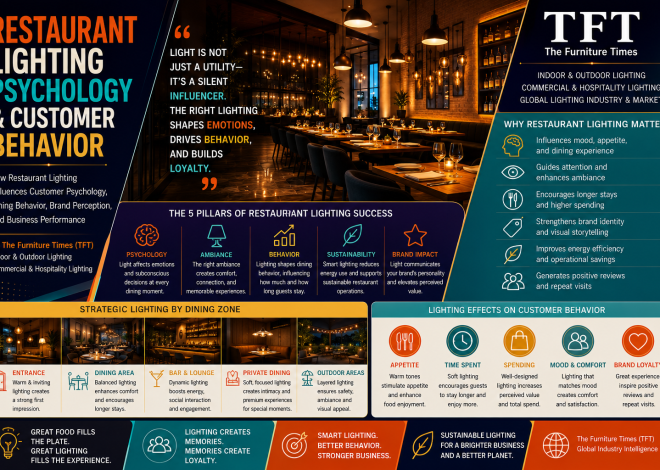
Retail Psychology Begins with Light
Consumers make purchasing decisions using both logic and emotion.
Lighting influences how customers:
- Feel inside the store
- Perceive product quality
- Judge pricing
- Navigate displays
- Explore merchandise
- Interact with staff
- Remember the brand
- Share experiences online
- Spend time browsing
- Make purchasing decisions
Comfortable lighting encourages shoppers to stay longer, increasing opportunities for product discovery and higher spending.
Product Visibility Drives Sales
Products cannot sell if customers cannot see their quality, colour, texture, or craftsmanship.
Well-designed lighting enhances:
- Product colours
- Surface textures
- Material quality
- Fine details
- Premium finishes
- Packaging
- Product presentation
- Display arrangements
- Seasonal collections
- Promotional campaigns
Retail lighting transforms merchandise into visual experiences that inspire purchase.
Different Retail Sectors Require Different Lighting Strategies
Every retail category has unique lighting requirements.
Furniture Showrooms
Furniture retailers benefit from lighting that showcases:
- Wood grain
- Upholstery textures
- Leather finishes
- Colour accuracy
- Lifestyle settings
- Interior inspiration
- Room ambience
- Decorative accessories
- Premium craftsmanship
- Material authenticity
Layered lighting helps customers imagine products within their own homes.
Fashion Retail
Clothing stores prioritise:
- Accurate colour rendering
- Comfortable fitting room lighting
- Highlighted displays
- Dynamic window lighting
- Seasonal merchandising
- Brand storytelling
- Customer comfort
- Premium visual merchandising
- Luxury ambience
- Flexible promotional displays
Lighting influences both purchasing confidence and brand perception.
Electronics Stores
Technology retailers favour:
- Bright illumination
- Product clarity
- Interactive displays
- Modern aesthetics
- Digital integration
- High visibility
- Functional layouts
- Contemporary design
- Product demonstrations
- Innovation-focused environments
Lighting reinforces technological sophistication.
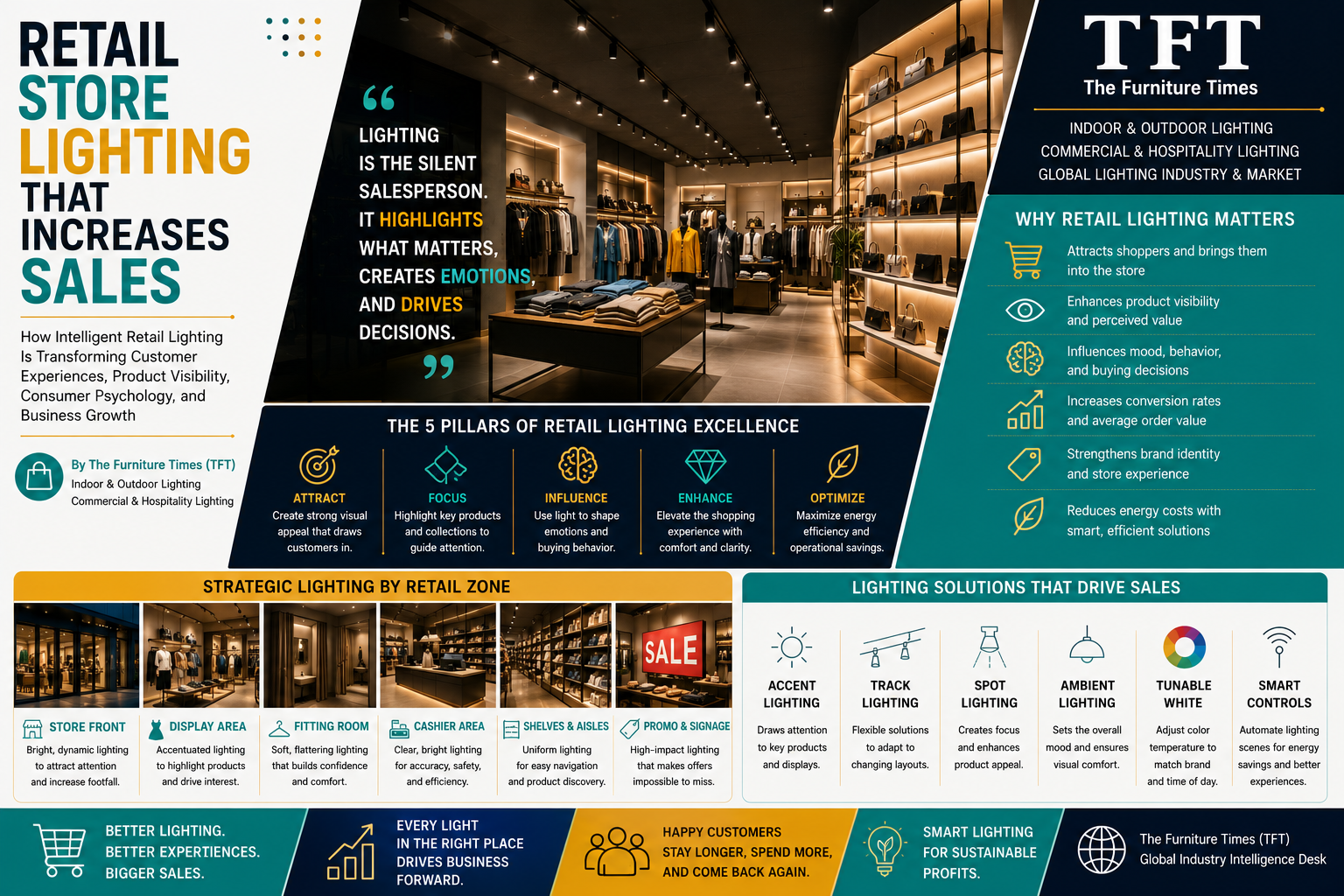
Layered Lighting Creates Better Shopping Experiences
Professional retail designers rely on layered lighting.
Ambient Lighting
Ambient lighting provides comfortable overall illumination throughout the store.
Applications include:
- Sales floors
- Shopping aisles
- Entrance areas
- Customer lounges
- Checkout zones
- Corridors
- Waiting areas
- Product galleries
- Service counters
- Consultation spaces
Balanced ambient lighting ensures visual comfort while maintaining consistency.
Task Lighting
Task lighting supports operational activities.
Applications include:
- Checkout counters
- Customer service desks
- Cashier stations
- Inventory rooms
- Product demonstrations
- Display preparation
- Consultation areas
- Repair centres
- Packaging stations
- Staff workspaces
Task lighting improves efficiency and service quality.
Accent Lighting
Accent lighting directs customer attention.
Popular applications include:
- Featured products
- Promotional displays
- Window merchandising
- Premium collections
- New arrivals
- Seasonal displays
- Brand logos
- Interactive zones
- Display shelving
- Architectural elements
Accent lighting encourages product engagement and impulse purchases.
Human-Centric Lighting Improves Shopping Comfort
Retailers increasingly adopt human-centric lighting to enhance customer well-being.
Appropriate lighting supports:
- Visual comfort
- Reduced eye strain
- Positive mood
- Relaxed browsing
- Better concentration
- Natural colour perception
- Comfortable shopping environments
- Extended dwell time
- Higher customer satisfaction
- Stronger emotional connections
A comfortable shopper is more likely to explore, engage, and purchase.
Smart Lighting Revolutionises Retail
Artificial Intelligence and IoT technologies are reshaping retail operations.
Modern lighting systems enable retailers to:
- Adjust lighting automatically.
- Schedule promotional lighting scenes.
- Detect customer movement.
- Analyse foot traffic.
- Monitor energy usage.
- Integrate with digital signage.
- Coordinate with security systems.
- Optimise operating costs.
- Improve maintenance planning.
- Support personalised shopping experiences.
Lighting has become a data-driven business asset.
Furniture and Lighting Work Together
Retail furniture increasingly incorporates integrated lighting.
Applications include:
- Display shelving
- Product cabinets
- Point-of-sale displays
- Luxury showcases
- Jewellery counters
- Wall units
- Interactive displays
- Experience zones
- Reception desks
- Branded installations
Integrated lighting strengthens visual merchandising while highlighting premium craftsmanship.
Furniture manufacturers and lighting companies continue collaborating to improve retail environments.
Window Displays Sell Before Customers Enter
Window displays remain one of retail’s most powerful marketing tools.
Strategic lighting helps:
- Attract attention
- Highlight featured products
- Create emotional appeal
- Reinforce brand identity
- Increase foot traffic
- Promote seasonal campaigns
- Differentiate from competitors
- Support storytelling
- Improve visual hierarchy
- Encourage store entry
Lighting transforms storefronts into compelling advertisements.
Sustainability Becomes a Retail Priority
Retail businesses increasingly invest in environmentally responsible lighting.
Key initiatives include:
- Energy-efficient LEDs
- Smart occupancy sensors
- Renewable energy integration
- Intelligent energy monitoring
- Sustainable manufacturing
- Recyclable materials
- Green building certifications
- Long product life cycles
- Carbon footprint reduction
- Responsible sourcing
Sustainable lighting benefits both profitability and corporate reputation.
Omnichannel Retail Requires New Lighting Strategies
Physical stores now support both in-store shopping and digital commerce.
Lighting enhances:
- Live-stream shopping
- Product photography
- Social media content
- Click-and-collect areas
- Digital displays
- Interactive experiences
- Brand storytelling
- Customer engagement
- Content creation
- Online marketing
Retail lighting increasingly supports both physical and digital customer journeys.
Artificial Intelligence Will Define the Future of Retail
Future lighting systems may automatically:
- Analyse customer behaviour.
- Personalise shopping environments.
- Highlight relevant products.
- Adjust lighting according to store traffic.
- Synchronise with promotional campaigns.
- Improve energy efficiency.
- Predict maintenance.
- Enhance security.
- Integrate with AI shopping assistants.
- Connect with complete retail ecosystems.
AI will transform lighting into an intelligent sales and operations platform.
Opportunities Across the Retail Industry
The continued evolution of physical retail creates opportunities for:
- Retailers
- Lighting manufacturers
- Furniture companies
- Architects
- Interior designers
- Shopping mall developers
- Visual merchandising specialists
- AI technology providers
- Sustainable product manufacturers
- Commercial property developers
Businesses capable of combining intelligent technology, visual merchandising, sustainability, and customer psychology will lead the next generation of retail innovation.
Challenges Facing Retail Lighting
Despite ongoing progress, the industry continues addressing:
- Rising energy costs
- Smart system interoperability
- Installation complexity
- Cybersecurity
- Consumer expectations
- Product standardisation
- Cost management
- Skilled workforce shortages
- Sustainability compliance
- Long-term software support
Overcoming these challenges will strengthen the future of commercial retail environments.
Lighting the Future of Retail
Retail lighting has become one of the most powerful drivers of customer engagement and commercial success.
It shapes first impressions, enhances product presentation, influences purchasing decisions, strengthens brand identity, improves operational efficiency, and supports long-term business profitability.
From AI-powered automation and human-centric lighting to architectural illumination, integrated retail furniture, intelligent LED systems, and sustainable commercial design, lighting continues transforming retail stores into immersive shopping destinations.
For retailers, furniture manufacturers, architects, lighting companies, shopping centre developers, visual merchandisers, technology innovators, and commercial property investors, the opportunity lies in creating retail environments where every beam of light contributes to customer satisfaction and increased sales.
The retail stores of tomorrow will not simply display products.
They will create intelligent, personalised, emotionally engaging, and data-driven shopping experiences that inspire customers to explore, connect, purchase, and return.
As commercial and hospitality lighting continues to evolve, one reality has become increasingly clear: successful retail is no longer driven by products alone—it is driven by experiences, and exceptional lighting is one of the most powerful tools for creating them.