Home Office Lighting for Productivity and Wellness
By The Furniture Times (TFT) | Indoor & Outdoor Lighting | Indoor Residential Lighting
How Intelligent Home Office Lighting Is Redefining Productivity, Wellness, and the Future of Remote Work
The workplace has undergone a remarkable transformation over the past decade. The rapid rise of remote work, hybrid employment models, digital entrepreneurship, online education, freelancing, and home-based businesses has fundamentally changed how people work and where work happens. Millions of professionals now spend a significant portion of their day working from home, making the home office one of the most important spaces in modern residential design.
As homeowners invest in ergonomic furniture, high-speed internet, smart technology, and dedicated workspaces, one critical factor continues to influence productivity, health, and overall work performance—lighting.
Home office lighting has evolved from a simple desk lamp into a carefully designed lighting ecosystem that supports concentration, creativity, collaboration, mental well-being, and physical comfort. Today, advances in LED technology, Artificial Intelligence (AI), Internet of Things (IoT), human-centric lighting, smart home automation, and sustainable design are transforming home offices into intelligent work environments that rival traditional corporate workplaces.
For homeowners, architects, interior designers, furniture manufacturers, lighting companies, developers, technology providers, and wellness experts, effective home office lighting is no longer an optional upgrade—it has become an essential investment in long-term productivity and healthier living.
The Rise of the Home Office Economy
The global workforce has embraced flexible working arrangements at an unprecedented scale.
Home offices now support:
- Corporate professionals
- Entrepreneurs
- Freelancers
- Consultants
- Designers
- Software developers
- Financial advisors
- Teachers
- Researchers
- Content creators
This shift has created growing demand for residential workspaces that are functional, comfortable, technologically advanced, and visually inspiring.
Lighting plays a central role in achieving these goals.
Lighting Directly Influences Productivity
Scientific studies have consistently shown that lighting affects cognitive performance, concentration, mood, alertness, and decision-making.
Poor lighting can contribute to:
- Eye strain
- Fatigue
- Headaches
- Reduced concentration
- Lower productivity
- Mental exhaustion
- Poor posture
- Increased stress
- Sleep disruption
- Reduced motivation
Conversely, well-designed lighting supports:
- Higher focus
- Faster task completion
- Improved accuracy
- Better visual comfort
- Increased creativity
- Enhanced motivation
- Reduced fatigue
- Greater job satisfaction
- Better emotional well-being
- Sustainable work performance
Lighting is no longer viewed as a background element—it has become a strategic productivity tool.
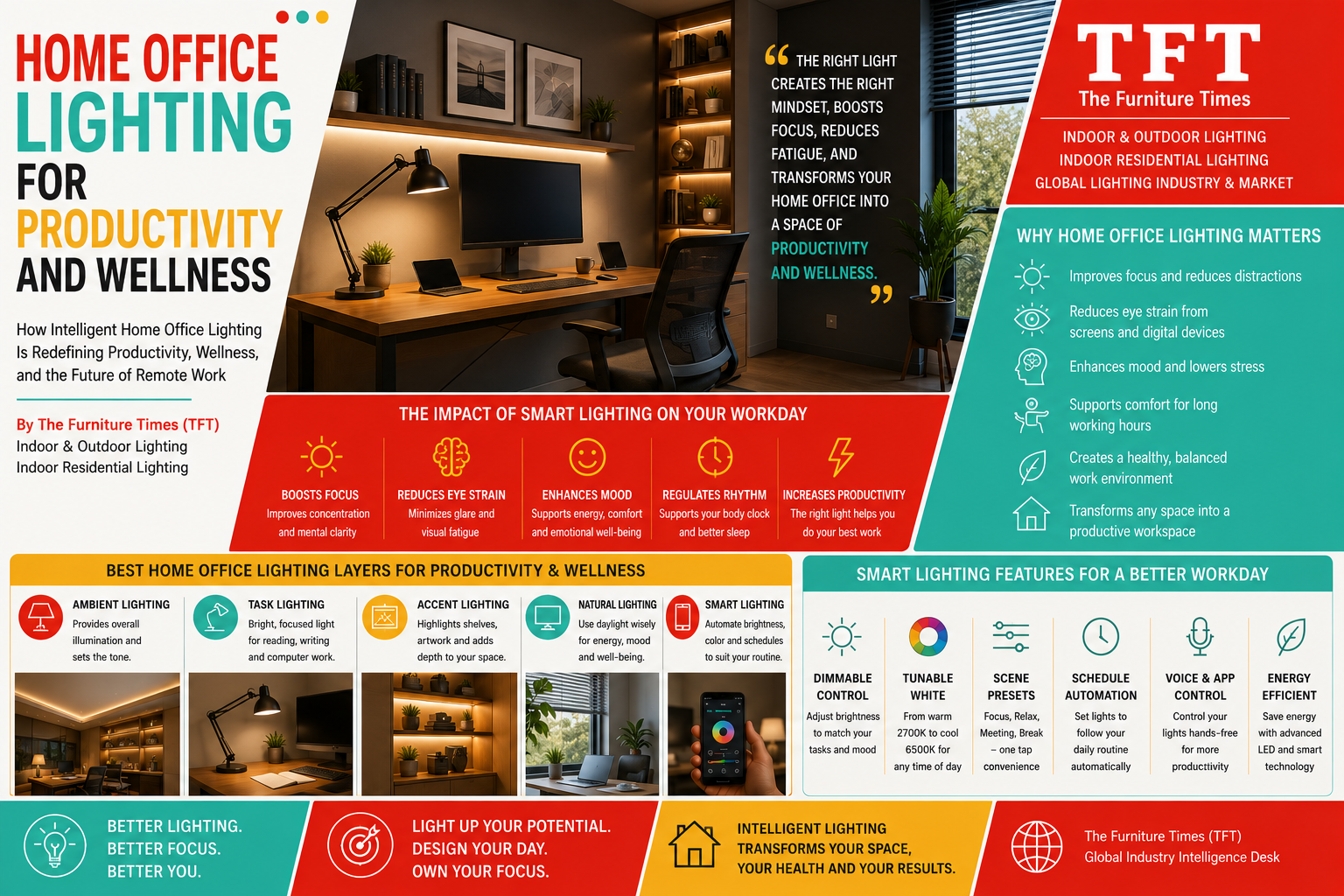
Layered Lighting Creates Effective Workspaces
Professional workspace designers recommend layered lighting to accommodate different work activities.
Ambient Lighting
Ambient lighting provides overall room illumination.
Popular solutions include:
- Recessed LED lighting
- Ceiling-mounted fixtures
- Surface-mounted luminaires
- Indirect ceiling lighting
- Smart ceiling panels
Balanced ambient lighting reduces harsh contrasts while creating a comfortable working environment.
Task Lighting
Task lighting provides focused illumination for work surfaces.
Applications include:
- Computer work
- Reading documents
- Writing
- Sketching
- Video meetings
- Product design
- Administrative work
- Technical drawings
- Online teaching
- Creative projects
Adjustable desk lamps with glare control remain among the most effective task lighting solutions.
Accent Lighting
Accent lighting improves the visual appeal of the workspace.
Common applications include:
- Bookshelves
- Display cabinets
- Awards
- Certificates
- Decorative walls
- Indoor plants
- Artwork
- Floating shelves
- Architectural features
- Backgrounds for video conferences
Accent lighting enhances both aesthetics and professional presentation.
Human-Centric Lighting Supports Wellness
One of the most significant innovations in workplace design is human-centric lighting.
These intelligent systems mimic natural daylight patterns throughout the day.
Morning lighting becomes brighter and cooler to promote alertness and concentration.
As the day progresses, lighting gradually transitions to softer, warmer tones that reduce stress and prepare the body for evening relaxation.
Benefits include:
- Improved circadian rhythms
- Better sleep quality
- Reduced eye fatigue
- Higher concentration
- Enhanced mood
- Greater productivity
- Improved mental well-being
- Increased comfort
- Better work-life balance
- Long-term health support
Human-centric lighting is becoming a standard feature in premium home offices.
Natural Daylight Remains Essential
Architects increasingly position home offices near windows to maximize natural daylight.
Natural light provides numerous benefits:
- Better visual clarity
- Improved mood
- Increased energy
- Reduced electricity consumption
- Enhanced productivity
- Better color accuracy
- Lower stress
- Stronger connection to nature
- Healthier work environments
- Improved overall well-being
Artificial lighting should complement rather than compete with natural daylight.
Modern homes increasingly integrate daylight-responsive lighting controls that automatically adjust interior illumination as outdoor conditions change.
Smart Lighting Is Transforming Remote Work
Artificial Intelligence and smart home technologies are reshaping residential workspaces.
Modern lighting systems enable users to:
- Control lighting through smartphones.
- Use voice assistants.
- Schedule workday routines.
- Adjust brightness automatically.
- Change color temperatures.
- Create productivity scenes.
- Synchronize with calendars.
- Integrate with smart blinds.
- Monitor energy usage.
- Activate focus modes.
These intelligent systems create personalized work environments while improving efficiency and convenience.
Furniture and Lighting Are Becoming Integrated
Modern office furniture increasingly incorporates integrated lighting solutions.
Applications include:
- Height-adjustable desks
- Shelving systems
- Bookcases
- Display cabinets
- Storage units
- Wall-mounted workstations
- Modular office furniture
- Built-in charging stations
- Video conferencing backgrounds
- Collaborative work areas
Furniture manufacturers continue collaborating with lighting companies to create ergonomic and aesthetically refined home office environments.
LED Technology Continues Leading Residential Workspaces
LED lighting remains the preferred technology for home offices.
Advantages include:
- Energy efficiency
- Long operational lifespan
- Low maintenance
- Minimal heat generation
- Excellent color rendering
- Adjustable brightness
- Smart home compatibility
- Flexible installation
- Sustainable performance
- Reduced operating costs
Modern LED technology allows homeowners to customize lighting according to individual work preferences.
Video Conferencing Has Changed Lighting Priorities
Virtual meetings have become an essential part of professional life.
Proper lighting improves:
- Facial visibility
- Professional appearance
- Camera image quality
- Visual communication
- Client confidence
- Brand perception
- Online presentations
- Educational sessions
- Team collaboration
- Digital content creation
Many home offices now include dedicated lighting designed specifically for video conferencing.
Minimalist Design Supports Concentration
Contemporary home offices increasingly embrace minimalist design principles.
Popular lighting features include:
- Slim linear fixtures
- Hidden LED lighting
- Recessed luminaires
- Matte finishes
- Neutral colors
- Clean architectural lines
- Indirect illumination
- Adjustable task lighting
- Integrated shelving lights
- Distraction-free environments
Minimalist lighting encourages concentration while creating visually calm workspaces.
Sustainability Influences Consumer Decisions
Consumers increasingly prioritize environmentally responsible lighting products.
Desired characteristics include:
- Energy-efficient LEDs
- Recyclable materials
- Renewable energy compatibility
- Eco-friendly packaging
- Smart energy controls
- Long service life
- Reduced carbon emissions
- Green certifications
- Sustainable manufacturing
- Circular economy principles
Sustainability has become an important consideration in residential office design.
Artificial Intelligence Will Define Future Home Offices
The next generation of home office lighting will become increasingly adaptive.
AI-powered systems may automatically:
- Detect occupancy.
- Learn work schedules.
- Adjust lighting for specific tasks.
- Reduce screen glare.
- Monitor energy efficiency.
- Support wellness goals.
- Integrate with wearable devices.
- Optimize video conferencing.
- Adapt to weather conditions.
- Personalize work environments.
Lighting will become increasingly proactive rather than reactive.
Real Estate Developers Recognize Home Office Value
Residential developers increasingly understand that dedicated home offices improve property appeal.
Exceptional office lighting contributes to:
- Higher property values
- Increased buyer interest
- Better marketing photography
- Smart home positioning
- Premium residential branding
- Flexible living
- Long-term marketability
- Luxury differentiation
- Customer satisfaction
- Investment performance
The home office has become a major selling feature for contemporary homes.
Opportunities Across the Industry
Growing demand for remote work environments creates opportunities for:
- Lighting manufacturers
- Furniture companies
- Architects
- Interior designers
- Smart home developers
- AI software providers
- Ergonomic product manufacturers
- Wellness technology companies
- Residential developers
- Home automation specialists
Organizations capable of integrating technology, wellness, sustainability, and intelligent design will continue leading market innovation.
Challenges for Future Development
Despite rapid progress, the industry continues addressing important challenges.
These include:
- Product interoperability
- Installation complexity
- Consumer education
- Cybersecurity
- Smart home compatibility
- Software updates
- Product standardization
- Cost accessibility
- Electronic waste
- Skilled workforce development
Continued collaboration across the industry will help accelerate adoption.
Lighting the Future of Work
The home office is no longer a temporary workspace—it has become a permanent feature of modern living.
Lighting now plays a central role in supporting productivity, creativity, wellness, collaboration, and long-term professional success.
From layered lighting and ergonomic task illumination to AI-powered automation, human-centric lighting, integrated furniture, sustainable LED technologies, and intelligent smart home ecosystems, residential office lighting continues to evolve alongside the changing nature of work.
For homeowners, architects, interior designers, furniture manufacturers, developers, technology companies, and lighting specialists, the opportunity lies in creating workspaces that support both professional excellence and personal well-being.
The home offices of tomorrow will not simply provide better illumination.
They will become intelligent environments that understand human needs, improve performance, protect health, and help people achieve more every day.
As remote work continues reshaping the global economy, one principle has become increasingly clear: exceptional work begins with exceptional environments—and exceptional environments begin with exceptional lighting.