Dining Room Lighting That Creates Luxury Experiences
By The Furniture Times (TFT) | Indoor & Outdoor Lighting | Indoor Residential Lighting
How Elegant Dining Room Lighting Is Redefining Luxury Living, Hospitality, and the Future of Residential Interior Design
The dining room has always held a special place within the home. Traditionally reserved for family meals and special occasions, it has evolved into a sophisticated space where lifestyle, design, hospitality, and personal expression converge. In today’s homes, the dining room is no longer simply an area for eating—it has become a destination for entertaining guests, celebrating milestones, conducting business dinners, hosting festive gatherings, and creating memorable experiences.
At the heart of this transformation lies one of the most powerful yet often underestimated elements of interior design: lighting.
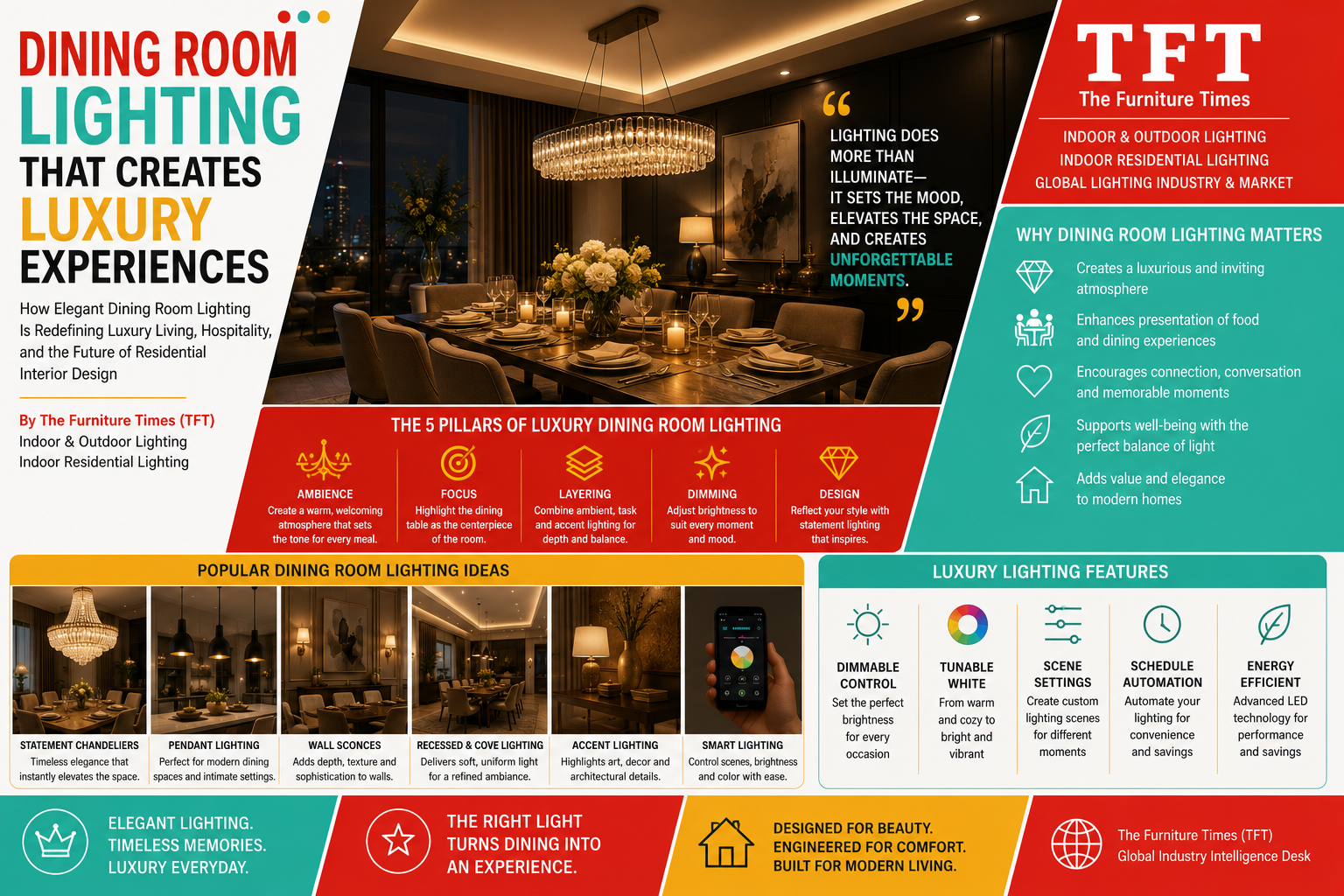
Dining room lighting has progressed far beyond providing basic illumination. It now defines mood, enhances architecture, showcases furniture, highlights décor, influences emotions, and creates luxurious environments that elevate every dining experience. Whether in a private residence, luxury apartment, penthouse, villa, hotel, or fine dining restaurant, thoughtfully designed lighting transforms an ordinary meal into an extraordinary occasion.
Driven by advancements in LED technology, Artificial Intelligence (AI), Internet of Things (IoT), smart home automation, sustainable materials, and human-centric lighting, dining room illumination has become an essential investment for homeowners, architects, interior designers, furniture manufacturers, developers, lighting companies, and hospitality professionals worldwide.
Dining Rooms Have Become Lifestyle Spaces
Contemporary lifestyles have changed the purpose of the dining room.
Today, dining spaces frequently host:
- Family meals
- Business discussions
- Festive celebrations
- Holiday gatherings
- Birthday parties
- Wine tastings
- Social entertaining
- Remote working sessions
- Children’s activities
- Casual conversations
As these functions continue expanding, lighting must adapt to different moods, activities, and occasions throughout the day.
Modern lighting systems provide homeowners with the flexibility to transition effortlessly from bright functional lighting during breakfast to warm, intimate illumination for evening dinners.
Luxury Begins with Layered Lighting
Interior designers increasingly rely on layered lighting to create elegant dining environments.
Rather than depending on a single ceiling fixture, luxury dining rooms combine several complementary lighting layers.
Ambient Lighting
Ambient lighting establishes the overall brightness of the room.
Popular solutions include:
- Recessed ceiling lighting
- Flush-mounted fixtures
- Architectural cove lighting
- Hidden LED ceiling illumination
- Smart ceiling luminaires
Ambient lighting provides visual comfort while creating a welcoming atmosphere.
Task Lighting
Although dining rooms require less task lighting than kitchens, certain activities benefit from focused illumination.
These include:
- Serving meals
- Buffet presentations
- Reading menus
- Table arrangements
- Decorative displays
- Beverage stations
- Sideboards
- Wine cabinets
- Display shelving
- Artwork
Carefully positioned lighting improves functionality without disrupting the room’s elegant ambiance.
Accent Lighting
Accent lighting introduces visual drama and sophistication.
Applications include:
- Feature walls
- Artwork
- Display cabinets
- Sculptures
- Decorative shelving
- Wine displays
- Architectural niches
- Premium furniture
- Ceiling details
- Indoor greenery
Accent lighting creates depth while emphasizing luxury design elements.
Statement Chandeliers Remain Timeless
One of the defining features of luxury dining rooms is the statement chandelier.
Modern chandeliers combine craftsmanship, engineering, and artistic expression.
Popular styles include:
- Crystal chandeliers
- Contemporary sculptural lighting
- Linear pendants
- Minimalist geometric fixtures
- Organic-inspired designs
- Glass installations
- Brass finishes
- Matte black finishes
- Mixed-material compositions
- Custom-designed luminaires
These fixtures become visual centerpieces that enhance both architecture and furniture.
Pendant Lighting Defines Modern Dining Spaces
Pendant lighting continues gaining popularity across contemporary homes.
Suspended above dining tables, pendants provide:
- Balanced illumination
- Architectural focus
- Visual symmetry
- Comfortable dining brightness
- Decorative elegance
- Flexible installation
- Adjustable heights
- Smart lighting integration
- Excellent color rendering
- Personalized aesthetics
Multiple pendants are increasingly used over larger dining tables to create balanced lighting compositions.
Lighting Enhances Furniture Design
Dining furniture and lighting are becoming increasingly interconnected.
Premium dining spaces often incorporate lighting that highlights:
- Solid wood dining tables
- Marble tabletops
- Upholstered dining chairs
- Designer buffets
- Display cabinets
- Sideboards
- Wine storage
- Floating shelves
- Decorative accessories
- Luxury finishes
The correct lighting enhances textures, craftsmanship, colors, and premium materials while increasing the perceived value of furniture.
Furniture manufacturers increasingly collaborate with lighting designers to develop integrated residential solutions.
Human-Centric Lighting Improves Dining Experiences
Human-centric lighting is extending beyond bedrooms and offices into dining spaces.
Adaptive lighting systems automatically adjust brightness and color temperature according to the time of day.
Benefits include:
- Enhanced relaxation
- Improved visual comfort
- Better emotional well-being
- More enjoyable meals
- Reduced eye strain
- Comfortable evening dining
- Improved hospitality experiences
- Natural atmosphere
- Family comfort
- Healthier living environments
Dining room lighting increasingly contributes to both wellness and aesthetics.
Smart Dining Rooms Become Reality
Artificial Intelligence and smart home technologies continue reshaping residential interiors.
Modern dining room lighting systems allow homeowners to:
- Control lighting using smartphones.
- Use voice assistants.
- Create dining scenes.
- Schedule lighting routines.
- Adjust brightness instantly.
- Change color temperatures.
- Synchronize with music.
- Integrate with entertainment systems.
- Monitor energy usage.
- Automate special event lighting.
These intelligent systems create highly personalized dining experiences.
LED Technology Continues Leading Residential Lighting
LED lighting has become the preferred solution for luxury dining rooms.
Advantages include:
- Superior energy efficiency
- Long operational lifespan
- Low maintenance
- Excellent color rendering
- Flexible fixture design
- Minimal heat generation
- Dimming compatibility
- Sustainable performance
- Smart home integration
- Reduced operating costs
Modern LEDs allow designers to create dramatic visual effects while maintaining exceptional efficiency.
Hospitality Design Inspires Residential Interiors
Luxury hotels and fine dining restaurants increasingly influence residential design trends.
Homeowners seek dining rooms that reflect the elegance of premium hospitality environments.
Key influences include:
- Mood lighting
- Soft indirect illumination
- Premium pendant fixtures
- Decorative wall sconces
- Layered lighting scenes
- Candle-inspired LED lighting
- Warm color temperatures
- Architectural detailing
- Intelligent controls
- Personalized guest experiences
The boundary between residential and hospitality lighting continues to blur.
Sustainable Luxury Is Growing
Today’s consumers increasingly expect luxury to include environmental responsibility.
Dining room lighting now emphasizes:
- Energy-efficient LED systems
- Sustainable manufacturing
- Recyclable materials
- Long product lifespans
- Eco-friendly packaging
- Renewable energy compatibility
- Smart energy controls
- Carbon footprint reduction
- Responsible sourcing
- Green building compatibility
Luxury and sustainability are becoming complementary rather than competing priorities.
Minimalism Meets Elegance
Modern dining rooms often embrace minimalist design while maintaining a luxurious atmosphere.
Popular lighting characteristics include:
- Slim linear pendants
- Hidden LED strips
- Matte finishes
- Neutral color palettes
- Clean geometric forms
- Architectural integration
- Floating ceiling illumination
- Frameless fixtures
- Simple elegance
- Balanced compositions
Minimalist lighting allows furniture, architecture, and dining experiences to become the focal points.
Artificial Intelligence Will Personalize Dining Spaces
The future of dining room lighting will become increasingly intelligent.
AI-powered systems may automatically:
- Recognize meal times.
- Learn family preferences.
- Adjust lighting for celebrations.
- Synchronize with natural daylight.
- Optimize energy efficiency.
- Adapt to guest numbers.
- Integrate with voice assistants.
- Support elderly accessibility.
- Personalize holiday lighting.
- Connect with broader smart home ecosystems.
Lighting will increasingly anticipate user needs rather than requiring manual adjustment.
Real Estate Developers Recognize the Value of Luxury Lighting
High-quality dining room lighting contributes directly to residential market appeal.
Developers increasingly use sophisticated lighting to enhance:
- Property value
- Luxury branding
- Interior photography
- Buyer interest
- Smart home positioning
- Premium architectural design
- Sustainable certifications
- Market competitiveness
- Customer satisfaction
- Long-term investment performance
Lighting has become an important differentiator in premium residential developments.
Opportunities Across the Lighting Industry
The continued evolution of dining spaces creates opportunities for:
- Lighting manufacturers
- Furniture companies
- Interior designers
- Architects
- Smart home technology providers
- Real estate developers
- Hospitality consultants
- Decorative lighting specialists
- Sustainable product manufacturers
- AI technology companies
Businesses capable of combining design excellence, intelligent technology, sustainability, and premium customer experiences will continue leading market growth.
Challenges Facing Residential Dining Lighting
Despite rapid innovation, the industry continues addressing several challenges.
These include:
- Smart home interoperability
- Product standardization
- Installation complexity
- Consumer education
- Cybersecurity
- Software maintenance
- Cost accessibility
- Recycling
- Skilled workforce shortages
- Long-term product support
Successfully overcoming these challenges will accelerate adoption and encourage greater consumer confidence.
Lighting That Creates Memorable Experiences
Dining rooms are no longer defined solely by beautiful tables, elegant chairs, or luxurious finishes.
They are defined by the atmosphere created through exceptional lighting.
From statement chandeliers and layered lighting to AI-powered automation, integrated furniture illumination, sustainable LED technologies, and human-centric wellness, dining room lighting has become one of the most influential elements of contemporary residential design.
For homeowners, architects, interior designers, furniture manufacturers, developers, hospitality professionals, and lighting companies, the opportunity is clear: create dining environments that inspire connection, celebrate craftsmanship, support wellness, and elevate everyday living.
The future of dining room lighting extends beyond illumination.
It is about designing unforgettable experiences where every meal feels special, every gathering feels welcoming, and every home reflects elegance, comfort, and timeless sophistication.
As residential interiors continue evolving, luxury will increasingly be measured not only by what homeowners see—but by how lighting makes them feel.