Bedroom Lighting That Improves Comfort, Relaxation, and Sleep
By The Furniture Times (TFT) | Indoor & Outdoor Lighting | Indoor Residential Lighting
How Intelligent Bedroom Lighting Is Transforming Wellness, Interior Design, and the Future of Healthy Living
The modern bedroom has evolved far beyond its traditional role as simply a place to sleep. Today, it serves as a personal sanctuary—a space for relaxation, recovery, reading, meditation, remote work, self-care, and emotional well-being. As modern lifestyles become increasingly demanding and digitally connected, homeowners are placing greater emphasis on creating bedrooms that promote comfort, tranquility, and restorative sleep.
One of the most influential yet often underestimated elements in achieving this goal is lighting.
Bedroom lighting is no longer limited to a ceiling fixture and bedside lamp. It has become a carefully planned combination of ambient illumination, task lighting, accent lighting, architectural integration, smart controls, and human-centric technologies designed to improve physical health, emotional comfort, and overall quality of life.
Advancements in LED technology, Artificial Intelligence (AI), Internet of Things (IoT), circadian lighting, smart home automation, and sustainable design are redefining how lighting supports wellness within residential interiors.
For homeowners, architects, interior designers, furniture manufacturers, lighting companies, real estate developers, hospitality professionals, and smart home technology providers, bedroom lighting has become one of the most important aspects of contemporary residential design.
Sleep Has Become a Global Wellness Priority
Modern society faces increasing challenges related to stress, long working hours, excessive screen exposure, and irregular daily routines.
As awareness of sleep quality grows, consumers are investing in environments that encourage healthier lifestyles.
Bedroom lighting now plays a significant role in:
- Supporting healthy sleep cycles
- Creating relaxing environments
- Reducing visual fatigue
- Enhancing emotional well-being
- Improving nighttime comfort
- Supporting morning routines
- Promoting mindfulness
- Encouraging digital detox
- Increasing residential comfort
- Elevating interior aesthetics
Lighting has become a wellness investment rather than simply an electrical necessity.
Human-Centric Lighting Is Changing Bedroom Design
Among the most significant innovations in residential lighting is human-centric lighting.
Unlike traditional lighting systems that provide constant brightness and color temperature, human-centric lighting automatically adapts throughout the day to better align with natural daylight patterns.
Morning lighting typically becomes brighter and cooler, helping residents feel more alert and energized.
As evening approaches, lighting gradually shifts toward warmer, softer tones that create a calming atmosphere and encourage relaxation before bedtime.
This adaptive approach supports healthier circadian rhythms while improving the overall bedroom experience.
Increasingly, homeowners view lighting not only as decoration but also as an important contributor to personal wellness.
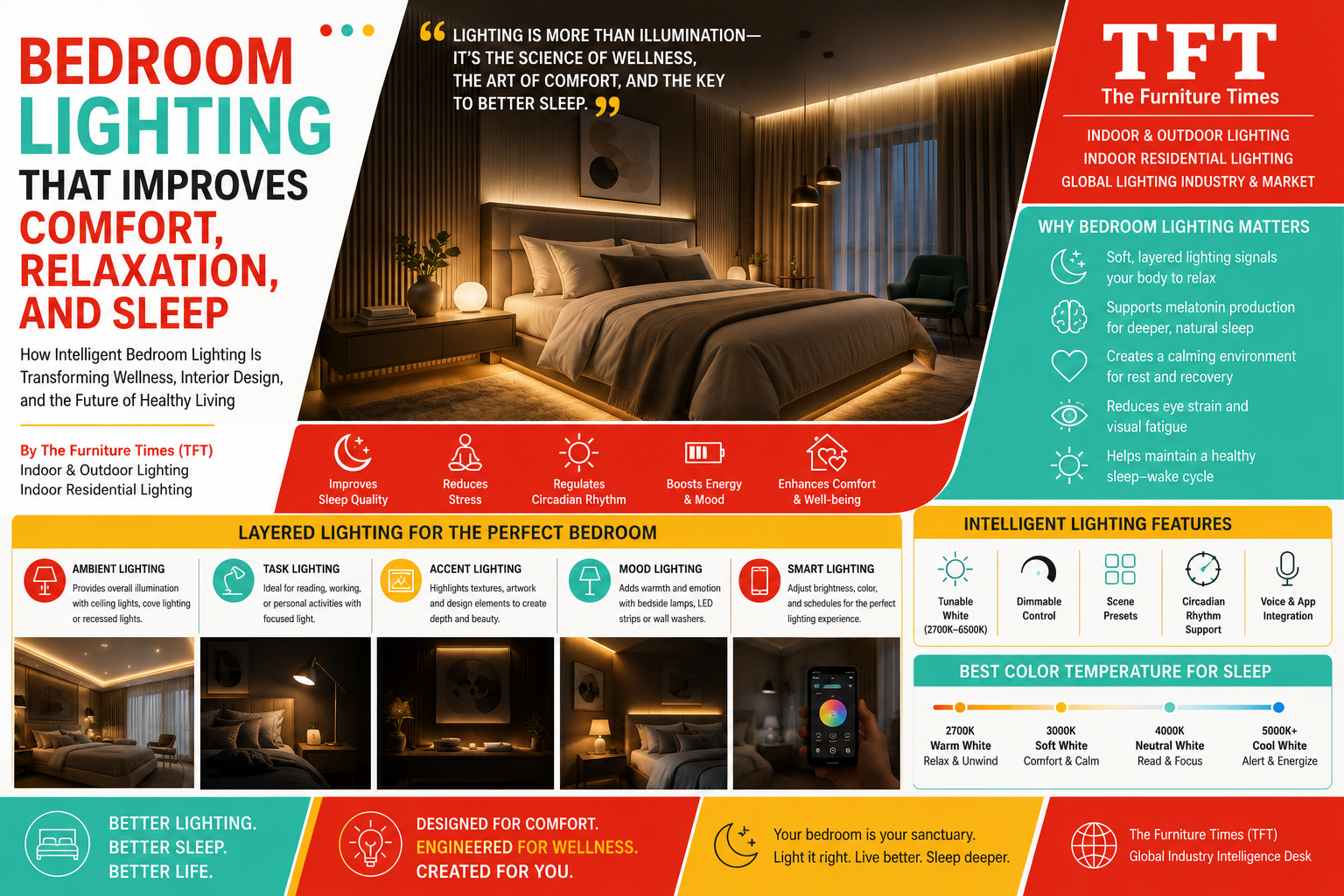
Layered Lighting Creates Comfortable Bedrooms
Professional designers rarely rely on a single light source.
Instead, modern bedrooms use layered lighting strategies that combine multiple types of illumination.
Ambient Lighting
Ambient lighting provides the room’s primary illumination.
Popular solutions include:
- Recessed ceiling lights
- Flush-mounted fixtures
- Indirect ceiling lighting
- Cove lighting
- Smart LED ceiling luminaires
Soft ambient lighting creates a calm and welcoming atmosphere without excessive brightness.
Task Lighting
Bedrooms often support activities beyond sleeping.
Task lighting assists with:
- Reading
- Writing
- Remote work
- Dressing
- Personal grooming
- Makeup application
- Closet organization
- Crafts
- Digital device use
- Journaling
Common task lighting solutions include adjustable bedside lamps, wall-mounted reading lights, dressing table illumination, and integrated wardrobe lighting.
Accent Lighting
Accent lighting enhances the room’s visual character.
Applications include:
- Headboard lighting
- Decorative wall features
- Artwork illumination
- Floating shelves
- Indoor plants
- Architectural niches
- Feature walls
- Display furniture
Layered lighting creates depth, elegance, and flexibility throughout the bedroom.
Warm Color Temperatures Promote Relaxation
Lighting color temperature significantly influences emotional comfort.
Bedrooms generally benefit from warm white lighting that produces a peaceful and inviting environment.
Warm lighting helps create:
- Relaxation
- Emotional comfort
- Cozy interiors
- Calm evening routines
- Reduced visual stress
- Better ambiance
- Softer aesthetics
- Hospitality-inspired luxury
- Personal comfort
- Restful environments
Cool white lighting may remain useful in wardrobes or dressing areas where greater visibility is required.
Balancing both creates a versatile and practical bedroom.
Smart Bedroom Lighting Is Becoming Standard
Smart home technology continues transforming residential interiors.
Modern bedroom lighting systems allow homeowners to:
- Control lighting through mobile applications.
- Use voice assistants.
- Schedule daily lighting routines.
- Create personalized scenes.
- Dim lighting automatically.
- Adjust color temperatures.
- Synchronize lighting with alarms.
- Activate sleep modes.
- Integrate with curtains and blinds.
- Monitor energy consumption.
These intelligent systems provide greater convenience while supporting healthier daily routines.
Furniture and Lighting Are Becoming Integrated
Bedroom furniture increasingly incorporates built-in lighting.
Popular applications include:
- Illuminated wardrobes
- Headboards with integrated lighting
- Floating bedside tables
- Display shelving
- Vanity mirrors
- Walk-in closets
- Storage cabinets
- Smart dressing areas
- Platform beds
- Bedroom entertainment units
Integrated lighting improves usability while reducing visual clutter and creating cleaner contemporary interiors.
Furniture manufacturers and lighting companies continue collaborating to develop multifunctional products.
LED Technology Supports Modern Bedrooms
LED lighting remains the preferred technology for residential bedrooms.
Advantages include:
- Low energy consumption
- Long operating life
- Reduced heat generation
- Excellent dimming performance
- Flexible installation
- Compact fixture design
- Improved sustainability
- Lower maintenance
- Wide color temperature options
- Smart home compatibility
LED strips are particularly popular for concealed architectural lighting that creates soft indirect illumination.
Minimalist Design Continues Growing
Modern bedrooms increasingly embrace minimalist aesthetics.
Lighting complements this approach through:
- Hidden LED strips
- Slim pendant lights
- Frameless fixtures
- Recessed lighting
- Floating ceiling illumination
- Simple geometric forms
- Matte finishes
- Neutral colors
- Clean architectural lines
- Integrated lighting solutions
The objective is to create calm environments free from unnecessary visual distractions.
Luxury Bedrooms Focus on Atmosphere
Luxury residential interiors increasingly emphasize lighting as a defining design feature.
Premium bedrooms frequently include:
- Designer chandeliers
- Statement pendant lighting
- Hotel-inspired bedside illumination
- Decorative wall sconces
- Intelligent mood lighting
- Architectural ceiling details
- Soft indirect lighting
- Walk-in wardrobe lighting
- Spa-inspired bathroom integration
- Personalized lighting scenes
These features enhance both comfort and property value.
Natural Light Remains Essential
Artificial lighting performs best when combined with thoughtful daylight design.
Modern bedroom architecture increasingly incorporates:
- Large windows
- Skylights
- Smart blinds
- Natural ventilation
- Reflective interior materials
- Light-colored finishes
- Indoor-outdoor connections
- Automated shading
- Energy-efficient glazing
- Daylight-responsive controls
Natural and artificial lighting increasingly work together to support healthy living.
Sustainability Influences Purchasing Decisions
Consumers increasingly prioritize environmentally responsible lighting solutions.
Desired features include:
- Energy-efficient LEDs
- Sustainable materials
- Recyclable components
- Eco-friendly packaging
- Renewable energy compatibility
- Long product lifespans
- Smart energy controls
- Low maintenance
- Reduced carbon footprint
- Green building compatibility
Sustainability has become an important consideration in residential lighting design.
Artificial Intelligence Will Personalize Bedroom Experiences
The next generation of bedroom lighting will become increasingly intelligent.
AI-powered systems may automatically:
- Learn bedtime routines.
- Adjust lighting according to weather.
- Synchronize with wearable health devices.
- Optimize circadian rhythms.
- Reduce energy consumption.
- Personalize lighting preferences.
- Monitor occupancy.
- Improve nighttime safety.
- Support aging-in-place solutions.
- Integrate with broader wellness platforms.
Lighting will increasingly respond to individual lifestyles rather than requiring manual control.
Real Estate Developers Recognize the Value
Developers increasingly understand that thoughtfully designed bedroom lighting contributes to:
- Higher property values
- Improved buyer satisfaction
- Luxury branding
- Better interior photography
- Smart home positioning
- Increased rental demand
- Greater market competitiveness
- Sustainable building certifications
- Premium residential experiences
- Long-term investment appeal
Lighting has become an important differentiator in residential development.
Opportunities for the Lighting Industry
Growing awareness of wellness-focused design creates significant opportunities across the lighting industry.
Expanding markets include:
- Human-centric lighting
- Smart bedroom systems
- AI-powered home automation
- Decorative residential fixtures
- Furniture-integrated lighting
- Architectural lighting
- Wellness technologies
- Hospitality-inspired residential products
- Sustainable lighting materials
- Connected home ecosystems
Manufacturers that combine aesthetics, technology, comfort, and sustainability will continue leading residential innovation.
Challenges for Future Development
The residential lighting sector continues addressing several important challenges.
These include:
- Product interoperability
- Consumer education
- Installation complexity
- Cybersecurity
- Smart home compatibility
- Cost accessibility
- Product recycling
- Software maintenance
- Standardization
- Long-term technical support
Overcoming these challenges will strengthen consumer confidence and accelerate adoption.
Lighting Better Sleep, Better Homes, and Better Lives
The future of bedroom lighting extends far beyond illumination.
It is becoming an essential component of wellness, interior architecture, intelligent homes, sustainable living, and personalized residential experiences.
From layered lighting and warm color temperatures to AI-powered automation, integrated furniture, human-centric wellness, and energy-efficient LED technology, bedroom lighting is transforming how people rest, recover, and prepare for each new day.
For homeowners, architects, interior designers, furniture manufacturers, developers, hospitality professionals, and technology providers, bedroom lighting represents an opportunity to create spaces that support both physical comfort and emotional well-being.
The bedrooms of tomorrow will not simply be brighter.
They will be healthier, smarter, more sustainable, and more deeply connected to the needs of the people who live within them.
As the residential lighting industry continues to innovate, one principle remains clear: the best bedroom lighting is not measured only by how well it illuminates a room—it is measured by how well it enhances life itself.