How Different Age Groups Buy Furniture: From Gen Z to Baby Boomers—A Global Consumer Intelligence Report
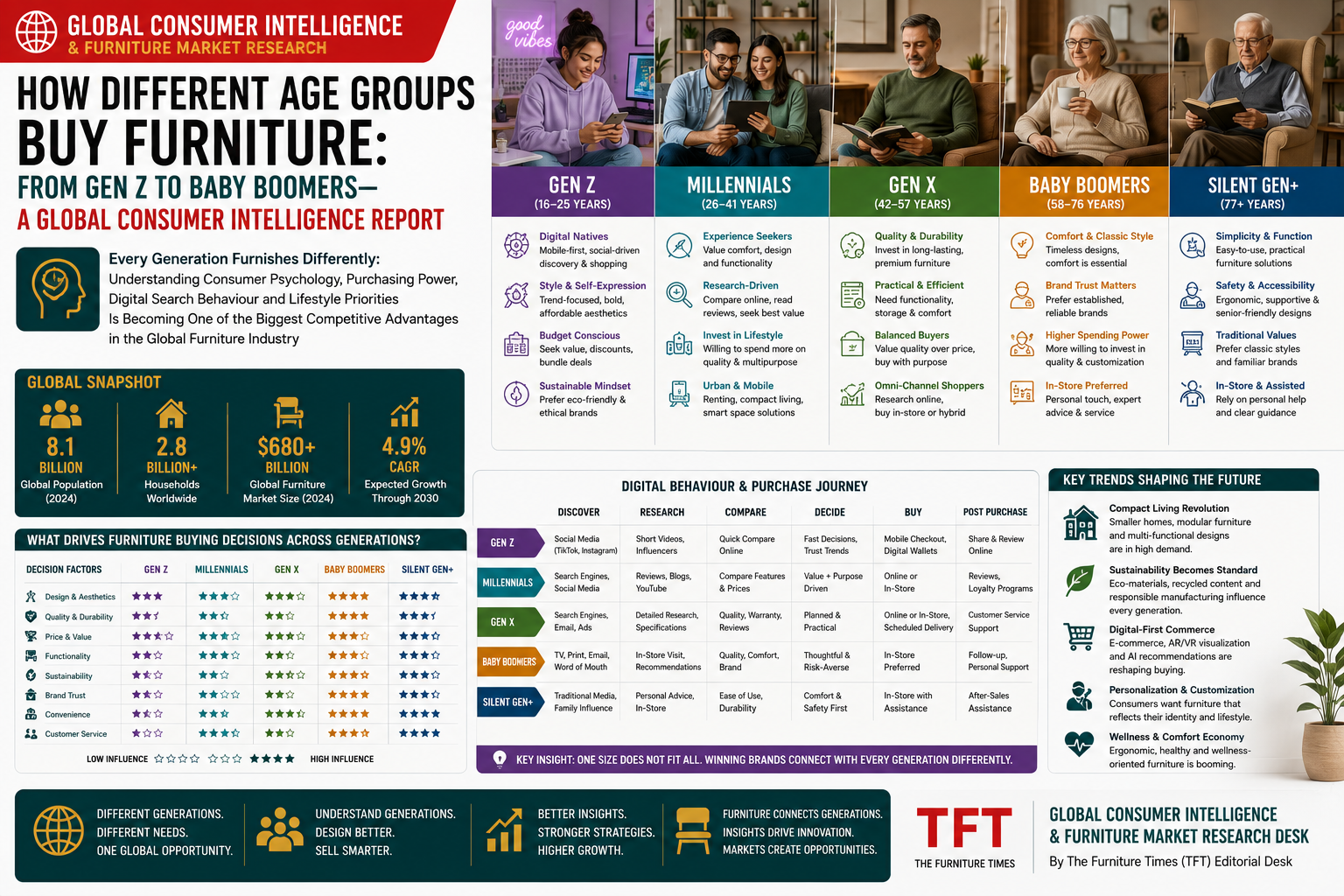
Every Generation Furnishes Differently: Understanding Consumer Psychology, Purchasing Power, Digital Search Behaviour and Lifestyle Priorities Is Becoming One of the Biggest Competitive Advantages in the Global Furniture Industry
Global Consumer Intelligence & Furniture Market Research Desk
By The Furniture Times (TFT) Editorial Desk
Furniture is one of the few products that accompanies people throughout almost every stage of life.
A teenager buying a study desk, a young professional furnishing a first apartment, a growing family purchasing a larger dining table, a business executive investing in a premium home office, and retirees redesigning a home for comfort are all participating in the same global furniture economy—but for completely different reasons.
For decades, many furniture companies divided customers simply by income or geography.
Today, that approach is no longer sufficient.
Modern furniture purchasing is increasingly influenced by:
- Age
- Life stage
- Household composition
- Career development
- Housing type
- Digital behaviour
- Health
- Family size
- Mobility
- Sustainability awareness
- Technology adoption
- Lifestyle priorities
The global furniture market continues to expand as new households are created, urbanisation accelerates and consumer lifestyles evolve. One widely cited market assessment estimates the global furniture market at approximately US$786 billion in 2025, with long-term growth expected through the next decade. Different research firms publish different totals depending on market definitions, but they consistently point toward sustained expansion. (grandviewresearch.com)
The most successful furniture businesses will not simply manufacture more products.
They will understand who is buying, why they are buying, when they are most likely to purchase and how they search before making a decision.
This report examines how each major generation is reshaping the global residential and commercial furniture economy.
Furniture Purchasing Begins With Life Events
People rarely buy furniture randomly.
Purchases are usually triggered by life events.
Major triggers include:
- Leaving home
- University admission
- First employment
- Marriage
- Renting a property
- Purchasing a home
- Birth of children
- Career advancement
- Working from home
- Renovation
- Relocation
- Retirement
- Health changes
- Downsizing
The same individual may purchase completely different furniture every ten years.
Therefore, age should never be analysed independently from lifestyle.
Global Generational Overview
Although exact birth-year definitions vary slightly between countries and researchers, the following groups are widely recognised.
Generation Alpha
Born approximately 2013 onwards
Current role:
- Children
- Future consumers
- Influencers through parents
Generation Z
Approximately 1997–2012
Current stage:
- Students
- First jobs
- First apartments
- Early homeowners
- Young entrepreneurs
Millennials (Generation Y)
Approximately 1981–1996
Current stage:
- Family formation
- Home purchases
- Career growth
- Child raising
- Major furniture spending
Generation X
Approximately 1965–1980
Current stage:
- Established careers
- Larger homes
- Renovations
- Premium upgrades
- Mature purchasing
Baby Boomers
Approximately 1946–1964
Current stage:
- Retirement
- Downsizing
- Comfort-focused purchasing
- Age-friendly living
Each generation creates a unique furniture economy.
Generation Alpha: The Future Customer Already Influencing Today’s Sales
Generation Alpha rarely purchases furniture independently.
However, it strongly influences household decisions.
Parents increasingly consider:
- Study furniture
- Educational furniture
- Storage
- Flexible bedrooms
- Safe furniture
- Technology integration
- Creative spaces
Demand includes:
- Adjustable desks
- Children’s wardrobes
- Toy storage
- Reading corners
- Modular beds
- Bunk beds
- Activity furniture
Manufacturers that understand children’s development will build long-term customer relationships beginning at an early age.
Generation Z: The Digital-First Furniture Buyer
Generation Z is creating one of the fastest-changing furniture markets.
Many are:
- Graduating
- Renting
- Living in cities
- Sharing apartments
- Beginning careers
- Starting businesses
Their purchasing priorities differ significantly from previous generations.
What Generation Z Values
Affordability
Housing costs often limit disposable income.
Budget-conscious purchasing is common.
Compact Living
Small apartments create demand for:
- Folding furniture
- Modular furniture
- Storage furniture
- Wall-mounted products
- Multifunctional furniture
Online Discovery
Generation Z often discovers products through:
- Google Search
- AI search
- Social media
- Short-form video
- Visual search
- Creator recommendations
Fast Delivery
Immediate availability often influences purchasing decisions.
Flexible Payment
Installments and buy-now-pay-later options may increase purchasing confidence, although consumers should understand repayment obligations before using such services.
Sustainability
Many younger consumers express interest in:
- Recycled materials
- Certified wood
- Repairability
- Transparent sourcing
However, affordability often remains the deciding factor.
Generation Z Search Behaviour
Typical searches include:
- Best sofa under $500
- Small apartment furniture
- Furniture for studio apartment
- Affordable bedroom furniture
- Minimalist desk
- Compact dining table
- Modular storage
- Furniture delivery today
Their search behaviour is conversational rather than category-based.
Millennials: The Largest Furniture-Spending Generation
Millennials currently represent one of the world’s most influential furniture-buying groups.
Many are:
- Purchasing homes
- Raising children
- Renovating
- Building home offices
- Upgrading interiors
Their purchasing power is generally greater than Generation Z while family responsibilities create broader furniture demand.
Millennial Buying Priorities
- Quality
- Value
- Design
- Functionality
- Reviews
- Warranty
- Sustainability
- Durability
Key Product Categories
- Sofas
- Dining furniture
- Beds
- Children’s furniture
- Storage
- Home office
- Outdoor furniture
- Kitchen cabinets
Millennials often purchase room-by-room rather than replacing every item simultaneously.
Digital Behaviour
Millennials typically:
- Compare prices
- Read reviews
- Watch videos
- Research materials
- Compare brands
- Visit showrooms before purchasing
Omnichannel retail performs particularly well for this generation.
Generation X: Premium Upgrade Buyers
Generation X generally occupies its highest earning years.
Many have:
- Stable careers
- Older children
- Larger homes
- Greater savings
- Renovation budgets
Their purchasing decisions frequently emphasise long-term value.
Product Interests
- Premium sofas
- Solid wood dining tables
- Quality mattresses
- Outdoor furniture
- Home libraries
- Executive home offices
- Kitchen upgrades
Decision Drivers
- Durability
- Craftsmanship
- Comfort
- Warranty
- Brand reputation
- Material quality
Generation X often spends more time evaluating technical details before purchasing.
Baby Boomers: Comfort and Accessibility Become Essential
Baby Boomers continue representing an important furniture market.
Many are:
- Retired
- Downsizing
- Renovating
- Supporting grandchildren
- Investing in comfort
Furniture Priorities
- Comfort
- Accessibility
- Stability
- Easy maintenance
- Long lifespan
Important categories include:
- Adjustable beds
- Recliners
- Supportive seating
- Dining furniture
- Bedroom furniture
- Accessible storage
Furniture should support independence without appearing clinical.
Purchasing Power Changes Across Life Stages
Age influences purchasing capacity, but income alone does not determine buying behaviour.
Other factors include:
- Housing costs
- Family size
- Healthcare expenses
- Education costs
- Savings
- Retirement planning
- Debt
- Employment confidence
Furniture brands should avoid assuming that every older consumer has greater purchasing power than every younger consumer.
Search Behaviour by Generation
Generation Z
Searches are highly visual and conversational.
Examples:
- Modern apartment furniture
- TikTok furniture ideas
- Space-saving furniture
Millennials
Research-driven.
Examples:
- Best sectional sofa
- Wood vs engineered wood
- Best dining table for family
Generation X
Specification-focused.
Examples:
- Solid oak dining table
- Premium leather sofa
- Lifetime warranty furniture
Baby Boomers
Comfort-focused.
Examples:
- Easy chair for elderly
- Comfortable recliner
- Adjustable bed reviews
Materials Preferred by Different Generations
Generation Z
- Engineered wood
- Metal
- Recycled materials
- Compact upholstery
Millennials
- Solid wood
- Engineered wood
- Performance fabrics
- Aluminium outdoor furniture
Generation X
- Hardwood
- Premium upholstery
- Stone
- Glass
- Metal
Baby Boomers
- Solid wood
- Upholstered seating
- Stable metal frames
- Easy-maintenance materials
Residential vs Commercial Purchasing
Generational influence extends beyond homes.
Younger employees increasingly expect:
- Ergonomic chairs
- Collaborative furniture
- Flexible workplaces
Older employees often value:
- Comfortable seating
- Larger work surfaces
- Better lighting
- Privacy
Hotels increasingly provide furniture suitable for every age group rather than designing exclusively for younger travellers.
Healthcare providers increasingly require furniture that supports ageing populations.
Regional Differences
Asia-Pacific
Younger urban populations create strong demand for compact furniture, while multigenerational households continue purchasing larger dining and storage solutions.
Europe
Ageing populations increase demand for accessible furniture, while younger urban residents favour modular and sustainable products.
North America
Replacement purchasing remains strong across every generation.
Middle East
Young populations, rapid residential development and premium housing support growth across multiple generations.
Africa
Rapid population growth and urbanisation create long-term opportunities among younger consumers entering independent living.
Latin America
Family-centred households continue supporting strong dining, living-room and storage furniture demand.
Digital Behaviour Is Replacing Traditional Shopping Journeys
Every generation now uses digital channels to some extent.
However, their expectations differ.
Generation Z expects instant answers.
Millennials expect comparisons.
Generation X expects detailed specifications.
Baby Boomers expect trust, clarity and service.
Furniture companies must provide all four experiences simultaneously.
Future Consumer Trends Through 2035
The next decade is likely to produce:
- Smaller households
- More single-person homes
- Longer renting periods
- More home working
- Greater ageing populations
- Increased furniture subscription services
- AI-assisted shopping
- Visual search
- Sustainable purchasing
- Repair and refurbishment markets
- Smart furniture
- Modular living
No single generation will dominate every market.
Instead, manufacturers must develop products that reflect changing demographic realities.
Strategic Recommendations for Furniture Companies
Furniture businesses should:
- Build separate marketing strategies for each generation.
- Segment products by lifestyle rather than age alone.
- Improve mobile-first shopping experiences.
- Publish detailed product information.
- Create educational buying guides.
- Offer flexible payment options responsibly.
- Design furniture for smaller urban homes.
- Expand home-office collections.
- Invest in age-friendly furniture.
- Develop replacement-part programmes.
- Optimise content for AI and conversational search.
- Use customer reviews to build trust.
- Improve after-sales service.
- Study demographic trends in every target market.
- Design for multigenerational households where appropriate.
- Offer sustainable products supported by evidence.
- Strengthen omnichannel retail.
- Invest in long-term customer relationships.
- Measure purchasing triggers, not only sales.
- Treat consumer intelligence as a strategic business asset.
The Future of Furniture Belongs to Companies That Understand People
Furniture is ultimately about people rather than products.
Every generation brings different expectations.
Generation Alpha influences parental purchasing.
Generation Z values flexibility and affordability.
Millennials invest in homes and families.
Generation X upgrades quality and comfort.
Baby Boomers seek accessibility and independence.
The companies that continue producing identical products for every customer will struggle to compete.
The companies that understand changing lifestyles, purchasing psychology and digital behaviour will build stronger brands and longer customer relationships.
The future of the furniture industry will not be determined only by manufacturing capacity.
It will be determined by how well manufacturers understand the people they serve.
Every generation tells a different furniture story. The brands that learn to speak every generation’s language will shape the future of the global furniture industry.